Metal 3D Printer on ISS Sparks Space Manufacturing Shift
A Northrop Cygnus cargo ship delivered the first metal 3D printer for the ISS, a critical test for manufacturing tools and parts in orbit in 2024.
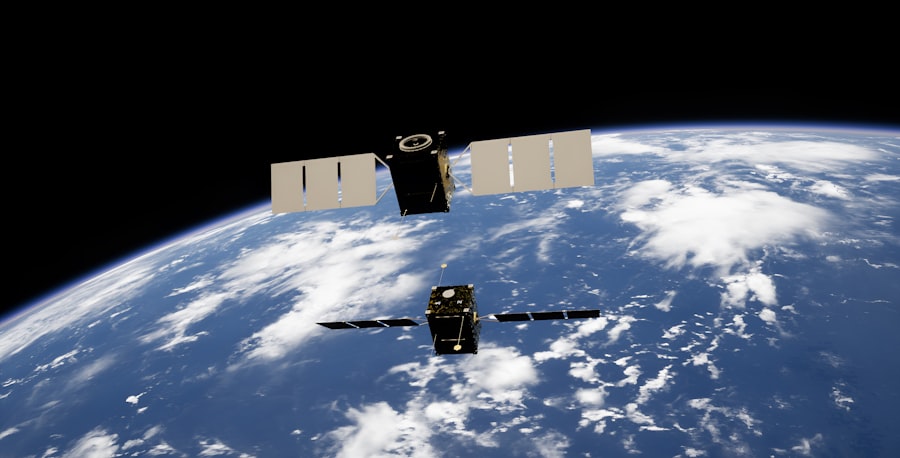
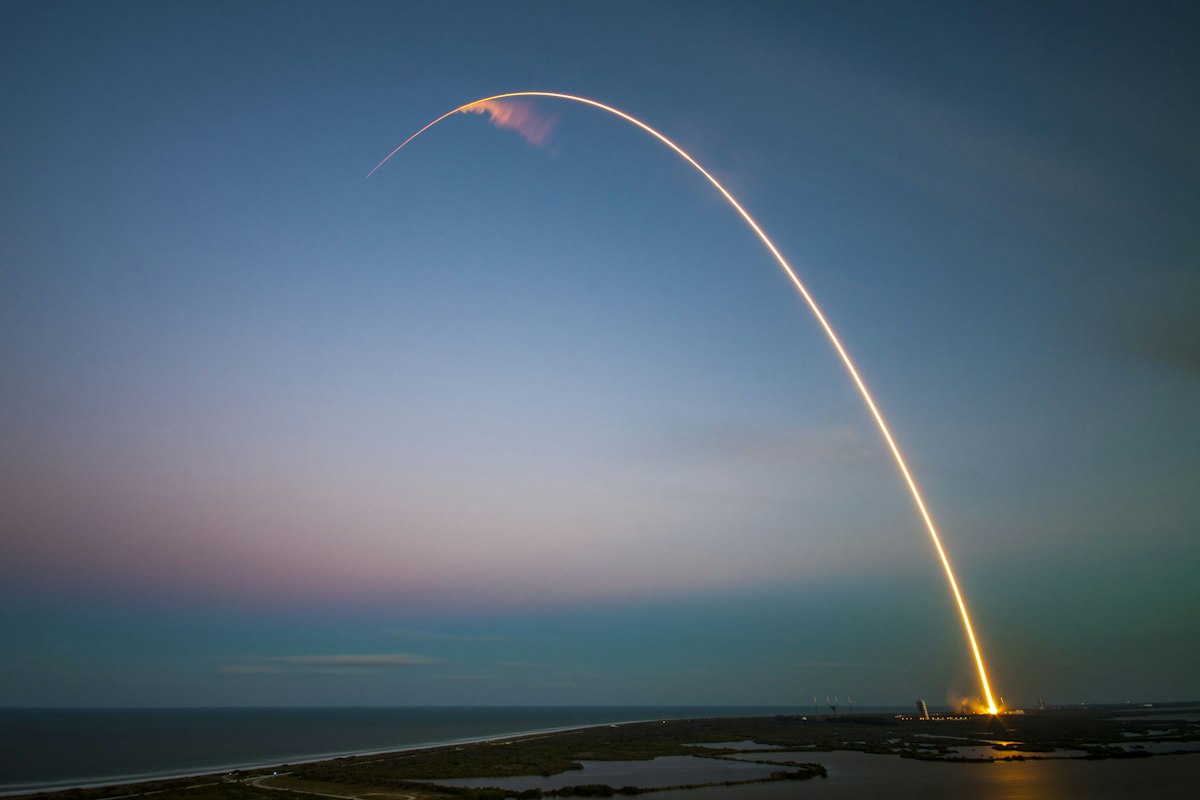
The night sky over Virginia's Eastern Shore turned orange and white, the thunderclap of ignition rattling windows for miles. At 12:32 p.m. ET on Thursday, a Northrop Grumman Antares rocket tore itself free from Wallops Island, carrying a Cygnus cargo freighter with a singular, groundbreaking piece of hardware in its belly. Its most critical payload, a machine that represents a fundamental shift in how humans operate in space, is now en route to the International Space Station. The orbiting lab is about to receive its first commercial-grade metal 3D printer.
From Plastic Toys to Sovereign Spare Parts
For years, the ISS has hosted 3D printers, but they've been the plastic-filament kind, useful for printing tools, closures, and test samples. What just launched is a different beast entirely. This is the European Space Agency's (ESA) Metal 3D Printer, developed by Airbus, and it doesn't just represent an upgrade in material. It represents a potential end to the agonizing wait for a replacement part when you're 250 miles up and the next cargo ship is months away.
Here is the part they didn't put in the official mission briefing: the sheer, ballast-tipping cost of spare parts. NASA and its partners must anticipate every single failure, every bolt, every pump housing, every custom wrench that might be needed for the station's lifetime. They must build them, test them, certify them, and then launch them on rockets costing tens of thousands of dollars per kilogram. It's a logistical nightmare of guesswork and capital, all to fill warehouses on Earth and in orbit with hardware that will, statistically, never be used.
"The ability to manufacture metal parts on-demand in space is a cornerstone for sustainable exploration beyond Low Earth Orbit," said ESA Director of Human and Robotic Exploration, Daniel Neuenschwander, in a statement published ahead of the launch. "This is not just about faster prototyping. It is about crew autonomy and safety."
How Do You Weld Metal in Zero-G?
So how does this thing actually work? Forget the desktop plastic printer model. This is a fully contained, sealed unit about the size of a large washing machine. Inside, the process is technically known as Wire-Based Additive Manufacturing. It's a cousin to welding, but with insane precision.
The printer uses a spool of stainless steel wire as its feedstock. This wire is fed into a print head, which is essentially a high-powered, focused energy source. In this case, it's likely a laser or an electron beam. That energy source melts the tip of the wire, depositing a tiny molten droplet onto a build plate. The print head moves, laying down a bead of metal, layer by minuscule layer, following a digital blueprint uploaded from Earth. The entire process happens in a sealed, inert gas environment, likely argon or nitrogen, to prevent oxidation and ensure the metal's structural integrity.
The core challenge in microgravity is controlling the molten metal. On Earth, gravity pulls the melt pool flat and helps with heat dissipation. In orbit, surface tension becomes the dominant force. The printer's software and hardware must meticulously control the energy input, wire feed rate, and head movement to prevent the molten steel from balling up into useless spheres. According to ESA's technical notes, the printer will initially produce four test specimens. These will be returned to Earth for exhaustive analysis, comparing their strength, microstructure, and performance to identical pieces printed on the ground.
The Strategic Stakes: Who Controls the Machine Shop?
But wait, it gets worse, or more interesting, depending on your perspective. This isn't just a nifty science experiment. The arrival of a functional metal 3D printer on the ISS lights a fuse under long-simmering strategic tensions in space policy. The real conflict isn't technical, it's geopolitical and economic.
For the United States, this technology is a linchpin in its Artemis moon program and ambitions for Mars. NASA's own "On-Demand Manufacturing of Metals" project has been running in parallel. The ability to print spare parts, habitat structures, or even tools from lunar regolith is considered essential for a sustained presence. If ESA and Airbus prove the technology's viability now, on the ISS, it gives Europe a formidable lead in the nascent market of in-space servicing, assembly, and manufacturing (ISAM).
"We are not only demonstrating a new way of manufacturing in space, we are also paving the way for a commercial business case," said Patrick Lécureuil, ESA's Technical Officer for the project, in a briefing. The subtext is clear: the first entities to master this don't just supply their own missions, they supply everyone else's.
Competitors, particularly in the burgeoning commercial space sector, are watching with a mix of enthusiasm and anxiety. A company like SpaceX, with its Starship architecture designed for Mars, would inherently benefit from such technology. But what if the certified, flight-proven hardware comes from Airbus? This introduces a new layer of supply chain sovereignty. The nation or company that controls the orbital machine shop holds significant leverage.
The Documented Risks: More Than Just a Printer Jam
The skeptics and safety engineers have legitimate concerns that extend far beyond a simple machine failure. Their worry list is extensive:
- Debris Generation: A metal 3D printing process, even contained, produces fumes and microscopic spatter. In the station's delicate microgravity environment, these particles could become invasive contaminants, fouling air filters, coating sensitive experiment optics, or even damaging other equipment.
- Power and Thermal Load: Melting metal requires immense, concentrated energy. The printer is a power hog and a significant heat source. On the ISS, power is a carefully balanced commodity, and waste heat must be actively radiated away. Running this printer requires scheduling and could strain resources needed for other experiments.
- Structural Integrity: A part printed in microgravity may look identical to one printed on Earth, but its internal crystalline structure could be different. Weak points, voids, or stress concentrations invisible to the eye could make a "spare part" a catastrophic point of failure under pressure or load.
- Cybersecurity: The digital blueprint file is the soul of the printed part. A corrupted or maliciously altered file sent from a ground station could result in a structurally flawed component being installed into a critical life support system. The verification and uplink process for these files will need fortress-level security.
The Orbital Test Bed: A Proving Ground for the Moon
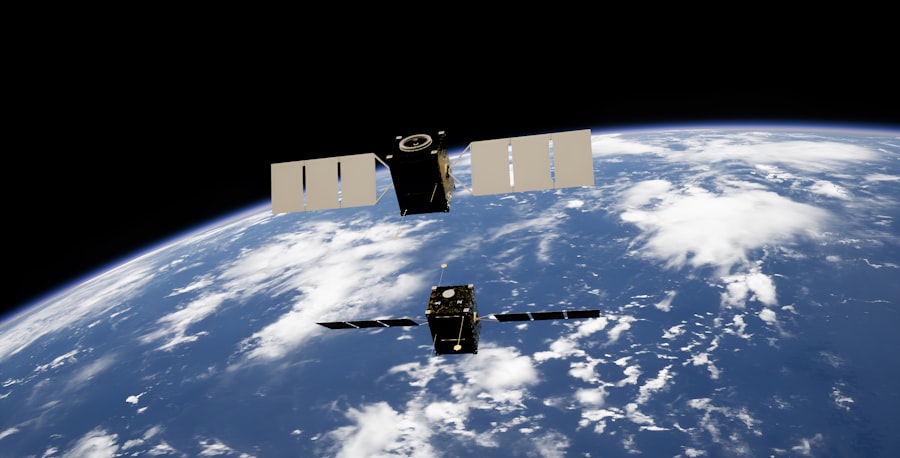
The ISS, in its twilight years, has found a new, critical role: the ultimate test bed for deep space tech. This metal printer experiment is a direct analog for future lunar operations. The station provides the two things a lunar base will have: sustained microgravity (though weaker on the Moon) and a human crew for maintenance, monitoring, and troubleshooting.
Let's break down the orbital math here. The ISS orbits at an inclination of 51.6 degrees, a path chosen largely for accessibility from Russian launch sites. This Cygnus spacecraft, NG-21, performed a precise series of engine burns to match that orbit and is now in a carefully choreographed rendezvous, culminating in capture by the station's robotic arm. The printer will be installed in the ESA's Columbus laboratory module, a specifically allocated "factory floor" in space.
The test prints planned are not random shapes. They are designed to stress the process:
- A simple tensile rod, to test pure strength.
- A part with fine internal channels, simulating a fluid cooling jacket.
- A component with complex overhangs, testing the printer's ability to handle geometries that would require supports on Earth.
- A part with a rotating or moving interface, like a gear or bearing race.
Each of these tests probes a different question critical for future use. Can you print a replacement pump body with coolant lines intact? Can you print a gear that doesn't shatter on first use?
The Human Factor: Astronauts as Machinists
This experiment also quietly tests a new operational concept: the astronaut as a machine shop foreman. While the process is highly automated, crew time is allocated for setup, monitoring, and removal of printed parts. They will be conducting visual inspections, potentially using handheld scanners, and packaging the finished products for return. This is a new skillset being woven into the fabric of space station operations, a subtle but important shift from pure science to in-situ industrial maintenance.
The Unspoken Deadline: A Race Against Station's End
There's an urgent, unspoken clock ticking on this and other advanced ISS experiments. The International Space Station is currently funded through 2030, with a planned deorbit in early 2031. That gives projects like this metal printer a brutally short window, about five years, to move from initial demonstration to operational reliability.
The data from these first test prints will take months to analyze back on Earth. Assuming success, the next phase would involve printing "certifiable" parts for actual use on the station, a process that requires a whole new level of paperwork and safety sign-offs from all international partners. Then, and only then, could it be used in a real contingency. The timeline is tight, squeezing the technology demonstration cycle that would normally take a decade on the ground into a handful of years in orbit.
This pressure is driving a new pragmatism. According to NASA's own project documentation, the focus is on "rapid iteration" and "failure tolerance." The attitude is shifting from the old space model of perfect-it-on-the-ground to a new model of test-it-quickly-in-the-real-environment. The ISS, in its final act, is becoming a beta-test site for the next era.
A Foundry in the Void
The successful docking of the Cygnus spacecraft this weekend will mark the start of a quiet revolution. There will be no flashy spacewalks, no dramatic unveiling. The metal 3D printer will be transferred, installed, and powered on with little fanfare. Its first test print will be a slow, meticulous affair, invisible to the public.
But in a control room in Munich or at Airbus's facility in Toulouse, engineers will be holding their breath, watching telemetry data stream down. They are not just watching a printer. They are watching the first sparks of an off-world industrial base. The implications ripple outward from a simple stainless steel test coupon: to the Moon, to Mars, and to a future where a broken part on a distant outpost doesn't mean a mission-ending crisis, but just a minor delay while the local factory whirs to life. The age of Earth-dependent spaceflight is beginning to crack, one molten droplet at a time.
Frequently Asked Questions
What is the metal 3D printer on the ISS?
The metal 3D printer on the ISS is a European Space Agency experiment developed by Airbus that uses stainless steel wire to print metal parts in microgravity.
Why is a metal 3D printer important for space?
A metal 3D printer allows astronauts to manufacture spare parts and tools on demand, reducing reliance on costly resupply missions from Earth.
When will the metal 3D printer start printing?
The metal 3D printer arrived at the ISS in early 2024 and is expected to begin its first test prints shortly after installation in the Columbus module.
Frequently Asked Questions
What is the significance of the metal 3D printer on the ISS?
It marks a shift towards in-space manufacturing, reducing reliance on Earth resupply missions.
How does the metal 3D printer work in microgravity?
It uses a wire-based additive manufacturing process adapted for zero gravity conditions.
What materials can the ISS metal 3D printer use?
It primarily uses stainless steel wire, with potential for other metals in the future.
When was the metal 3D printer installed on the ISS?
It was delivered and installed in early 2024 as part of ESA's manufacturing demonstration.
How will this technology impact future space missions?
It enables on-demand production of spare parts and tools, crucial for long-duration missions to the Moon and Mars.

Leo Sokolov reports on spaceflight and the companies and agencies racing to reach orbit and beyond. He is captivated by the engineering that makes leaving Earth possible.
💬 Comments (0)
No comments yet. Be the first!