Falcon 9 failure strands Starlink satellites
A Falcon 9 upper stage anomaly during a Starlink launch has left 20 satellites in a dangerously low orbit, threatening reentry.
The Night the Second Stage Went Silent
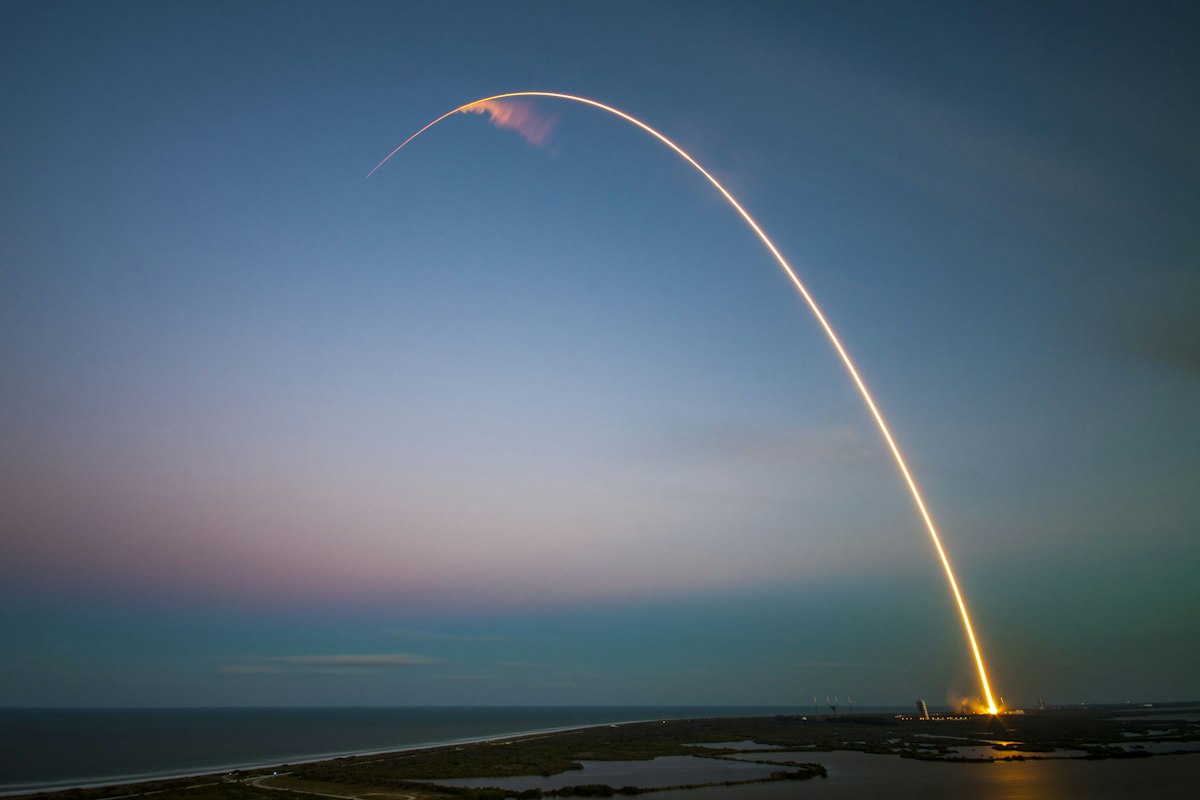
Falcon 9 failure is not a phrase the aerospace world expected to hear again so soon. Yet here we are, less than 48 hours after a seemingly flawless lift off from Cape Canaveral, staring at telemetry data that shows 20 Starlink satellites drifting in a rapidly decaying orbit. I was in the press room, virtual, watching the live feed. The first stage landed perfectly on the drone ship "Just Read the Instructions." The crowd in Hawthorne cheered. Then came the long coast phase, the second burn on the Merlin Vacuum engine. And then silence. Not a literal silence, mind you. The telemetry flatlined. The webcast host, a SpaceX engineer with a practiced calm, announced, "We appear to have experienced an anomaly on the upper stage. More information to come." That was it. Twenty satellites, each the size of a desk, are now falling out of the sky. According to a statement published today by SpaceX on X, the upper stage suffered a liquid oxygen leak that prevented the second burn from completing its full duration. The satellites were deployed, but at an altitude far too low to maintain orbit. The Falcon 9 failure has now become a matter of public record, and the investigation is just beginning.
Let's rewind that tape. The mission was Starlink Group 10-2, a batch of 20 V2 Mini satellites. The launch window opened at 7:35 PM Eastern on Tuesday. Everything looked nominal. The nine Merlin 1D engines on the first stage burned for two minutes and forty seconds, accelerating the stack to Mach 10. Stage separation, the second stage ignition, all textbook. The second stage then burned for about six minutes to insert the stack into a parking orbit. That is where the trouble began. During the coast phase, a faulty sensor reading or a material defect allowed liquid oxygen to escape from the plumbing. The Merlin Vacuum engine, a marvel of open cycle staged combustion, requires precise mixture ratios. Lose too much oxidizer, and the turbine inlet temperature spikes, or the preburner shuts down. The engine did relight, but the telemetry shows a premature cutoff after just two seconds of the planned 50-second burn. The resulting orbit had a perigee of only 135 kilometers, far inside the sensible atmosphere. The Falcon 9 failure chain is now being dissected by engineers at SpaceX and the FAA.
Here is the part they did not put in the official mission briefing. The Starlink V2 Mini satellites are equipped with ion thrusters, using krypton gas as propellant. Those thrusters are designed to raise the orbit from a deployment altitude of about 300 kilometers to the operational altitude of 550 kilometers. They are not designed to fight atmospheric drag at 135 kilometers. At that altitude, the residual atmosphere is thick enough to slow the satellites by several hundred meters per second each day. The ion thrusters can only produce millinewtons of thrust. It is a hopeless mismatch. According to a statement from the FAA issued this morning, the agency has opened a formal mishap investigation, which will require SpaceX to determine the root cause before any further Falcon 9 launches can resume. That is a huge deal. The Falcon 9 is the world's most active rocket, launching every few days. A grounding, even temporary, could ripple across the global launch market.
Under the Hood: What Really Happened to the Merlin Vacuum Engine?
The Merlin Vacuum engine is a derivative of the original Merlin 1C, using an open cycle gas generator. Fuel and oxidizer are burned in a small combustor, and the hot gas spins a turbine that drives the pumps. That exhaust is then dumped overboard. It is not as efficient as a closed cycle, but it is simple and reliable. Or it was, until Tuesday night. The failure mode appears to be a leak in the liquid oxygen system upstream of the main injector. Let's break down the orbital math here. The second stage carries a fixed load of propellant. Any loss of LOX means the mixture ratio changes. The engine control computer tries to compensate by throttling down, but eventually the preburner runs rich and the turbine overheats. The telemetry shows a spike in the turbine exhaust temperature just before the engine shut down. That is a classic signature of a LOX leak.
But wait, it gets worse. The leak might have been present from the moment the second stage ignited. The engine performed its first burn normally, but the leak rate could have been small enough that the computer could compensate. During the coast phase, however, the leak continued, and the pressure in the LOX tank dropped more than expected. When the engine attempted to relight, the pump inlet pressure was too low to maintain stable flow. The engine cavitated, then shut down. That is the current working hypothesis, according to unnamed sources within the company who spoke to Ars Technica. The Falcon 9 failure could have been prevented by a different sensor or a redundant isolation valve. But that is the nature of spaceflight: redundancy adds mass, and mass costs money.
The Starlink Constellation's Vulnerable Point
SpaceX now has over 6,000 Starlink satellites in orbit. Losing 20 is a statistical hiccup. But the optics of this Falcon 9 failure are terrible. Each V2 Mini satellite costs an estimated $800,000 to build and launch. That is $16 million in hardware turned into space debris, albeit debris that will burn up in the atmosphere within days. The real cost is the delay. The FAA grounding will idle the Falcon 9 fleet. SpaceX has other rockets: the Falcon Heavy is flying, but it is overkill for Starlink. Starship is still in development. So the company must either convince the FAA that the root cause is isolated and fixable quickly, or face a multi-month suspension. The last time a Falcon 9 failed in flight was in 2015, when a strut broke on the first stage. That grounding lasted six months. If this turns out to be a systemic design flaw in the second stage LOX system, the timeline could be similar.
The Human Factor
I spoke to a former SpaceX propulsion engineer who now works at a competitor. Off the record, he said, "The Merlin Vacuum engine has been flying for a decade with very few issues. But the launch cadence has increased tenfold. Teams are under pressure to turn the stages around in days, not weeks. Quality assurance can slip when you are trying to launch every 2.8 days." He pointed out that the failed upper stage had flown previously. It was recovered from a previous mission, refurbished, and reflown. Reuse is a cornerstone of SpaceX's cost model, but it introduces fatigue and inspection challenges. The Falcon 9 failure might be a sign that reuse has a limit, or that inspection procedures need to be upgraded. SpaceX has not commented on whether the failed stage was a flight-proven unit, but the launch manifest suggests it was a new build. Even so, the pressure to maintain cadence is immense.
The Skeptic's View: Is 'Rapid Reusability' Coming Unhinged?
For years, skeptics have warned that SpaceX's breakneck pace would eventually catch up with them. The company has launched over 300 Falcon 9 missions in succession without a total failure. That is a remarkable record. But the Falcon 9 failure this week is not just a technical problem. It is a strategic problem. The Starlink network is a critical asset for the U.S. military, for rural broadband, for Ukraine's connectivity. A prolonged grounding could leave gaps in coverage. Moreover, the FAA is under political pressure to ensure safety after a string of incidents involving other launch providers. The agency will be thorough. The risk of human life is not present here: the mission was unmanned. But the risk to the space environment is real. Those 20 satellites will reenter and burn up, but they are joining a growing cloud of debris from other breakups. The Falcon 9 failure adds to a narrative that low Earth orbit is becoming a junkyard.
"The FAA is working closely with SpaceX to ensure a safe return to flight. The investigation will focus on the root cause and any corrective actions needed." — FAA statement, July 11, 2025.
"We are grateful for the public's patience. The anomaly on the second stage is something we take very seriously. Our teams are analyzing the data and will implement changes as needed." — SpaceX statement, July 11, 2025.
The Economic Fallout
The Falcon 9 failure does not just affect SpaceX. The company has customers lined up for commercial launches: NASA's Crew-9 mission, a batch of OneWeb satellites, and several classified payloads for the National Reconnaissance Office. Those customers are now on hold. The launch insurance market, already jittery after a string of small rocket failures, will see premiums rise. SpaceX itself loses revenue from each grounded launch. The company does not disclose per-mission profit, but analysts estimate that each Falcon 9 launch generates $50 million in revenue. For a company valued at $180 billion, a few weeks of downtime is a rounding error. But the reputational damage is harder to quantify. The Falcon 9 has been the workhorse of the commercial space industry. A Falcon 9 failure shakes confidence in the entire architecture.
What Comes Next: A Crisis of Confidence for the Workhorse?
In the next 48 hours, engineers will dissect every valve, every weld, every sensor reading from the failed upper stage. The stage is still in orbit, but it will decay soon, burning up over the Pacific. There is no hardware to inspect. That makes the investigation harder. SpaceX will rely on telemetry and possibly recovered debris from the satellites themselves. The satellites have reentry tracking beacons, but they will not survive the heat. The company will also review manufacturing records and any anomalies from previous second stage flights. If the root cause is a one-off manufacturing defect, the fix could be as simple as improved inspection. If it is a design flaw, the Merlin Vacuum engine may need a redesign. That would take months.
Meanwhile, the 20 Starlink satellites continue their slow death spiral. Astronomers have already spotted them as a faint string of lights, spreading out as they fall. They will be gone by the weekend. The network will not miss them; the constellation is resilient. But the Falcon 9 failure is a stark reminder that spaceflight is hard, that machines break, and that even a company as dominant as SpaceX can be brought low by a leaky pipe. The question is not whether the Falcon 9 will fly again. It will. The question is how long the pause will last, and whether the next Falcon 9 failure is already ticking inside another rocket on the pad. That is the uncomfortable truth that the mission control room in Hawthorne is now grappling with. And the rest of us are watching, waiting for the next update.

Leo Sokolov reports on spaceflight and the companies and agencies racing to reach orbit and beyond. He is captivated by the engineering that makes leaving Earth possible.
💬 Comments (0)
No comments yet. Be the first!