Europe will go it alone on its Venus mission
Europe will go it alone on its Venus mission after NASA determined it was unlikely to provide a US-built radar instrument for the Envision spacecraft.
Europe will go it alone on its Venus mission after NASA concluded it is unlikely to deliver a radar instrument promised for the spacecraft, pushing the European Space Agency to build the key sensor itself.
The orbiter is called Envision. It will map the Venusian surface at 10 times higher resolution than the last radar mission sent to Venus by NASA in the 1990s. She described the pivot during a presentation at the Europlanet Science Congress.
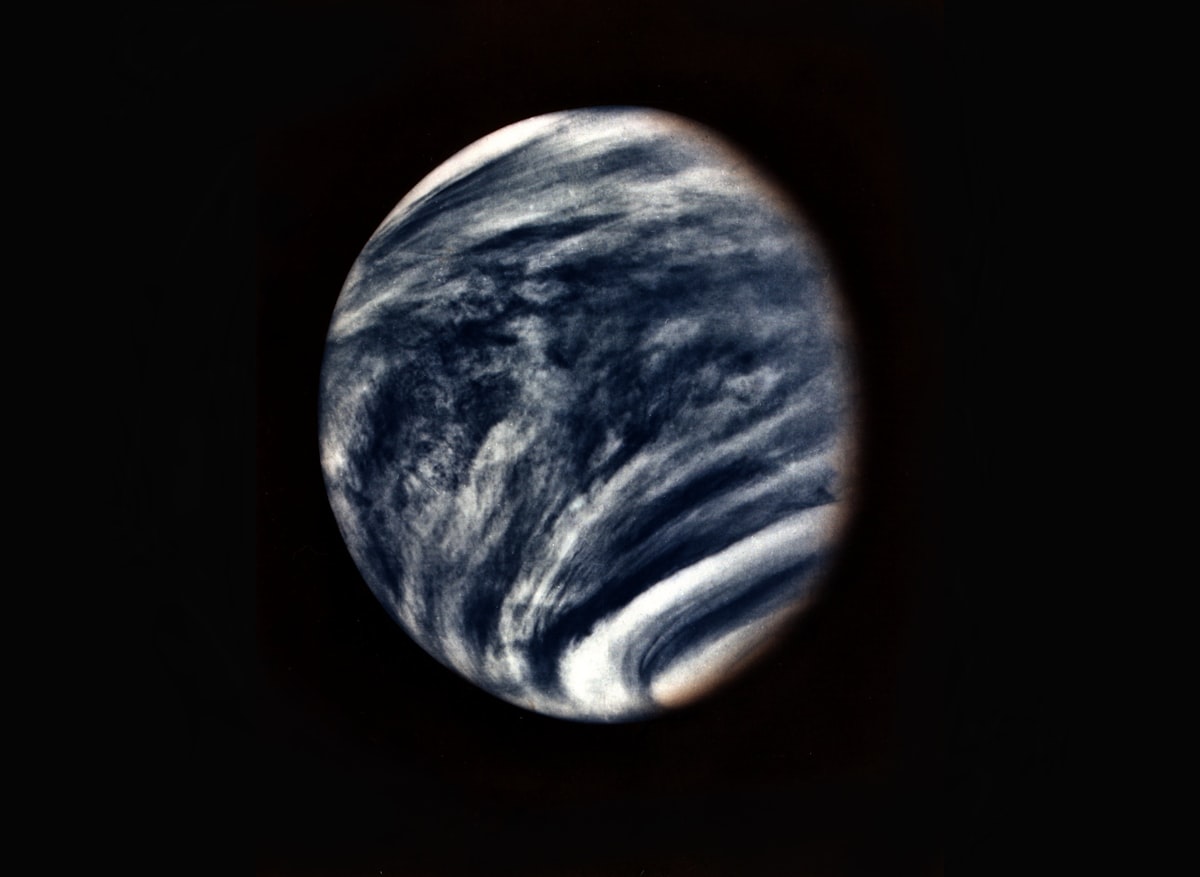
Venus doesn't make this easy. It's wrapped in thick clouds of sulfuric acid, and those clouds hide the surface from optical cameras in orbit, which means we can't just look down and see what's there. Radar cuts through. It's the most effective way to punch through those clouds and reveal the terrain below, the kind of tool that lets scientists map what they otherwise couldn't see at all. And scientists want Envision to hunt for signs of active volcanism.
A Partnership That Slipped Away
In 2024, NASA and ESA signed a memorandum of understanding. It laid out their roles. NASA agreed to supply a US-made synthetic aperture radar instrument, Envision's primary mapping tool, plus tracking and communications support through the Deep Space Network. In return, ESA would put US researchers on the mission's science team. Europe would build the spacecraft. It would build the rest of its instruments too. And it would provide a launch on an Ariane 6 rocket.
Then the money got tight. NASA's science budget is under pressure from the Trump administration, which proposed cutting the agency's science funding nearly in half in fiscal years 2026 and 2027. Congress rejected most of those cuts for 2026 and passed a budget with $2.54 billion for NASA's planetary science division. That is far above the White House request, but still about $220 million shy of the previous year's funding.
The shortfall saved some missions and squeezed others. NASA's own Venus mission, DAVINCI, which is designed to drop an entry probe into the planet's crushing atmosphere, escaped the chopping block. But agency managers now face hard choices. The primary targets for cuts are funding for operating missions, especially those well past their original design lives, and support for partnerships on international missions.
Europe Builds Its Own Radar
NASA's role is in doubt. So ESA officials issued contracts to begin technology development on a European radar payload for Envision, a decision that keeps the mission's radar ambitions alive even as the American contribution remains uncertain. Industrial teams in the United Kingdom and Italy are now studying radar designs under contract with ESA.

NASA had spent more than $50 million on its Envision contributions as of 2025, when the Trump administration first proposed canceling the mission.
"We don't know what the final design will be, but we have the same requirements, so we're expecting that we can do exactly the same science. We'll have the same modes, but in detail, of course, there can be differences."
That is Straume-Lindner explaining the tradeoff. ESA is still waiting. It's waiting for formal word from NASA on the status of its contribution, and while the agency has made clear that conversations with ESA regarding Envision are ongoing, according to a NASA spokesperson, there's still no final answer on what happens next.
Time is the enemy. Envision was supposed to launch in 2031, but ESA has already pushed that back by one year to 2032 so European teams can get more time to deliver the radar, and Straume-Lindner said the agency is finalizing its agreement with NASA, though the picture looks grim. And it's grim.
"At the moment, we are finalizing our agreement with NASA, but it is looking like they are not able to provide the radar. So that is why we are going full steam ahead with the European solution."
The Wider Damage to Science
Envision is not the only casualty. NASA's contributions to three European-led science missions are among the most prominent cuts. Two of them are large new space-based observatories: LISA, which would be the first space mission to measure gravitational waves from events like black hole mergers, and New Athena, set to be the largest X-ray telescope ever built and a successor to NASA's Chandra X-ray Observatory, still operational after launching in 1999. Both were on track for launches in the late 2030s before NASA's role came into question.
NASA was to provide lasers and ultra-stable telescopes for LISA's three formation-flying spacecraft. For New Athena, the US agency was on the hook for X-ray sensor hardware, a cryocooler, and a vibration isolation system. That's three roles. ESA is now assessing how to fill those roles itself, and it's doing so because the US agency's contributions to both missions can't be counted on the way they once were, which means the European Space Agency has to figure out what it can build in-house.
There is more. NASA's VERITAS radar orbiter, a complementary mission to Envision, was supposed to launch in the late 2020s. Funding woes at NASA and the Jet Propulsion Laboratory forced a delay until no earlier than 2031, and its development remains in limbo. DAVINCI continues working toward a launch in the early 2030s. The Venus Science Coordination group, established jointly by NASA and ESA, has been suspended due to changes in the US budgetary situation.
The Trump administration tried to kill NASA's role in the Rosalind Franklin rover mission. It's a Mars mission. Launch is set for 2028. NASA has a long-standing agreement to pay for the launch of the European-built rover, and that arrangement has shaped the mission's planning for years. But Congress restored funding last year. That let the agency sign a contract with SpaceX to launch Rosalind Franklin in 2028.
Europe's Options Beyond NASA
ESA is not standing still. Carole Mundell, the agency's director of science, said its 23 member states committed unprecedented funding for ESA science at a meeting of government ministers last year. Member states agreed to increase the science budget by 3.5 percent per year through 2028, plus inflation. That still leaves ESA's science budget at a fraction of NASA's, averaging about 750 million euros, or less than $900 million, each year. Enough to start work on a European radar, but not enough to erase the gap.
Mundell struck a diplomatic note. ESA is a very reliable partner. And we always deliver on our commitments and our promises, and we appreciate the difficulty that they're in right now, she said, acknowledging the partner that is stepping back while making clear that we've never failed to honor what we've pledged to them.
Europe has other places to look for cooperation. ESA launched its first 50-50 joint science mission with China earlier this year, a partnership that shows how both sides can build and fly hardware together, and it's a sign of what they're willing to try. The SMILE spacecraft, built in China and launched by Europe's Vega rocket, is studying the connection between the solar wind and Earth. And the first ESA instrument to land on the Moon arrived on the lunar surface in 2024 aboard China's Chang'e 6 mission. Mundell said China has invited ESA to join more Chinese-led science missions. "That is something that we're exploring," she said.
Still, NASA remains ESA's most enduring partner. That's especially true in human spaceflight, where the two cooperate closely on the International Space Station and on the Orion spacecraft used for Artemis missions to the Moon. So the Venus split is a strange kind of breakup. Europe will go it alone on its Venus mission, and it's not by choice, because the radar it counted on is no longer coming.
- Envision: European orbiter to map Venus at 10 times the resolution of NASA's 1990s radar mission.
- Radar: The primary mapping instrument, originally to be built at NASA's Jet Propulsion Laboratory.
- New timeline: Launch delayed one year to 2032.
- European replacements: Teams in the United Kingdom and Italy studying radar designs under ESA contract.
- NASA spending: More than $50 million on Envision contributions as of 2025.
What to Watch
ESA still awaits formal notification from NASA about the radar. Until that arrives, European engineers are designing to the same requirements and promising the same science, and they're doing so because there's nothing else they can do while they wait for word that hasn't come. But the launch window in the early 2030s leaves little room for further slips. It's tight. We've got no slack.
Frequently Asked Questions
What is the Envision mission and what resolution will its radar achieve?
Envision is a European Space Agency orbiter that will map the Venusian surface. According to the article, it will map the surface at 10 times higher resolution than the last radar mission sent to Venus by NASA in the 1990s.
Why did NASA's planned contribution to Envision fall through, and what caused the budget shortfall?
NASA concluded it is unlikely to deliver the radar instrument promised for the spacecraft because the agency's science budget is under pressure from the Trump administration, which proposed cutting science funding nearly in half in fiscal years 2026 and 2027. Congress rejected most of those cuts for 2026, but the resulting budget was still about $220 million shy of the previous year's funding, squeezing partnerships on international missions.
How is Europe responding to NASA's likely withdrawal from the radar payload?
ESA officials issued contracts to begin technology development on a European radar payload, keeping the mission's radar ambitions alive. Industrial teams in the United Kingdom and Italy are now studying radar designs under contract with ESA, aiming for a radar with similar capabilities to the NASA-funded instrument that was to be built at the Jet Propulsion Laboratory in California.
When is Envision now scheduled to launch, and why did the timeline change?
Envision was supposed to launch in 2031, but ESA has already pushed that back by one year to 2032. The delay gives European teams more time to deliver the radar, and the article notes that the launch window in the early 2030s leaves little room for further slips.
What other NASA contributions to European-led science missions have been affected by the budget situation?
NASA's contributions to three European-led science missions are among the most prominent cuts, including LISA, which would measure gravitational waves, and New Athena, set to be the largest X-ray telescope ever built. NASA was to provide lasers and ultra-stable telescopes for LISA and X-ray sensor hardware, a cryocooler, and a vibration isolation system for New Athena, and ESA is now assessing how to fill those roles itself.

Astrid Berg covers space and astronomy, from missions and launches to the science of the universe. She follows the ongoing effort to explore beyond our planet.
💬 Comments (0)
No comments yet. Be the first!