CosmoCube Satellite Will Listen to Early Universe
CosmoCube satellite will listen to the early universe from the far side of the Moon, aiming to detect signals from the Cosmic Dark Ages.
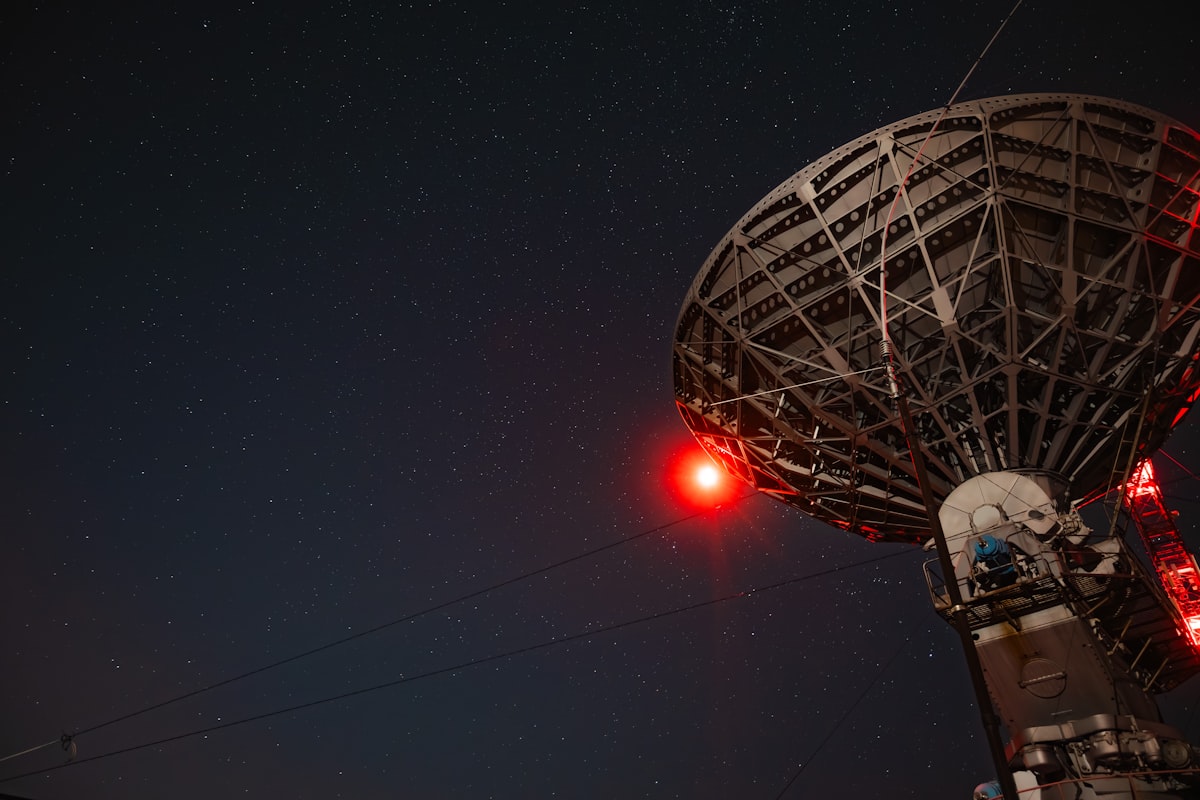
The CosmoCube satellite is heading to the far side of the Moon. It's chasing the universe's oldest radio whispers. That's the bold plan from a team at the University of Cambridge, and it could finally open a window into the "Cosmic Dark Ages," the murky period that has frustrated astronomers for decades because they've never been able to see through its dense fog of neutral hydrogen. But now, with this mission, they might just catch a glimpse. So don't count it out yet.
Here is the core problem. Right after the Big Bang, the universe was filled with neutral hydrogen, and that hydrogen emitted a specific radio frequency, the famous 21-centimeter line. Catching that signal today would let scientists map the universe before the first stars ever switched on. But we've never been able to do it. Earth's ionosphere blocks those frequencies, and our own planet is a noisy mess of radio towers, satellites, and telecommunications chatter, so the signal is so faint that any interference swamps it completely. It's maddening.
A Quiet Place in the Solar System
The Moon's far side is the one spot in the neighborhood that offers total radio silence. It's permanently shielded from Earth's transmissions by the lunar body itself, and that natural shielding is exactly what the CosmoCube satellite needs to do its job without interference. So as the probe orbits the Moon, it will slip behind the far side and get roughly 40 minutes of pristine listening time on each two-hour lap, a quiet window that repeats with every revolution, giving the instrument a dependable rhythm of observation. That's the sweet spot.
That is not much time. But over a two-year primary mission, those minutes add up to about 1,000 hours of data on what many cosmologists call the final frontier of astronomy.
Listening Below the Noise
The satellite will operate at extremely low frequencies, between 10 and 50 MHz. That range is invisible to ground-based telescopes. It's a dead zone for most instruments. But it's also where the 21-centimeter signal from the early universe should be hiding, redshifted by 13.5 billion years of cosmic expansion, and that makes it the only window we've got to see that faint, ancient whisper. Don't miss it. We can't afford to.
The science goal is straightforward but profound. Researchers want to see the universe transition from a dark, nearly empty place into one filled with bright stars and galaxies, and they want to understand how dark matter pulled hydrogen into the first structures. Professor Eloy de Lera Acedo from Cambridge’s Cavendish Laboratory leads the study. He told the team’s collaborators that this emission from hydrogen, produced after the Big Bang but before the first stars, could reveal how dark matter worked in the early universe to gather hydrogen into the first stars and galaxies. But it's a tough task. They can't see it directly.
That's a big ask for a small satellite. But CosmoCube is built to be compact and low-cost, and that deliberate choice keeps the entire mission feasible. No other place offers the shielding needed to detect such a faint signal while looking at the whole of space, as De Lera Acedo noted, and the far side of the Moon solves multiple problems at once. It opens a clear window to the very early universe. He also stressed that the mission's size is unique. They're probing the earliest, deepest parts of the dark ages that others don't reach, yet they do it from a compact, affordable platform.
Clever Engineering for a Hostile Place
Operating around the Moon is brutal. Extreme temperature swings, no atmosphere, and a radiation environment that punishes electronics all conspire against you, and that's before you even factor in the need for sensitive measurements. The hardware has to survive all of that. But it can't do it without some clever design work.
Dr. Will Grainger from STFC RAL Space, a co-author on the project, explained that CosmoCube is aiming to do ambitious science from a very small satellite in a challenging environment. He said that calls for clever design techniques. The team has worked with project partners to develop representative models of the satellite and its payload. Those models have been tested in facilities to ensure the thermal performance allows the payload to operate correctly under the different temperature conditions it will face in orbit around the Moon.
The payload is a miniature radiometer built around RF-Systems-on-Chip, or RFSoCs. It's a relatively new approach. These chips combine analog and digital technology in the latest possible configuration, while Surrey Space Technology Limited (SSTL) is building the space platform, called the SSTL-21, with funding from the UK Space Agency. The research team hopes to launch within the next five years. Instrument development is already well along, with working lab prototypes and environmental testing underway. But it's not done yet. Partners include Portsmouth University and STFC RAL Space, so they're pushing hard to keep every subsystem on schedule before the flight model takes shape, and that's a tall order given the tight timeline they're working against.
One Big Problem: The Quiet Won’t Last
There's a catch. The far side of the Moon is radio-quiet today, but that will not be true for long, and multiple space agencies are planning to build bases there. NASA, China, Russia, and others all see the far side as prime real estate for research. But those bases will bring their own radio noise.
That puts a clock on the science. The CosmoCube satellite needs to get there before the silence is broken.
But the team isn't waiting around. They recently took part in the ESA mini-Fast missions Call for Ideas, which seeks medium-size, fast, and cost-effective mission concepts, and that's a notable step forward. The project has broader ambitions. De Lera Acedo framed it as a potential UK success story, and he's not shy about the scale of the claim. The hardware, the software, the implementation, and the technology are all being developed in the UK, which gives the effort a distinctly national character. He said it could help answer one of the most profound questions in the universe. So there it is.
There is no other place where you can get the sort of shielding you need to detect such a faint signal, while at the same time looking at the whole of space.
That quote from de Lera Acedo sums up the mission’s appeal. It's the only location. The far side of the Moon isn't just a good spot, it's the sole place where the quiet cosmic signal can be heard, and the CosmoCube satellite is racing to use it before humanity's expansion into space ruins the view for good. But time is running out.
The clock is ticking. The silence is precious. And a small satellite from Cambridge is racing to hear what the universe sounded like before there was anything to see.
Frequently Asked Questions
What is the primary scientific goal of the CosmoCube satellite mission?
The primary scientific goal is to detect the 21-centimeter radio signal from neutral hydrogen emitted after the Big Bang but before the first stars, which would allow scientists to map the universe during the Cosmic Dark Ages. This signal has been redshifted by 13.5 billion years of cosmic expansion and is expected to be in the 10-50 MHz range, which is invisible to ground-based telescopes.
Why does the CosmoCube satellite need to operate from the far side of the Moon?
The far side of the Moon is the only place in the solar system that offers total radio silence, as it is permanently shielded from Earth's transmissions by the lunar body. This shielding is necessary because Earth's ionosphere blocks the relevant frequencies, and our planet's radio towers, satellites, and telecommunications chatter would completely swamp the faint cosmic signal.
How does the CosmoCube satellite manage to collect enough observation time despite its orbit?
The satellite orbits the Moon, and on each two-hour lap, it slips behind the far side for about 40 minutes of pristine listening time. Over a two-year primary mission, these minutes add up to about 1,000 hours of data, providing a reliable rhythm of observation that compensates for the short individual windows.
Who is leading the CosmoCube satellite project, and what is their affiliation?
Professor Eloy de Lera Acedo from the University of Cambridge's Cavendish Laboratory leads the study. He has emphasized that the far side of the Moon is the only location that offers the necessary shielding to detect such a faint signal while looking at the whole of space, and he sees the mission as a potential UK success story.
What urgent concern does the article raise about the future of the far side of the Moon?
The article warns that the far side of the Moon is currently radio-quiet, but that will not last because multiple space agencies, including NASA, China, and Russia, plan to build bases there, which will bring their own radio noise. This creates a time pressure for the CosmoCube satellite to launch and collect data before the pristine environment is compromised.

Astrid Berg covers space and astronomy, from missions and launches to the science of the universe. She follows the ongoing effort to explore beyond our planet.
💬 Comments (0)
No comments yet. Be the first!