China Postpones Chang'e-7 Mission
China's Chang'e-7 lunar mission delayed from its late-August launch window, the agency announced with a brief press release.

China Postpones Chang’e-7 Mission Hours Before Lunar Launch
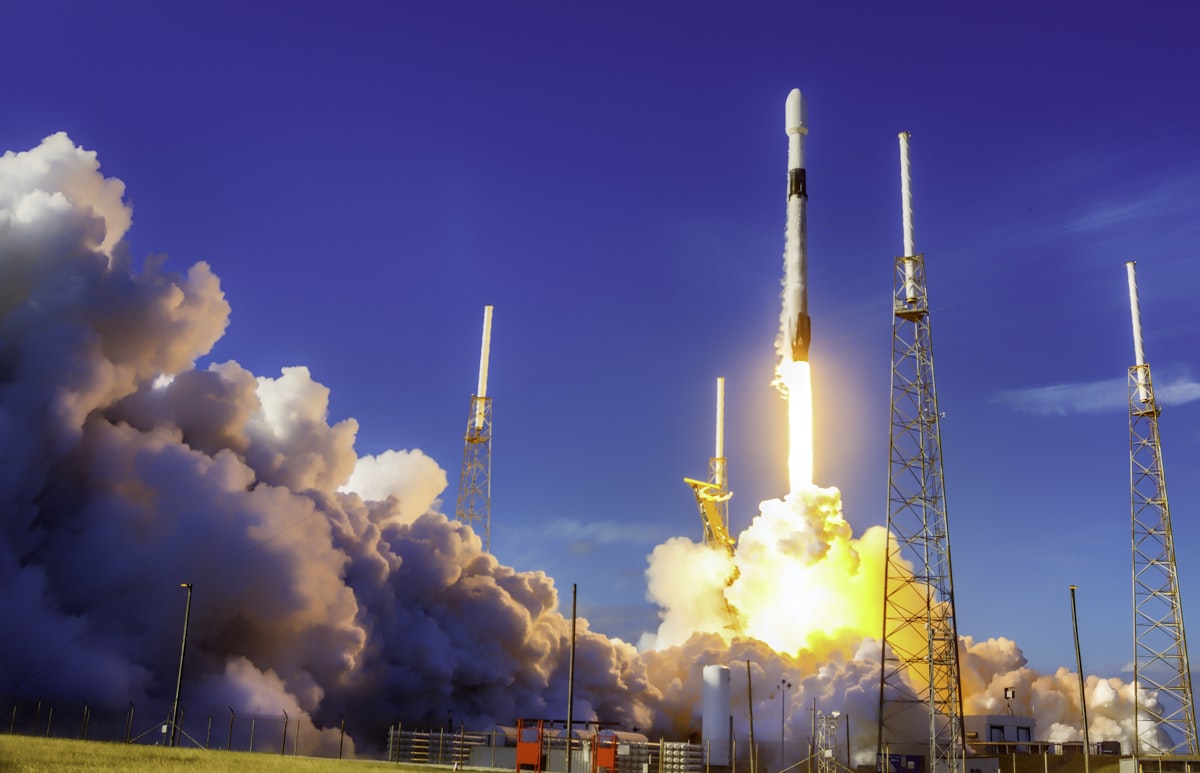
China has officially delayed its Chang’e-7 mission. That pulls the robotic lunar explorer from a late-August launch window just as it sat fueled and ready on the pad, with no room for error at the final countdown. The China National Space Administration and the China Manned Space Engineering Office issued a terse statement confirming the postponement, though they offered no technical explanation for that last-minute call. So the Long March 5 rocket, already staged at the Wenchang Space Launch Site on Hainan Island, will now wait for a new opportunity to carry the payload toward the Moon’s south pole. It's a quiet hold.
Space is unforgiving. It's a lesson we're watching unfold again, though without the fiery spectacle of past launch failures, this time the stakes are measured in silence and scheduling. The original window opened on August 24th, a date chosen for a delicate alignment between Earth's launch azimuth and seasonal sunlight conditions at the lunar south pole. Miss it. So you wait for the planets to realign, a drawn-out process that can't be rushed and could easily stretch well into next year, leaving everyone grounded in a cold, patient limbo. And that's the real cost.
A Mission Built on Prior Success
Chang’e-7 carries enormous weight on its shoulders. And that's not just about payload mass, either,its predecessors set a brutal standard that's hard to overstate. The program has logged everything from a simple orbiter to the first-ever robotic sample return from the far side of the Moon, and those were called “absolute mission successes” by the space agencies themselves, so the bar couldn't be higher.
The mission architecture itself compounds the challenge. Chang'e-7 isn't a single spacecraft but a constellation of systems working in concert. An orbiter will map the lunar surface at high resolution, capturing topographic data that scientists have never had access to before. Then there's the lander and rover duo, designed to touch down in the treacherous terrain near Shackleton crater, a region of permanent shadows and extreme temperature swings. So consider the “hopper,” a novel vehicle built to make powered leaps across crater floors and into chasms, sniffing for water ice and other volatiles hidden beneath the surface. That's a lot of moving parts. It's a heavy load. But they're all built to work together, and without every single piece functioning, the whole thing can't succeed.
Each of those elements brings its own engineering headaches. That's the real problem here. So the culprit behind this delay could easily be any one of them, a long-standing issue that's been quietly festering, and we can't just pick a single suspect without digging deeper into the whole mess. It's a puzzle.
“Prudence, reliability, and absolute mission success” were cited as the guiding principles in the decision to stand down.
That phrasing suggests officials understood the stakes were existential for the program. But it also hints at something more personal, something quieter and harder to quantify, a shadow that falls across the cold calculus of institutional risk when the people making the decisions are the same ones who will live with the results. Careers hang in the balance. A failure on their watch wouldn't just set science back; it would ripple through performance reviews, funding renewals, and the whispered judgments of peers for years to come. So they knew it wasn't just the mission at risk. It was them.
The Domino Effect on Lunar Ambitions
This delay ripples far beyond one launch date. Chang’e-7 is a direct precursor to the International Lunar Research Station, China’s ambitious plan to build a permanent robotic and human outpost on the Moon, and that makes every slip in its schedule a direct hit on the timeline for that larger project. One of the mission’s primary jobs was to hunt for resources that could sustain that base, particularly water ice that might be processed into propellant, drinking water, and breathable oxygen. Engineers need ground-truth data on how accessible that ice actually is. They can't design the mining infrastructure without it. So a delay in gathering that data means a delay in making those design decisions, and we've seen how those knock-on effects compound across a program this size. It's a chain reaction, pure and simple.
There's another parallel roadmap pushing toward a crewed Chinese lunar landing by 2030. But it's still early. The Long March 10 rocket and the Mengzhou crew vehicle are both in ground testing, and their final designs hinge entirely on data from Chang’e-7, specifically the thermal profiles and regolith dynamics at the south pole that will define how human-rated systems cope with that harsh environment. Without that information, engineers can't fly blind on these parameters. They're making educated guesses, and that's a risk. So the clock is ticking, and the data can't come soon enough.
The delay is a blow to those longer-term plans. But consider the alternative. It's a costly pause, sure, and nobody's happy about losing that precious time, yet a failed mission would have been a far more devastating setback, one that could have thrown the entire lunar program into question, so this postponement is an attempt to avoid that outcome. We can't afford that risk.
What Happens Next
Officials haven't yet announced a new launch date. So the next viable window will likely open sometime next year at the earliest, though no firm timeline has been given, leaving teams to wait without a concrete schedule. That gives scientists additional months to refine their plans and incorporate lessons from Chang’e-6’s returned samples, which have already begun yielding results. It's a waiting game. But those extra months are precious, and they can't be rushed.
For now, the mission sits in limbo, waiting for the technical issue to be resolved and the celestial mechanics to align once more. The delay is disappointing, no question. But in the unforgiving calculus of space exploration, a postponed mission is still a mission that can fly. A failed one is not.
Hopefully this is just a minor hiccup. But it's worth asking whether it signals something deeper. The Chinese lunar program has been nothing short of stellar so far, or perhaps more accurately, lunar, and one delay doesn't erase that record. We'll wait a little longer for Chang'e-7. So what does that mean? It just means patience is the price for seeing what Chang'e-7 finds in the shadows of the Moon's south pole, where the light never quite reaches and the mysteries are buried in ice.
Frequently Asked Questions
What is the Chang'e-7 mission and why was it postponed?
Chang'e-7 is a robotic lunar explorer mission that was postponed hours before its launch. The postponement was announced by the China National Space Administration and the China Manned Space Engineering Office, but no technical explanation was provided for the last-minute delay.
When was the original launch window for Chang'e-7, and why is timing critical?
The original launch window opened on August 24th, chosen for a delicate alignment between Earth's launch azimuth and seasonal sunlight conditions at the lunar south pole. Missing this window means waiting for a similar alignment, which could stretch well into next year.
What are the components of the Chang'e-7 mission and what will they do?
Chang'e-7 is a constellation of systems: an orbiter will map the lunar surface at high resolution, a lander and rover duo will touch down near Shackleton crater, and a 'hopper' vehicle will make powered leaps to sniff for water ice and volatiles beneath the surface. All these elements must work together for the mission to succeed.
How does the Chang'e-7 delay affect China's lunar ambitions?
Chang'e-7 is a direct precursor to the International Lunar Research Station, and its primary job is to hunt for resources like water ice that could sustain that base. The delay in gathering ground-truth data means delays in design decisions for mining infrastructure and also affects the parallel crewed lunar landing by 2030, as thermal profiles and regolith dynamics from Chang'e-7 are needed for human-rated systems.
What is the current status of Chang'e-7 and what are the next steps?
Officials haven't announced a new launch date, but the next viable window will likely open sometime next year. The extra months will allow scientists to refine plans and incorporate lessons from Chang'e-6's returned samples, but the mission remains in limbo until the technical issue is resolved and celestial mechanics align.

Arthur Vance writes about astronomy and space exploration, covering the discoveries that expand our view of the cosmos. He enjoys connecting distant science to the questions we ask here on Earth.
💬 Comments (0)
No comments yet. Be the first!