Canada Rocket Company Gets Serious About Launch Industry
As US relations fray, Canada Rocket Company and two others get launch awards, and Canada Rocket Company plans the R-2 medium-lift rocket.
Canada Rocket Company launch industry ambitions are no longer a quiet footnote in the global space race. The Toronto-based firm has decided to skip the small-rocket phase entirely and aim straight for a medium-lift vehicle, a move that signals just how seriously Canada is now treating sovereign access to space.
For years, the Canadian launch sector barely registered. A handful of companies tinkered with small rockets. Few outside a tight circle of space enthusiasts paid attention. Then the political ground shifted.
The Trump Administration began threatening and imposing tariffs. Talk surfaced of making Canada the 51st state. Canadians got angry. That anger rippled into policy, and policy rippled into procurement.
Ottawa started reassessing areas where it had long relied on the US government and American companies. Sovereign access to space landed on that list. This spring, the government announced the first awards under a program called Launch the North, backing three companies: NordSpace, Reaction Dynamics, and Canada Rocket Company. The initial money was modest, $8.33 million CAD, but the signal mattered more than the sum. Larger awards are coming.
Why Skip the Small Stuff
Canada Rocket Company looked at the light-lift path. They walked away. Hugh Kolias, the company's chief executive, explained the reasoning in blunt terms, and what he laid out was a decision that the company reached after weighing the options and deciding that this particular road wasn't one they wanted to travel. So the company spoke with roughly 150 engineers, from the director of Starship engineering down to entry-level staff. That's a lot of voices.
"The advice we got from having spoken with about 150 engineers, from the director of Starship engineering all the way down to some entry-level folks, is that you're not going to be able de-risk a rocket development program by building a smaller rocket," Kolias said.
His point was practical. About 90 percent of what a company builds for a light-lift rocket gets thrown out when it moves up to a bigger vehicle. It becomes almost a net new program. And if the goal is not to commercialize light lift, the whole exercise starts to look pointless.
"And everyone said, if you're not going to try to commercialize light lift, then why even do it in the first place?" Kolias said. "And that kind of hit us relatively hard."
So the company aimed higher. It is now developing the R-2, a medium-lift rocket that in renderings resembles SpaceX's Falcon 9. The vehicle carries nine methane-fueled engines, uses a gas-generator engine cycle, and sports landing legs that point toward future first-stage reuse. It could lift up to 12.5 metric tons to low-Earth orbit. If everything goes according to plan, Kolias said, the company could be ready to launch by 2032.
The Mood Up North
Is that timeline realistic? Maybe. The political weather in Canada has turned sharply defensive, and that changes what money is available.
For decades, Canada leaned on the United States for defense. In 1959, a Canadian prime minister canceled the Avro Arrow interceptor, a decision that still echoes through the country's aerospace history. After that, the industry largely languished. Canadian satellites typically ride American rockets to orbit.
Sovereignty is back in fashion. Earlier this year, Canada unveiled a Defense Industrial Strategy meant to build a strong industrial and technological base for defense readiness. Space ranks among the 10 capabilities outlined, and space launch appears as a priority within it.
Kolias sees opportunity in the friction. "I think the geopolitics has actually created a fantastic opportunity, not just for us, but for other Canadian industries to finally build real ambitious industries," he said. "We're pulling a little bit away from the globalist movement and realizing that there are some core aspects, both economically and from a sovereign or defense and military perspective, that you should own your own destiny."
He expects the Canadian government could eventually put as much as half a billion dollars on the table for a sovereign launch capability, possibly paired with guaranteed launch contracts.
A Test Stand Named for a Hero
The company remains small. About 30 people work there now, including a core of Canadian rocket scientists who left for SpaceX, Blue Origin, and Rocket Lab and have since come home. Canada Rocket Company has raised $22.5 million to date and is heading to market with a Series A fundraise. Growth is coming.
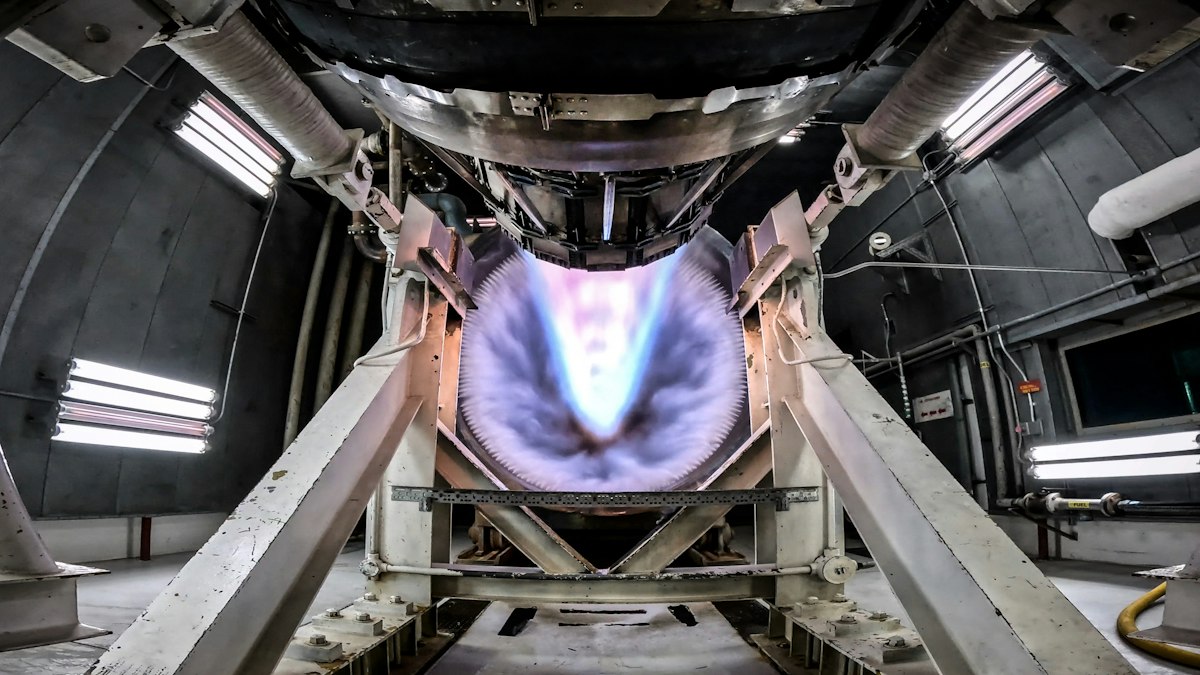
On Thursday, the company announced where some of that growth will happen. Its rocket engine test facility, named after Canadian astronaut Jeremy Hansen, will sit on 50 acres leased from the Greater London International Airport Authority near London, Ontario. The $30 million Jeremy Hansen Test Facility will include an engine test area with up to three vertical and horizontal test stands for static engine testing, capable of handling engines with more than 1MN in thrust, or 225,000 pounds.
Kolias said he intends to begin testing the E-1 engine there in about two years.
The naming choice carries weight. Hansen became the first non-American astronaut to fly into deep space during Artemis II, and he returned a national hero. Kolias tapped straight into that pride.
A Rocket Program Built on Complicated Feelings
Hansen's flight cut both ways. It was an unqualified success that raised the prestige of Canada's space agency. It also happened on the wings of America's space program, at a moment when the two neighbors are snarling at each other over trade and sovereignty.
That tension sits underneath every part of the Canada Rocket Company launch industry push. The country wants its own way to orbit. And it wants that partly because it no longer trusts the old arrangement, the one it relied on for so long. Yet the expertise, the ambition, and the engineers themselves were shaped by American companies and American programs, and that's a fact the country can't undo, no matter how much it wants its own way to orbit now.
Maybe that is the hopeful version of the story. Two countries that remain good neighbors, with warm relations returning someday, while Canada quietly builds the capability to launch its own rockets regardless.
For now, the hardware is not flying. The test stands are not built. The R-2 exists in renderings and engineering plans. But the money is moving, the strategy is written, and the mood has shifted in a way that no one in the Canadian space community would have predicted two years ago.
- Canada Rocket Company is developing the R-2, a medium-lift rocket with nine methane-fueled engines and a target launch date of 2032.
- The company received an initial Launch the North award of $8.33 million CAD alongside NordSpace and Reaction Dynamics.
- The $30 million Jeremy Hansen Test Facility will sit on 50 acres near London, Ontario, with test stands capable of handling more than 1MN of thrust.
- Canada Rocket Company has raised $22.5 million to date and is preparing a Series A round.
The path from renderings to orbit is long, expensive, and unforgiving. Plenty of rocket companies have promised medium-lift vehicles and delivered nothing but slide decks. But the conditions that pushed Canada Rocket Company toward this decision are not going away, and they won't, because tariffs, sovereignty talk, and a defense strategy that names space launch as a priority all point the same direction. It's bleak. They're stuck. We've seen this before.
Canada Rocket Company launch industry watchers now have something concrete to track: a test facility with a name, a rocket with a timeline, and a government that seems willing to spend. Whether the hardware follows is the only question that matters.
Frequently Asked Questions
What is the R-2 rocket that Canada Rocket Company is developing?
The R-2 is a medium-lift rocket that in renderings resembles SpaceX's Falcon 9. It carries nine methane-fueled engines, uses a gas-generator engine cycle, sports landing legs pointing toward future first-stage reuse, and could lift up to 12.5 metric tons to low-Earth orbit.
Why did Canada Rocket Company decide to skip building a small rocket and aim straight for a medium-lift vehicle?
According to CEO Hugh Kolias, the advice from speaking with roughly 150 engineers, from the director of Starship engineering down to entry-level staff, was that you cannot de-risk a rocket development program by building a smaller rocket. About 90 percent of what a company builds for a light-lift rocket gets thrown out when it moves up to a bigger vehicle, and if the goal is not to commercialize light lift, the whole exercise looks pointless.
What is the Jeremy Hansen Test Facility and where will it be located?
The Jeremy Hansen Test Facility is a $30 million rocket engine test facility named after Canadian astronaut Jeremy Hansen. It will sit on 50 acres leased from the Greater London International Airport Authority near London, Ontario, and will include an engine test area with up to three vertical and horizontal test stands for static engine testing, capable of handling engines with more than 1MN in thrust.
How has the political situation between Canada and the United States influenced Canada Rocket Company's launch industry ambitions?
The Trump Administration began threatening and imposing tariffs, and talk surfaced of making Canada the 51st state, which made Canadians angry and led Ottawa to reassess areas where it had long relied on the US government and American companies, including sovereign access to space. Kolias sees the friction as an opportunity, expecting the Canadian government could eventually put as much as half a billion dollars on the table for a sovereign launch capability, possibly paired with guaranteed launch contracts.
What funding has Canada Rocket Company received so far, and what is its target launch timeline?
Canada Rocket Company received an initial Launch the North award of $8.33 million CAD alongside NordSpace and Reaction Dynamics, and has raised $22.5 million to date while preparing a Series A round. According to Kolias, if everything goes according to plan, the company could be ready to launch by 2032.

Astrid Berg covers space and astronomy, from missions and launches to the science of the universe. She follows the ongoing effort to explore beyond our planet.
💬 Comments (0)
No comments yet. Be the first!