Can We Steal Energy from Black Holes? Part 1: Leveling Up Spacetime
In 1969, Roger Penrose proposed a way to extract energy from a spinning black hole. This article explains frame dragging and how spacetime can be viewed as a fluid.
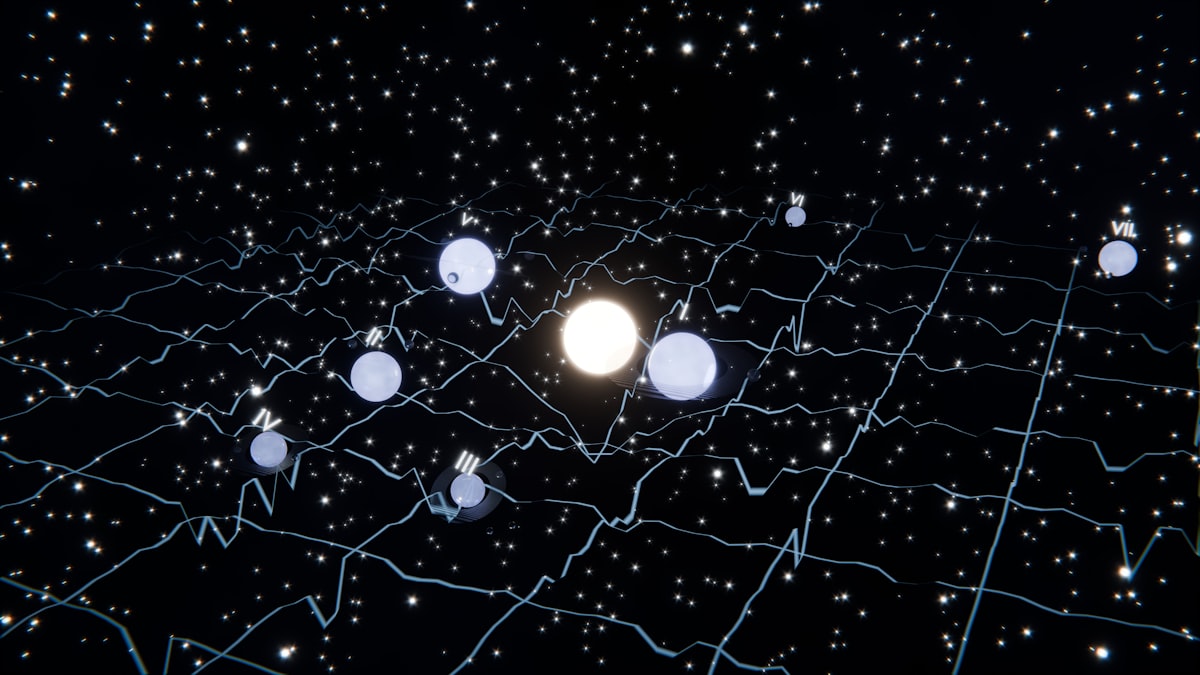
Can We Steal Energy from Black Holes?
Can we steal energy from black holes? In 1969, Roger Penrose, the same physicist who would later claim a Nobel Prize, worked out a method to do exactly that. The trick sounds almost too simple: fly a spacecraft close to a spinning black hole, drop a payload at just the right angle, and you return with more energy than you started with. The black hole gets slightly smaller in the process. Nothing crosses the event horizon, no physical laws are violated, and yet the universe has just handed you free energy.
Welcome to the land of black holes, where nothing makes sense and everything we thought we knew turns out to be not quite right. But that's okay. We're going to take our time with this one. We're going to unpack how the process works, why it doesn't break any laws of physics, and hopefully, by the end, the universe will make a little more sense.
To get there, we need to introduce a rather beefy physics concept. It's called frame dragging. It's real, it's fun, and most importantly, it's what we're here to talk about.
Leveling Up Spacetime
Before we can grasp frame dragging, we need to change how we think about spacetime itself. We need to level up.
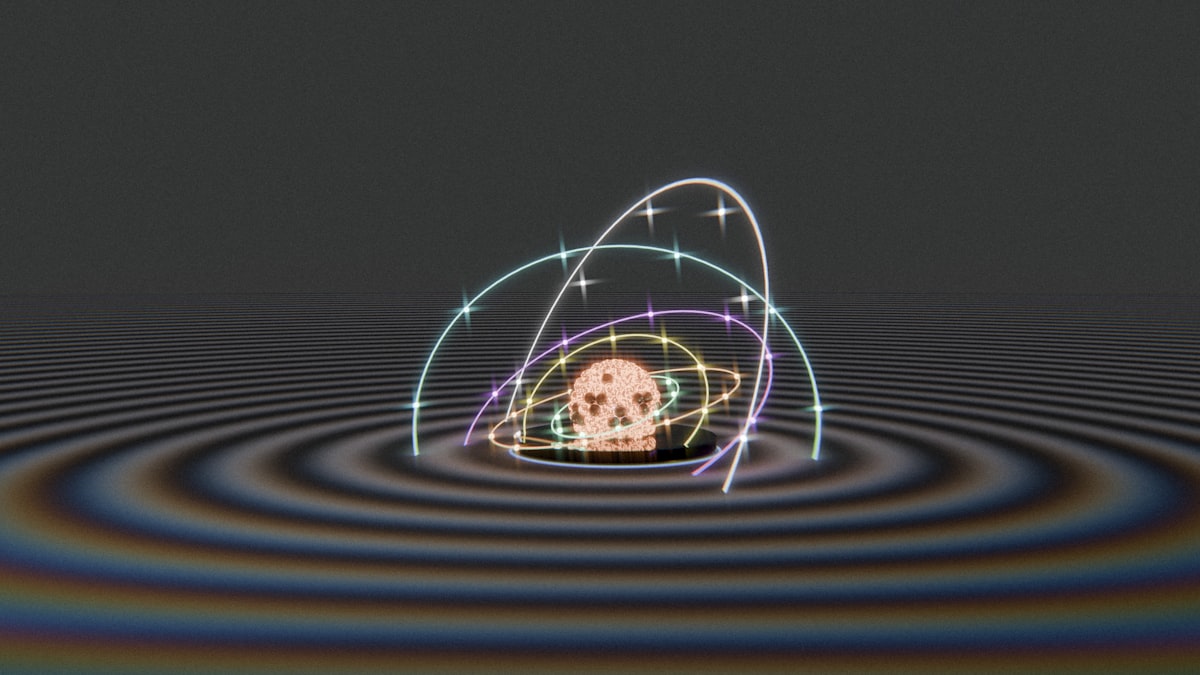
The level 1 way most of us imagine space is basically Newton's version: an empty stage. Objects sit in it, move through it, and exert forces on each other across it, but the space itself is a passive backdrop. It's a giant three-dimensional room that doesn't care what's inside. In this picture, space has no properties of its own. It doesn't stretch, it doesn't push back, it doesn't do anything. It's just where stuff happens.
Of course, this level-1 picture was blown up by Einstein's general relativity, which is our level 2 way of imagining space. Spacetime is not a passive stage. It's a physical thing with a shape. Mass and energy bend that shape, and the bent shape is what we experience as gravity. Picture a single four-dimensional object that can be stretched, curved, twisted, and, spoiler alert, dragged.
Spacetime is an object in its own right, imbued with physical existence just like particles and forces and fields are. It's dynamic. It's alive.
But that's still only level-2 thinking. It's good enough for most work in general relativity, but not for where we're going today. So let's move to level 3.
Spacetime as a Fluid
Spacetime has shape and behavior. Because of that, we can treat it as a kind of fluid, and this is going to be mostly analogy, but also not 100 percent, since the physics behind it is real and not just a poetic stand-in. But general relativity gives us a lot of freedom in how we describe spacetime and its interactions with matter, so we're not locked into one rigid picture. It's flexible.
Picture a black hole's space as fixed, with things tumbling in. But you can also imagine that same space flowing toward it, like water spiraling down a sinkhole, and as you near the event horizon the current picks up speed, faster and faster, until you try to turn back and find you're pushing against a rush that outpaces light itself. It's a trap with no exit. Eventually the gravity grows so intense, the well's walls so sheer, that nothing can break free. So choose your metaphor, but don't forget the outcome. That's the same for both.
Two completely different pictures, but one unified mathematical structure underneath. We've seen this pattern countless times in physics, where equivalent descriptions of the same phenomenon turn out to be perfectly valid, even when they look nothing alike on the surface. And it's especially fun with general relativity. That's the real kicker.
The Two-Way Dialogue
When I say let's treat spacetime like a fluid, I don't mean a real fluid made of molecules. I mean a substance with its own local geometry that responds to what mass and energy are doing inside it. When something moves through spacetime, it interacts with the geometry, like motion through water: you push the water, the water pushes back on you. It's a two-way dialogue.
And when something spins, it doesn't just churn the air or the water around it. It churns the geometry of spacetime itself.
Stirring Honey
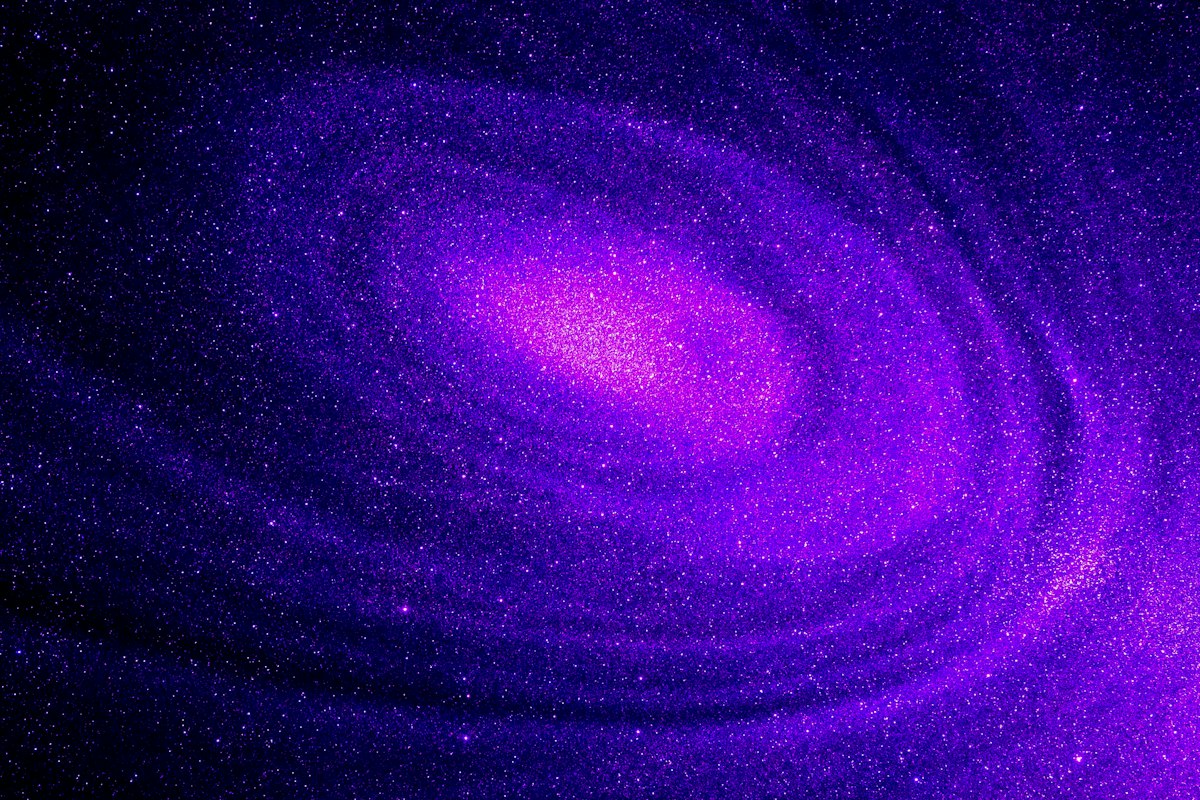
Churning fluids have a very curious property. Think of stirring honey with a spoon. The honey right next to the spoon moves fastest. A little farther out, it rotates more slowly. Farther still, it barely moves at all. Just by rotating, the spoon has set up a slow, decaying swirl in the fluid around it.
General relativity says a spinning mass does exactly the same thing to spacetime. It's a slow twist. Spacetime itself picks up that rotation, strongest near the object, then fading with distance, so the effect grows weaker the farther you travel from the source. So frame dragging works like this: mass drags spacetime, but a spinning mass drags it in a rotational pattern. And that's the whole story.
Spacetime is a fluid participant here, not a stage. It flows locally. It responds to what mass is doing, then it goes on to do its own thing, and that's the part we care about most: spinning things generate swirls, so there's a genuine sense in which spacetime gets carried along by whatever's inside it, and that's not just metaphor. But it's real.
Of course, this is only a model to help guide us through the math, so let's not get carried away. Spacetime is not made of anything the way the ocean is made of something. It isn't molecules with pressure and viscosity. It has no temperature, it doesn't slosh, and if you set up a swirl there's no friction to slow it down over time.
The swirl persists as long as the spinning source does. It's a geometric effect, not a mechanical one.
But it is a real effect. Spacetime is real, it's a thing, even though it's only made of itself, and that thing responds to the motion of what's inside it, and the response persists.
The Road to Stolen Energy
So even with all those caveats, our level-3 thinking can help us understand how to pull energy out of black holes. It's the Penrose process that does the trick. Frame dragging creates a region around a spinning black hole where spacetime itself gets dragged along in the direction of rotation, and that's the key mechanism we're relying on to make the whole thing work. But we've got to respect the limits.
Drop something into that region at the right angle, and the swirl of spacetime can add energy to your payload. You leave with more than you came with. The black hole gets slightly smaller.
Can we steal energy from black holes? The answer is yes, and frame dragging is the key. But this is only part one of the story. In part two, we track frame dragging down to an absurdly tiny number, and follow the decades-long effort to measure it right here at Earth.
Frequently Asked Questions
What is the Penrose process for stealing energy from black holes?
The Penrose process, devised by physicist Roger Penrose in 1969, involves flying a spacecraft close to a spinning black hole, dropping a payload at the right angle, and returning with more energy than started. This does not cross the event horizon and does not violate physical laws, but the black hole gets slightly smaller.
Why does frame dragging allow energy to be extracted from a spinning black hole?
Frame dragging creates a region around a spinning black hole where spacetime itself gets dragged along in the direction of rotation. When a payload is dropped into that region at the right angle, the swirl of spacetime can add energy to it, allowing it to leave with more energy than it came with.
How does the article describe spacetime as a fluid to explain frame dragging?
The article suggests treating spacetime as a fluid that responds to the motion of mass and energy inside it, similar to stirring honey with a spoon. A spinning mass sets up a rotational drag in spacetime, strongest near the object and fading with distance, which is frame dragging.
Who is credited with working out the method to steal energy from black holes?
Roger Penrose, the physicist who later won a Nobel Prize, is credited with working out the method in 1969. The method is now known as the Penrose process.
What is the outcome for the black hole when energy is stolen via the Penrose process?
The black hole gets slightly smaller in the process. This happens without anything crossing the event horizon and without violating any physical laws.

Arthur Vance writes about astronomy and space exploration, covering the discoveries that expand our view of the cosmos. He enjoys connecting distant science to the questions we ask here on Earth.
💬 Comments (0)
No comments yet. Be the first!