Asteroid Bennu's Identity Crisis: Jupiter to Blame
Asteroid Bennu's mixed isotopic makeup puzzles scientists, and a new paper points to Jupiter's early growth as the likely cause.
Asteroid Bennu's Identity Crisis Deepens
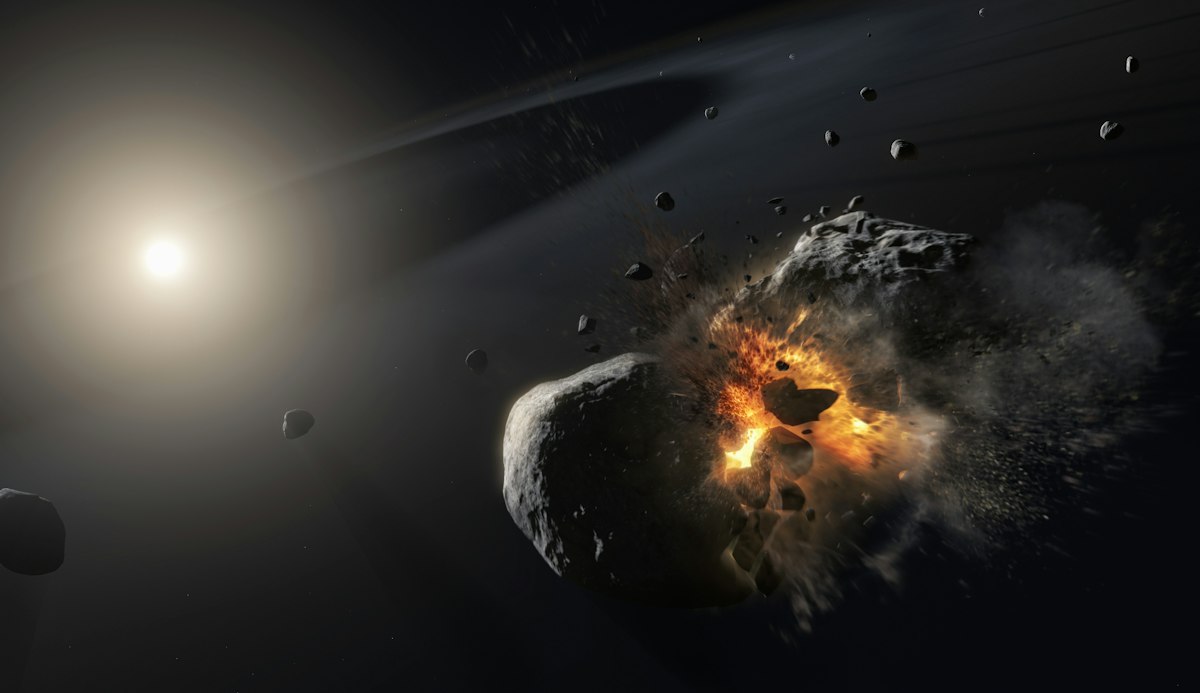
Asteroid Bennu has a problem. It looks like it formed in two places at once, which is strange. But a new paper in Science Advances says the answer may point at Jupiter. That's it. So we've got a rock that seems to have come together in two separate spots, and scientists writing in Science Advances now argue that the explanation might sit squarely with Jupiter, the giant planet whose gravity shapes so much of what happens in that part of the solar system. It can't be both, and yet it looks that way.
The samples in question came from asteroid (101955) Bennu, a near Earth asteroid that has become one of the most closely studied objects in the solar system. Unlike meteorites that have been scorched during atmospheric entry, these samples arrived on Earth untouched. That matters more than most people realize.
Half a Gram That Changed Everything
Half a gram of Bennu reached ETH Zurich. Maria Schönbächler and her lab started analyzing it right away. As a Professor of Isotope Geochemistry, Schönbächler and her students were hunting for exactly what her title implies, and that's nucleosynthetic isotopes, the very thing they've built their careers around, the thing they can't stop chasing once a sample like this lands on the bench. And they don't waste time.
Isotopes act like markers in the early solar system. When the Sun formed 4.6 billion years ago, the dust around it did not stir evenly. Different parts of the new star's orbital plane contained different blends of isotopes. Elements like iron, titanium, and chromium had slightly different numbers of neutrons depending on where they sat in that protoplanetary disk.
Studies of other asteroids and meteorites have noted a distinct split into two families. NC asteroids? They're inner solar system material. That's where terrestrial planets like Earth formed. But carbonaceous asteroids, the CC family, are born in the cold, volatile-rich outer solar system, so the two groups don't share an origin, and it's a split scientists can't ignore.
The Expectation Versus the Reality
Scientists had already labeled it. Before Bennu ever sent a sample back, they'd sorted it into a box called CI chondrite, a sub-type of the more common CC asteroids, long before anyone knew for sure. Only 10 meteorites of this type have ever been found. That's less than 0.0127% of the ones collected. But that's likely because most of them burn up in the atmosphere. And studying a pristine sample from such an asteroid, something we've never had the chance to do before, was an extraordinarily rare opportunity.
The isotopes matched. That's what researchers expected for CC asteroids across the solar system, and for Bennu's titanium and chromium, they were right. But iron told a different story, because Bennu looked more like the NC asteroids, the ones that formed nearer the Sun.
Jupiter's Gravitational Traffic Jam
Digging deeper, the researchers used radioactive manganese-53 decay to date the asteroid to about 2 million years after the first solid rocks started appearing in our solar system. That's the timeline. In the outer solar system, where the parts are more sparsely available, it would have taken far longer for an asteroid to assemble, and that difference matters because it's a clue about where Bennu actually came from. But Bennu seemed to lack the heavy hydrogen and nitrogen that we see in comets known to have formed in that region. And they're not there.
So the researchers put the blame squarely on one particular culprit: Jupiter.
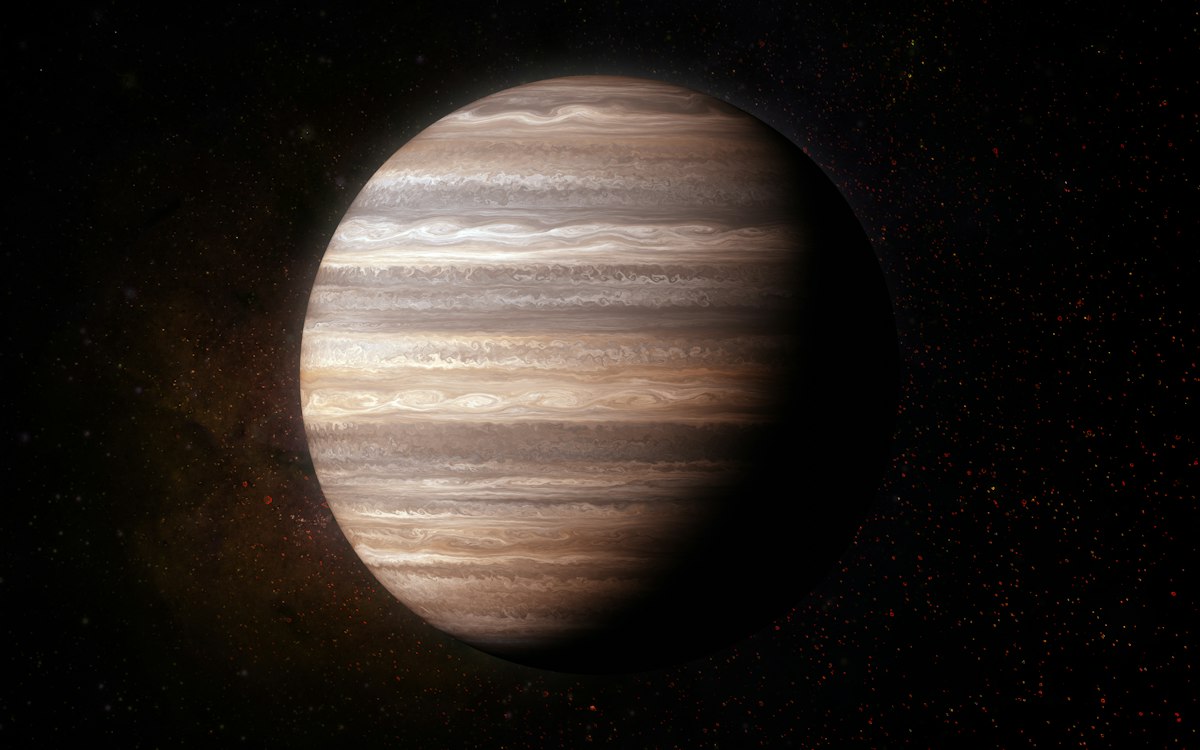
Bennu formed. Jupiter was already huge. It had reached twenty three times the Earth's mass by that point in the solar system's history, and it had carved its path out of the disk's gas and dust, leaving some residual pressure ridges both inside and outside of its orbit. This allowed tiny dust grains to cross Jupiter's orbit inwards toward the Sun without much difficulty. But it trapped larger, millimeter-sized molten droplets called chondrules in the pressure gaps outside its orbit, and they're the ones that couldn't continue their inward migration to the gravitational center of the solar system. So they stayed put.
Those pressure ridges nearly matched the ice line. That's the point around the Sun where it's cold enough to freeze water. And when Bennu was formed, this line, the exact spot where the temperature dropped enough to turn water into ice, sat just inside the orbit of Jupiter, so the ridges and the line don't just loosely overlap, they're tied together in a way we've got to notice.
As the dust hit this water-ice line with its pressure ridges, they began to collapse in on themselves, creating what could be thought of as a dust traffic jam.
Cosmic Sedimentary Layers
Eventually, these traffic jams formed the seeds of asteroids like Bennu. Dust continued to stream in from the outer solar system, creating what looked like cosmic sedimentary layers on Bennu itself, and blending the inner disk ingredients with the dust grains from the outer disk.
So that's why Bennu looks so strange. It's a mix of inner and outer solar system. It appears to have formed near the water-ice line, and since then it has migrated further inward, eventually becoming a Near Earth Asteroid (NEA), and making itself a prime target for a sample return mission. That migration didn't stop.
That process took millions of collisional shoves and gravitational nudges over billions of years, but its fundamental chemistry remained the same.
What This Means for Future Missions
- Bennu's iron isotopes match inner solar system objects, while its titanium and chromium match outer solar system objects.
- Jupiter's pressure ridges near the water-ice line acted as a trap for chondrules, allowing dust to accumulate and form asteroid seeds.
- The asteroid later migrated inward to become a Near Earth Asteroid, preserving its original chemistry through billions of years of collisions.
It just took a plucky robotic explorer, half a gram of dust, and some very fancy instrumentation to finally uncover how this particular form of asteroid came to be.
Frequently Asked Questions
What is the strange identity problem that Asteroid Bennu appears to have?
Asteroid Bennu looks like it formed in two places at once, which is strange because it can't be both. Its titanium and chromium isotopes match the outer solar system CC asteroids, but its iron isotopes look more like the inner solar system NC asteroids, the ones that formed nearer the Sun.
Why did researchers blame Jupiter for Bennu's mixed composition?
Jupiter had already reached twenty three times the Earth's mass and had carved pressure ridges out of the disk's gas and dust both inside and outside of its orbit. These pressure ridges nearly matched the water-ice line and acted as a trap for millimeter-sized molten droplets called chondrules, so dust accumulated there and formed the seeds of asteroids like Bennu.
How did scientists determine when Bennu formed, and what does that timing reveal?
The researchers used radioactive manganese-53 decay to date the asteroid to about 2 million years after the first solid rocks started appearing in our solar system. That timing matters because in the outer solar system, where the parts are more sparsely available, it would have taken far longer for an asteroid to assemble.
Who analyzed the half a gram of Bennu that reached ETH Zurich, and what were they looking for?
Maria Schönbächler, a Professor of Isotope Geochemistry, and her lab started analyzing the sample right away. Schönbächler and her students were hunting for nucleosynthetic isotopes, which act like markers in the early solar system.
What happened to Bennu after it formed near the water-ice line, and why does that matter for future missions?
Bennu later migrated further inward, eventually becoming a Near Earth Asteroid, through millions of collisional shoves and gravitational nudges over billions of years. Its fundamental chemistry remained the same, which is why it became a prime target for a sample return mission.

Leo Sokolov reports on spaceflight and the companies and agencies racing to reach orbit and beyond. He is captivated by the engineering that makes leaving Earth possible.
💬 Comments (0)
No comments yet. Be the first!