Alien Comet 3I/ATLAS: What Its Deuterium Means
Comet 3I/ATLAS, an interstellar visitor in 2025, carried clues in its deuterium levels about its ancient, cold home.

Alien Comet 3I/ATLAS: Deuterium Tells Its Deep Space Story
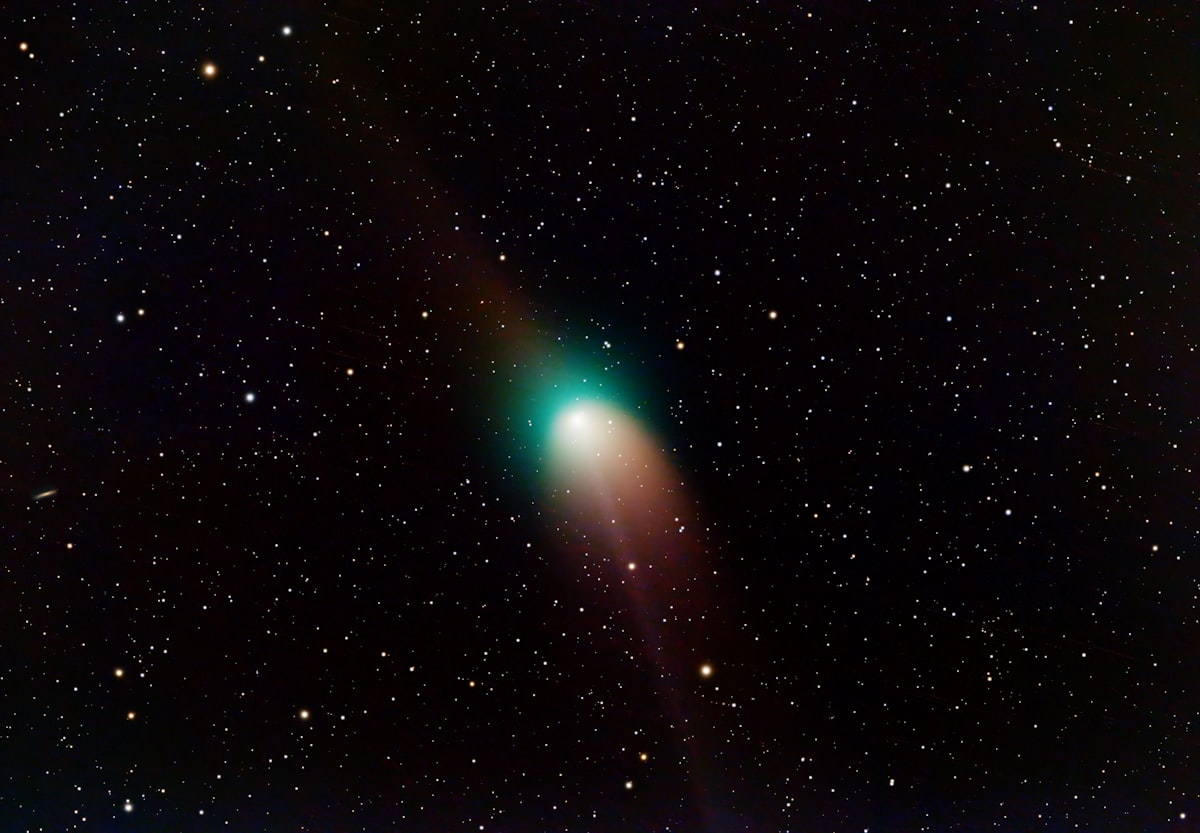
It's a cosmic fingerprint. Comet 3I/ATLAS, that interstellar visitor zipping past Earth and Mars in 2025, has spilled some ancient secrets by revealing a surprisingly high level of deuterium, a special form of hydrogen, hidden within its icy heart. But this isn't just a quirky chemical detail; it points to where this traveler came from and how old it truly is.
This alien comet passed within a relatively close 1.8 AU of us. That's close enough for the James Webb Space Telescope, or JWST, to get a really good look at it. Using its sensitive NIRSpec instrument, astronomers peered into the thick cloud of gas and dust, the coma, that formed as the comet warmed up. What they found was a shocker. Comet 3I/ATLAS is loaded with deuterium, more than thirty times the amount typically found in comets born within our own solar system. But it's a discovery that changes everything we thought we knew.
Real talk: this isn't just about a comet. It's about understanding the building blocks of other planetary systems, and maybe even how common or rare our own corner of the galaxy is.
Deuterium: A Cold Case Clue
So what's the big deal about deuterium? It's a heavier twin of regular hydrogen. Most of the deuterium in the universe was cooked up in the Big Bang, and it prefers to hang out in cold places because it tends to get converted into regular hydrogen when things get hot. But this means the amount of deuterium relative to hydrogen in a comet is a direct indicator of the temperature conditions where that comet originally formed.
For our own solar system's comets, we see a certain deuterium-to-hydrogen ratio that tells us they formed in a very specific temperature range about 4.5 billion years ago. But Comet 3I/ATLAS? Its ratio is off the charts. This suggests it wasn't born in our solar system's cradle.
This was a unique opportunity to study an ancient object from the distant Galaxy. It probably pre-dates our Sun and Solar System. Astro-chemist Martin Cordiner of NASA's Goddard Space Flight Center said so. But on one hand, we get direct insight into that distant time and place, and on the other, we learn something about how unusual our own Solar System may be.
This high deuterium count strongly indicates that Comet 3I/ATLAS formed in an extremely cold environment. Scientists suspect it originated from a very early part of the Milky Way's history, perhaps 10 billion years ago or even older. Imagine a place where stellar formation was rampant, birthing stars and their accompanying planetary disks that were far colder than our own Sun's nursery. But it's hard to grasp. So much time has passed since then.
It's a perfect time capsule from the early universe. Its long journey through interstellar space, far from any heat source, has kept this primitive ice in a deep freeze and preserved its original, high deuterium signature.
Tracing the Origins of Comet 3I/ATLAS
Comet 3I/ATLAS wasn't a local. Its path through our inner solar system was a dead giveaway, clearly showing it's an interstellar visitor and not something born from the same cloud of gas and dust that formed the Sun and planets.
Some astronomers have speculated that its home system might lie within the thinner or thicker disks of the Milky Way. But these regions have distinct histories of star formation. They can't fully comprehend it. This alien visitor has traveled unimaginable distances, carrying with it chemical clues from a galactic era long past that we've only begun to piece together.
Carbon: The Age and Ambition of an Alien World
Deuterium isn't the whole story. But JWST also analyzed the comet's carbon isotopes, and the findings here add another layer to its ancient origins, offering clues about how our solar system formed billions of years ago.
The comet showed very low levels of carbon-13 compared to the more common carbon-12. Here's why that matters. Over billions of years, as stars live and die in the galaxy, they release carbon into space, and this released carbon includes carbon-13, so newer generations of stars like our Sun form from this enriched material.
Our Sun is 4.5 billion years old. But it's a relatively young star with a higher proportion of carbon-13 because it formed from a later generation of stellar material that had been enriched by previous cycles. Comet 3I/ATLAS has low carbon-13, though. So it likely formed in a much older system, one that hadn't yet been significantly "cooked" by repeated stellar cycles. It's another piece of evidence pointing to an origin point in the early Milky Way.
But the story gets even more intriguing. Cyanide in the comet , it's a precursor molecule, a building block for life. Other telescopes, like the European Southern Observatory's Very Large Telescope, detected this compound, and finding it in an object from another planetary system opens up fascinating possibilities.
But it's not just about the thrill of discovery. "For us as scientists, finding these rare isotopes is fascinating, but the bigger picture here is looking at the possibilities of prebiotic chemistry elsewhere in the galaxy," explained Stefanie Milam of NASA Goddard. So far, we know of only one place in the vast cosmos where chemical ingredients led to life: our Solar System, our Earth. She highlighted the significance of that fact. Analysis of these interstellar objects is a major step towards learning how common, or uncommon, the conditions for the evolution of life are in the Universe.
- Comet 3I/ATLAS passed within 1.8 AU of Earth in 2025.
- JWST's NIRSpec instrument analyzed its coma.
- Deuterium levels are over 30 times higher than in solar system comets.
- High deuterium suggests formation in a very cold environment.
- Low carbon-13 also points to an ancient origin, predating our Sun.
- Cyanide, a prebiotic compound, was also detected.
It's a rare and exciting discovery. The presence of these life-building ingredients in an object from another star system means the chemistry that led to life here might not be unique to Earth. So studying Comet 3I/ATLAS is a direct window into the conditions present in incredibly distant and ancient parts of our galaxy. But it pushes us closer to answering the fundamental question: are we alone?
Frequently Asked Questions
What unique chemical characteristic did Comet 3I/ATLAS reveal, and what does it suggest about its origin?
Comet 3I/ATLAS revealed a surprisingly high level of deuterium, over thirty times the amount typically found in comets born within our own solar system. This high deuterium count strongly indicates that the comet formed in an extremely cold environment, likely originating from a very early part of the Milky Way's history.
How did the deuterium-to-hydrogen ratio in Comet 3I/ATLAS compare to that of solar system comets, and why is this significant?
The deuterium-to-hydrogen ratio in Comet 3I/ATLAS was off the charts compared to our own solar system's comets, which have a specific ratio indicating formation about 4.5 billion years ago. This suggests Comet 3I/ATLAS was not born in our solar system's cradle and likely predates our Sun and Solar System.
What instrument on the James Webb Space Telescope was used to study Comet 3I/ATLAS, and what did it observe?
The James Webb Space Telescope's sensitive NIRSpec instrument was used to study Comet 3I/ATLAS. It peered into the thick cloud of gas and dust, the coma, that formed as the comet warmed up and found the high deuterium levels.
What additional chemical evidence besides deuterium supports the ancient origin of Comet 3I/ATLAS?
JWST also analyzed the comet's carbon isotopes and found very low levels of carbon-13 compared to carbon-12. This low carbon-13 suggests the comet formed in a much older system that had not been significantly enriched by later stellar cycles, pointing to an origin in the early Milky Way.
Why is the detection of cyanide in Comet 3I/ATLAS significant for understanding the potential for life elsewhere in the galaxy?
Cyanide, a precursor molecule and building block for life, was detected in Comet 3I/ATLAS by the European Southern Observatory's Very Large Telescope. Finding such prebiotic compounds in an object from another star system suggests the chemistry that led to life on Earth might not be unique, helping scientists learn how common conditions for life may be in the universe.

Astrid Berg covers space and astronomy, from missions and launches to the science of the universe. She follows the ongoing effort to explore beyond our planet.
💬 Comments (0)
No comments yet. Be the first!