What Can Scientists Learn From a SpaceX Rocket?
A spent SpaceX rocket stage has struck the Moon near the Einstein crater, providing scientists a unique research opportunity.
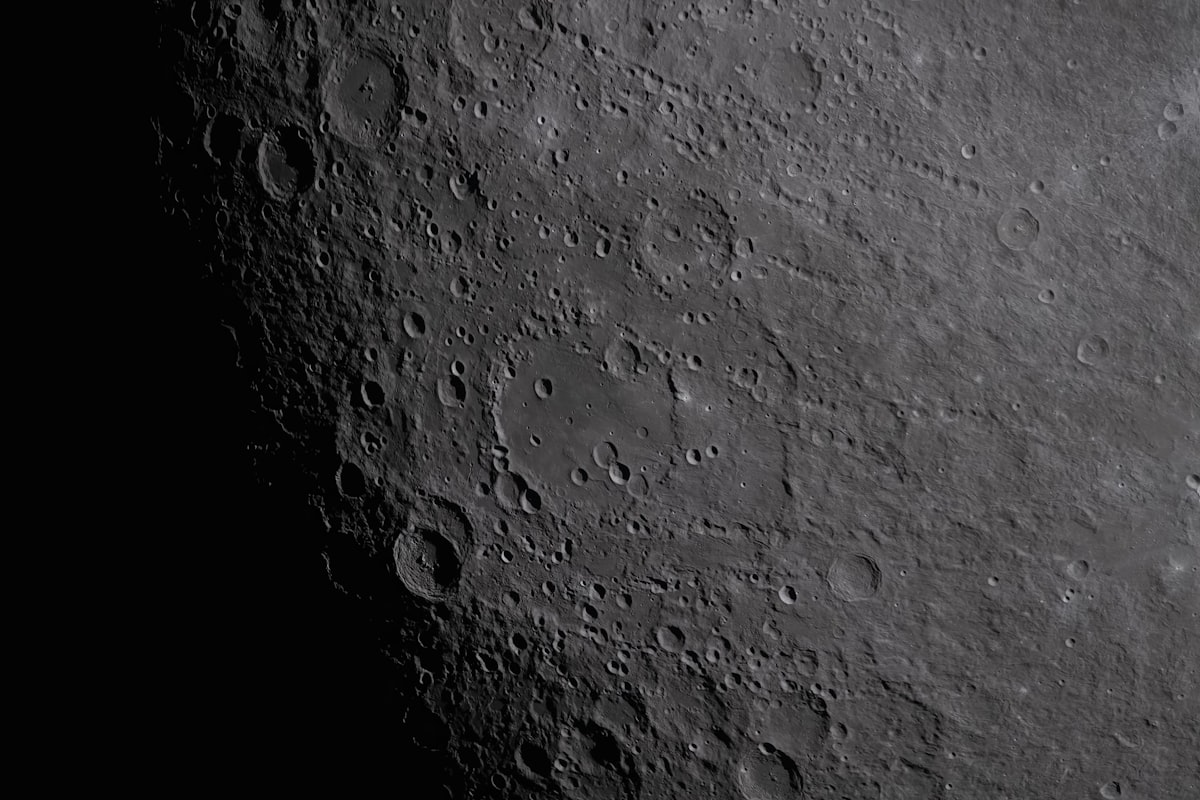
SpaceX rocket debris impacts the Moon
A SpaceX rocket upper stage slammed into the lunar surface this Wednesday, carving out a new crater near a well-known landmark, and that's a fact we can't ignore. It struck hard. The spent Falcon 9 booster, roughly the size of a five-storey building and weighing at least 4,000kg, hit the ground at a velocity of approximately 5,400mph, and this unintended arrival near the Einstein crater gives planetary geologists an unexpected opening, a chance they don't get every day to refine their models of how impacts shape the moon's surface. But it's a rare one.
A long journey to impact
The journey began in January of last year when the booster launched from Florida to deliver two lunar landers into space. It was a clean departure. After successfully placing the landers on their path toward the Moon, the rocket stage was left drifting in a long, looping orbit, and over the next 18 months, gravitational tugs and solar light pushed it onto a collision course. The empty craft gained speed daily. But it wasn't immediate; during that time, the subtle gravitational pull from the Earth, Moon, and Sun, combined with pressure from solar light, pushed the empty craft onto a collision course, and that relentless accumulation of force built until the final impact occurred at 07:35 BST.
Data from a rare experiment
We know its size, its speed, and its exact location. So this isn't a mere accident; it's a controlled experiment. It's a rare chance to observe the physical dynamics of a high-speed collision with precision that scientists rarely get, and the data should reveal how impacts fling debris across the lunar surface and trigger seismic tremors deep inside the Moon's interior.

Practical goals for future missions
The aftermath of this crash isn't just wreckage; it's a dataset for engineers planning future lunar operations. So they study it with precision. Understanding how lunar material behaves during an impact, from the initial shockwave to the sprawling debris field, directly informs the design of safer landers and permanent bases, and that knowledge doesn't come cheap. But it's worth it. And every bit of that debris tells a story we can't ignore.
- How far ejected rock and dust travel after a strike.
- The intensity of ground vibrations caused by such an impact.
- New insights into lunar geology from material displaced from beneath the surface.
Tracking the aftermath
Spotting a 14-meter rock slamming into the Moon from 385,000km away? It's a nightmare for astronomers. The flash itself was so faint that even high-end telescopes couldn't catch it, but the impact likely kicked up a dust plume stretching a hundred kilometers into the vacuum above the lunar surface. So researchers are now crunching data from powerful observatories scattered across the Americas, piecing together what happened from the faintest of clues. That's no small task.
Watching from above
The Moon's orbiters are joining the hunt. So the Lunar Reconnaissance Orbiter is expected to photograph the crash site in the coming days, which will let scientists compare the landscape before and after the impact and look for fresh scars. It's a key step. The Danuri team, whose spacecraft passed near the site before the collision, have said they'll release any useful footage once their analysis wraps up. They can't rush it.
Historical context of lunar impacts
We've been littering the moon for over sixty years now. The debris trail begins with the Soviet Luna 2 probe in 1959, and it's grown ever since, accumulating through deliberate scientific missions and accidental collisions alike, a slow, silent scattering across a world that can't clean up after us. But this latest event is just the newest entry in that long, messy history. More than half a century of junk, and it's still piling up.
The collision is a scientific gift for planetary geologists, as it provides a rare opportunity to test existing models of how impacts dig out craters and send tremors through the interior of the Moon.
The search for answers
While the full picture of the impact may take weeks to emerge, the focus remains on extracting every available detail from the event, and researchers are working methodically to piece together what happened. But they're not just looking at the crash itself. By cleaning up data from large observatories, they hope to gain a better understanding of the Earth-Moon system and how it formed 4.5 billion years ago, turning a messy accident into a clean scientific query. It's a lucky break. The stray SpaceX rocket has effectively become a tool for discovery, so an unintended crash becomes a long-term research opportunity. We've got a lot to learn from it.
Frequently Asked Questions
What was the SpaceX rocket's impact on the Moon?
The SpaceX rocket upper stage, a spent Falcon 9 booster, slammed into the lunar surface, creating a new crater near the Einstein crater. It hit at a velocity of approximately 5,400mph, and this event gave planetary geologists an unexpected opportunity to refine their models of lunar impacts.
Why is this SpaceX rocket crash considered a rare scientific opportunity?
The crash is considered a rare opportunity because scientists know the rocket's size, speed, and exact location, making it a controlled experiment. It allows them to observe the physical dynamics of a high-speed collision with precision that is rarely achieved, revealing how impacts fling debris and trigger seismic tremors.
How can the SpaceX rocket crash help with future lunar missions?
Understanding how lunar material behaves during an impact, from the initial shockwave to the debris field, directly informs the design of safer landers and permanent bases. It also provides data on how far ejected rock and dust travel and the intensity of ground vibrations caused by such impacts.
When did the SpaceX rocket impact the Moon?
The impact occurred this Wednesday at 07:35 BST, according to the article. The rocket had been drifting for 18 months after launching from Florida in January of last year, with gravitational pulls and solar light pushing it onto a collision course.
Who is tracking the aftermath of the SpaceX rocket crash?
Researchers are using data from powerful observatories across the Americas to piece together what happened from faint clues. The Lunar Reconnaissance Orbiter is expected to photograph the crash site, and the Danuri team, whose spacecraft passed near the site, will release any useful footage after analysis.

Eva Koch writes about scientific research and the people behind it, covering the studies and breakthroughs shaping our understanding of the world. She values curiosity and careful evidence in equal measure.
💬 Comments (0)
No comments yet. Be the first!