Second Fruit Fly Brain Connectome Completed
A complete connectome of a male fruit fly brain has been mapped, revealing over 300 million synapses and sex-specific differences.
Second fruit fly brain connectome complete
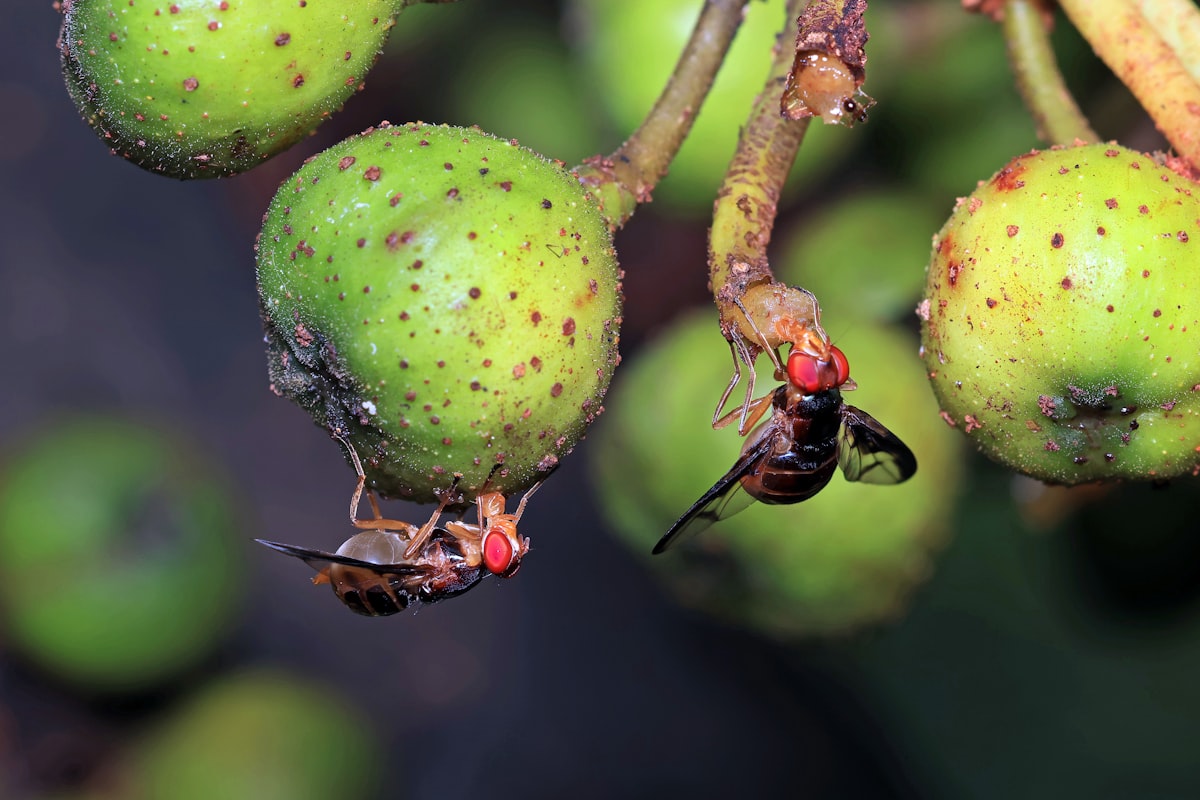
They're done. Researchers announced Friday that they have finished mapping every neuron in the brain of a male fruit fly, completing the second fruit fly brain connectome ever assembled. And that's not all. The work follows the completion of a female Drosophila connectome earlier this year, giving scientists their first paired look at how sex shapes the brain's wiring at cellular resolution. So we've got two complete maps now.
Janelia Research Campus biologists and Google computer scientists teamed up for this project. Neither side could have done it alone. They're candid about that, admitting the collaboration was key, and both groups acknowledge that the fusion of biological insight with computational muscle proved necessary, because the data sets were too vast and the imaging too complex for any single discipline to conquer. But the partnership worked. It's a win they don't take for granted.
“The reason I think Google and we were interested in this is because this is this type of grand challenge that just cannot be done in any other way,” said Michal Januszewski, a staff scientist at Google Research. “We knew we need AI for this. This cannot be solved by having more humans or by any other technology. And it’s important.”
Why map a fly brain?
Every thought, memory, and movement starts with sensory input. Neurons that register sound, light, and touch pass signals to other neurons, which transform those inputs into something the rest of the brain can use. The route that information takes depends entirely on which neurons connect to which.
That catalog of connections is called a connectome. In practical terms, it lists every neuron in a brain, its location in three-dimensional space, and the synapses it forms with other cells.
The fly's brain holds only a fraction of those 150,000 neurons. But each neuron can branch into multiple axons and form hundreds of connections, so the new work uncovered over 300 million synaptic connections in that tiny space, a number that dwarfs the total cell count by more than two thousand times. It's staggering.
The old way: magic markers
Gerry Rubin, a senior group leader at Janelia and one of the senior authors on the paper, remembers when connectomics meant manual labor. As a graduate student in 1971 at the UK’s Laboratory of Molecular Biology, he watched researchers attempt to map the connectome of C. elegans, a transparent worm with just over 300 neurons.
Rubin said it took them about two years to realize the computers were nowhere near powerful enough for the task at hand. So they pivoted to a radically manual approach. They'd print everything out on photographic prints, grab colored magic markers, and then circle neurons one by one, tracing the connections by hand,no, wait, they traced it by hand, carefully mapping each link with those markers. It's painfully slow. But it worked.
That approach would never scale to the fruit fly, which is not transparent and packs far more complexity. Fortunately, computers have improved dramatically since the early 1970s.
Cutting and stitching a brain
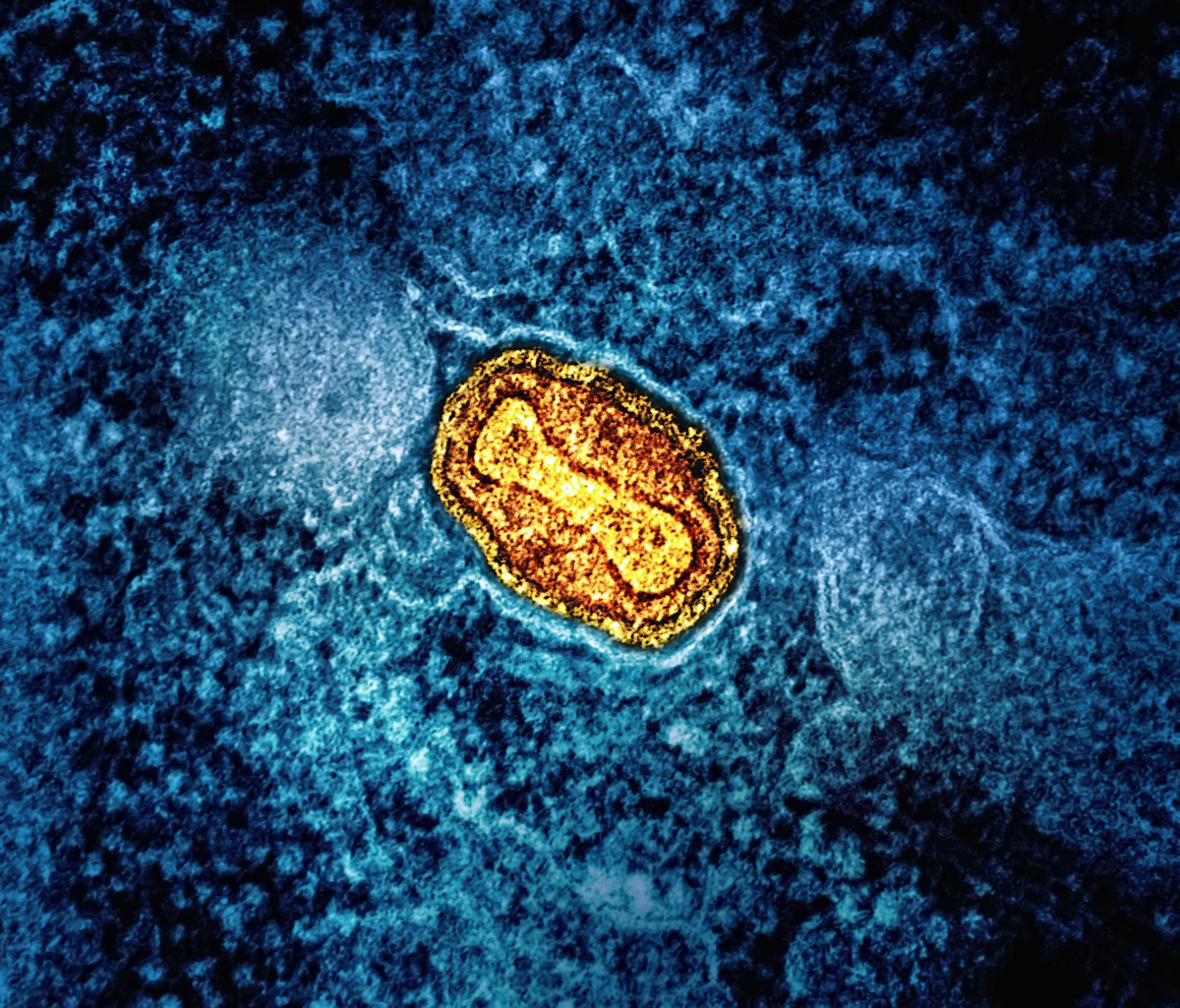
For the new work, the team took a dissected fruit fly brain, along with part of its ventral nerve cord, and cut it into a series of evenly spaced slices. Keeping those slices in exact order preserved the brain’s three-dimensional architecture. Electron microscopy then captured images at the resolution needed to identify small cellular structures.
From there, the work became a computational problem.
Januszewski explained that the first step uses a form of generative AI to fix distortions where each slice was cut, and that's a clever trick given how messy the process can be. Material gets lost. Warping happens. No matter how carefully tissue is sliced, a small amount of material is lost and some warping occurs, so the AI has to patch those gaps and straighten out the bends before anything else can proceed. But it's not a perfect fix. It's just the start.
When you take those blocks and stitch them back together computationally, there's a little bit of a gap in between them, so the tissue doesn't completely smoothen, he said. We use a generative model to make it look as if the seams were never there. It's a clever trick. But that gap is always lurking beneath the surface, and the model has to account for every tiny imperfection to convince the eye that the tissue is one continuous, natural whole, which is no small feat given how the human brain registers even the slightest irregularity in texture. So the seams vanish.
A separate model fills in the spaces defined by cellular membranes, allowing the system to track individual cells across 3D space. Other models recognize synapses and classify them by type. These models can be tuned for different levels of sensitivity, or “greediness,” which adjusts the probability they’ll flag something as a synapse.
Human proofreaders played a major role in that tuning process.
Rubin called it a back and forth between the proofreaders and Mikhail. That's the core of it. So the whole thing becomes an iterative process, one where the humans offer their feedback and then the algorithms get tuned in response, and each round of input refines what the system does next.
Four years of work
The whole journey, from an intact fly brain to its complete connectome, stretched across roughly four years of patient, meticulous work. It's a long time. But Rubin hopes the techniques they've developed along the way will speed up future efforts on larger brains, and that's the real payoff here. So don't expect another four-year wait.
Rubin's take is blunt: "We did Drosophila with a team of 50 people." So the hope is that when someone finally tackles a mouse, they'll still need a team of 50, even though that brain contains a thousand times more neurons than the fly's. The people won't disappear. But they won't have to scale with the neuron count either, since scaling that way would crush any budget, making the whole endeavor economically impossible. It's a bold bet.
Sex on the brain
Having both male and female connectomes opens a unique research window. Flies possess a rich genetic toolbox for understanding sex determination, where two genes, doublesex (dsx) and fruitless (fru), translate chromosomal differences into behavioral variations.
The researchers compared the two connectomes and found 289 male-specific neurons, 71 female-specific ones, and 138 neurons present in both sexes but shaped differently. The relationship to dsx and fru was not always straightforward.
Ninety percent of male-specific neurons were making dsx and fru. That leaves ten percent that weren't. Rubin suggested those likely picked up sex-specific identity through interactions with other neurons that did express the genes, a kind of neural chain reaction that spreads the signal across the circuit. And nearly forty percent of the neurons present in both sexes but shaped differently had no active dsx or fru genes at all, which is a striking gap. So the system isn't simple. It's messy, layered, and far more complex than a straightforward genetic switch.
There were oddities too. Two neuron types that control the female’s physical response to mating also appeared in males with the same basic shape, even though the tissue they indirectly control doesn’t exist in males. The neurons differed instead in their connections.
Sex-specific neurons cluster away from sensory processing or motor control. Instead, they work alongside neurons tied to higher-level cognition, which suggests their role is more about integrating complex signals than reacting to the immediate environment. But exceptions exist. A few neurons detect sex-specific pheromones, and that's a direct sensory link, though it doesn't change the overall pattern. They're the outliers. The bulk of these cells don't sit at the front lines of input or output, and that's a striking fact when you consider how often we assume sex differences start with basic perception. So the picture is clear. Most of these neurons are built for deeper processing, not quick reflexes.
As the paper puts it, the location and connections of the sex-specific neurons “suggests a hierarchy in which sex differences primarily modify integrative and decision-making areas while sensory detection and the highly tuned motor interface remain more constant.”
What comes next
Researchers see the male and female connectomes as a resource similar to the fly genome when it was first completed. It will accelerate work already underway. If a study identifies an interesting neuron, researchers can open a browser and see which other neurons and structures it connects to.
Rubin says the impact on theoretical neuroscience has been immediate.
“Before this, most neuro theorists were very much like, ‘How could a brain work?’” he said. “And they didn’t have a constraint. Once they had the connectome, they could say, ‘The brain does this and here’s the wiring diagram. How can this wiring diagram allow this function?’”
The work also revealed a tantalizing hint of variability. A specific neuron seen in the female connectome was absent from one of the two hemispheres of the male fly, presumably due to a developmental glitch. With only two connectomes complete, it’s impossible to know how common such variability is.
Answering that question will require dozens of connectomes. So that means the process can't stay at four years per brain, not if we're serious about mapping more than a handful. It's far too slow. But the team's hope is that the tools they refined, the ones that shaved time off each step of the pipeline, will make this faster pace possible. They might just do it.
Frequently Asked Questions
What is the significance of completing the second fruit fly brain connectome?
The completion of the second fruit fly brain connectome provides scientists with their first paired look at how sex shapes the brain's wiring at cellular resolution, as it follows the earlier completion of a female Drosophila connectome. Having both male and female connectomes opens a unique research window for understanding sex differences in brain structure and function.
How did the researchers approach the challenge of mapping the fruit fly brain?
The team, comprising biologists from Janelia Research Campus and computer scientists from Google, collaborated because the data sets were too vast and the imaging too complex for any single discipline to conquer. They used generative AI to fix distortions from slicing, separate models to track individual cells and recognize synapses, and human proofreaders to tune the algorithms iteratively over four years.
Why is mapping the fruit fly brain connectome considered important?
Mapping the connectome is important because it catalogs every neuron and its synaptic connections, which determine the routes that sensory input takes in the brain. This understanding helps explain how every thought, memory, and movement begins and is processed, as described in the article.
What did the comparison between male and female connectomes reveal about sex-specific neurons?
The comparison found 289 male-specific neurons, 71 female-specific ones, and 138 neurons present in both sexes but shaped differently. Most sex-specific neurons cluster away from sensory processing or motor control, instead working alongside neurons tied to higher-level cognition, suggesting they play a role in integrating complex signals rather than reacting to immediate environment.
What are the future implications of this connectome work according to the article?
The connectomes are seen as a resource similar to the fly genome, accelerating research by allowing scientists to look up neuron connections in a browser. The work also hints at variability between individuals, but determining how common that is will require dozens of connectomes, and the team hopes their refined tools will speed up future efforts on larger brains like a mouse's.
Victor Holm reports on science and discovery, with a particular interest in physics, biology and the questions that drive research forward. He looks for the wonder in how the world works.
💬 Comments (0)
No comments yet. Be the first!