Sea Monkeys Show Scientists How to Rewrite a Rule of Turbulence
Sea monkeys reveal how the flow of energy in turbulent systems can be reversed by geometry, upending a long-held rule of turbulence.
Sea Monkeys Rewrite a Rule of Turbulence
Sea monkeys are tiny brine shrimp. For decades, they've been sold as a mail-order novelty. And now they've done something no one expected. In a lab at the University of Pittsburgh, these centimeter-long swimmers flipped the direction in which energy flows through a turbulent system, according to findings that could reshape how physicists think about chaos in fluids. It's a surprise. They're just centimeter-long. We've never seen this before.
By swimming at a particular angle, the shrimp's flailing bodies disrupted the moving water and seemed to shift the direction of energy flow.
A Rule Written in Whorls
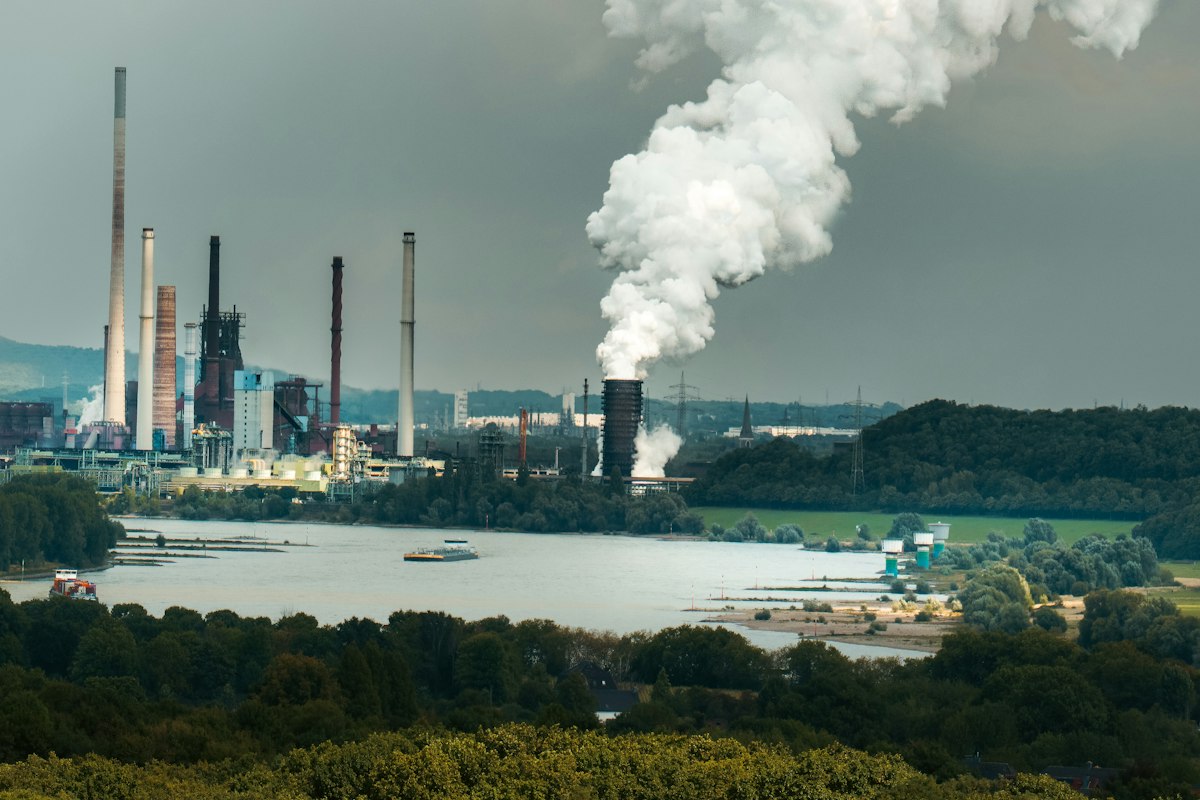
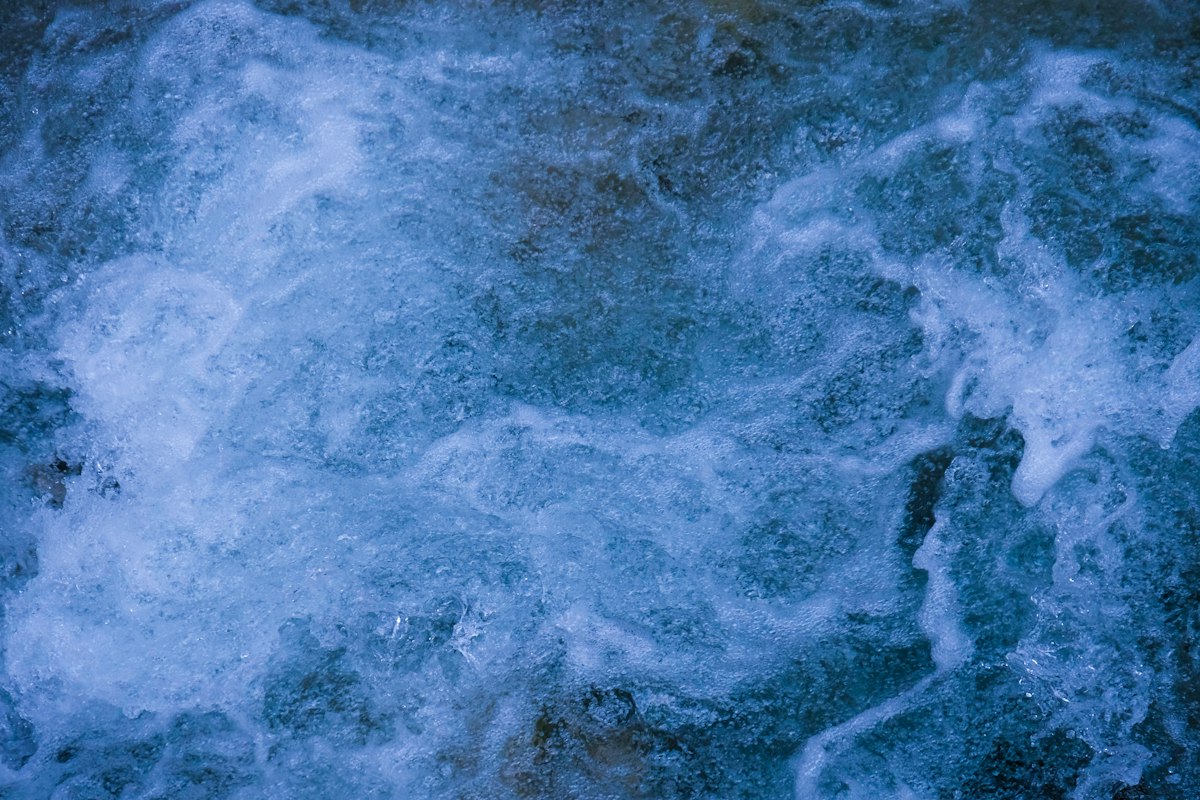
Turbulence is everywhere you look. It churns the foam at the base of a waterfall, shapes the crest of a breaking wave, and produces the bumpiness of a flight. It swirls milk into coffee and roils plasma on the surface of the sun. "We observe turbulence generally everywhere in our lives, when we go to the beach or wash our hands," said Francesca De Serio, a civil engineer and hydrodynamics expert at the Polytechnic University of Bari in Italy.

For nearly a century, scientists have understood turbulence through a simple picture. Energy moves from large eddies down to smaller ones. That's the three-dimensional system. It keeps going until viscosity, the resistance to motion, dissipates it as heat, which is a process that scientists have described in exactly this way for a very long time. And in 1922, the English mathematician Lewis Fry Richardson captured the idea in verse:
Big whorls have little whorls
Which feed on their velocity,
And little whorls have lesser whorls
And so on to viscosity.
But that picture changes in two dimensions. In the late 1960s, physicists Robert Kraichnan and George Batchelor extended the investigation to flat systems, where energy cascades in the opposite direction, from small eddies up to large ones. Jupiter's Great Red Spot is a prime example. Smaller vortices near its perimeter feed the giant maelstrom at its center.
For decades, no one deeply questioned whether that inverse flow was fixed. Then a student started playing with sea monkeys.
How a Brine Shrimp Broke the Script
Xinyu Si was a student in Lei Fang's lab. He studied how biological swimmers mix materials in fluids. The lab focuses on active matter, a term for things that move on their own and inject energy into their surroundings, from bacteria to tiny robots.
Si and Fang ran the numbers. They calculated how the shrimp's flailing bodies disrupted the moving water. And what they saw was strange, because it didn't fit what anyone expected. They saw something strange. It's a shift in the direction of energy flow, the kind of thing you don't predict when you're watching a small creature thrash against a current that's already moving.
They ran the experiment repeatedly. When a single brine shrimp swam at an angle of less than 45 degrees to the direction of maximum stretching, energy flowed from smaller scales to larger ones, feeding the flow. But when the shrimp swam at an angle of more than 45 degrees to the direction of maximum stretching, the energy went in reverse, pulling from the larger scale of the flow to energize smaller perturbations. Every experiment suggested the same conclusion: the orientation of a brine shrimp's body seemed to change the turbulent system's energy flux.
"The geometry matters," said Fang, the Pittsburgh engineer who led the work.
The scientists found a way to interpret what they were seeing. They used a field of mathematics called tensor geometry, which has long been a workhorse for physicists studying turbulence. Fang and Si found their results made sense as the interaction of two tensors, one representing the large-scale shear of the water and the other the small-scale movement of the swimmers. The alignment of those tensors, set by the swimmer's orientation, determined how energy flowed. It's that simple.
From Sea Monkeys to Tabletop Tornadoes
Outside scrutiny didn't break the findings. They held up. And that mattered to Fang. "That made me much more comfortable," Fang said, because when you're dealing with something as strange and counterintuitive as the manipulation of energy flux, which doesn't behave the way anyone would normally expect it to, you can't help but feel a little uneasy about whether the whole thing is real. "It's a very weird thing to manipulate energy flux.
And there are big differences between a weakly turbulent two-dimensional system in a lab and the strongly turbulent three-dimensional ones found in nature.
The work has implications beyond theory. The researchers are exploring how to influence the "transport barrier," the threshold between two fluids as they mix.
Other scientists have taken notice. De Serio has been firing strong jets into large tanks of turbulent, rotating fluids with high viscosity. "I was attracted by this idea that these manipulations could be applied in a real context," she said.
Gregory Falkovich, a physicist at the Weizmann Institute of Science and a pioneer in the study of turbulent two-dimensional systems, called the work "beautiful and skillful."
Si, now a postdoc at the University of Rochester, said the findings introduce a new hypothesis testable in any setting where turbulence plays a role, from a tiny bowl of sea monkeys to the enormous scale of Earth's atmosphere.
Frequently Asked Questions
What are sea monkeys, and where did they demonstrate an unexpected effect on turbulence?
Sea monkeys are tiny brine shrimp that have been sold as a mail-order novelty for decades. In a lab at the University of Pittsburgh, these centimeter-long swimmers flipped the direction in which energy flows through a turbulent system.
How did the brine shrimp's swimming angle affect the direction of energy flow in the experiment?
When a single brine shrimp swam at an angle of less than 45 degrees to the direction of maximum stretching, energy flowed from smaller scales to larger ones, feeding the flow. But when the shrimp swam at an angle of more than 45 degrees to the direction of maximum stretching, the energy went in reverse, pulling from the larger scale of the flow to energize smaller perturbations.
Why was the traditional understanding of turbulence in two dimensions different from three dimensions?
In three dimensions, energy moves from large eddies down to smaller ones until viscosity dissipates it as heat. In the late 1960s, physicists Robert Kraichnan and George Batchelor extended the investigation to flat systems, where energy cascades in the opposite direction, from small eddies up to large ones, with Jupiter's Great Red Spot as a prime example.
Who conducted the experiment with sea monkeys, and what mathematical framework did they use to interpret the results?
Xinyu Si was a student in Lei Fang's lab, and together they ran the experiment and the numbers. They used a field of mathematics called tensor geometry, finding their results made sense as the interaction of two tensors: one representing the large-scale shear of the water and the other the small-scale movement of the swimmers.
What practical implications did the researchers explore based on their findings about energy flux?
The researchers are exploring how to influence the "transport barrier," the threshold between two fluids as they mix. Other scientists have taken notice, with Francesca De Serio firing strong jets into large tanks of turbulent, rotating fluids with high viscosity, attracted by the idea that these manipulations could be applied in a real context.

Nadia Petrov covers science and research across disciplines, from the laboratory to the field. She enjoys making discovery accessible and showing why new findings matter.
💬 Comments (0)
No comments yet. Be the first!