Roman Telescope's First Test Image Shows Neon-Green Stars
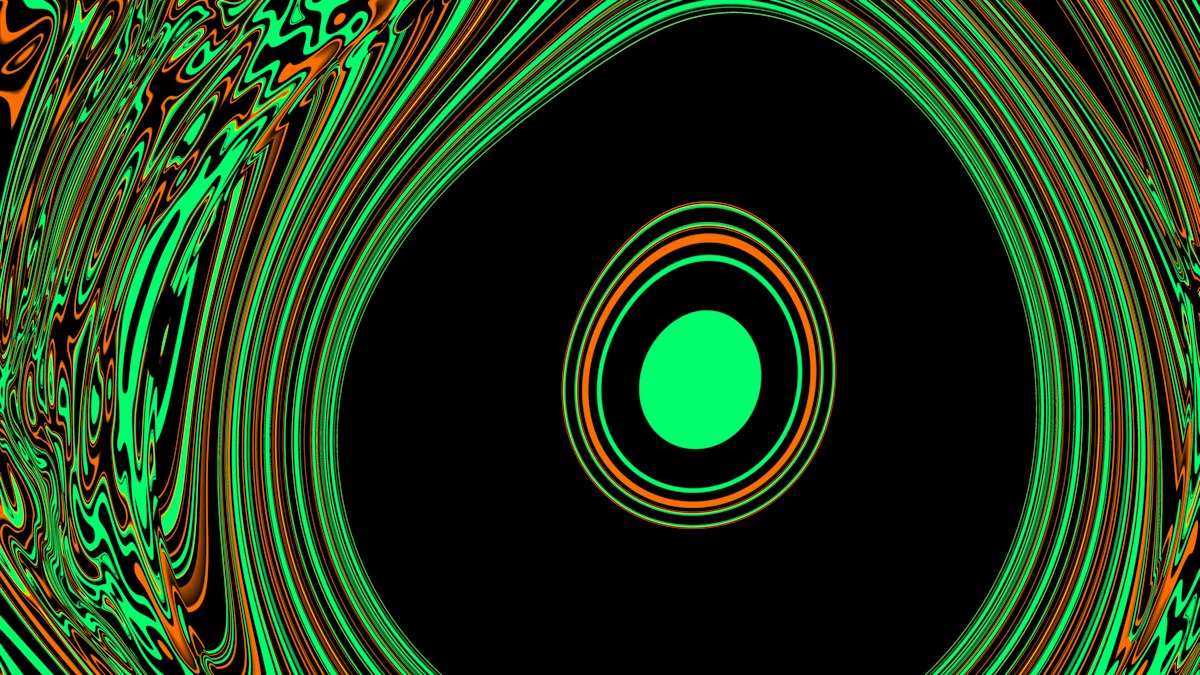
Roman Telescope's first test image shows hundreds of stars as neon-green rings. NASA says all systems are working as they should.
Roman Telescope Opens Its Eyes
Roman Telescope has taken its first look at the cosmos, and the universe stared back in neon green. NASA's Nancy Grace Roman Space Telescope activated its 300-megapixel infrared camera for the first time, capturing hundreds of stars as glowing lime-colored rings against the dark. The image, shared on Sept. 15, 2026, marks a critical milestone for a mission still finding its footing in space.
The telescope launched on Aug. 30 and is now partway through a months-long commissioning process. NASA scientists are testing and tuning each instrument as the spacecraft undertakes a million-mile journey to Lagrange point L2, an orbital parking spot where the competing gravity of Earth and the sun will hold it steady alongside the James Webb Space Telescope and other scientific spacecraft.
Why the Stars Look Like Doughnuts
The green loops are not a malfunction. Roman's camera system, known as the Wide Field Instrument, has not been fully focused yet, so each star appears as a wavy ring rather than a sharp point of light. The effect is temporary. By the time the telescope is ready to beam home its first full science images in early 2027, it will capture cosmic snapshots as crisp and detailed as those from the Hubble Space Telescope, with each frame covering an area 100 times larger than Hubble's.
Josh Schlieder, chief WFI scientist at NASA's Goddard Space Flight Center in Maryland, called the moment a turning point. Years of effort went into building and testing the instrument on the ground, and now, after all that work, we have confirmation that it is operational in space, which he called a huge milestone. There is much to do. But we're on our way to science that could change everything.
The Engine Behind the Image
The wavy rows of squares visible in the test image reveal how Roman Telescope builds its pictures. Each square is one detector. There are 18 of them, and they're devices that translate photons from distant light sources into electrical signals. Together, they encode enormous images of the universe. The data volume is staggering. Scientists are preparing for the telescope to beam roughly 1.4 terabytes back to Earth every day, which is about five to 10 times the storage capacity of an average smartphone, and that's a lot of data, and it's coming every single day, and they're getting ready for it now.
That flood of information will feed long-term surveys of distant galaxies, helping researchers discover new objects and calculate the expansion of the universe. It's a lot. And it could shed new light on dark energy, one of astronomy's most stubborn mysteries, a force they're still trying to understand, a problem we've never solved, something that can't be ignored.
A Second Instrument Passes Its Test
Roman carries more than a wide-field camera. The spacecraft also includes a coronagraph, an instrument designed to block out starlight so the telescope can zoom in on exoplanets with unprecedented precision, free from stellar glare. NASA successfully tested the coronagraph this week.
The implications are huge. We've confirmed over 6,000 alien worlds so far, and scientists expect Roman's exoplanet surveys could push that count beyond 100,000 by the end of its planned 10-year mission, which is a number so vast it's hard to grasp. But it's the search for alien life that really matters. And they're just getting started.
There is much to do, but we are on our way to science that could change everything."
Josh Schlieder, chief WFI scientist at NASA's Goddard Space Flight Center
A Mission That May Double Its Lifespan
Ten years was always the plan. A successful thruster burn, combined with bonus fuel loaded onto the spacecraft at launch, means Roman Telescope may have enough power to operate for 22 years instead.
That kind of longevity has precedent. Hubble kept going. It operated far beyond its initial mission parameters, delivering science for decades longer than anyone anticipated, and it's still up there, still working, still handing us data nobody thought we'd get. Roman may follow the same path. It's an orbital gift that keeps giving long after its original deadline.
What Comes Next
For now, the telescope is still in its commissioning phase, with months of tuning ahead before it reaches its final orbit at L2. The neon-green doughnuts will sharpen into precise images. The detectors will calibrate. The data will begin to flow.
- Roman launched on Aug. 30 and is traveling to Lagrange point L2, a million miles from Earth.
- The Wide Field Instrument is a 300-megapixel infrared camera, the largest ever flown for cosmology.
- First full science images are expected in early 2027.
- The telescope's coronagraph was successfully tested this week.
- Roman may operate for 22 years instead of the planned 10.
When those first science images arrive, they will cover swaths of sky 100 times larger than Hubble's view, at comparable sharpness. That's the combination. Breadth and clarity. It's what makes Roman Telescope unusual, because it isn't just looking deeper, it's looking wider, and faster, and with enough data to keep astronomers busy for a generation.
The green loops are just the beginning.
Frequently Asked Questions
Why do the stars appear as neon-green doughnut shapes in the Roman Telescope's first test image?
The green loops are not a malfunction. Roman's camera system, known as the Wide Field Instrument, has not been fully focused yet, so each star appears as a wavy ring rather than a sharp point of light.
How much data is the Roman Telescope expected to beam back to Earth every day?
Scientists are preparing for the telescope to beam roughly 1.4 terabytes back to Earth every day. That is about five to 10 times the storage capacity of an average smartphone.
When are the Roman Telescope's first full science images expected to arrive?
First full science images are expected in early 2027. By then, the telescope will capture cosmic snapshots as crisp and detailed as those from the Hubble Space Telescope.
What did NASA successfully test on the Roman Telescope this week besides the wide-field camera?
NASA successfully tested the coronagraph this week. It is an instrument designed to block out starlight so the telescope can zoom in on exoplanets with unprecedented precision, free from stellar glare.
How long might the Roman Telescope operate instead of its planned 10-year mission?
A successful thruster burn, combined with bonus fuel loaded onto the spacecraft at launch, means Roman Telescope may have enough power to operate for 22 years instead. Ten years was always the plan.

Nadia Petrov covers science and research across disciplines, from the laboratory to the field. She enjoys making discovery accessible and showing why new findings matter.
💬 Comments (0)
No comments yet. Be the first!