Nasa Launches Roman Telescope to Explore Dark Energy
Nasa's Roman telescope launched from Florida, aiming to explore dark energy and find exoplanets.
Roman telescope launch marks a new era for space exploration. NASA's most ambitious observatory yet lifted off from Kennedy Space Center in Florida on Sunday morning, riding a SpaceX Falcon Heavy rocket into the sky. It's a big deal. The Nancy Grace Roman Space Telescope blasted off, beginning a mission that could reshape our understanding of dark energy, black holes, and the very fabric of the cosmos, and we've got a long road ahead before we see what it finds. But that launch was just the first step.
The launch was picture perfect, according to project manager Jackie Townsend, who described the moment as "glorious" during a news conference following the event. "The ride was magnificent. It put us right where we wanted to be." About 30 minutes after liftoff, the telescope separated from its rocket and began its 100-day journey to a vantage point roughly one million miles from Earth.
A Wider Window on the Universe
Sheer scope sets this telescope apart. It's a leap beyond anything we've flown before, and the Roman telescope launch delivers an instrument with a field of vision 100 times larger than both the Hubble and James Webb space telescopes, according to NASA. That expansive view means Roman can capture vast panoramic sweeps of space. It won't just peer at narrow slices of the sky. So the difference isn't subtle, it's a whole new way of seeing, one that sweeps across entire regions in a single glance.
The mission's primary goals are nothing short of audacious: charting exoplanets beyond our solar system, mapping billions of galaxies, probing the mysteries of dark matter and dark energy, and studying black holes from our cosmic backyard to the edge of the observable universe.
Nicky Fox, a NASA administrator, didn't mince words about the stakes. Roman is going to change the way we look at the Universe. She went further, predicting the telescope is going to discover tens of thousands, maybe even 100,000 new exoplanets, and that's a number so vast it could redraw our entire cosmic map. But she didn't stop there. So here's the real kicker: those worlds, once invisible, might hold the keys to questions we've barely thought to ask, and that's the kind of shift you can't simply shrug off.
Why Exoplanets Matter So Much
Fox connected the dots for anyone wondering why finding distant worlds should matter to Earthlings. So why do we care so much about exoplanets? It's simple. Because one of our main goals at Nasa is answering the question, are we alone in the universe, and that's a question that touches every single person who's ever looked up at the night sky and wondered if someone out there is looking back.
It's the kind of question that has driven astronomers for generations. But Roman's wide field of view promises to change everything, and with it, scientists expect to find thousands of new worlds right here in our own galaxy, worlds that could reshape our understanding of where we fit in the cosmos. Astronomer Jenifer Millard said the telescope will be positioned four times further from Earth than the Moon is. That's a long way out. It's a location where infrared space cameras can operate without interference, free from the warmth and glare that would otherwise blind their sensitive instruments. So the hunt is on.
That placement isn't random. Millard explained that being a million miles away ensures infrared light from the Moon and Earth doesn't contaminate the cameras. But it's a lonely vantage point. The James Webb Space Telescope, launched in 2021, orbits at a similar distance, yet its field of vision is far more limited, which means it can't sweep the same swaths of sky. Hubble, which has been circling Earth since 1990, operates from just 300 miles above the surface. So distance changes everything.
The Legacy Behind the Name
Nancy Grace Roman was NASA's first chief astronomer and its first female executive back in the 1960s. She's known as the "mother of Hubble," and that's because she played an instrumental role in getting that telescope approved by Congress, a fight that took years of persistence and political savvy. But Roman later said dark energy was the most interesting discovery to emerge from her namesake's predecessor. It's a powerful legacy. That telescope honors her.
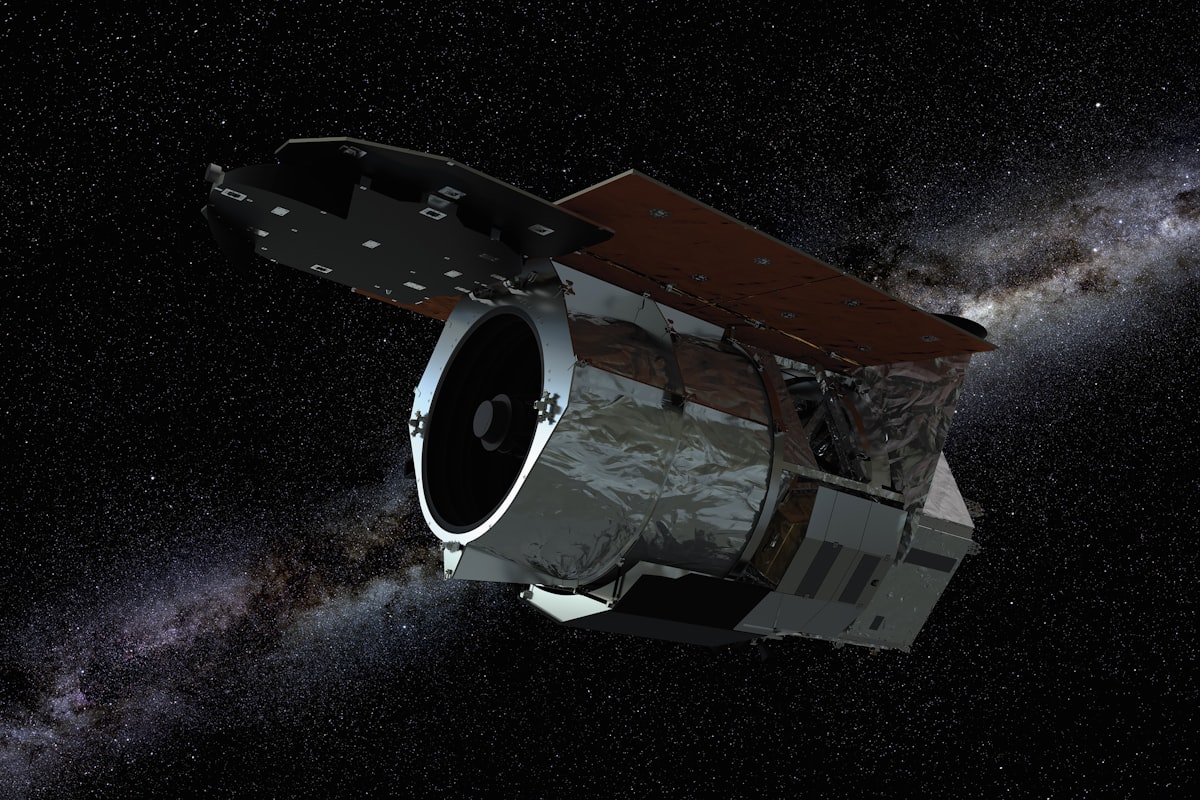
Roman's official mission is five years. But the team has designed it with one eye on a full decade of operation, so the timeline question isn't really about hardware endurance at all. It's about what the telescope will find, and when. We've built it to last, but discovery doesn't follow a schedule.
Peeling Back Cosmic Layers
Millard described the approach scientists will take with the data Roman sends back. It's almost like an onion, she said. You can peel back layer upon layer and see how the distribution of galaxies changes through cosmic time, and what we want to do is use this distribution to try and figure out dark matter and dark energy because we know they exist and we see their effects. But what they are is a real mystery. We can't crack that easily.
Two invisible forces dominate the universe. Dark matter acts as a kind of gravitational glue holding galaxies together, and dark energy is believed to be a repulsive force driving the universe's expansion, so together they account for roughly 95% of everything that exists. Ordinary matter, the stuff we can see and touch, makes up just a sliver. It's a tiny fraction. But that sliver is everything we've ever known.
"With Roman, we are going to make this giant leap forward.. that is going to allow us to look at these distant, distant worlds and start to really resolve the atmosphere around them to let us know: could they be habitable?" - Nicky Fox, NASA administrator
Even the White House took notice. President Donald Trump dialed into NASA's news conference to congratulate the scientists behind the mission, and he didn't hold back with his praise. "You're the hottest in space, and we have the hottest country anywhere in the world," Trump said, adding, "So, let's keep it all going. You're a big part of it." That's a bold claim. But the call itself was real, and it underscored how much political capital this small team had suddenly generated.
What Happens Next
The launch is only the beginning. Over the next 100 days, the Roman telescope will cruise toward its final orbital position, a stable point in space roughly a million miles from Earth, and that journey demands patience from everyone involved. Calibration comes next. Scientists will start the slow process of testing instruments and checking systems once it arrives, so the real science can't begin until every piece of gear proves it's ready. And that's when the wait really pays off.
NASA's "crisp, sweeping surveys" are expected to help scientists investigate dark energy and dark matter, discover and characterize exoplanets, map billions of galaxies, study black holes, and explore objects from our own solar system to the edge of the observable universe.
Millard captured the collaborative spirit of the effort. Through telescopes like Roman, scientists hope to create "enormous cosmic maps" of the universe at various stages of its evolution, and those maps could finally crack the code on dark matter and dark energy. It's a tall order. But these twin mysteries have haunted physics for decades, so the payoff, if it comes, would be immense.
For now, the telescope is heading toward its destination, carrying with it the hopes of astronomers worldwide who've waited decades for this moment. Roman's launch has already made history. But what it discovers next could rewrite textbooks, reshaping how we understand dark energy, exoplanets, and the very structure of galaxies we've only glimpsed through older instruments. A million miles away, a new eye on the universe is opening. And the cosmos may never look the same again. It's a quiet revolution.
Frequently Asked Questions
What is the primary purpose of the Roman telescope launch?
The Roman telescope launch aims to explore dark energy, dark matter, exoplanets, black holes, and map billions of galaxies. It will also study objects from our solar system to the edge of the observable universe.
How does the Roman telescope's field of vision compare to Hubble and James Webb?
The Roman telescope has a field of vision 100 times larger than both the Hubble and James Webb space telescopes. This allows it to capture vast panoramic sweeps of space rather than narrow slices.
Why is the Roman telescope positioned one million miles from Earth?
Being a million miles away ensures that infrared light from the Moon and Earth doesn't contaminate the cameras. This location allows the infrared space cameras to operate without interference from warmth and glare.
Who was Nancy Grace Roman and how is she connected to the telescope?
Nancy Grace Roman was NASA's first chief astronomer and first female executive in the 1960s, known as the 'mother of Hubble' for her role in getting that telescope approved. The Roman telescope is named in her honor, and she later called dark energy the most interesting discovery from Hubble.
What is the expected timeline for the Roman telescope's mission?
The official mission is five years, but the team designed it to potentially operate for a full decade. The telescope will take 100 days to reach its orbital position, and calibration will occur before science begins.

Victor Holm reports on science and discovery, with a particular interest in physics, biology and the questions that drive research forward. He looks for the wonder in how the world works.
💬 Comments (0)
No comments yet. Be the first!