Nancy Grace Roman telescope vs Hubble and Webb
NASA's Nancy Grace Roman Space Telescope will hunt dark matter and exoplanets, complementing Hubble and Webb with a wide field of view.
Nancy Grace Roman telescope enters a crowded field
The Nancy Grace Roman telescope is about to change how astronomers see the universe. It's a big deal. Less than five years after the James Webb Space Telescope debuted, NASA is preparing to launch another major observatory, and this one will hunt dark matter, dark energy, and exoplanets while giving astrophysicists an unprecedented wide view of the cosmos. Launch is scheduled for early next year from Kennedy Space Center in Florida. So we can't wait to see what it finds.
Webb and the aging Hubble Space Telescope are still collecting data, so it’s fair to wonder what another mission brings. But scientists who know the instrument best say Roman fills a gap neither predecessor can touch, a gap defined by sheer survey power rather than the ability to peer at a single galaxy for hours on end. It’s a survey machine built for speed and breadth. Not deep zoom.
Roman is a quiet underdog. That's how Elisa Quintana, an astrophysicist at NASA's Goddard Space Flight Center who previously served as Roman's deputy project scientist for communications, describes it. But all of the data they're collecting is going to be a goldmine for many, many decades, and that's a promise we can't ignore.
Three massive science goals
Roman’s mission packs three big research targets. It will search for subtle signatures of dark matter and dark energy, identify tens of thousands of new exoplanets, and gather a flood of general astrophysics observations, which means data on hundreds of black holes, billions of galaxies, and 100 billion stars.
Roman will sweep across the sky in a carefully choreographed pattern to manage that packed agenda. But it's not just a camera in space. It's a nimble observatory, one that can pivot quickly between targets, and that agility is what lets it keep pace with a schedule demanding constant motion and rapid shifts in focus.
It's a big survey machine, but also at high resolution. Usually, you have to pick one or the other. So that's what makes this so rare. Sabrina Stierwalt, an astrophysicist at Occidental College in California and co-chair of the Roman Science User Panel, says the combination is exactly what astronomers have been waiting for, because they've never had both at once before. But here it is.
The survey focus is baked into Roman's design. It's a deliberate choice. But the real trick lies in the engineering: the mirror and spacecraft are lighter than both Hubble and Webb, and that reduced mass gives the telescope unusual agility. So it can pivot quickly. That's the payoff.
“We have an observatory that can move nimbly, it can stop on a dime,” says Julie McEnery, an astrophysicist at NASA’s Goddard Space Flight Center and senior project scientist for Roman.
The wide-angle lens vs. the zoom
Webb represents the opposite tradeoff. It prioritizes a truly massive mirror for super-deep views of the universe, but that power comes with a narrow field of view. McEnery puts it simply: “You could think of Roman as the wide-angle lens and Webb as the zoom.”
Neither approach is better. Each serves different science. Stierwalt gives an example: if an astronomer spots a galaxy with Webb that “has some weird shape,” that galaxy becomes a puzzle. Webb can’t reveal the story behind that oddity. For that kind of cosmic detective work, you need an observatory like Roman to scan the surrounding area and find context.
The two telescopes will collaborate well because of their complementary strengths. It's a match made in deep space. Both sit nearly 1 million miles from Earth on the side opposite the sun, where they stay naturally cold, and that positioning matters because both study infrared radiation, which heat interferes with. But Webb covers a much broader range of that light, and it needs its trademark sunshield for extra protection, so the pair don't overlap in every task. Cold is their shared advantage. Simple.
Roman vs. Hubble, a family resemblance
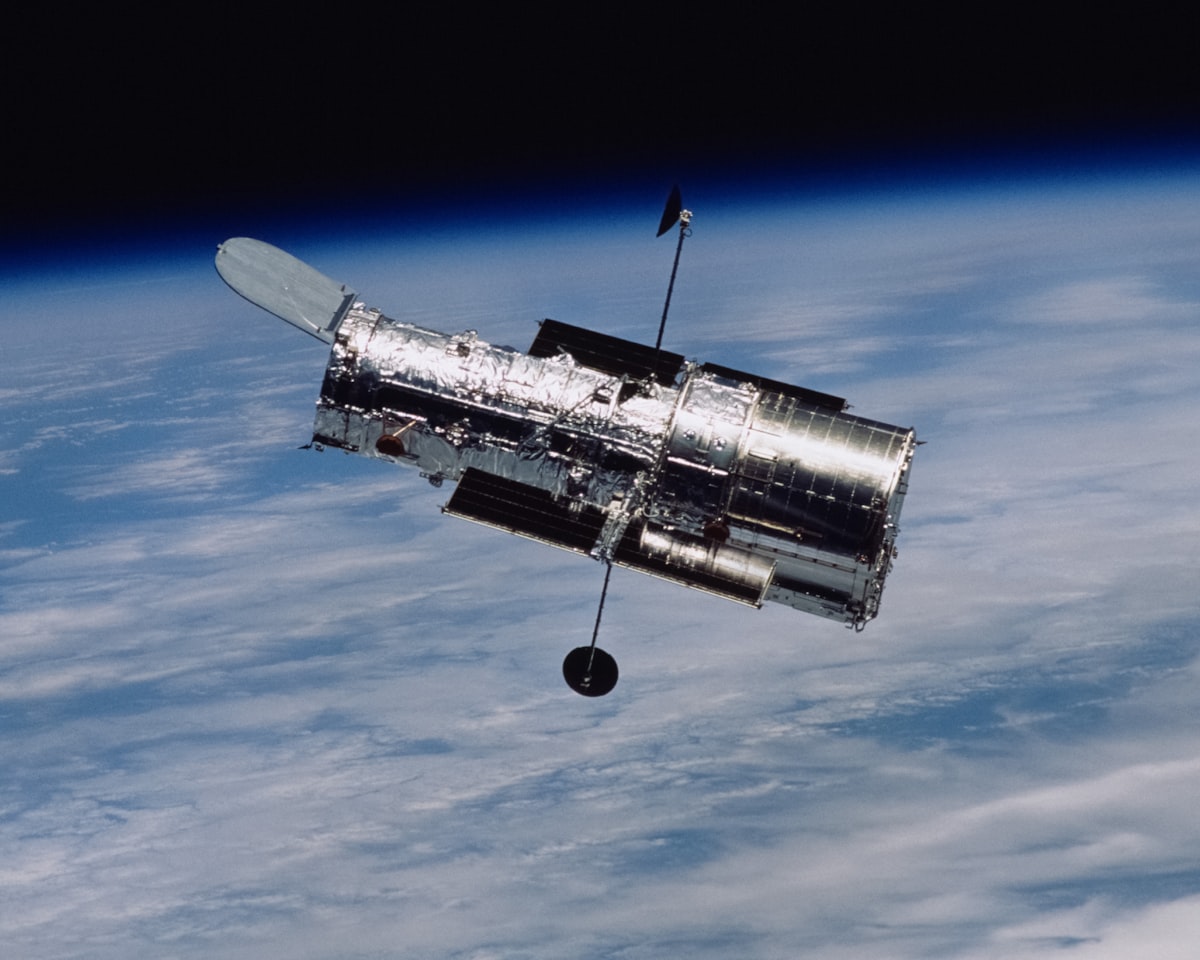
Roman is actually closer to Hubble than to Webb in several ways. Both share the basic lipstick-tube frame common among space telescopes. Each has a round mirror 7.9 feet across. But Roman’s mirror weighs one-quarter of Hubble’s, which contributes to that agility.
Roman and Hubble are built for in-space maintenance. Webb isn't. Hubble received five astronaut servicing missions in the 1990s and 2000s, and those crews could reach it easily because it orbits close to Earth. Roman, though, sits far away, so NASA would need robotic servicing operations that don't exist yet, and that's a problem we've never solved. So fixing Roman won't be nearly as easy. It's a tough spot.
The real difference comes down to sensors. Roman has significantly more of them, and each is much larger than Hubble’s equivalents, so every glance captures a patch of sky 100 times larger than Hubble’s view. That's a huge leap. But over its initial five-year mission, Roman will observe 50 times the amount of sky Hubble covered in 30 years, and that’s a scale we've never seen before.
Hubble still has work to do
That doesn’t make Hubble obsolete. NASA is committed to keeping the 36-year-old observatory running as long as possible. Hubble’s key advantage is observing in visible light and, more importantly, ultraviolet radiation, which Earth’s atmosphere completely blocks from reaching ground telescopes.
Hubble continues doing all the science it always has. We're not going to use Roman in a way that could duplicate Hubble science, so Roman will operate in a completely different manner, one that Hubble simply can't match. But Hubble's still going to do what Hubble has always done. McEnery says that's the whole point, because Roman's capabilities are aimed elsewhere, and that keeps both telescopes busy without stepping on each other's toes.
Roman’s unique capabilities will complement Hubble and Webb while creating its own hugely important legacy, even if people aren’t quite as familiar with it yet.
The Nancy Grace Roman telescope launches from NASA’s Kennedy Space Center in Florida on Sunday, August 30 at 7:26 a.m. EDT. Once it reaches its post, astronomers will finally have all three tools in the toolbox. One wide, one deep, and one that’s been around for decades. Each sees what the others can’t.
That’s the real story here. Roman isn’t replacing anyone. It’s adding a new way to look at the sky, and doing it fast. The data will keep scientists busy for generations.
Frequently Asked Questions
What makes the Nancy Grace Roman telescope different from Hubble and Webb?
Roman is designed as a survey machine for speed and breadth, not deep zoom, with a wide-angle lens compared to Webb's zoom and Hubble's narrow view. Its key difference lies in its ability to capture a patch of sky 100 times larger than Hubble's view, and it will observe 50 times the amount of sky Hubble covered in 30 years.
Why is the Nancy Grace Roman telescope's agility important for its mission?
The telescope's agility, achieved through a lighter mirror and spacecraft, allows it to pivot quickly between targets. This nimbleness is crucial for managing its packed agenda of surveying dark matter, dark energy, and exoplanets, as it can stop on a dime and rapidly shift focus.
How does the Nancy Grace Roman telescope complement the James Webb Space Telescope?
Roman and Webb have complementary strengths: Roman provides a wide-angle view, while Webb offers super-deep views with a narrow field. For example, if Webb spots a galaxy with a weird shape, Roman can scan the surrounding area to provide context, making them a match made in deep space.
When is the Nancy Grace Roman telescope scheduled to launch?
The article states that the Nancy Grace Roman telescope launches from NASA's Kennedy Space Center in Florida on Sunday, August 30 at 7:26 a.m. EDT. It is scheduled to launch early next year, but the specific date given is August 30.
Who are some of the scientists involved with the Nancy Grace Roman telescope, and what roles do they play?
Elisa Quintana, an astrophysicist at NASA's Goddard Space Flight Center, previously served as Roman's deputy project scientist for communications. Julie McEnery is the senior project scientist for Roman, and Sabrina Stierwalt is co-chair of the Roman Science User Panel.

Nadia Petrov covers science and research across disciplines, from the laboratory to the field. She enjoys making discovery accessible and showing why new findings matter.
💬 Comments (0)
No comments yet. Be the first!