Industrial chicken farming and pathogen risk
Industrial chicken farming scale is driving a 100-fold increase in bacterial strain exchange, raising antimicrobial resistance.
The Scale of Biological Change
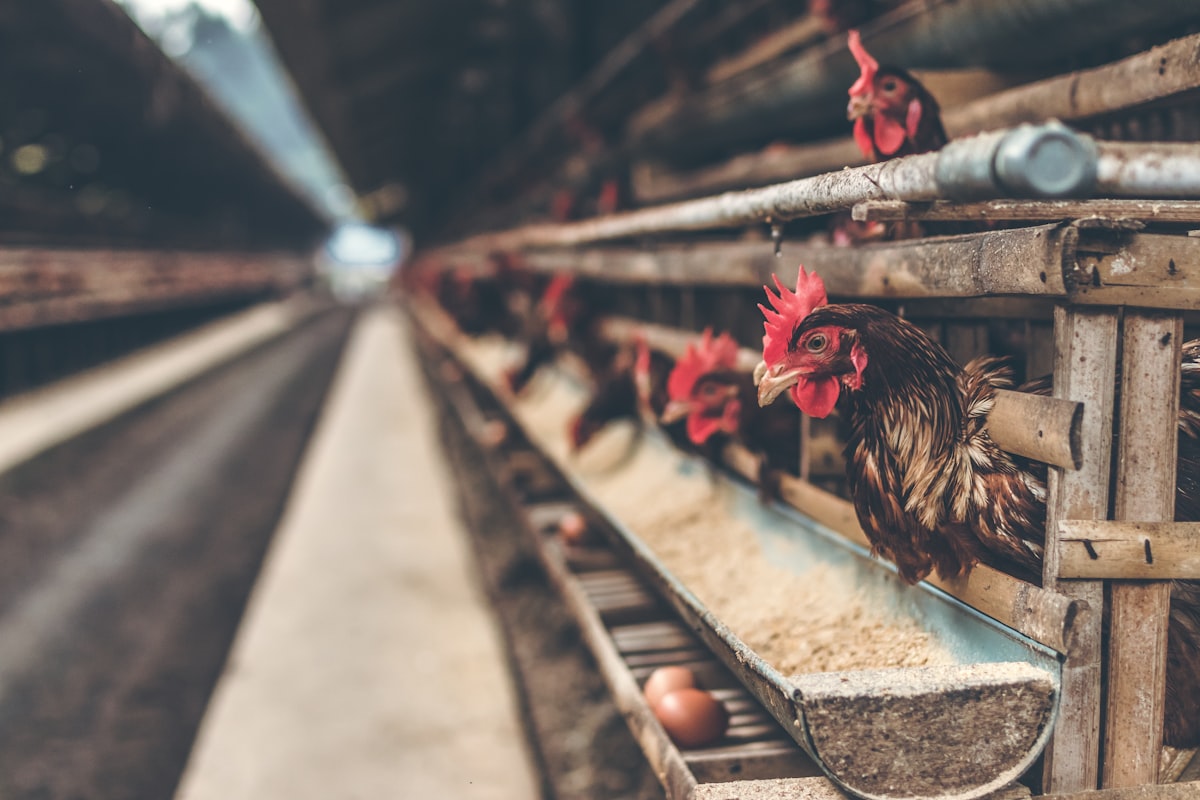
The sheer volume of birds in current systems represents a seven-fold increase since the 1960s. This concentration of biomass accounts for roughly 70 percent of all bird biomass on Earth. When large numbers of animals are housed in high density, the opportunity for different bacterial strains to meet and hybridize increases exponentially. Scientists have observed a 100-fold increase in the movement of strains between chickens and wild birds since 1900. This is not a static trend. It is accelerating as the industry pushes for faster growth cycles.Evolutionary Pressure in Poultry Sheds
Modern production systems prioritize speed, with animals often reaching slaughter weight in just five weeks. This "super growing" model requires specific environmental conditions. These conditions are now linked to the rise of antimicrobial resistance. Bacteria exposed to environments where antibiotics are used for growth promotion or disease control have developed traits that allow them to survive drugs that once treated human infections effectively.- Global chicken populations have reached 27 billion birds.
Market Context: According to the OECD and FAO, global poultry meat production is expected to rise to over 141.3 million metric tons in 2024.
- Chicken biomass is now 70 percent of total bird biomass on Earth.
- Researchers analyzed 2,800 bacterial genomes across 30 countries.
- Strain exchange between wild birds and chickens has increased 100-fold since 1900.
The Risks of Bacterial Hybridization
The danger lies in the mixture of diverse bacterial strains within a single host. When bacteria from wild populations and intensive farms converge, they swap genetic material. Prof Sam Sheppard of the University of Oxford explains the danger of this process:As the chicken population has exploded, they have increasingly picked up strains from different wild birds and become a cauldron of bacterial evolution. Lots of strains come together and hybridise. We do not want that, because that is where new Frankenstein monster bugs emerge.
Policy and Production Tensions
The growth of this sector has successfully delivered animal protein at scale but at a cost that is increasingly visible in public health data. Regulators face a difficult position. While they oversee the expansion of these facilities, they must also grapple with the reality of pathogen evolution. Maya Pardo of Communities Against Factory Farming highlights that the move to expand industrial facilities persists even as concerns about disease spread intensify.The Future of Food Safety
Cooking remains the primary defense for the consumer, yet the pervasiveness of these pathogens makes cross-contamination a constant risk. The link between the environment inside the shed and the risk of human illness is becoming clearer as genetic data accumulates. The current trajectory suggests that as long as the capacity for production remains high, the risk of developing resistant strains will likely follow. Looking ahead, the evidence indicates that the current model of production is driving evolutionary changes that we are only beginning to quantify. There is a clear consensus that the status quo is unsustainable from a microbiological perspective. The industry must now determine if technical adjustments can mitigate these risks or if a fundamental shift in the scale of operation is the only path toward reducing the emergence of new, resistant pathogens.
Frequently Asked Questions
What is the primary concern of industrial chicken farming regarding pathogen evolution?
Industrial chicken farming creates a biological environment that is fundamentally changing how common pathogens evolve and spread. The intensive nature of these operations has turned poultry sheds into epicenters for microbial adaptation, altering the evolutionary trajectory of bacteria that cause gastrointestinal illness in humans.
How has the scale of chicken production changed since the 1960s?
The sheer volume of birds in current systems represents a seven-fold increase since the 1960s. This concentration of biomass accounts for roughly 70 percent of all bird biomass on Earth.
Why does the high density of chickens increase the risk of bacterial hybridization?
When large numbers of animals are housed in high density, the opportunity for different bacterial strains to meet and hybridize increases exponentially. This mixture of diverse bacterial strains within a single host allows them to swap genetic material, potentially creating new dangerous pathogens.
What evidence supports the increase in strain exchange between chickens and wild birds?
Scientists have observed a 100-fold increase in the movement of strains between chickens and wild birds since 1900. This finding is based on an analysis of 2,800 bacterial genomes across 30 countries.
What is the primary defense for consumers against pathogens from industrial chicken farming?
Cooking remains the primary defense for the consumer. However, the pervasiveness of these pathogens makes cross-contamination a constant risk.

Eva Koch writes about scientific research and the people behind it, covering the studies and breakthroughs shaping our understanding of the world. She values curiosity and careful evidence in equal measure.
💬 Comments (0)
No comments yet. Be the first!