Why Governments Ignore Global Catastrophe Risks
Florian Ulrich Jehn argues that leaders must prepare for global catastrophes like supervolcanoes and nuclear war, which could disrupt food systems. He calls for risk assessments, trade rules, and pilot projects.
Global Catastrophe Risks Demand Attention Before It’s Too Late
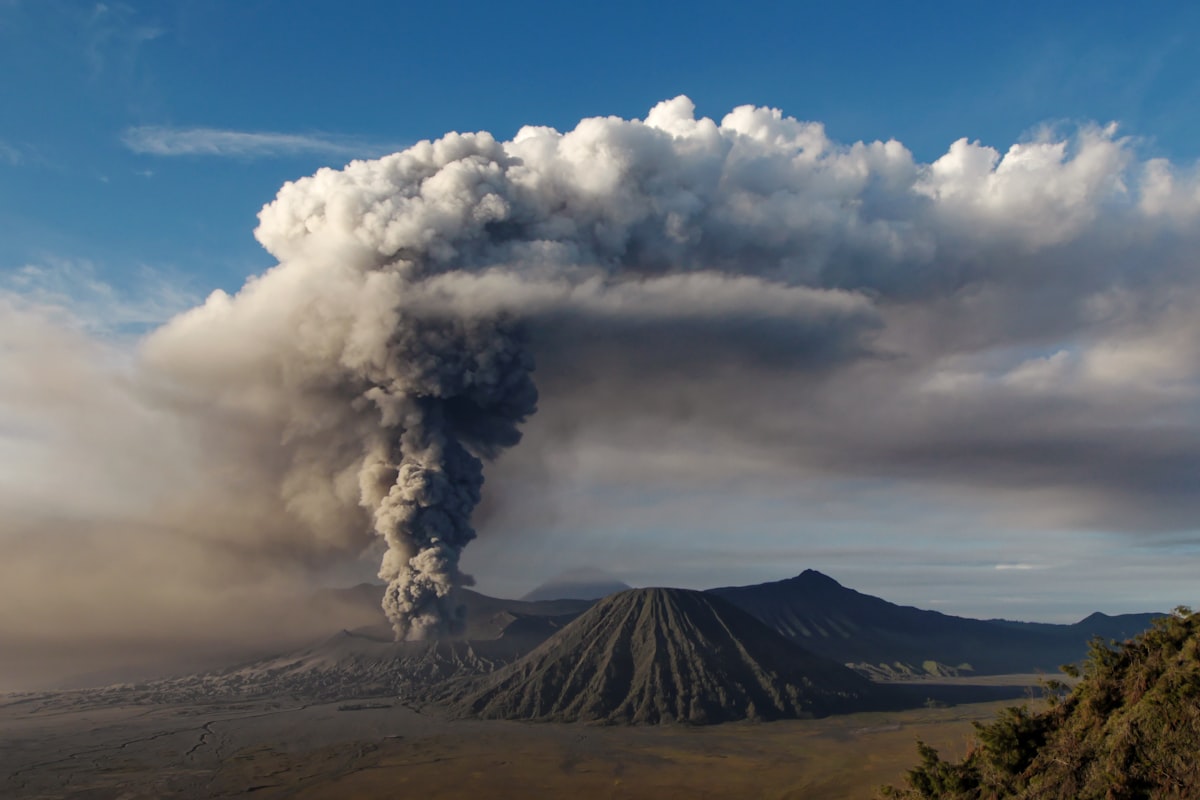
Global catastrophe risks remain dangerously absent from national planning, leaving the world unprepared for events that could collapse the food system and cost tens of millions of lives. The scenarios are not abstract thought experiments. A massive volcanic eruption in Southeast Asia, a continent-wide blackout from a solar storm, or the firestorms of nuclear war would each push particles into the upper atmosphere, block sunlight, and turn productive farmland into barren ground. Harvests would fail from the American Midwest to the monsoon belt in Asia. Borders would close. People who have never heard of the volcano would begin to starve.
We haven't seen this nightmare scenario yet. But it's not a matter of if, only when, and that single truth should chill every government official who assumes the next world-changing event will wait politely for their next election cycle or budget review before it arrives. So the real question is whether they'll start preparing now, before one lands. They can't wait.
The Odds Are Worse Than They Feel
Critics might question why we need to prepare for such Black Swan events. But global catastrophe risks are not as unlikely as they feel. Ice cores let volcanologists count large eruptions of the past. On that basis, they put the chance of a magnitude 7 eruption, the size of Tambora in 1815 which caused a year without summer, at roughly 1 in 6 this century.
Estimates for a repeat of the 1859 Carrington solar storm, which could disrupt power grids on a continental scale, run from about 1% to 12% per decade. Nuclear-armed states are almost constantly engaged in conflicts, risking nuclear war. Each of these events might seem unlikely on its own. But together, they make it quite likely that at least one will happen in this century.
They all share a drastic impact on food production. In the most extreme nuclear war scenario, researchers estimate that global calorie production could drop by around 90%, a figure that would reshape every market, every meal, and every border overnight. A long blackout works differently but has the same consequence: no fertilizer, no pesticides, no fuel. And the sharpest yield losses hit exactly where we produce most food today. That's the cruelest part.
National Risk Registers Miss the Scale
Hardly anyone is assessing these global catastrophe risks. Even the countries doing it best fall short.
The U.K. National Risk Register lists 89 risks, including volcanic eruptions, severe space weather, pandemics and a nuclear miscalculation abroad. However, the catastrophic events it considers are all relatively small scale, with a reasonable worst-case scenario of over 1,000 deaths and a cost of tens of billions of pounds. The register does not even begin to consider events like a global famine or a nuclear war that could lead to tens of millions of deaths and cost trillions of pounds.
Switzerland's national risk analysis covers 44 hazards including a solar storm, a foreign volcanic eruption and a meteor strike. Again, the scale is too small. The volcano is a moderate European eruption and the meteor is 66 feet (20 meters) across, comparable to the Chelyabinsk impact in 2013. Many other countries do not even consider risk on these limited scales.
The 1991 eruption of Mount Pinatubo in the Philippines reached a magnitude of 6 on the volcanic explosivity index, the biggest eruption of the last 100 years. The last VEI 8 eruption took place around 26,500 years ago. Those events are not on the table in most national assessments.
No Country Can Go It Alone
Florian Ulrich Jehn and his colleagues, in their review, highlighted the key factors that would make countries and communities more resilient to various global catastrophes. Food self-sufficiency matters. Decentralization helps, too. So does geographic isolation. But governance quality is the real linchpin, which means working institutions, low corruption, and low inequality all have to be in place for any of this to actually hold up when disaster strikes. That's a heavy load. It's not easy. And yet, these aren't wild ideas; they're practical, testable conditions that any nation could start building toward tomorrow.
Australia scores best on these measures. But even Australia would struggle without imported fuel, medicine and fertilizer. Nowhere is a refuge on its own.
Countries will need international collaboration to make it through a crisis of this scale. Export bans have been a common reflex in food crises of the past. After a global catastrophe, they would only isolate countries from each other and lead to further damage, as export bans can easily lead to the situation where enough food is still around, but nobody is trading it and so people starve.
That way of thinking has to change before an emergency arrives. We can't wait for the chaos to dictate our choices. But the rules governing trade under those circumstances need to be agreed upon now, while we still have the clarity and calm to debate them fairly, not in the middle of a collapse when panic and misinformation will make any rational decision nearly impossible. So we've got to act.
What Needs to Happen Now
We need to act. And there are three main steps we should take soon. First, put events like nuclear war, a huge volcanic eruption and a continent-wide blackout into national risk assessments. Second, agree to trade rules for such an emergency before it arrives. Third, fund pilot projects now for foods so we know what can be produced at scale without much sunlight or without fertilizer. That's the whole plan.
Jehn, a senior researcher in environmental science specializing in food security, climate impacts, and civilizational resilience, argues that starting work on resilient foods or better international agreements when a global catastrophe has already occurred is too late. You cannot start an industry in the month the harvest fails.
- Low-input farming is within grasp of most countries.
- Decentralized grids reduce the damage from a single point of failure.
- A diverse food supply buffers against crop-specific losses.
- More exhaustive risk assessment costs little compared to the potential damage.
The Cost of Waiting
You might say the probabilities are too small to justify the cost, and that money spent on hypothetical volcanoes is money not spent on floods, hospitals and defense. This criticism might land if you only look at a single catastrophe.
But that framing misses the portfolio effect. There is a whole range of events that could lead to global catastrophe. In combination, there is a good chance that one of them will hit, and if it does, we better be prepared. Many of the preparations needed are not even that expensive.
Prevention beats resilience. That's clear enough. But some of these events can't be prevented at all, and when one of them arrives, the difference between the societies that prepared and those that didn't will be measured not in dollars or policies but in human lives, plain and simple. COVID, the Russian invasion of Ukraine, and the Iran war have all shown us that in today's interconnected world, a regional crisis will reach far beyond its borders, pulling distant nations into its orbit whether they're ready or not. The ripple effects are faster now, wider, and more intense. And with larger catastrophes, those ripples won't just spread,they'll explode, hitting harder and taking hold quicker than anything we've seen before.
The closure of the Strait of Hormuz alone could disrupt global food production, because a large share of the world's traded fertilizer passes through it. The United Nations Food and Agriculture Organization has warned that the shortfall will cut yields into 2027. That is a regional disruption. Global catastrophe risks are an order of magnitude worse, and they are not getting the attention they demand.
Frequently Asked Questions
What are the three main steps the article recommends taking now to prepare for global catastrophe risks?
The article recommends first putting events like nuclear war, a huge volcanic eruption, and a continent-wide blackout into national risk assessments. Second, agreeing to trade rules for such an emergency before it arrives. Third, funding pilot projects now for foods so we know what can be produced at scale without much sunlight or without fertilizer.
Why does the article argue that countries cannot rely solely on their own preparations for global catastrophe risks?
The article states that even a country like Australia, which scores best on resilience factors, would struggle without imported fuel, medicine, and fertilizer. It emphasizes that nowhere is a refuge on its own and that countries will need international collaboration to make it through a crisis of this scale.
How does the article illustrate the inadequacy of current national risk registers in addressing global catastrophe risks?
The article notes that the U.K. National Risk Register lists 89 risks but considers only relatively small-scale catastrophic events with a reasonable worst-case scenario of over 1,000 deaths and tens of billions of pounds. Switzerland's analysis covers events like a moderate European volcanic eruption and a 66-foot meteor, but does not include larger-scale events like a global famine or nuclear war.
What is the estimated probability of a magnitude 7 volcanic eruption this century, and why is it significant?
The article states that ice cores allow volcanologists to estimate the chance of a magnitude 7 eruption, like Tambora in 1815, at roughly 1 in 6 this century. This is significant because such an eruption caused a year without summer, leading to harvest failures, and the probability is not negligible.
According to the article, what is the role of governance quality in building resilience to global catastrophes, and what does it require?
The article highlights that governance quality is the linchpin for resilience, requiring working institutions, low corruption, and low inequality to be in place. It states that these are practical, testable conditions that any nation could start building toward tomorrow, though it is not easy.

Nadia Petrov covers science and research across disciplines, from the laboratory to the field. She enjoys making discovery accessible and showing why new findings matter.
💬 Comments (0)
No comments yet. Be the first!