How geoneutrinos Reveal Earth's Inner Heat
Scientists are using geoneutrinos to map radioactive elements deep inside the Earth's mantle and understand its heat.

Geoneutrinos are finally exposing the hidden engines of Earth's inner heat. They offer a direct look at the radioactive decay that keeps our planet alive, and scientists are using these ghostly particles to map processes we've never been able to observe. Deep underground, shielded from the constant noise of cosmic radiation, sensitive detectors are capturing them. It's a quiet pursuit. And it's unfolding two kilometers beneath the surface at the Creighton mine, where the SNO+ experiment in Sudbury, Canada, relies on a massive sphere filled with 780 tons of oily liquid scintillator to trap particles that can slip through solid rock without a single trace.
Earth's geological activity rests on two primary heat sources. Some warmth is leftover from the violent formation of our planet billions of years ago. But the rest comes from something entirely different: the continuous radioactive decay of uranium, thorium, and potassium in the mantle and crust. That process never stops. Without this internal engine, we'd be a cold, dead world, one that would have cooled off long ago, ending the dynamic processes that drive plate tectonics and generate our protective magnetic field. So detecting the particles produced during this decay gives researchers a direct way to measure this vital heat, and that's the key. It's all we've got.
Chasing ghosts in absolute darkness
Neutrinos are incredibly abundant. But they're notoriously difficult to detect, and that's because they possess a mass only a millionth of an electron's and carry no electromagnetic charge, so they rarely interact with normal matter at all. Trillions of solar neutrinos pass through our bodies every second without notice. It's odd. To catch them, scientists must build huge, highly sensitive detectors in deep underground caverns, where the rock above blocks cosmic rays from reaching the sensors, and we've found that without this shielding, there's virtually no chance of spotting them.
The SNO+ detector is an acrylic sphere wrapped by nearly 10,000 light sensors, and it sits submerged in 7,000 tons of ultrapure water. Cleanliness is everything. Technologists must maintain extreme vigilance to prevent any radioactive dust, such as radon, from contaminating the facility, because even a single stray particle could mimic the signal they're hunting for. Workers swap their clothes for clean jumpsuits and hairnets before entering the lab. It's a necessary measure. Those rare flashes of light from particle interactions are incredibly faint, so they can't be recorded accurately if background noise gets in the way. So every step counts.
A tale of two hemispheres
Solar neutrinos are captured by the hundreds of thousands. Geoneutrinos? They're far scarcer. Only a few hundred have been detected globally since hunting began, and that scarcity makes each one a tiny, hard-won prize for physicists peering into the planet's radioactive heart. In November 2025, SNO+ reported its first successful detection of about 50 geoneutrinos, marking the first time these particles have been measured in the western hemisphere. So this achievement gives us a fresh point of comparison against older measurements taken in the eastern hemisphere. It's a big deal. But it's just the start.
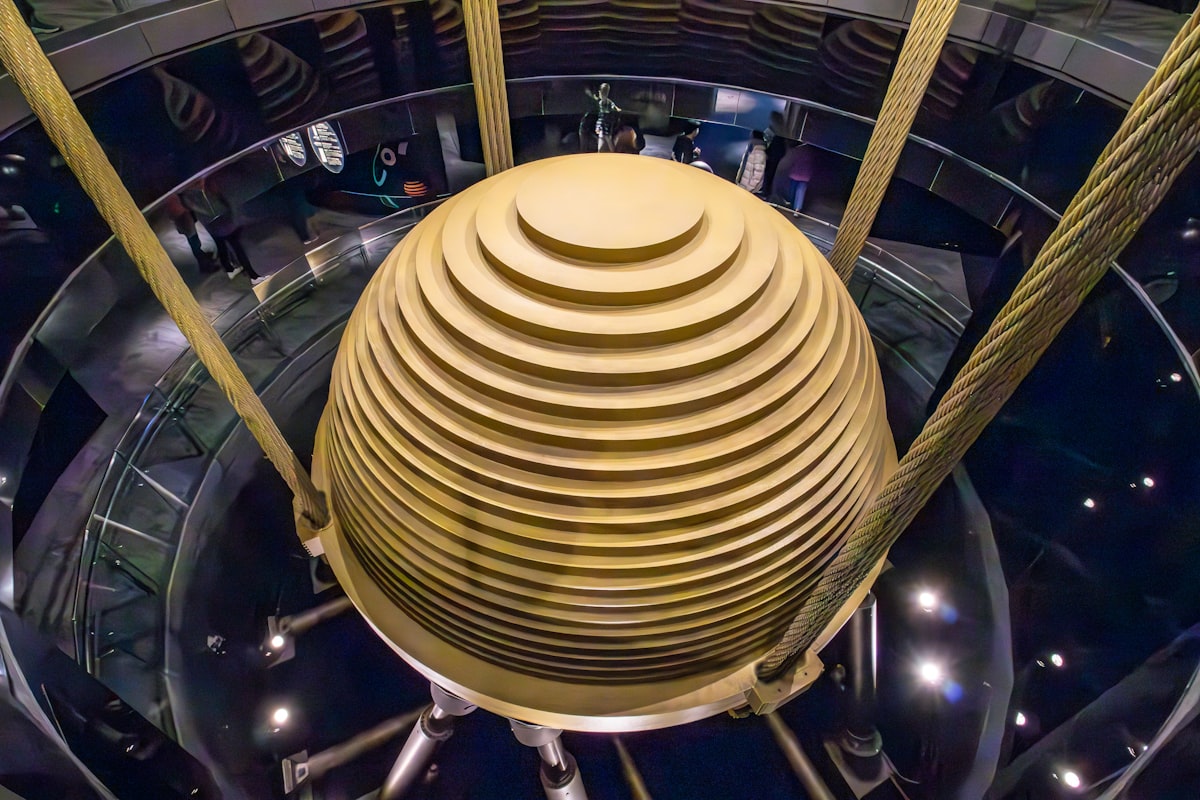
Before this, only two other experiments had successfully captured these particles:
- The Kamland instrument in Japan, which reported the very first geoneutrino detection in 2005.
- The Borexino detector in Italy, which reported catching several dozen particles in 2009.
- The SNO+ experiment in Canada, which added its first dataset in late 2025.
The measurements from these different locations don't match up. That's a problem for anyone trying to build a simple picture of Earth's deep interior, because the flux of geoneutrinos appears to vary significantly depending on where the detector is located. So the mantle may not be a uniform mix of elements, after all. It's a direct challenge to what geochemists have long assumed, and it suggests our planet hides far more complexity beneath our feet than we've ever given it credit for. But the data is clear. We can't ignore it.
"It could be that that's the first hint that the mantle is not uniform," says Mark Chen, a particle astrophysicist at Queen's University and director of the SNO+ collaboration.
Blobs in the deep mantle
Geoneutrino counts vary. That variation points to radioactive elements hiding in specific, massive structures deep within the Earth. Seismologists have previously mapped two continent-size regions of hot, dense material near the core-mantle boundary, known as large low-shear-velocity provinces. One sits under Africa. The other lies beneath the Pacific Ocean. So the detectors recording the highest geoneutrino activity appear to be positioned directly above those anomalous zones, and that's no coincidence.
The challenge of filtering the signal
Determining whether these differences are real or simply an artifact of how detectors count particles remains a major hurdle. Particles don't arrive with clear labels. So physicists must carefully filter out unwanted signals, including high-energy particles, particles with the wrong helicity, and neutrinos streaming from nearby commercial nuclear reactors, a process that demands constant vigilance and clever statistical tricks. But it's the only way forward.
Subtracting the local crust
The crust's radioactivity is another major uncertainty. SNO+ scientists must calculate and subtract the geoneutrinos produced by the crust within a few hundred kilometers of the detector, including a complex geological basin that formed 1.8 billion years ago when a giant impactor struck. That subtraction is tricky. But only after removing these local signals can researchers isolate the true flux coming from the deeper mantle, and it's a painstaking process that demands precise modeling of ancient rock. So they can't skip a step.
A massive new eye in China
The debate over mantle uniformity may soon find answers. It's a big deal. So the massive new experiment called JUNO, located outside the city of Guangzhou in China, is expected to report its first geoneutrino detections this year, and that timeline means we can't wait long to see what the data reveals about Earth's deep interior. But the wait is nearly over.
The first results from this giant detector are expected to be reported later this year, providing a fourth, incredibly rich stream of data to help resolve the discrepancies between the eastern and western hemispheres.
The dream of an ocean detector
To truly isolate the mantle signal, some scientists argue we need to leave the continents behind entirely. It's a bold ask. Continental crust is thick and packed with radioactive elements that muddy the data, and that's a problem we can't ignore when every grain of isotope noise skews the picture we're trying to draw, yet it's a problem we've known about for decades. By contrast, oceanic crust is thin and highly uniform, which would drastically reduce local crust-related uncertainties. So the trade-off is clear. But it's not a simple fix, because the ocean floor brings its own set of challenges that no one's fully solved yet, and those challenges range from hydrothermal alteration to sub-seafloor basalt variability. We can't rush this.
"You are in mantle-only territory," says William McDonough, a geochemist at the Chinese Academy of Sciences, describing the benefits of an ocean-bottom detector.
Until a deep-sea detector becomes a reality, researchers will continue to refine their models using the quiet, deep laboratories buried miles beneath the land.
Frequently Asked Questions
What are geoneutrinos and why are they important for understanding Earth's inner heat?
Geoneutrinos are particles produced during the continuous radioactive decay of uranium, thorium, and potassium in Earth's mantle and crust. They are important because detecting them gives researchers a direct way to measure this vital heat, which drives plate tectonics and generates Earth's magnetic field.
Why is it difficult to detect geoneutrinos, and how does the SNO+ experiment overcome this challenge?
Geoneutrinos are notoriously difficult to detect because they have a mass only a millionth of an electron's and carry no electromagnetic charge, so they rarely interact with normal matter. To catch them, scientists build huge, highly sensitive detectors in deep underground caverns, like SNO+ at Creighton mine, where the rock above blocks cosmic rays and the detector uses 780 tons of oily liquid scintillator and nearly 10,000 light sensors.
What was significant about SNO+'s first detection of geoneutrinos in November 2025?
SNO+ reported its first successful detection of about 50 geoneutrinos in November 2025, marking the first time these particles have been measured in the western hemisphere. This achievement gives a fresh point of comparison against older measurements taken in the eastern hemisphere, and it's a big deal but just the start.
How do the measurements from different geoneutrino detectors challenge the assumption of a uniform mantle?
The measurements from different locations don't match up, as the flux of geoneutrinos appears to vary significantly depending on where the detector is located. This suggests the mantle may not be a uniform mix of elements, challenging what geochemists have long assumed, and indicating Earth hides far more complexity beneath our feet than we've given it credit for.
What is the purpose of the JUNO experiment in China, and when are its first results expected?
The massive new experiment called JUNO, located outside the city of Guangzhou in China, is expected to report its first geoneutrino detections this year. Its first results are expected to be reported later this year, providing a fourth stream of data to help resolve discrepancies between the eastern and western hemispheres.

Victor Holm reports on science and discovery, with a particular interest in physics, biology and the questions that drive research forward. He looks for the wonder in how the world works.
💬 Comments (0)
No comments yet. Be the first!