Do Animals Experience Schadenfreude?
Do animals experience schadenfreude? Researchers say such a complex emotion in animals is unlikely and warn against anthropomorphizing them.
Do animals experience schadenfreude? It is one of those questions that sounds like a joke until you start pulling at the thread.
The German word translates literally as "harm joy," the quiet satisfaction of watching someone else stumble. A rival coworker gets fired. A rude neighbor has a package stolen off the porch. Humans feel it constantly, and most of us are a little embarrassed about it.
So when a pet seems to smirk at our misfortune, we notice. We joke about it. Sometimes we genuinely wonder.
The Parrot Who Coughed on Cue
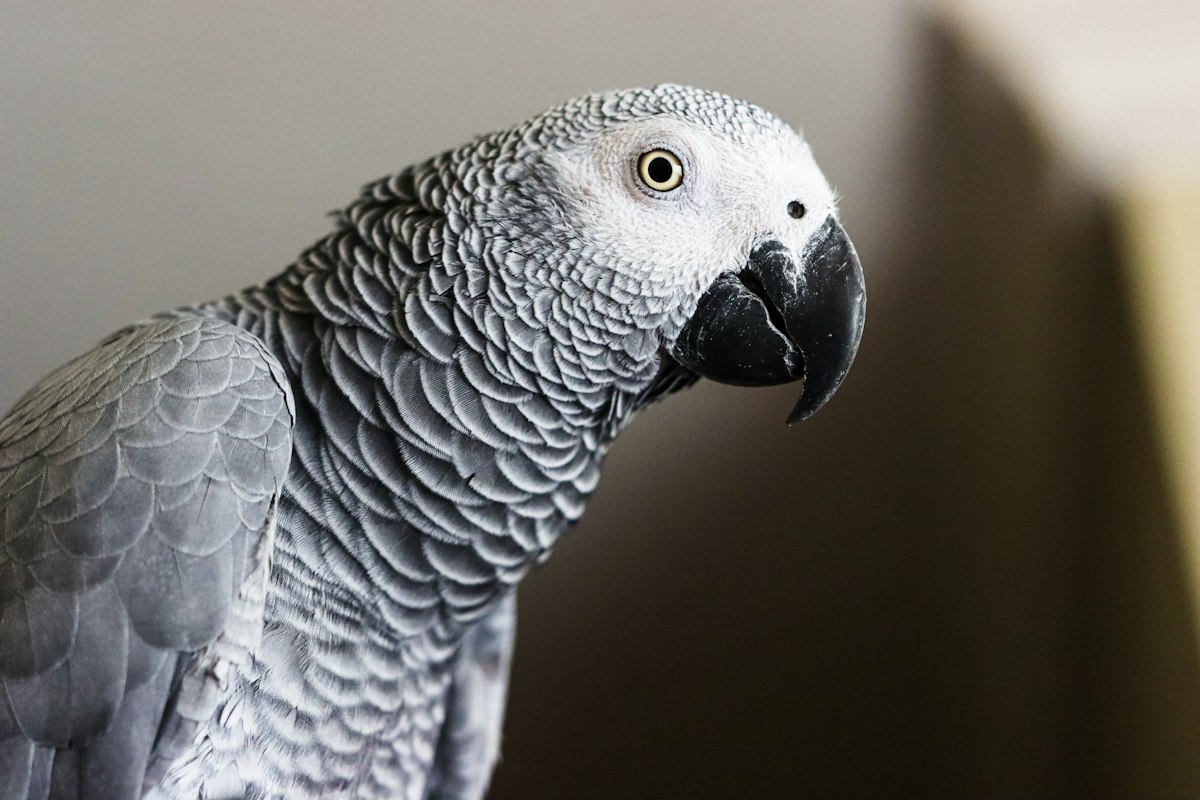
In 2023, an African gray parrot named Jack became an internet sensation for imitating the coughs and wheezes of her owner's father, a man who struggled to breathe because of severe chronic obstructive pulmonary disease. The imitation alone was impressive. What made Jack famous was the apparent delight behind it. She seemed to savor the suffering of a man she supposedly hated, and her owner claimed the bird even had a favorite cough.
Was that schadenfreude? Or was it something far simpler dressed up in feathers?
That question sits at the center of a long-running tension in animal behavior research. Pet owners see intent and emotion everywhere. Scientists see a methodological minefield. The truth, for now, lives somewhere in between.
Why Researchers Can't Just Ask
Animals probably don't feel schadenfreude. That's what researchers say. They study animal behavior and intelligence, and they're the ones who'd know, though the honest version of that answer comes with a caveat that undercuts almost everything: the question has barely been studied at all.
Part of the problem is practical. Part of it is philosophical.
"The study of complex emotions is incredibly difficult when you're talking about an animal that cannot communicate their emotions linguistically," said Zachary Silver, an assistant professor of psychology who leads the canine intelligence lab at Occidental College in Los Angeles.
Silver pointed out that researchers can only work with proxies. Behavior, neurological signals, hormonal activity. A dog with ears back and tail tucked is probably feeling something negative. A dog wagging its tail is probably feeling something positive. But positive and negative are broad buckets, and a tail wag can mean happiness, curiosity, or simple interest in something new.
You can't separate them. Positive and negative emotions blur together when we don't have the right words to describe what we're feeling, and that makes it very difficult to disentangle one from the other, according to Silver. And here's the thing. He added that it's just so hard for us to say with any definitive nature that we really can know exactly what emotion is going on there.
The Trap of Anthropomorphization
Animal behavior researchers train themselves to avoid anthropomorphizing, which means attributing human qualities to animals without evidence.
Consider a cat that comforts a grieving owner. It looks like sympathy. It might just be a behavior that was reinforced over time with treats or pets. Consider Jack the parrot. The cough imitation that looked like cruelty might have been a bid for attention, nothing more.
Cats knocking things off shelves are a favorite example. Owners read it as spite.
Avoiding anthropomorphism can slide into its opposite error, a stubborn refusal to see anything at all. The researchers themselves do not go that far.
What It Would Actually Take
To genuinely experience schadenfreude, an animal would need to grasp the emotional states of both itself and others. Researchers call this theory of mind, and it is a tall order.
"Dogs may have some ability to attribute mental states like emotions, thoughts, beliefs, intentions to other individuals, but this really only occurs in very select contexts and in really kind of a rudimentary way," Silver said. Because of that, he said, "it's exceedingly unlikely that dogs would be able to experience schadenfreude in the way that we as humans do."
David Stahlman, an animal behavior researcher at the University of Mary Washington, agreed. He said animals do not appear able to recognize their own emotional states, though he noted that not all researchers in the field share that view.
His distinction is worth sitting with. There is a difference between an emotional response and the awareness of having one. Schadenfreude requires the second layer.
Where It Might Hide, If Anywhere
If any nonhuman animal were capable of this, Stahlman suspects it would be a highly social great ape. Chimpanzees and bonobos top his list.
The logic is straightforward. Schadenfreude requires close social groups, because it requires knowing the individual who is suffering and whether that suffering is deserved. In hierarchical groups, one animal's misfortune can benefit another, and that could produce something resembling happiness.
Even then, Stahlman doubts it would qualify as true schadenfreude. "The kind of Machiavellian stuff is a very human thing," he said.
The Evidence Isn't Zero
Kaeli Swift is an animal behavior researcher at the University of Washington and the author of the Corvid Research blog. She offered a different emphasis. But she pointed out something that a lot of people don't stop to consider. There is a lot of data, she said, that suggests animals have deep capacities for emotional intelligence, and that's a claim we've maybe heard before but don't always take seriously. It's a different emphasis.
Studies of some corvid species, the crow and jay family, have turned up evidence of emotional recognition, fairness, and what Swift called "some of the strongest evidence across the animal world" for theory of mind.
Even so, she said researchers have not quite crossed the threshold for an emotion as complex and subjective as schadenfreude.
Her summary of the field is blunt. "We have barely started to scratch the surface."
The Takeaway
When a pet seems to enjoy your misery, you are almost certainly watching something else. Attention seeking. A reinforced habit. A perfectly timed coincidence. The capacity for genuine harm joy appears to require a level of self-awareness and social reasoning that the evidence does not support in animals.
That does not make the question pointless. It makes it a useful test case for how hard it is to know any mind but your own.
Frequently Asked Questions
What does the German word "schadenfreude" literally translate to?
The German word translates literally as "harm joy," the quiet satisfaction of watching someone else stumble. Humans feel it constantly, and most of us are a little embarrassed about it.
Why is it so difficult for researchers to study complex emotions like schadenfreude in animals?
Zachary Silver noted that the study of complex emotions is incredibly difficult when talking about an animal that cannot communicate their emotions linguistically. Researchers can only work with proxies like behavior, neurological signals, and hormonal activity, and positive and negative emotions blur together without the right words to describe what is being felt.
What would an animal need in order to genuinely experience schadenfreude, according to researchers?
To genuinely experience schadenfreude, an animal would need to grasp the emotional states of both itself and others, which researchers call theory of mind. Schadenfreude also requires the awareness of having an emotional response, not just the response itself, and David Stahlman said animals do not appear able to recognize their own emotional states.
Where might schadenfreude hide if any nonhuman animal were capable of it, and why?
David Stahlman suspects that if any nonhuman animal were capable of this, it would be a highly social great ape, with chimpanzees and bonobos topping his list. The logic is that schadenfreude requires close social groups, because it requires knowing the individual who is suffering and whether that suffering is deserved.
What evidence exists about animals' emotional intelligence, and has it crossed the threshold for schadenfreude?
Kaeli Swift said there is a lot of data suggesting animals have deep capacities for emotional intelligence, and studies of some corvid species have turned up evidence of emotional recognition, fairness, and some of the strongest evidence across the animal world for theory of mind. Even so, she said researchers have not quite crossed the threshold for an emotion as complex and subjective as schadenfreude, and her summary of the field is that we have barely started to scratch the surface.

Eva Koch writes about scientific research and the people behind it, covering the studies and breakthroughs shaping our understanding of the world. She values curiosity and careful evidence in equal measure.
💬 Comments (0)
No comments yet. Be the first!