Cosmology's Black Hole 'Egg' May Come First, Study Suggests
A galaxy may be a black hole's way of making another black hole, with new data from JWST suggesting black holes precede galaxy formation.
Cosmology's Black Hole 'Egg' May Come First, Study Suggests
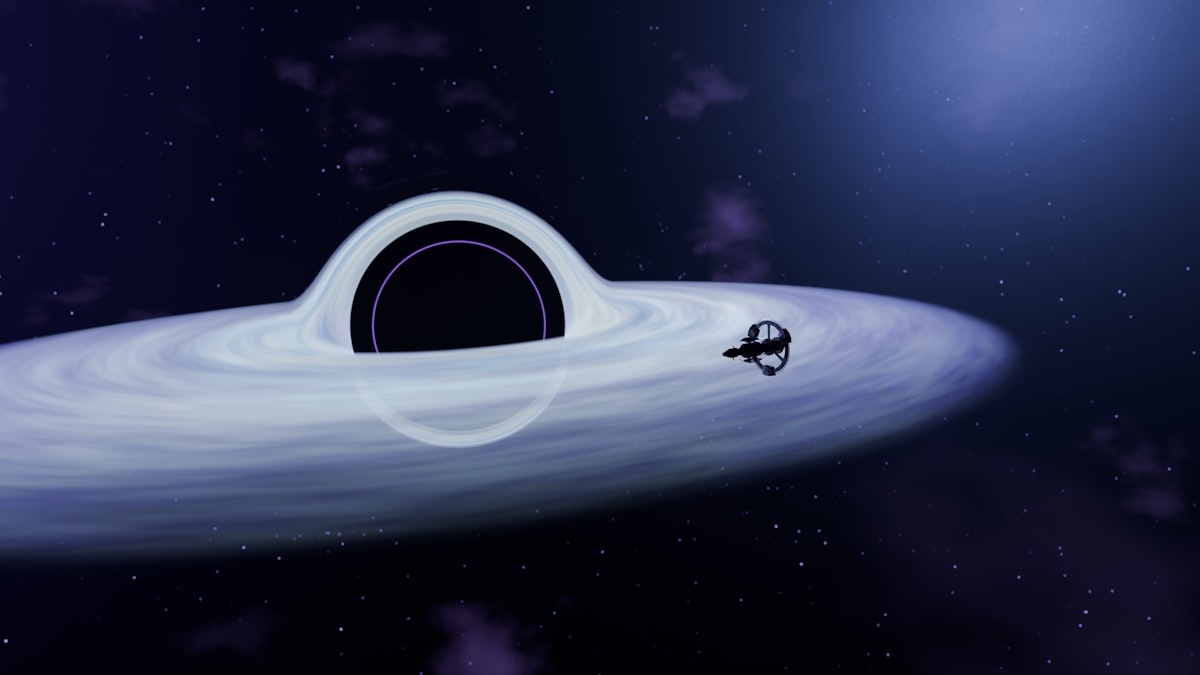
It's a cosmic riddle. Cosmology's black hole "egg" may have been the initial building block, preceding the formation of galaxies, according to a recent reevaluation of early universe observations. But this challenges the long-held assumption that galaxies must form first, with their central black holes emerging later. So the idea draws a parallel to the classic "chicken or the egg" conundrum, suggesting that in the cosmic genesis, the black hole might have been the origin point.
It's a profound cosmic dance. For years, astronomers have observed a deep connection between massive galaxies and the supermassive black holes that sit at their cores, where the galaxy supplies material to feed the black hole, which in turn shapes the galaxy's development. But the exact order of this symbiotic relationship has been a major puzzle in cosmology.
The perplexing existence of supermassive black holes so early in the universe's history has been a particular point of contention. They're huge. But these colossal objects were found to be hundreds of millions of times the mass of the sun less than 500 million years after the Big Bang, and considering the vast timescales involved in stellar evolution and black hole growth, their immense size so early on seemed, according to current physical laws, almost impossible to explain.
Several theoretical pathways exist for the formation of these early giants. And one involves the gradual merging of smaller, stellar-mass black holes. But this process is too slow. It simply can't account for the observed sizes within the available cosmic timeframe. Another possibility involves the formation of a "massive seed" from the earliest stars or dense stellar clusters, yet this merely pushes the problem of early formation back a step. So it's a dead end.
The Direct Collapse Hypothesis
Two more plausible explanations have emerged. The first is direct collapse, where a vast cloud of gas, prevented from forming stars by intense radiation, collapses under its own gravity to become a black hole without intermediate stellar stages. The second, more controversial, is the idea of primordial black holes.
Primordial black holes are a strange idea. If they're real, they would have formed in the very first moments after the Big Bang, not from stellar collapse but from the extreme pressures of the nascent universe. People often talk about their potential smaller sizes. But for galaxy formation, the interest lies in larger primordial black holes that could have formed earlier than any other known black hole type. Their existence would answer a deep cosmic question. It's the cosmological chicken-or-the-egg puzzle, implying that galaxies couldn't have formed as early as these black holes. We've lacked concrete evidence for them. That is, until recently.
JWST Sheds New Light
The James Webb Space Telescope has provided unprecedented views into the early universe, allowing astronomers to observe regions closer to the Big Bang than ever before. But these observations have consistently revealed supermassive black holes in those earliest epochs. They're everywhere. Galaxy structure seems to evolve as we look further back in time, yet the "little red dots",distant galaxies identified by JWST,present a particularly intriguing case that we can't ignore.
JWST confirmed them: small, red, and incredibly distant galaxies. Their supermassive black holes are unusually large and spin incredibly fast. But in 2024, researchers noted that these black holes constituted between 20 and 70 percent of their host galaxies' masses, a ratio significantly higher than the typical less-than-half seen in more mature galaxies, and that discrepancy presented a major challenge to existing models. It's a puzzle we can't ignore.
A Glimpse into the Past
The JWST got lucky. A fortunate geometric alignment magnified light from Abell 2744-QSO1, or QSO1, giving astronomers an exceptionally clear view of a galaxy that existed just 700 million years after the Big Bang. Scientists measured the velocity of gas orbiting QSO1's core. And this let them calculate the mass of both the galaxy and its central black hole. It's a measurement previously unattainable for black holes so close to the universe's inception.
The black hole weighs roughly 50 million solar masses. But it's inside a galaxy scientists estimate is no more than 75 million solar masses, which strongly supports either the direct collapse or primordial black hole scenarios, and neither of those suggests the galaxy formed before its central black hole. So for this galaxy, the evidence points to the black hole being the initial "egg.
This finding offers a potential solution to a long-standing cosmological debate, though scientists caution the work is far from over. But it's a start. They plan to examine more "little red dot" galaxies to determine if QSO1 is representative, and further research will seek to uncover the exact formation mechanism of its black hole and the composition of its host galaxy, which will likely reveal new mysteries along the way. For now, though, it appears the cosmic egg truly did come first.
The Black Hole Predominance
Galaxies and their central supermassive black holes share a symbiotic relationship. It's a cornerstone of cosmological understanding. But the sheer scale of some of these black holes in the early universe has baffled scientists, and it's a mystery we can't easily solve.
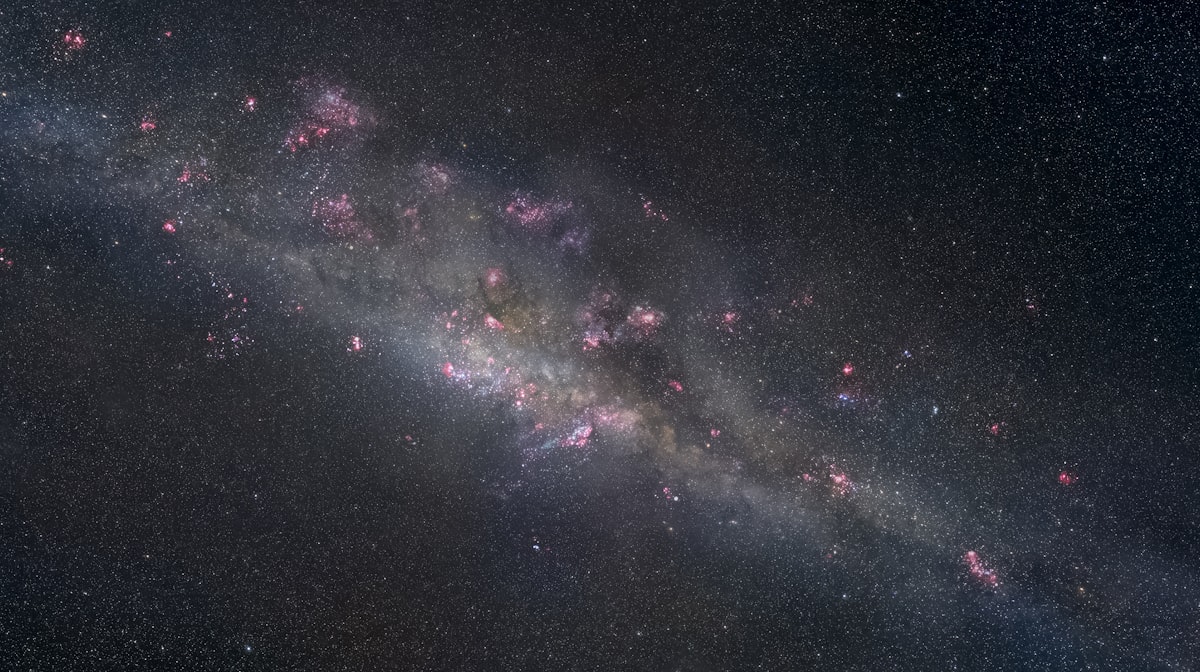
Early Universe Observations
- Supermassive black holes were found hundreds of millions of times the mass of the sun less than 500 million years after the Big Bang.
- The James Webb Space Telescope has identified numerous "little red dots," which are distant galaxies.
- Black holes at the centers of these "little red dots" are unusually large, sometimes making up 20 to 70 percent of their galaxy's mass.
- For Abell 2744-QSO1, the central black hole is estimated at 50 million solar masses, while the entire galaxy is at most around 75 million.
These observations suggest a fundamental shift in our understanding of cosmic origins.
```Frequently Asked Questions
What is the 'cosmological black hole egg' concept described in the article?
The concept draws a parallel to the 'chicken or the egg' conundrum, suggesting that in the cosmic genesis, the black hole might have been the origin point, preceding the formation of galaxies. This idea challenges the long-held assumption that galaxies must form first, with their central black holes emerging later.
Why were supermassive black holes found early in the universe a puzzle for scientists?
These black holes were found to be hundreds of millions of times the mass of the sun less than 500 million years after the Big Bang. Considering the vast timescales involved in stellar evolution and black hole growth, their immense size so early on seemed almost impossible to explain according to current physical laws.
How did the James Webb Space Telescope contribute to the study of early black holes?
JWST provided unprecedented views into the early universe, allowing astronomers to observe regions closer to the Big Bang than ever before. Its observations consistently revealed supermassive black holes in those earliest epochs, including 'little red dots'—distant galaxies with unusually large and fast-spinning black holes.
What specific evidence from the galaxy Abell 2744-QSO1 supports the black hole 'egg' idea?
For Abell 2744-QSO1, which existed 700 million years after the Big Bang, the black hole weighs roughly 50 million solar masses inside a galaxy estimated at no more than 75 million solar masses. This strongly supports either the direct collapse or primordial black hole scenarios, neither of which suggests the galaxy formed before its central black hole.
What are two possible formation mechanisms for early supermassive black holes mentioned in the article?
The first is direct collapse, where a vast cloud of gas collapses under its own gravity to become a black hole without intermediate stellar stages. The second is the idea of primordial black holes, which would have formed in the very first moments after the Big Bang from extreme pressures.

Eva Koch writes about scientific research and the people behind it, covering the studies and breakthroughs shaping our understanding of the world. She values curiosity and careful evidence in equal measure.
💬 Comments (0)
No comments yet. Be the first!