Brain Compresses Noisy World: New Framework
Neuroscientists propose a new framework for how the brain compresses noisy sensory data into categories, emphasizing prediction and energy needs.
Brain Compresses Noisy World Into Survival Categories
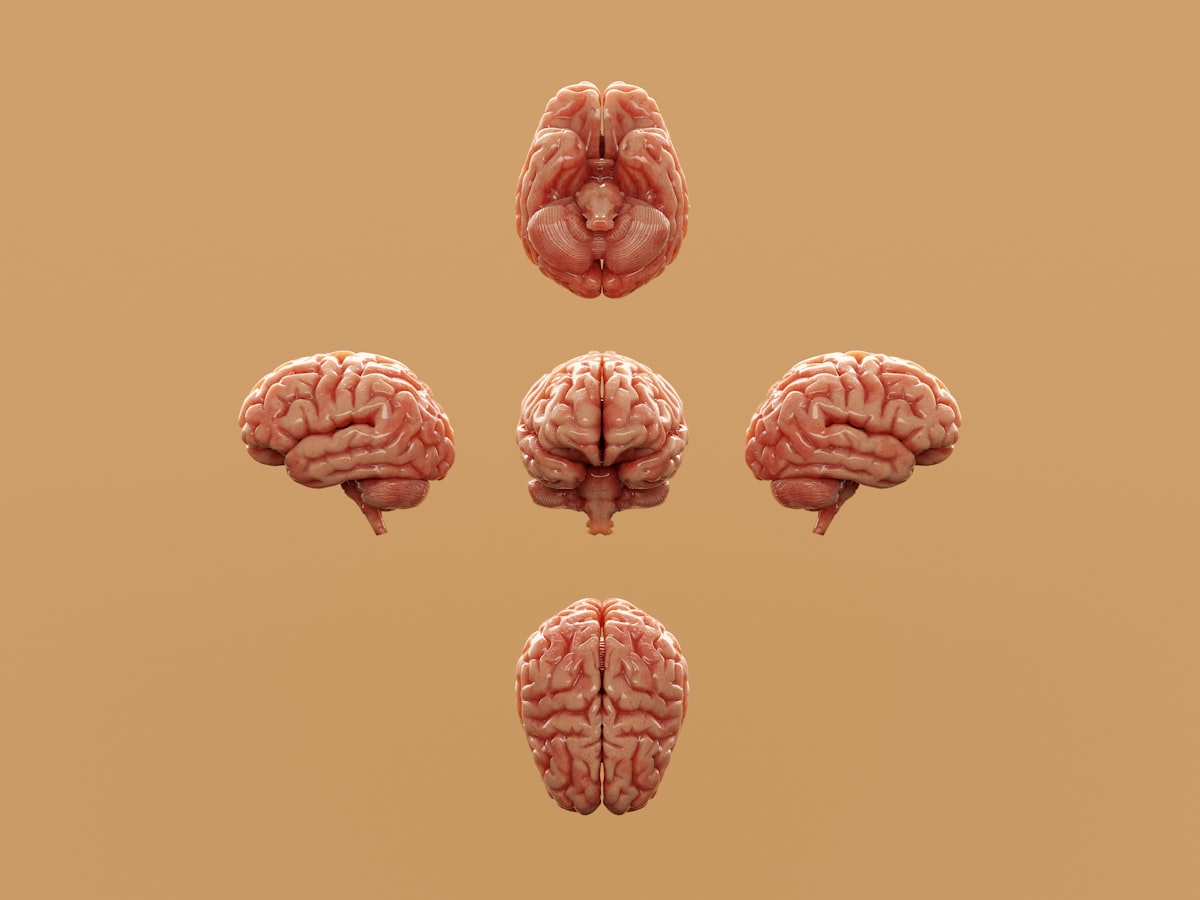
Every time you hear a sound or see a shape, your brain compresses a noisy world. Neuroscientists call this process categorization, and two of the field's most influential researchers just tore up the old rulebook. Lisa Feldman Barrett from Northeastern University and Earl Miller from MIT have joined forces to propose that the brain doesn't just file away sensory data like a clerk stuffing folders, and that's a radical shift in thinking. Instead, it constantly rebuilds its categories on the fly, driven by the body's immediate energy needs. So you can't pin it down. It's alive, moving, and hungry.
The traditional view holds that categorization happens at the tail end of sensory processing. Photons hit your retina, sound waves crash against your eardrums, and the brain passively decodes those signals, matching them against stored templates in memory. It's a neat, orderly picture. It's also, according to Barrett and Miller, deeply incomplete.
Consider this: a rhythmic patter on a sunny open street reads as a pigeon taking flight. But the same sound in a dimly lit alley at night becomes the shuffle of a stranger's footsteps, and that shift happens without a single conscious thought from you. Same sensory input, radically different categories. How does the brain pull that off? It's a trick we don't often stop to question.
Predictions Trump Raw Sensation
Barrett and Miller's answer, published in Nature Reviews Neuroscience, flips the traditional hierarchy on its head. The brain projects categories onto the world, they argue, in response to survival needs. So before you're even consciously aware of what you're sensing, the brain is already preparing your body to act in ways that maintain the energetic resources powering your physiology. That's the whole trick. It's not about seeing first.
This is a counterintuitive leap. We like to think our categories reflect objective reality. The researchers say it's the other way around: the brain's predictions shape and limit how we categorize, not the cumulative weight of sensory evidence.
Your brain constantly predicts what's coming next. It has to filter out most incoming sensory information, and that's a massive job that happens in mere seconds, all while you're just trying to walk down the street or sip your coffee, because the sheer volume of data is overwhelming. So it can't process everything. It's mainly hunting for mismatches, and those are far more informative than the stuff that lines up perfectly. That's the trick.
That's the essence of predictive coding, a model Miller has spent years testing through high-level electrical patterns in the brain. Normally, feedback signals from the brain's internal predictions dominate the feedforward signals arriving from the senses, so the system runs smoothly on expectation rather than raw input. But when something unexpected happens, those sensory signals crash against the predictive model, creating prediction errors. That mismatch surfaces in conscious experience as surprise. It's a jolt.
Allostasis Meets Emotion
Barrett brings a different piece to the puzzle. It's all about predictive energy. Her work on emotion centers on allostasis, the process by which an organism predictively regulates its energy use. So in her view, emotion categories like fear, happiness, and anger are predictive action plans, and the nervous system generates them to activate behaviors that served us well in the past. That's the core claim.
Take fear. A worked-up bodily state, elevated heart rate, fast breathing, tense muscles, in the context of being chased by a dog, triggers the category "fear" to mobilize energy for fighting or running. Traditional neuroscience thought emotions were hardwired circuits present from birth. Barrett has spent years showing we construct emotional categories from signals inside the body and from external context.
In 2025, she reached out to Miller. "Even really brilliant scientists can sometimes be guided by traditional thinking, which can be hard to get beyond," she said. "He understood what I was saying immediately."
Miller said yes without hesitation. It was that simple. And in our discussions, it became clear we were cut from the same cloth, two people who shared a fundamental restlessness with the status quo. What I love about Lisa is that she is always thinking in big-picture terms, never bogged down by the petty details that stall most people. Both of us, we are not afraid to say things that run counter to the standard way of looking at things. We can't help it. That's just who we are.
The Body Shapes the Category
Here's where the framework gets genuinely radical. It's not confined to one brain region. Categorization happens across the entire organ and beyond, spanning the whole nervous system from head to toe, and that distributed process is what makes the whole thing so hard to pin down with a simple scan. So don't expect a single spot to light up. It can't work that way.
Picture a scratch on your leg. If you're calmly walking through a safe place, you'll barely register it. But imagine you're moving through tall grass in unfamiliar territory, heartbeat elevated, breathing fast. Your brain has already allocated resources for flight. You feel nervous. That nervousness primes you to categorize that same scratch as a potential threat, an insect bite or worse, a snake.
Same sensation.
Luiz Pessoa, a neuroscientist at the University of Maryland, called the framework "a fresh perspective on categorization." But he stressed that the deeper idea, that maintaining the energetic constraints of life is fundamental to how we structure categories, is "really important to pursue," and that's where the real work lies. It's a bold claim. So he's pushing for more research on it.
Funnels in the Brain
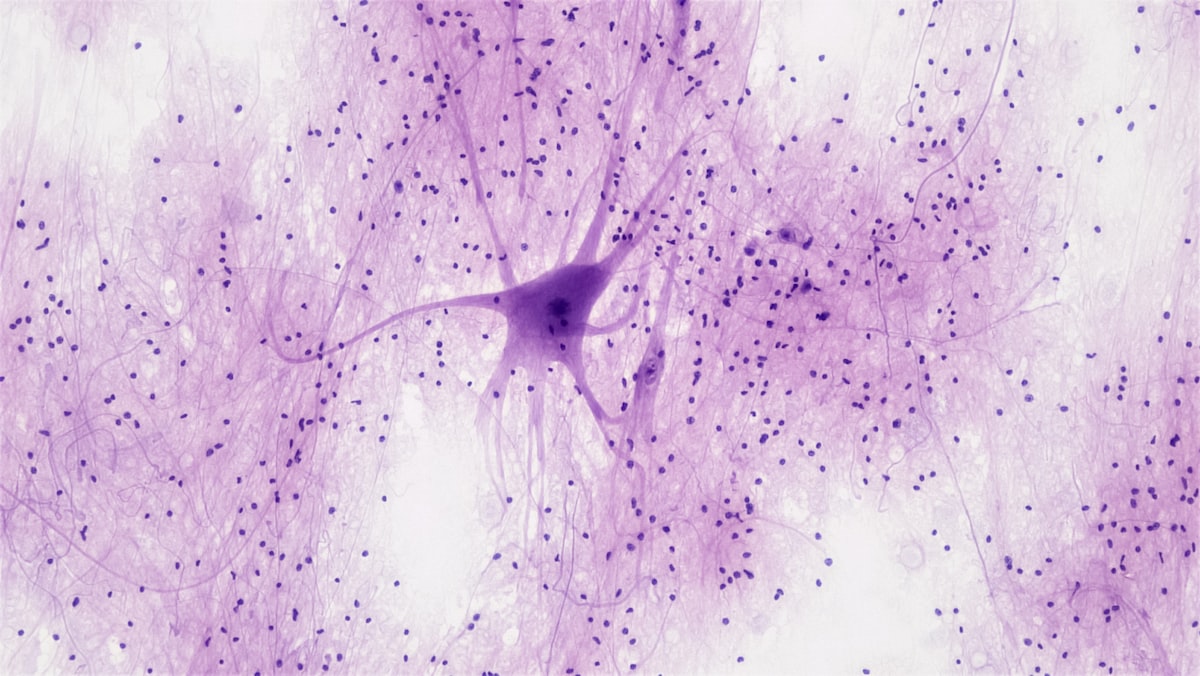
The neural evidence supports this view. Within the visual cortex alone, 90% of synaptic connections facilitate feedback signaling. That means the brain is structurally built for prediction, not passive reaction. Sensory circuits undergo massive compression as they travel deeper into the brain, passing through densely packed, sparsely connected neurons before reaching fewer, bigger, better-connected ones.
Picture a bow tie. Barrett and Miller describe the nervous system as two funnels shaped like that, meeting at their narrowest point, and that point is the limbic core, deep brain structures that integrate compressed signals from the body, senses, memory, and higher cognition. It sits close to the hypothalamus. That's the ancient region monitoring body temperature, heart rate, and hunger. But they're careful to note the core's position isn't static,it's a hub where everything converges and then diverges again, so the whole system works as one continuous, shifting cascade. It's tight. And that's the trick.
This is the point where the most compressed summaries of internal and external signals intersect. Physiological signals travel up the vagus nerve into the brain, getting compressed along the way, and sensory information compresses as it moves through the cortex. They meet in the limbic core. That generates an appropriate category and its associated behavior. But it's a fast, almost brutal simplification. So the brain can't waste a single synapse.
But don't mistake the limbic core for a starting line. "For the sake of having a scientific discussion, you have to say, 'I'm going to pick this point as the start,'" Barrett said. "We could've easily just picked some other point."
Miller agrees. "Lisa and I are arguing that this is something that is happening at every level, and it's happening in lots of places, and it's happening as a result of these opposing, interacting flows of information, feedforward and feedback. It's not at one end of the brain, which it has traditionally been thought."
The filing cabinet model is dead. Categories aren't stored documents waiting to be retrieved. They're living, breathing predictions, rebuilt moment to moment, shaped by what your body needs right now to stay alive.
That's what it means when the brain compresses our noisy world. It's not a passive recording. But it's an active, energy-hungry, survival-driven process happening everywhere at once, and it's the kind of relentless, silent labor we can't switch off, even when we sleep, even when we think we're doing nothing at all.
Frequently Asked Questions
What is the traditional view of categorization in the brain, according to the article?
The traditional view holds that categorization happens at the tail end of sensory processing, where the brain passively decodes sensory signals by matching them against stored templates in memory. This is described as a neat, orderly process where photons and sound waves are processed and filed away after the fact.
How do Barrett and Miller propose the brain categorizes sensory information?
They propose that the brain projects categories onto the world in response to survival needs, constantly rebuilding them on the fly based on the body's immediate energy requirements. This flips the traditional hierarchy, with predictions shaping categories rather than raw sensory evidence.
Why does the brain prioritize predicting over processing all sensory input?
The brain cannot process the sheer volume of incoming sensory data, so it must filter out most of it while hunting for mismatches. Prediction errors, which are more informative than matches, surface as surprise, allowing the brain to efficiently manage overwhelming information.
What role does allostasis play in the categorization framework?
Allostasis is the process by which an organism predictively regulates its energy use, and Barrett applies this to emotions as predictive action plans. For example, fear mobilizes energy for fight or flight, showing that emotional categories are constructed from body signals and context rather than being hardwired.
When did Barrett reach out to Miller, and what was his initial reaction?
In 2025, Barrett reached out to Miller, and he understood her ideas immediately, saying yes without hesitation. She noted that even brilliant scientists can be guided by traditional thinking, but Miller shared her restlessness with the status quo.

Victor Holm reports on science and discovery, with a particular interest in physics, biology and the questions that drive research forward. He looks for the wonder in how the world works.
💬 Comments (0)
No comments yet. Be the first!