Black Hole Stars: Astronomers Spar Over Webb's Little Red Dots
Black hole stars may explain Webb's little red dots. Astronomers debate whether these tiny red objects are black holes or a new kind of object.
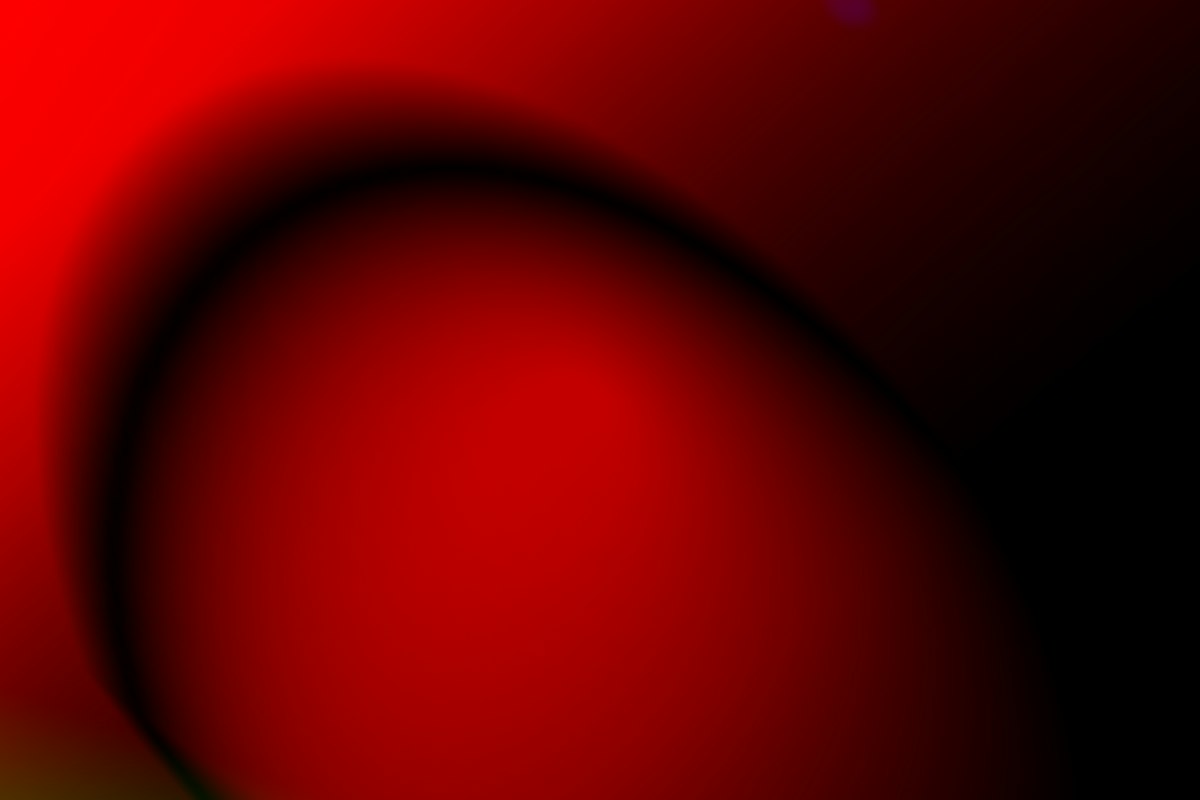
Black hole stars might be the strangest objects the James Webb Space Telescope has ever found. Astronomers can't agree on whether they exist at all. The debate centers on a class of tiny, blazing red pinpricks scattered across Webb's deep-field images, nicknamed "little red dots," and a growing camp argues these specks are colossal hydrogen stars powered by black holes hidden deep inside them, while others say they're just ordinary supermassive black holes dressed up by dust and viewing angle. The fight has split the field wide open.
A Puzzling Speck in Every Image
Astronomers built Webb to catch faint light from the first billion years after the Big Bang, when vast clouds of hydrogen and helium were collapsing into the first galaxies. Even in the telescope's earliest images, a zoo of mysterious smears of light showed up. One batch proved especially hard to read. They glowed blindingly bright, emitted red light at long wavelengths, and shone as brilliantly as entire galaxies. They were tiny, spanning just a single pixel. And they were everywhere, with a couple appearing in almost every image Webb takes. By 2023, researchers had settled on a nickname: little red dots.
Initially, the dots looked sort of like galaxies. Later, researchers concluded they looked more like the supermassive black holes sitting at the hearts of most galaxies. Those monstrous masses are dark themselves, but their gravity violently vacuums up gas and nearby matter, generating rings of hot, swirling debris that completely outshine surrounding stars. That explanation held up for a while. It did not break any cosmological theories, which was a relief.
Two Dots That Refused to Fit
Then came the spring of 2025. Two teams of astronomers simultaneously announced observations of a pair of little red dots unlike all the rest. Unlike any object ever seen, in fact.
"In all the millions of observations we've taken with ground-based telescopes," said Anna de Graaff, a researcher at the Max Planck Institute for Astronomy in Heidelberg, Germany, and head of one group, "there's nothing that looks like these sources."
De Graaff led a survey called Red Unknowns: Bright Infrared Extragalactic Survey, or Rubies. Rohan Naidu, an astronomer at the University of Hawai'i, co-led another called Mirage or Miracle, or MOM. Both surveys trained Webb on distant objects for hours at a time. They tabulated light. That detailed color breakdown, a spectrum, told a far richer story than the first observations had, because it captured precisely what shades of light came from each dot and how bright those shades were, and it's that precision we've come to rely on. But they don't stop there.
The bombshell in the spectra? Hydrogen's colors were smeared across multiple shades. Normally, that effect means you're looking straight at an exposed black hole, with hydrogen clouds whipping around it at furious rates, and the wider the smear, the faster the gas and the more massive the black hole. But what made these two dots exceptional was how red they were. Webb picked up almost no light in the bluer hues. And at a particular shade of red, the colors abruptly got much brighter.
The Star That Should Not Exist
That feature is called a Balmer break, and it shows up when you look at a hot ball of hydrogen gas, typically certain stars or galaxies. Deep in a star's core, nuclear fusion pumps out heat and light that filters up to the surface, where hydrogen atoms block bluer light and let redder light through. The result is a hump-shaped spectrum revealing the surface temperature. But these dots could not literally be stars. They were far too bright. Nor did they look much like black holes, which have ringlike structures of different temperatures and do not typically produce a Balmer break or a smooth red hump at around 5,000 kelvin.
De Graaff and Naidu concluded they were looking at the first examples of something that combines the vigor of a black hole with the outward appearance of a star: a black hole star.
Picture the structure. From the outside, it's a huge agglomeration of hydrogen gas. If our sun were replaced with one, it would extend a dozen times farther than the orbit of Pluto, which is a distance so vast that we can't really picture it, though the number itself is simple enough to write down. Out toward the edge, the star would boil unstably, sloughing off outer layers and explosively ejecting mass. And that's the whole thing.
"It's going to be a very messy system where stuff is being blown out and falling back in," de Graaff said. "I wouldn't want to come too close."
Deep in the center, invisible from outside, the black hole would pull gas around it, heating it dramatically and pushing light and energy outward, keeping the outer hydrogen layers from collapsing inward. It's the engine. The black hole would form the engine of the star, analogous to the fusion-powered core of our sun, though you can't see it from outside. And the gas cocoon would also block X-rays and damp down flickering, which would neatly explain two long-standing mysteries about other little red dots.
The Case Against the Cocoon
Not everyone buys it. Roberto Maiolino of the University of Cambridge calls the data compelling but the interpretation dubious. For every point in favor of black hole stars, he fires back a rebuttal. The lack of flicker? In the early universe, black holes may have had a steadier food supply and been tidier eaters. The lack of X-rays? Standard galactic black holes are ringed by a thick doughnut of gas and dust that blocks most X-rays. He sees no reason to suspect the dots are anything other than standard supermassive black holes.
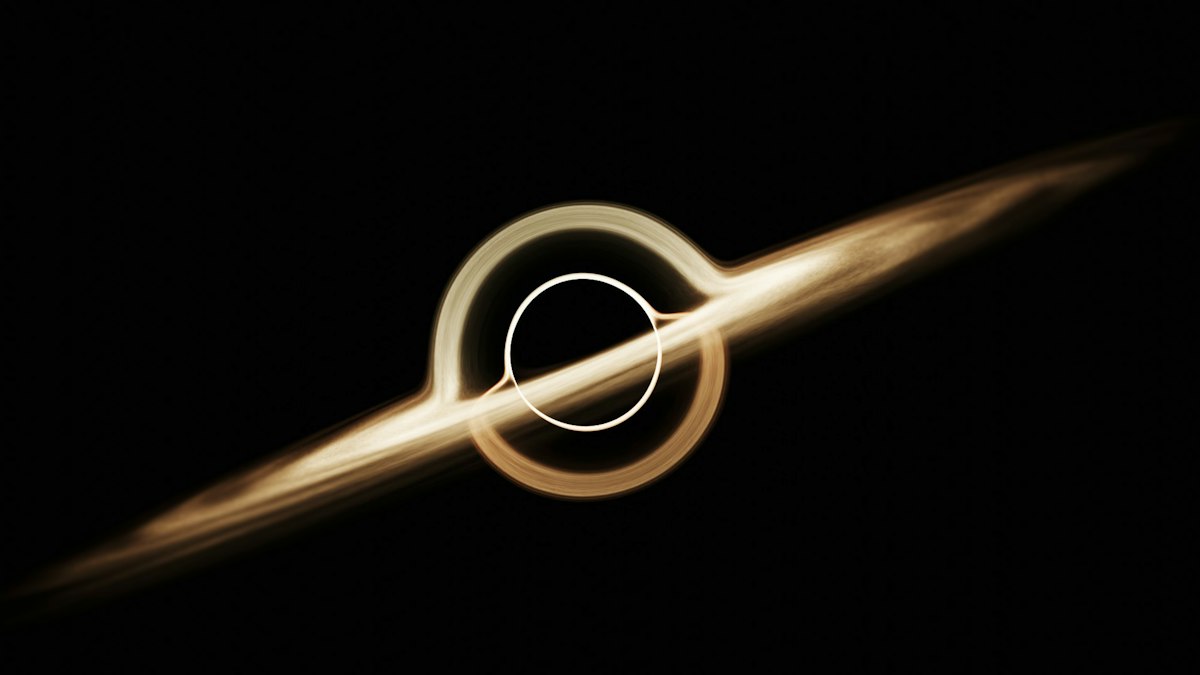
The redness means gas. A ton of it. He agrees it's there, between the black hole and us. But that gas could be the doughnut, or puffy clouds filling patches of the black hole's sky, rather than a shell around a black hole star, and that's a real distinction. Maiolino and Piero Madau of the University of California, Santa Cruz, argue the redness comes mainly from viewing angle, which is a simpler explanation than any shell. The reddest dots are the ones we happen to see edge on. Their gassy doughnuts block the view. Webb also sees some "little blue dots," which could be the same exposed black holes viewed top-down, and we can't rule that out.
Anna-Christina Eilers, an astrophysicist at MIT who studies little red dots, put the state of play bluntly.
"The field has gotten very polarized," she said.
Dale Kocevski of Colby College recalls leading a discussion at an April 2026 conference in Aspen, Colorado. He started by recapping what he hoped would be an uncontroversial idea about the dots' trace amounts of blue light. The group erupted. They argued instead. "We couldn't even get past the first bullet point," he said. And even years after the first little red dot was found, not much about them is settled, because the questions that surround these tiny points of light, from what they're made of to what they mean, still don't have answers that anyone in the field can agree on.
A Ghost From 2006
Mitchell Begelman has been teaching a graduate seminar on little red dots at the University of Colorado, Boulder. He's also been reading the firehose of papers on the subject. These objects aren't quite stars. They aren't quite black holes. And in them, he recognized a ghost from his past: the quasi-star, which he had proposed back in 2006 with Marta Volonteri and Martin Rees to explain observations of seemingly impossibly massive black holes.
"Suddenly the switch flipped, and I realized that this is what quasi-stars should look like," Begelman said.
A vast gas cloud collapses. Its core becomes a black hole. This is the quasi-star picture, where the black hole forms directly and gathers the rest of the cloud around it. In 2025, Begelman and Jason Dexter applied the model to the little red dots, estimating that quasi-stars could assemble in a few million years and last tens of millions of years, long enough for Webb to catch them. In 2026, Mauro Giavalisco of the University of Massachusetts, Amherst worked with a team to flesh out the model further. But he points out something familiar. Our sun does the same trick. It's smaller, sure. Our sun hides its explosive fusion.
"We have billions and billions of hydrogen bombs exploding every second, and yet we see none of them," he said.
Giavalisco and his collaborators found their quasi-star model fit the spectra of the two strange dots even better than the initial models had. It's a better fit. Giavalisco, weighing what the quasi-star model suggests against everything else he and his collaborators know about these two strange dots and the spectra they've measured, calls the theory plausible but stays open to alternatives. But he stays open.
"I just want to know the truth," he said.
What Would Settle It
At this stage, either theory could match what Webb has seen. Mauro Giavalisco, who has spent much of his career interpreting the spectra of distant galaxies, put it plainly: "I don't think that there is a compelling reason to prefer one or the other."
Astronomers need a clearer picture. They want to know how black hole stars might form and exactly how they should look, because that's the only way to test their interpretations. There is one more wrinkle. Vadim Rusakov of the University of Manchester and collaborators had been scrutinizing the broad lines of the best-observed dots. Broad lines take the shape of a sharp mountain peak. But in many cases these mountains sloped more gently than fast-moving gas around a black hole would produce. They suggested much of the color spread comes from light scattering off electrons instead. After digitally removing that smudging, the lines stopped looking so broad and started resembling light passing through a sluggishly churning shell of hydrogen gas, similar to what you'd expect from a black hole star.
The three teams posted their findings on March 20, 2025. Some researchers started calling it "black hole star date." If the idea holds, black hole stars could mark a new stage in the growth of supermassive black holes, a stage that would reshape how we think about how these enormous objects, sitting at the centers of galaxies, first assembled themselves and grew. First, a black hole forms. It sits at the center of a hydrogen shell. And a baby galaxy of normal stars forms around it. Over time, the black hole eats its way out of the cocoon, gaining mass as it clears the gas away.
"We are seeing the seed," Naidu said. "This is the birth of potentially every massive black hole in the universe."
Maybe. The little red dots are still just pixels, and the argument over what they mean is not close to over.
Frequently Asked Questions
What are the 'little red dots' that appear in Webb's deep-field images?
They are tiny, blazing red pinpricks that glow blindingly bright, emit red light at long wavelengths, and shine as brilliantly as entire galaxies while spanning just a single pixel. A couple appear in almost every image Webb takes, and by 2023 researchers had settled on the nickname 'little red dots.'
Why did two teams conclude in spring 2025 that a pair of little red dots were unlike anything seen before?
Their spectra showed hydrogen's colors smeared across multiple shades and almost no light in bluer hues, with colors abruptly getting brighter at a particular shade of red — a feature called a Balmer break. Anna de Graaff said that in all the millions of observations taken with ground-based telescopes, there is nothing that looks like these sources.
How is a black hole star structured, according to de Graaff and Naidu?
From the outside it is a huge agglomeration of hydrogen gas that would extend a dozen times farther than the orbit of Pluto if it replaced our sun, boiling unstably toward the edge and explosively ejecting mass. Deep in the center, invisible from outside, the black hole acts as the engine, pulling gas around it, heating it dramatically, and pushing light and energy outward to keep the outer hydrogen layers from collapsing inward.
Why does Roberto Maiolino reject the black hole star interpretation of the little red dots?
He agrees the gas is there between the black hole and us, but argues it could be the doughnut of gas and dust or puffy clouds rather than a shell around a black hole star. He and Piero Madau contend the redness comes mainly from viewing angle, with the reddest dots seen edge on and 'little blue dots' possibly being the same exposed black holes viewed top-down.
What did Mitchell Begelman recognize about the little red dots, and what did later modeling find?
Begelman recognized a ghost from his past: the quasi-star, which he had proposed back in 2006 with Marta Volonteri and Martin Rees, and in 2025 he and Jason Dexter applied the model to the little red dots. In 2026, Mauro Giavalisco and a team fleshed out the model further and found their quasi-star model fit the spectra of the two strange dots even better than the initial models had.

Nadia Petrov covers science and research across disciplines, from the laboratory to the field. She enjoys making discovery accessible and showing why new findings matter.
💬 Comments (0)
No comments yet. Be the first!