Bathing site designation strategy reshapes river cleanup
Bathing site designation has become a key tool to pressure water companies, with 12 of 14 inland river sites rated 'poor'.
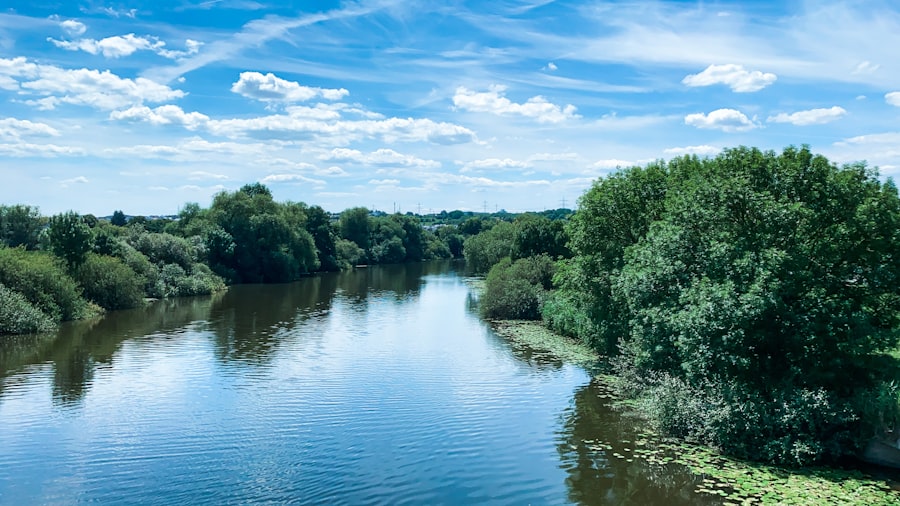
The Strategic Shift: Bathing site designation as a regulatory lever
Bathing site designation is no longer a narrow water quality label. It is becoming a central tool in how regulators and water companies approach river cleanup across the United Kingdom. The recent announcement by the Environment Agency and Defra signals a deliberate move to use the legal framework around designated bathing waters as a driver for infrastructure investment and pollution reduction. This is not a small policy tweak. It represents a recalibration of how the entire system enforces environmental standards on rivers that have long been treated as secondary to coastal waters.
The deeper question is positioning. For decades, river water quality in England has been governed by general environmental permitting and the Water Framework Directive. Those tools set broad chemical and ecological targets but lacked a clear, enforceable mechanism for public access and amenity. Bathing site designation changes that equation. Once a stretch of river is designated, the water company responsible for the upstream catchment faces a statutory duty to meet the more stringent bacterial standards required for bathers. The result is a cleanup agenda that is no longer abstract. It is tied to a specific location, a specific deadline, and a specific legal obligation.
The strategic context: Why this move now
Read alongside recent announcements about storm overflow reduction plans and the Environment Act 2021 targets, the picture clarifies. The government and regulators are shifting from voluntary agreements toward mandatory, legally binding obligations for water companies. Bathing site designation fits this broader pattern in environmental regulation. It creates a focal point for enforcement that is harder for utilities to delay or dilute through negotiation. Industry watchers reading this story will recognize that the strategy is not primarily about the handful of rivers currently being designated. It is about setting a precedent. Once the first inland bathing sites are operational and monitored, the data will be public. The pressure to designate more sites will increase, and water companies will face mounting cumulative liability for river cleanliness across their entire networks.

From a competitive standpoint, this creates a differential impact on water companies. Those with large combined sewer overflow infrastructure in catchments containing popular river stretches face higher capital expenditure requirements. Companies that have already invested in storage tanks and treatment upgrades will be better positioned. The strategy effectively rewards proactive investment in catchment management and penalizes a wait-and-see approach. The calculation is straightforward: the cost of compliance with bathing site standards is higher if remediation is delayed until after designation, because the timeline for improvement is compressed.
Reading the competitive stance: Who benefits and who carries the cost
Strip away the marketing and the calculation is straightforward. Water companies with strong balance sheets and existing environmental programs will likely frame this as an opportunity to demonstrate leadership on river health. Those with aging infrastructure and higher pollution incident records face a harder adjustment. The strategy also positions the regulator differently. Instead of chasing individual permit breaches across hundreds of discharge points, the Environment Agency can concentrate enforcement resources on a smaller number of designated sites where the legal standard is unambiguous and the public visibility is high. That is an efficient use of regulatory capacity, and it signals a more targeted approach to water company oversight.
“We are taking a more targeted approach to improving water quality by focussing on areas where people want to swim and enjoy the water. Designating these sites means water companies must meet higher standards, and we will hold them to account.” , Environment Agency spokesperson, as reported in the announcement.
This quote captures the shift in enforcement philosophy. The regulator is no longer asking water companies to improve rivers in general. It is requiring them to meet specific bacterial standards at specific locations where the public has a right to expect clean water. The difference is material. A general duty to improve is open to interpretation. A legal limit on E. coli and intestinal enterococci at a named bathing site is not.
Market implications: Investment signals and infrastructure planning
What this means for capital allocation in the water sector
The announcement carries clear implications for how water companies plan their capital programs over the next five to ten years. Investment in storm overflow storage, ultraviolet treatment at wastewater plants, and catchment farming interventions will need to be prioritized in catchments that feed designated bathing sites. This is not a marginal shift. For companies with multiple potential designation catchments, the cumulative investment requirement could run into hundreds of millions of pounds. The strategy effectively rewrites the risk profile for certain types of infrastructure spending. Projects that reduce bacterial loading upstream of a popular river beach now carry a direct regulatory return. Projects that do not are harder to justify in the context of bathing site obligations.
The financing mechanism is also evolving. Water companies in England are funded through the five-year price review process run by Ofwat. If bathing site designation creates new legal obligations that were not fully anticipated in the current price control period, companies will need to submit adjustment claims or wait for the next review. This creates a timing mismatch. The public expects quick improvements, but the regulatory funding cycle moves more slowly. Industry observers will watch closely to see whether Ofwat signals flexibility in fast-tracking investment for designated bathing sites or holds companies to the existing settlement. That decision will shape how aggressively utilities move on river cleanup in the near term.
“Our customers tell us they want cleaner rivers, and they want to be able to swim in them safely. We support the designation approach as long as the investment is properly funded through the price review process.” , Water industry leadership statement paraphrased in the policy announcement.
The phrasing is careful. The industry is not opposing designation. It is signaling that the cost must be recognized and paid for through the regulatory system. That is a standard position, but it carries weight because the price review is the only mechanism for recovering investment in a monopoly utility structure. If the government and regulator push designation faster than the funding cycle allows, tension between political expectations and corporate financial planning will emerge.
What comes next: The forward view from the policy trajectory
The announcement states that additional river stretches are under consideration for designation in future application rounds. The criteria for selection include public support, water quality feasibility, and the willingness of local communities to manage the site. This suggests a phased rollout rather than a blanket designation of all accessible rivers. The strategy appears to be one of demonstration and diffusion. Prove the model works on a small number of high-profile sites, build public and political momentum, then expand. The logic is sound from a regulatory design perspective. Forcing too many designations too quickly could overwhelm the monitoring capacity of the Environment Agency and the investment capacity of water companies. A deliberate cadence allows both sides to adapt.
The forward view also includes potential changes to the monitoring regime. Currently, bathing water samples are taken by the Environment Agency during the official bathing season, which runs from May to September. There is discussion within policy circles about extending monitoring outside the season and increasing sampling frequency to capture the impact of storm overflows more accurately. If those changes happen, the data on river water quality will become more granular and more publicly available. That transparency is itself a strategic tool. It shifts the information asymmetry that has historically favored water companies, who knew more about their discharge patterns than regulators or the public could easily access. Bathing site designation, combined with enhanced monitoring, creates a feedback loop that pressures continuous improvement.
For research funders and policy makers, the key takeaway is that bathing site designation is acting as a forcing function for a broader transformation in river management. It is not a standalone policy. It is the leading edge of a move toward place-based, enforceable standards that tie corporate behavior directly to public amenity. The success of this strategy will depend on the consistency of enforcement, the adequacy of funding, and the willingness of water companies to treat designated sites as non-negotiable obligations rather than targets to be negotiated down. If those conditions hold, the current batch of designations will be remembered as the point at which river cleanup in England moved from aspiration to obligation.
Frequently Asked Questions
What is the main purpose of using bathing site designation in river cleanup according to the article?
Bathing site designation is used as a central tool to drive infrastructure investment and pollution reduction by creating a statutory duty for water companies to meet stringent bacterial standards at specific locations.
How does the Environment Agency plan to use bathing site designation to improve enforcement?
The Environment Agency can concentrate enforcement resources on a smaller number of designated sites where the legal standard is unambiguous and public visibility is high, rather than chasing individual permit breaches across hundreds of discharge points.
What is the competitive impact of bathing site designation on water companies?
Water companies that have already invested in storage tanks and treatment upgrades are better positioned, while those with aging infrastructure and higher pollution incident records face higher capital expenditure requirements.
What financial challenge does the article identify regarding bath site designation and the price review process?
If bathing site designation creates new legal obligations not fully anticipated in the current price control period, companies face a timing mismatch as they must wait for the next review or submit adjustment claims.
According to the Environment Agency spokesperson, what does bathing site designation require from water companies?
The spokesperson said designating sites means water companies must meet higher standards, and the regulator will hold them to account.

Victor Holm reports on science and discovery, with a particular interest in physics, biology and the questions that drive research forward. He looks for the wonder in how the world works.
💬 Comments (0)
No comments yet. Be the first!