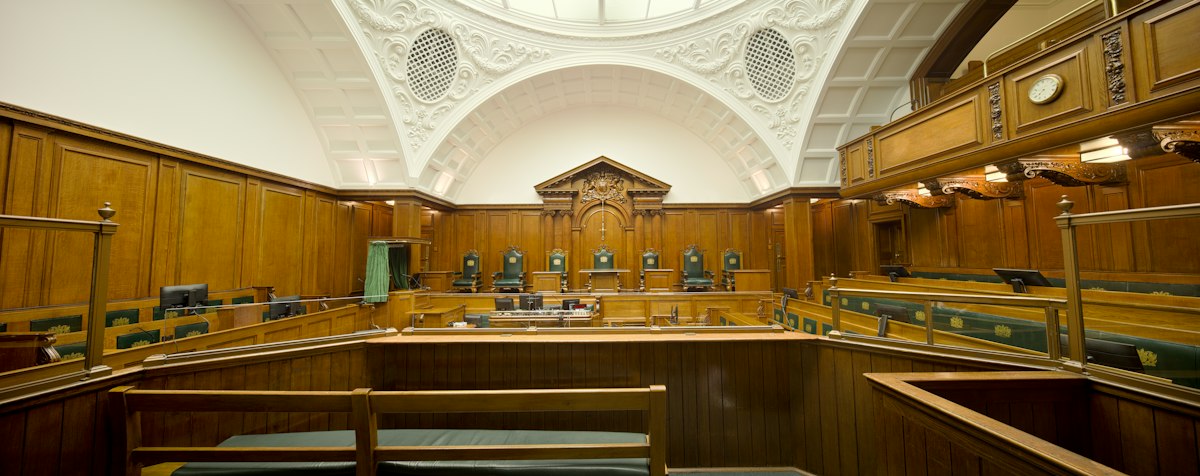
Louise Casey review: carers 'living an agony'
Louise Casey review: millions of unpaid UK carers 'living an agony', system relies on them to plug gaps.
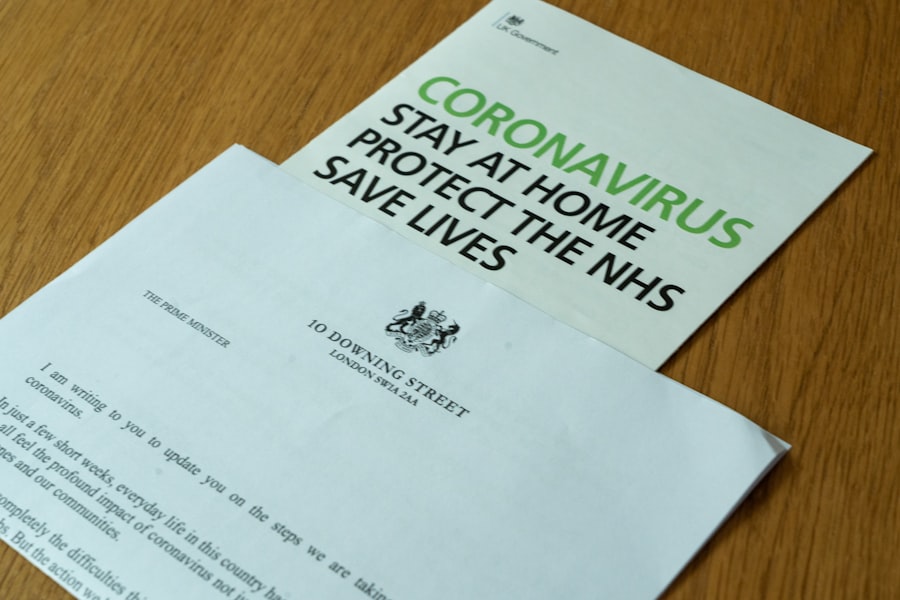
 >Louise Casey review calls the system a machine that grinds people down
Louise Casey review lands on the desk of ministers this morning like a live grenade with the pin already pulled. The title alone is enough to make you put down your coffee. The report, obtained by the The Guardian ahead of its formal release, documents what it calls the "agony" of unpaid carers in England. And it does not pull a single punch.
For the uninitiated, this is not some dry policy document destined to collect dust on a shelf. Louise Casey review is the culmination of a government commissioned inquiry into the state of social care for working age adults. It was ordered after the pandemic exposed just how brittle the whole damn system had become. The findings are brutal. According to the review, hundreds of thousands of people are trapped in a cycle of neglect, poverty, and physical exhaustion while performing the work the state refuses to fund.
The opening chapter alone reads like a dossier on systemic failure. It describes families who have not had a single night of uninterrupted sleep in years. It details carers who have given up jobs, homes, and mental health to look after loved ones with no training, no respite, and often no financial support. Louise Casey review frames this not as a series of isolated tragedies but as a predictable outcome of a system designed to ration care, not provide it.
The carer who became a prisoner in their own home
One woman, referred to in the report as "Sarah," has been caring for her adult son with severe autism for 28 years. She told the review team that she had not been to a supermarket in over a decade. She does all her shopping online because she cannot leave him alone. She has no paid support. The local authority assessed her for help and told her that her son's needs did not meet the threshold. This is the core finding of the Louise Casey review: the threshold for care is set so absurdly high that only the most extreme cases qualify, while everyone else is left to fend for themselves. The report estimates there are over 800,000 unpaid carers in England who provide more than 50 hours of care per week. That is a full time job, often a 24/7 job, with no salary, no sick pay, and no pension contributions. The Carer's Allowance, the main financial support available, sits at just £76.75 per week. Louise Casey review notes that this is below the minimum wage by a significant margin. If you pay someone to clean your house, you pay them more than the state pays a carer to keep someone alive.Under the hood: the legal architecture that creates the grinding wheel
Let us break down the legal math here, because the devils are all in the statutory details. The Care Act 2014 was supposed to fix this problem. It created a legal framework where local authorities had a duty to assess needs and provide care for those who qualified. But here is the part they did not put in the press release back then. The act also gave local authorities the power to set their own eligibility criteria, as long as they followed the national framework. The result is a postcode lottery where care is not based on need but on postal address. Louise Casey review takes a blowtorch to this framework. It documents how local authorities have systematically raised the bar for care over the last decade. In many areas, you now have to prove that you are at risk of imminent harm to get even a few hours of help a week. For carers, this means they must be at the point of physical or mental collapse before the state intervenes. The review calls this "crisis based care" and it is one of the most damning sections in the entire document. The technical term for this is the "Eligibility Determination." The Care Act 2014 says that care must be provided if needs are "substantial" or "critical." But the discretion given to local authorities means that what counts as substantial in one county is laughable in another. Louise Casey review includes a table showing the wild variations across different regions. One council will provide 10 hours of home support per week for a person with moderate dementia. Down the road, another council provides zero for the same condition.The block quote the government will not want you to read
"I have not had a holiday in 15 years. I have not had a full night's sleep in 15 years. My GP told me I was depressed and prescribed antidepressants. I told him I was not depressed, I was exhausted. There is a difference. But the system does not care about that difference."That quote is taken directly from a carer interviewed for the Louise Casey review. It captures the emotional core of the report. The review goes further and connects this individual suffering to a broken regulatory framework. It argues that the system is not just underfunded, it is actively hostile to carers. The paperwork alone is a nightmare. The report describes a woman spending 40 hours per month on form filling, chasing appointments, and fighting with the local authority just to maintain the tiny amount of support she already has.
The carer's allowance trap: a benefit designed to keep you poor
Here is where the inquiry gets into the really dark mechanics. Carer's Allowance is a benefit that pays £76.75 per week for people who care for someone for at least 35 hours per week. But there is a catch that the Louise Casey review exposes with surgical precision. If you earn more than £139 per week from paid work, you lose the entire allowance.Why politicians have ducked this for two decades
Every government since the turn of the century has promised to fix social care. Every single one has failed. The Louise Casey review traces this failure back to a fundamental political calculus. Social care is expensive. A proper, means tested, fully funded system would cost tens of billions of pounds. And the people who would benefit most, elderly and disabled people and their carers, are not a powerful voting bloc compared to pensioners who want their winter fuel payments protected. But wait, it gets worse. The review documents how successive governments have "kicked the can down the road" by commissioning reports that then get quietly buried. There have been at least seven major reviews of social care since 1999. The Dilnot Commission in 2011. The Barker Commission in 2014. The Health and Social Care Committee report in 2018. Each one identified the same problems. Each one made similar recommendations. Each one was ignored or partially implemented and then allowed to wither. Louise Casey review is different in one crucial respect. It focuses specifically on working age adults, not the elderly. This is a group that has been almost invisible in the public debate. When people talk about social care, they usually think of old people in care homes. The review forces you to look at the other side of the picture: younger adults with disabilities, people with brain injuries, people with severe mental illness, and their families who are trapped in a system that offers them almost nothing.The block quote that sums up the entire report
"This is not a crisis. It is a chronic condition. The system has been failing for so long that failure has become the baseline expectation. No one is shocked anymore. That is the most damning thing of all."Those are the words of a senior social worker who gave evidence to the review. The Louise Casey review does not just describe the pain, it explains the machinery that produces it. The local authorities are not staffed by monsters. Many of the social workers interviewed for the report are deeply frustrated and want to provide more care. But they are constrained by budgets that have been slashed year after year. The review calculates that council spending on social care for working age adults has fallen by nearly 20% in real terms since 2010.
The human cost: real numbers, real lives
Let me give you some of the specific figures from the report, because statistics can sometimes cut through the fog of policy language.- The number of working age adults receiving formal care in their own homes has fallen by 30% over the last decade.
- Unpaid carers provide an estimated 5.4 billion hours of care per year in England. That is the equivalent of 3 million full time jobs.
- The replacement cost of that unpaid care, if the state had to pay for it, would be around £130 billion per year. The entire NHS budget is roughly £180 billion.
The road ahead: recommendations and political realities
Louise Casey review does not just diagnose the problem. It offers a set of concrete recommendations. Chief among them is a demand for a new legal right to care. The review wants the Care Act 2014 amended to create a statutory entitlement to support for unpaid carers, rather than the current system where they must fight for crumbs. It also calls for an immediate increase in Carer's Allowance to at least the level of Jobseeker's Allowance, and for the earnings rule to be abolished. But here is the political math that matters. The treasury has told the government that implementing the full set of recommendations would cost between £8 billion and £12 billion per year. That is a huge sum at a time when the public finances are under severe strain. The Chancellor has already signaled resistance. In a statement to the House of Commons yesterday, the Health Secretary said the government would "consider the report carefully" but gave no commitment to funding.The skeptic's view: will this report end up on the same shelf as the others?
The reaction from campaign groups has been cautiously optimistic but deeply skeptical. Carers UK, the leading charity for unpaid carers, welcomed the review but warned that it could become "another document that gathers dust." The organization pointed out that the government has accepted the findings of similar reviews in the past and then done very little. The question now is whether this moment is different. Louise Casey herself is a formidable figure. She has a track record of producing reports that force change. Her review of the government's handling of the COVID crisis in care homes led to major reforms. But the social care system is a much bigger, more entrenched problem. It will require sustained political will over many years to fix. And the current government is facing elections within 18 months.The real story no one is talking about
There is an angle to the Louise Casey review that has not received much attention yet, but it is the one that matters most for the future. The review argues that the current system is not just failing carers, it is actively making the crisis worse. When carers collapse, the people they were caring for end up in expensive hospital beds or residential care homes. The NHS is already struggling with bed blocking. Social care failure is a direct driver of ambulance queues and waiting lists."You cannot fix the NHS without fixing social care. They are the same problem wearing different hats."That line comes from the report's conclusion. It is a direct challenge to the government's policy of prioritizing NHS funding while starving social care of resources. The Louise Casey review essentially says: you are pouring water into a bucket with a hole in the bottom. The hole is the social care system.
- The review estimates that up to 30% of hospital beds in some areas are occupied by patients who could be cared for at home if the support was available.
- It costs the NHS around £400 per night to keep someone in a hospital bed. A home care package costs around £50 per day.
- The arithmetic is not complicated. The political will is the problem.
Ending on the edge
There is no neat conclusion here. The report is out. The government is squirming. Campaigners are sharpening their knives. The carers are still waking up at 3am to change a bedpan or calm a terrified loved one. The Louise Casey review has done its job. It has put the agony of these families on the record in brutal, unignorable detail. Now the ball is in the government's court. And if history is any guide, we all know what happens to the ball when the court is empty, the lights are off, and the players have all gone home.Frequently Asked Questions
What is the focus of the Louise Casey review?
The Louise Casey review is a government commissioned inquiry into the state of social care for working age adults in England.
What does the review say about the threshold for care?
The review states that the threshold is set so high that only the most extreme cases qualify, leaving others to fend for themselves.
How many unpaid carers providing over 50 hours of care per week does the report estimate?
The report estimates there are over 800,000 unpaid carers in England who provide more than 50 hours of care per week.
What is the amount of Carer's Allowance according to the review?
Carer's Allowance sits at £76.75 per week, which the review notes is below the minimum wage by a significant margin.
What does the review call the system that only intervenes at the point of collapse?
The review calls it 'crisis based care' and describes it as one of the most damning sections in the document.

Alexander Meyer reports on technology policy, privacy law and the growing role of regulation in the digital economy. He tracks how lawmakers respond to a fast-changing industry.
💬 Comments (0)
No comments yet. Be the first!