What Next-Generation Contraceptive Pills Mean for Perimenopause
Online misinformation about perimenopause is leading some women to stop contraception too soon, say experts. Here are the facts about next-generation contraceptive pills and perimenopause.

Next-generation contraceptive pills are changing the perimenopause conversation. And honestly? It is overdue.
If you have spent any time on social media lately, you have seen the videos. Women in their late 30s and early 40s confidently declaring they are perimenopausal. Tossing their birth control. Buying expensive supplements. The comment sections are full of advice that sounds convincing but could land you in trouble.
Real trouble. Like an unintended pregnancy.
According to a recent report in The Guardian, experts are sounding the alarm. Misinformation about perimenopause and contraception is spreading fast online. And women are paying the price, sometimes literally, for unproven alternatives.
The Misinformation Trap
Here is what is happening. Social media has done something genuinely good: it smashed the silence around menopause. Women are talking. That is a win. But the flip side is a flood of half-truths and outright myths.
Dr Zara Haider, president of the College of Sexual and Reproductive Healthcare, put it bluntly. "We are seeing people turn to supplements or alternative treatments marketed online, sometimes instead of established, effective options, often at significant personal cost," she said.
Worse, some women are making decisions based on what they saw in a 60-second clip. They assume they are perimenopausal. They stop contraception. Then reality bites.
"We are seeing some women in their late 30s and early 40s questioning whether they're perimenopausal based on what they've seen online, and in some cases assuming they can stop contraception," Haider said.
Quick question: are your symptoms actually perimenopause? Or could it be something else? Haider noted that perimenopause symptoms overlap with other conditions, including primary ovarian insufficiency. Do not self-diagnose off a TikTok. Talk to your GP.
What Actually Works for You
There is no single magic method. Haider said it herself. It is about finding what fits your body, your lifestyle, and your symptoms.
Condoms protect against STIs. The hormone-free coil exists, though it may not suit women with heavy periods. Progestogen-only options like the mini-pill, patches, implants, injections, and intrauterine systems all have their place. Some last for years.
But hormonal contraception offers more than pregnancy prevention. Dr Paula Briggs, a consultant in sexual and reproductive health, laid out the benefits.
- Reduction in heavy bleeding
- Less pain
- Fibroid management
- Improvement in endometriosis symptoms
- Acne control
That is a lot of upside. And yes, some forms of hormonal contraception come with a slightly elevated breast cancer risk. But they can also reduce the risk of other cancers.
The Old Combined Pill Problem
Traditional combined pills contain ethinyl estradiol, a synthetic oestrogen. Prof Channa Jayasena, a reproductive endocrinology expert at Imperial College London, did not mince words. He called it "an incredibly strong steroid with some oestrogen-like properties."
That strength comes with a cost. Blood clot risk goes up. The risk climbs higher if you smoke, have obesity, or carry certain health conditions. And age amplifies it.
But that framing misses something critical.
Age alone is not a dealbreaker. Briggs said the idea that older women cannot have the combined pill is flat-out erroneous. "Age alone is not a contraindication. It's about assessing for risk factors, which include migraine with aura, being overweight, hypertension, but if it's treated, then the patient might still be able to access the combined pill," she explained.
The decision is not about the number on your birthday cake. It is about your full health picture.
Next-Generation Pills Arrive
This is where next-generation contraceptive pills enter the frame. And they are a genuine leap forward.
These newer combined pills contain natural oestrogen, not the synthetic ethinyl estradiol that drives up clotting risk. Jayasena called them "really good modern, next-generation contraceptive pills, which have a safety advantage and could be much more suitable for women in their 40s in particular, or even their 50s."
"These are really good modern, next-generation contraceptive pills, which have a safety advantage and could be much more suitable for women in their 40s in particular, or even their 50s." ; Prof Channa Jayasena, Imperial College London
He described them simply. "It's basically a mini-pill with natural oestrogen."
If you have been told you cannot take the combined pill because of your age or clot concerns, next-generation contraceptive pills may reopen that door. They deliver the same contraceptive reliability without the same vascular baggage. That is the safety advantage Jayasena is talking about.
Next-generation contraceptive pills are not a niche experiment. They are here now. And for women navigating perimenopause in their 40s, they could be the option that finally makes sense.
HRT Is Not Contraception
Let me put this bluntly. If you are under 55, have not reached menopause, and do not want to get pregnant, HRT alone will not protect you.
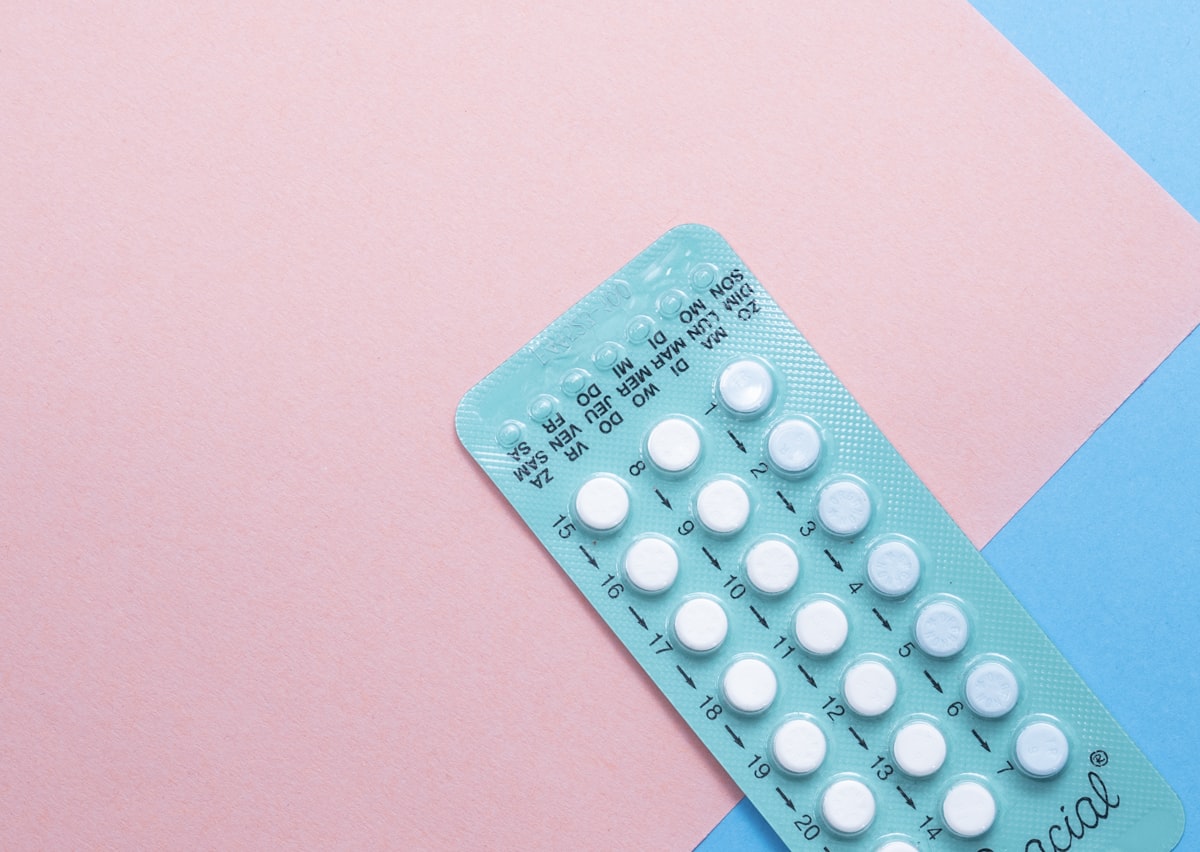
The doses are too low. The substances are not potent enough to stop your ovaries from releasing an egg. You need actual contraception alongside your hormone replacement therapy.
And about those body-identical hormones you keep hearing about. They are natural forms of oestrogen and progesterone, made in a lab but identical to what your body produces. They are used in some HRT formulations. Early research shows some benefits. But Jayasena noted something crucial: only non-natural forms are strong enough to act as contraceptives.
He also pointed out that non-natural progestogens can have real advantages. Some boost testosterone action, which can help with libido. Others have anti-testosterone effects, useful for women dealing with acne or excess hair. "So actually, there are advantages sometimes to deviating from nature," he said.
There is no one-size-fits-all answer. Natural is not always better. Synthetic is not always worse. Context matters.
What You Should Do Now
Stop letting social media curate your perimenopause plan. Here is what actually makes sense.
- Talk to your GP if you suspect perimenopause symptoms
- Do not assume you cannot get pregnant just because your periods are irregular
- Ask about next-generation contraceptive pills if you are concerned about blood clot risk
- Remember that HRT is not birth control
- Be skeptical of expensive supplements marketed as menopause cures
Dr Paula Briggs is not saying hormonal contraception is the only path. They are saying it deserves a fair hearing, stripped of the myths circulating online.
Next-generation contraceptive pills represent a smarter, safer option for women in perimenopause. They address the clotting concern that made older combined pills risky for some patients. They fit the needs of women in their 40s and even 50s. And they exist right now, not in some distant research pipeline.
Real talk: your perimenopause journey is yours. But the facts should come from your doctor, not your feed.
Frequently Asked Questions
What are next-generation contraceptive pills?
Next-generation contraceptive pills are advanced oral contraceptives that use newer progestins and lower estrogen doses to reduce side effects and offer additional health benefits.
How do next-generation pills help with perimenopause symptoms?
They can regulate irregular periods, reduce heavy bleeding, and alleviate hot flashes and mood swings by providing steady hormone levels.
Are next-generation contraceptive pills safe for women over 40?
Yes, they are generally safe for healthy, non-smoking women over 40, but a doctor should evaluate individual risks like blood pressure and smoking history.
Can next-generation pills delay menopause?
No, they do not delay menopause but can mask its onset by maintaining regular menstrual cycles.
What are the side effects of next-generation contraceptive pills?
Common side effects include nausea, breast tenderness, and spotting, but newer formulations often have fewer and milder side effects than older pills.

Hanna Schmidt writes about health, nutrition and wellbeing, separating evidence from the noise. She covers how lifestyle and science come together to shape long-term health.
💬 Comments (0)
No comments yet. Be the first!