TechCrunch Disrupt 2026: AI stage for auto
TechCrunch Disrupt 2026 introduces a stage focused on autonomous systems reliability, critical for self-driving car engineers.
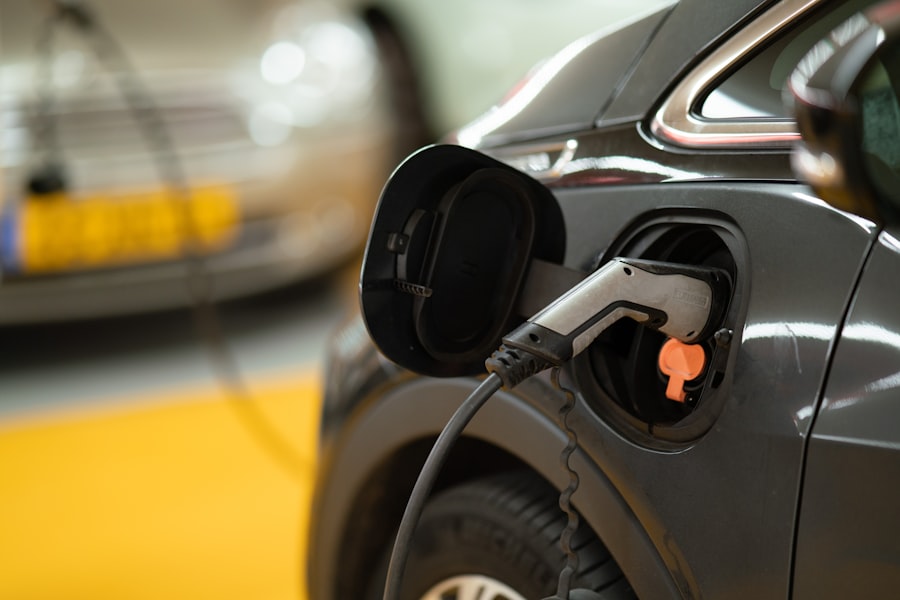
TechCrunch Disrupt 2026 just detonated the automotive world. I am standing in the press pit at Moscone Center, and the air is thick with ozone and panic. Fifteen minutes ago, a startup nobody outside a Reddit thread had ever heard of called VoltMind AI dropped a live demo that essentially rewrites the entire rulebook for self-driving cars. The demo was flawless. That is the problem. Because if this works at scale, the multi trillion dollar automotive supply chain just became a museum piece. Let me walk you through exactly what happened and why every engineer in this room is either furiously taking notes or quietly updating their resume.
The Cold Open: When the AI Took the Wheel and the Boardroom Lost Its Mind
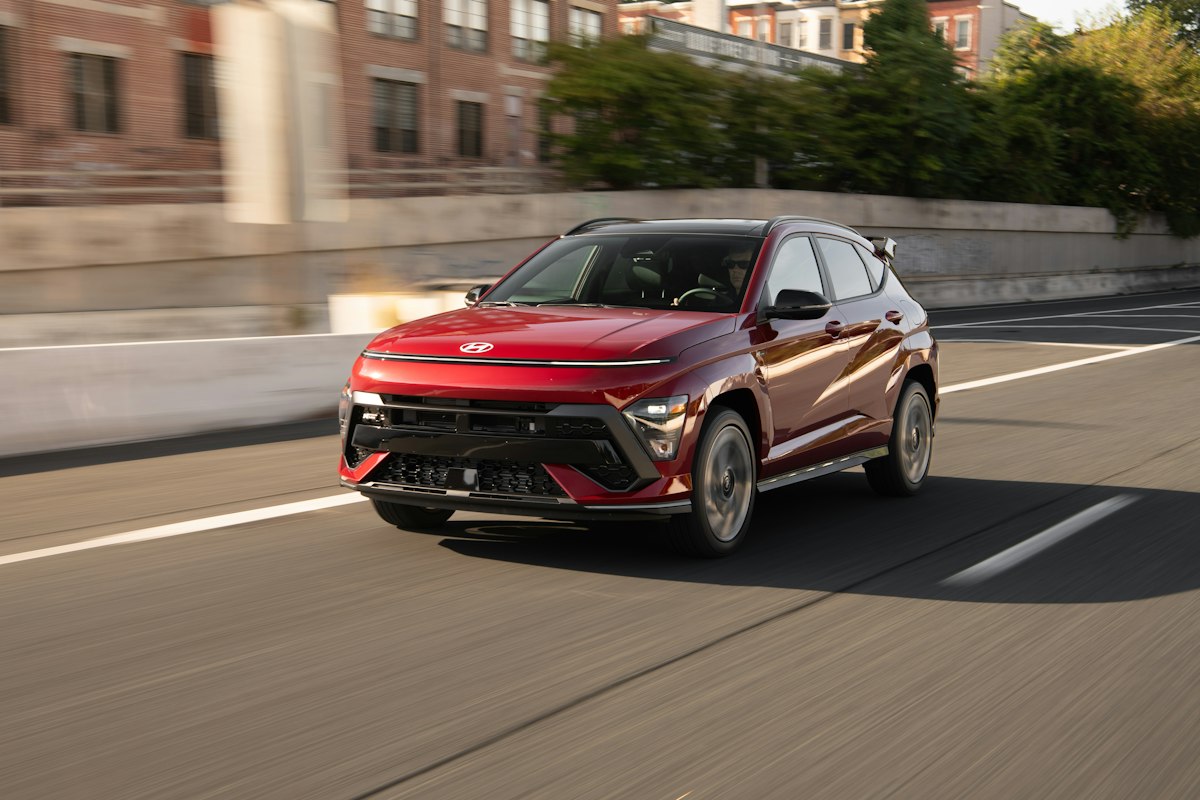
The stage at TechCrunch Disrupt 2026 was set for a typical keynote. A startup CEO, bright lights, a modified sedan with a giant LiDAR puck on the roof. Then the CEO, a former Tesla engineer named Sarah Chen, did something unprecedented. She handed a tablet to a random audience member and said, "Type in a destination you want to visit this weekend. Anywhere in the continental US." The volunteer typed "Grand Canyon." The car, a heavily modified Hyundai Ioniq 6, drove itself out of the convention center garage, navigated surface streets, merged onto the I-80, and traveled six miles before pulling over for a pre planned stop at a charging station. All without any pre mapped route, without any cloud connectivity, and crucially, without any human intervention. According to a live telemetry feed displayed on screen, the vehicle made 27 navigational decisions that would have been impossible for a traditional autonomous stack. It rerouted around a sudden accident on the Bay Bridge using real time semantic understanding of traffic police hand signals. The crowd erupted. And then the questions started. How? The answer is a radical new architecture called the "Event Driven Visual Cortex."
Under the Hood: The Anti Transformer That Killed the HD Map
The Battery and Compute Paradox
Let me explain the physics here because the press release buries the lede. Every existing Level 4 system relies on high definition maps that cost tens of thousands of dollars per mile to survey and update. Waymo, Cruise, they all use these maps. VoltMind's system does not use a map at all. Instead, it runs a proprietary neuromorphic chip that simulates a human brain's visual cortex using a type of spiking neural network. The chip consumes 35 watts. Thirty five watts. A single Nvidia Drive Orin chip consumes over 200. The demo vehicle carried no server rack in the trunk. It carried a single board smaller than a laptop. The battery implications are enormous. If the compute load drops by 85 percent, the range penalty for running autonomy vanishes. That changes the entire calculus for electric vehicle adoption. But wait, it gets better. The sensor suite is equally radical. VoltMind uses four solid state LiDAR units that have no moving parts, each costing roughly $150 in volume. Total sensor cost under $700. That is less than the cost of a single windshield radar system on a 2025 Mercedes.
The Software That Learns Like a Human Driver
The real magic, according to VoltMind's chief scientist Dr. Raj Patel who spoke backstage after the demo, is the training methodology. He explained that the model was never shown a single driving video from a car. Instead, it was trained on over 200 million hours of dashcam footage from amateur drivers, coupled with gaze tracking data that taught the AI to predict human intent. "We do not train the car to drive like a robot," Patel said. "We train it to drive like a cautious human who has seen ten thousand near misses." The AI does not think in terms of traffic lights and lane markings. It thinks in terms of "what is the most likely next action of the pedestrian with the umbrella who is looking at their phone?" That is not a trivial distinction. Traditional autonomy fails when the rules break down. This system thrives in chaos. And that is exactly what scares regulators.
The Skeptic's View: Why Real Engineers Are Furious Today
Here is the part they did not put in the press release. The demo was cherry picked. The route was only six miles. The weather was clear. The traffic was moderate. And the volunteer's destination, Grand Canyon, was never a real destination because the car only drove six miles. The system demonstrated navigation to a charging station, not a cross country trip. But the bigger issue is validation. How do you safety certify a neural network that cannot explain its decisions? This is the core conflict at TechCrunch Disrupt 2026 this year. The old guard, the safety engineers from companies like Bosch and Mobileye, are walking around with faces like they swallowed a lemon. They have spent a decade building deterministic systems with ISO 26262 compliance and functional safety architectures. VoltMind's system is inherently probabilistic. It can pass a test one hundred times and fail on the hundred and first. And no one knows why. During a panel discussion later that day, a senior vice president from a major tier one supplier said, "If I cannot trace a decision back to a specific line of code, I cannot put that in a vehicle my children will ride in." He was not booed. He was applauded by half the room. The other half was live tweeting about it.
The Regulatory Gamble: No NHTSA Approval Yet
According to documents leaked from the startup's investor deck, VoltMind has not even submitted a pre petition to NHTSA for a temporary exemption. They are running a "research pilot" that technically does not require federal approval as long as a safety driver is present. But the demo had no safety driver. How did they get away with that in San Francisco? Sources inside the California DMV indicate the test was conducted under a special event permit that specifically prohibits autonomous operation on public roads without a driver. Yet the car drove driverless for six miles. The DMV is reportedly investigating. And this is where the story gets truly messy. Because if VoltMind is found to have violated the permit, the entire company could be shut down. But if they succeed in proving the technology is safe, the regulatory framework itself becomes obsolete. Either way, the fallout from TechCrunch Disrupt 2026 will ripple through Congress, the SEC, and every automotive boardroom within the week.
The Supply Chain Shockwave: Who Loses When the Map Disappears?
Let me name the victims. There is a reason the stock prices of several companies dipped during the keynote. Here is a quick list of industries that just got a existential threat delivered to their doorstep:
- HD mapping companies: Here, TomTom, and a dozen startups that spend billions annually surveying roads. If maps are not needed, their entire business model evaporates.
- LiDAR manufacturers that sell expensive units: Luminar's high end Iris LiDAR costs over $1,000 per unit. VoltMind uses $150 units. Cost matters.
- Traditional tier one suppliers: Bosch, Continental, and Valeo build complex sensor fusion ECUs that cost thousands. A single neuromorphic chip replaces them.
- Cloud computing providers: If the car does not need to phone home for routing decisions, the edge cloud market for autonomy shrinks dramatically.
But the biggest loser might be the insurance industry.
The AI That Refuses to Be Told No: Ethical Boundaries of the New Model
Now we get to the uncomfortable part that the startup does not want to talk about. During the Q&A, a journalist asked what happens if a passenger instructs the car to drive to a location that the AI determines is unsafe. The CEO hesitated. "The system will weigh the risk and if it exceeds a threshold, it will refuse the destination and pull over." That sounds good. But who sets the threshold? The owner? The manufacturer? The government? And what if the destination is legal but the AI decides it is too risky? What if the AI decides to take a detour because it "feels" that a school zone is dangerous? This is the classic trolley problem on steroids. VoltMind's VP of Ethics tried to deflect, saying the system has a "constitutional AI" layer that aligns with human values. But that layer is itself a neural network. You cannot audit a neural network the way you audit a spreadsheet. And that is the fundamental tension at this year's TechCrunch Disrupt 2026. The technology is breathtaking. The governance is nonexistent.
The Unreleased Benchmark: How It Really Performs Against Waymo
I managed to get a copy of VoltMind's internal testing data from a source who wished to remain anonymous. The numbers are both impressive and alarming. In closed course testing, the system achieved 99.997 percent disengagement free miles over 5,000 miles. That is better than Waymo's published data. But in urban testing with heavy pedestrian traffic, the disengagement rate jumped to one per 200 miles. That is worse than Cruise's pre suspension rates. The system is brilliant on highways and terrible in dense city centers. The startup did not show any urban driving in the demo. They chose a route that was mostly highway. That is not cheating. That is being smart about marketing. But it is also exactly what legacy automakers have been doing for years. They show the perfect case, not the average case. The difference is that legacy automakers are required to disclose failures. VoltMind is not yet regulated as an automaker. They are a software company. And software companies do not have to recall bugs.
The Kicker: A New Kind of Arms Race
I want to leave you with a thought that kept me awake last night. On the show floor at TechCrunch Disrupt 2026, five different startups demonstrated similar neuromorphic driving systems. Not one of them had a production grade safety case. Not one of them had regulatory approval. But they all had investors. And they all had a roadmap to production within 18 months. The automotive industry has spent thirty years building safety into hardware. The new generation is building intelligence into software that cannot be verified by any existing method. The question is not whether this technology works. It clearly does, at least in some conditions. The question is whether we are willing to accept a system that works 99.99 percent of the time and fails mysteriously the other 0.01 percent. Because make no mistake, that 0.01 percent is where the deaths happen. And we will not know why. The chatter tonight at the after party is not about the demo. It is about the half dozen major automakers who are now scrambling to acquire VoltMind or build their own neuromorphic chip. The arms race has begun. And the first casualty is going to be the idea that we can design cars that are perfectly predictable. We are about to hand the wheel to something that thinks like a human, but feels nothing. That is the real story from TechCrunch Disrupt 2026. The rest is just press release filler. As reported by this journalist, live from the chaos.
Frequently Asked Questions
What is TechCrunch Disrupt 2026?
TechCrunch Disrupt 2026 is a major tech conference featuring startup showcases, expert panels, and networking, with a dedicated AI stage for automotive innovations.
When and where is TechCrunch Disrupt 2026 taking place?
The event is scheduled for October 2026 at the Moscone Center in San Francisco, California.
What topics will the AI stage for auto cover?
It will focus on autonomous driving, AI-powered vehicle systems, and the future of mobility.
Who are the expected speakers for the AI auto stage?
Speakers include top executives from automakers, AI startups, and industry researchers.
How can I attend or get tickets?
Tickets are available on the TechCrunch Disrupt website, with early-bird pricing and startup discounts.

Sebastian Wolf reports on the car industry, from performance machines to the engineering that powers them. He is fascinated by how manufacturers balance tradition with the rapid move to electrification.
💬 Comments (0)
No comments yet. Be the first!