How Shipping Fuel Demand Could Drop by 2100
Projections for future shipping fuel demand vary widely depending on assumptions about freight electrification and trade.
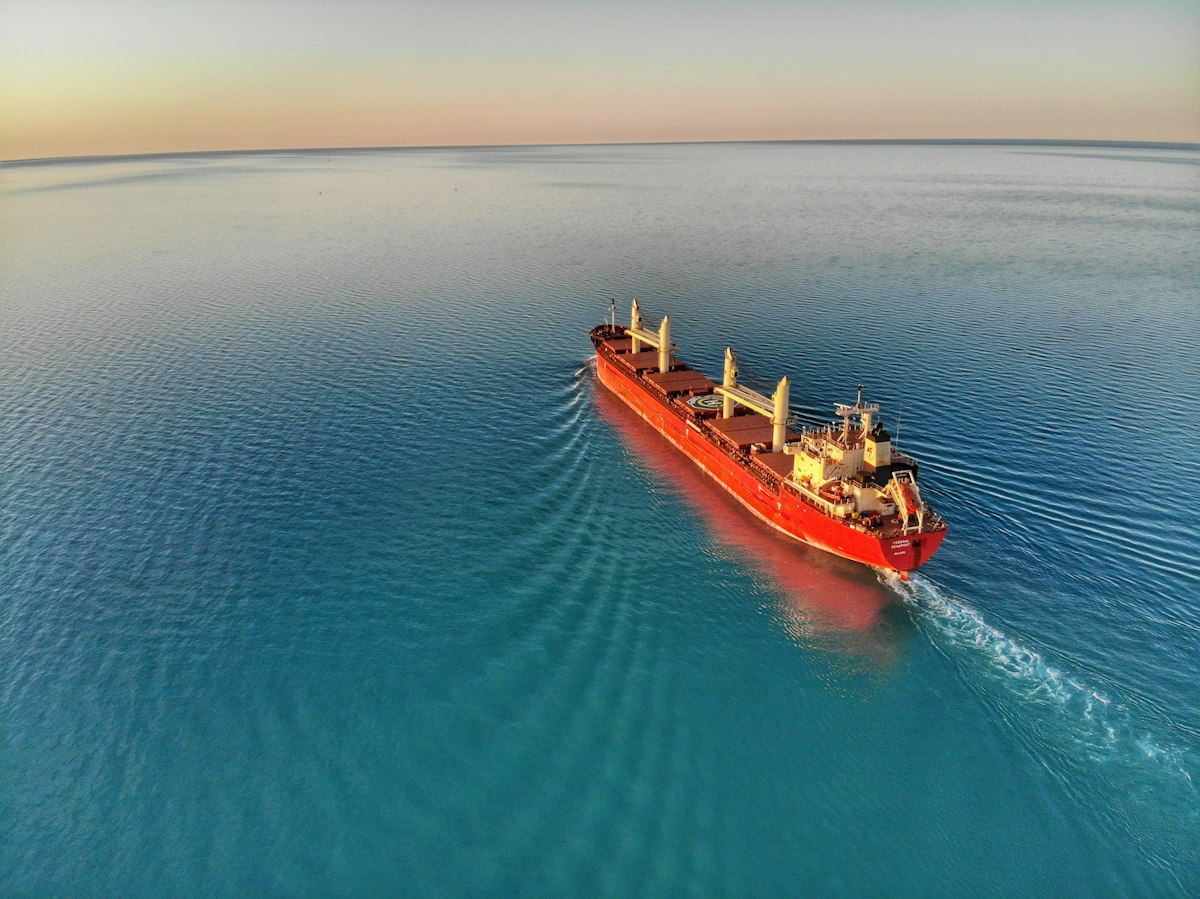
Driven by broad shifts across global markets that rewrite the energy equation, shipping fuel demand could drop to roughly 70 million tonnes annually by 2100. When current forecasts assume that today's market size and structure will simply carry forward into coming decades, planning revolves around finding direct low-carbon replacements for every barrel of oil or tonne of coal used today. So the decarbonization challenge looks far larger than it actually is. It's not.
Fossils and Freight Are Shrinking Together
Energy dominates global maritime freight. Roughly 40% of all shipping tonnage consists of fossil fuels, specifically coal, oil, and gas, while another 15% represents raw iron ore moved across seas. It's shifting. As power grids electrify and steel production methods evolve, the need to move those specific commodities across long distances will contract sharply, permanently altering the industry's future.
Fewer fossil fuel shipments mean fewer cargo ships are required on international waters. And because battery electrification is rapidly expanding into short-sea and inland shipping routes, the global maritime industry is changing. When those structural shifts occur simultaneously, the underlying need for liquid fuels in maritime transport shrinks for reasons that have nothing to do with alternative marine fuels. Demand drops.
Projections for maritime energy needs vary wildly. While one estimate puts shipping fuel demand at approximately 70 million tonnes per year by 2100, competing models project requirements reaching several hundred million tonnes, and it's clear that this massive variance changes everything about how capital must be allocated. Data is inconsistent. They're confused. So, investors can't decide.
Competing Demands for Sustainable Liquids
Every transport sector is competing. They're all after the exact same limited pool of clean fuels, even as electricity is rapidly taking over land-based transport systems while aviation faces a much tougher road to direct electrification.

Aviation faces limited technical alternatives, so it’s destined to maintain a much stronger economic claim on sustainable liquid fuels compared to any other heavy transport sector today. Priority matters. And because that clear hierarchy dictates what remains economically viable for ocean vessels, we’ve seen that shipping doesn't have the same financial flexibility when acquiring these scarce energy supplies.
- Cars, trucks, and rail networks are moving toward direct electrification.
- Short-distance maritime shipping is increasingly adopting battery power.
- Fossil fuel freight volumes are declining as global energy systems shift.
- Aviation maintains a priority claim on limited biological and synthetic fuels.
When all transport sectors are evaluated together, the realistic share of biodiesel and renewable diesel available for maritime routes looks drastically different than when shipping is viewed in isolation.
The Persistence of Costly Assumptions
Planning mistakes happen when organizations build long-term strategies around oversimplified growth targets. A central narrative around green hydrogen built momentum around the idea that the gas would eventually become cheap enough to run heavy transport, building heat, power storage, and varied industrial tasks. It's a gamble. So, they're ignoring the reality that such plans often don't account for the complex hurdles we've seen in the global energy market.
Institutions don't vanish quickly. Clean energy analyst Michael Barnard notes that they don't disappear as fast as the assumptions that created them, especially once money, staff, and political commitments accumulate around a proposition. So changing direction isn't just an analytical problem, it's an organizational one.
Persistent high production and delivery costs mean the actual addressable market for hydrogen is far smaller than we've assumed, yet policies, subsidies, and corporate structures remain locked into those original, inflated expectations. Inertia is deep. So, redirecting these vast resources requires overcoming the entrenched political and institutional forces that don't want to change their course despite the clear evidence of a limited economic reality.
Upgrading Infrastructure over Inventing Devices
We don't need radical breakthroughs. Addressing climate challenges effectively often relies on deploying known solutions through smarter commercial models, even as electricity transmission and distribution networks must expand to handle shifted loads. So utilities need to adapt their planning processes. They can't sacrifice reliability while bringing wind, solar, and battery installations online.
Community engagement drives execution. Securing local hosts for renewable infrastructure demands tangible regional benefits, rather than relying on national public support, as we've seen that project success depends on direct buy-in. Octopus Energy makes progress. They're deploying proven technologies alongside advanced software and customer-focused business models to change the landscape. Heat pumps and electric vehicles are already viable. But the priority is making them straightforward for households to adopt so everyone can participate.
Price Signals and Political Realities
Calculating future energy use requires factoring in how human behavior responds to rising costs, particularly because discretionary travel is sensitive to price in ways that routine daily commutes don't match. Aviation is roughly 91% discretionary. Facing higher costs, people may choose to:
- Fly less frequently throughout the year.
- Select destinations closer to home.
- Replace business travel with video calls.
- Pay a premium only for high-value trips.
Engineering models show how demand falls when sustainable aviation fuel pushes ticket prices higher, but they can't resolve the political challenge of government willingness to accept policies making travel more expensive for the public. Technology's ready and economically logical. But public acceptance sets deployment's pace.
Fixing the Scope of Atmospheric Drawdown
Carbon removal models fail. They suffer from the same inflated baseline problem because, while atmospheric drawdown is a recognized necessity, modeling overstated future fossil fuel use artificially inflates the calculated removal required to offset it. So, those giant removal estimates are then used to justify speculative technologies with uncertain costs and scaling timelines that we've yet to prove.
Some carbon removal pathways offer much better efficiency. Restoring forests, wetlands, and grasslands alongside improved agricultural practices provides clear ecological value. Capturing concentrated biogenic carbon dioxide directly from high-value industrial processes located near geological storage sites is far more practical than attempting to capture dilute carbon dioxide from ambient air and building massive infrastructure networks to move it.
Data center growth is predictable. Current projections for data center growth routinely extend existing computing power needs into the future while ignoring rapid improvements in software, processors, and hardware architecture. Efficiency matters now. Rising costs and energy limits create immediate incentives for efficiency gains, meaning computing output can grow exponentially even as the electricity required per task drops, which dramatically alters future energy demand curves. It's changing fast.
Frequently Asked Questions
What is the projected annual shipping fuel demand by the year 2100?
Driven by shifts in global markets, shipping fuel demand could potentially drop to roughly 70 million tonnes annually by 2100. However, projections vary widely, as some competing models estimate that requirements could reach several hundred million tonnes per year.
Why is the need for maritime fossil fuel shipments expected to contract?
Fossil fuels, specifically coal, oil, and gas, make up roughly 40% of all shipping tonnage. As power grids electrify and steel production methods evolve, the requirement to transport these specific commodities across long distances will decrease, which results in fewer cargo ships being needed.
How does the aviation sector affect the availability of sustainable fuels for shipping?
Aviation faces limited technical alternatives and therefore maintains a stronger economic claim on sustainable liquid fuels compared to other heavy transport sectors. Because of this hierarchy, the shipping industry possesses less financial flexibility when attempting to acquire these scarce energy supplies.
What institutional hurdles prevent a faster transition in energy planning?
Organizations often build long-term strategies around inflated expectations and struggle to change direction once money, staff, and political commitments accumulate. Redirecting resources requires overcoming entrenched political and institutional forces that resist changing course despite evidence of a limited economic reality.
Who should utilities focus on to ensure the success of renewable energy projects?
Utilities should focus on engaging local communities to secure hosts for renewable infrastructure, as project success depends on direct buy-in. It is essential to provide tangible regional benefits to these hosts rather than relying solely on national public support.

Sebastian Wolf reports on the car industry, from performance machines to the engineering that powers them. He is fascinated by how manufacturers balance tradition with the rapid move to electrification.
💬 Comments (0)
No comments yet. Be the first!