The Real Reason the V6 Gets No Respect
The V6 engine often outperforms V8s in trucks, yet it lacks enthusiast appeal. Why does this layout struggle for respect?
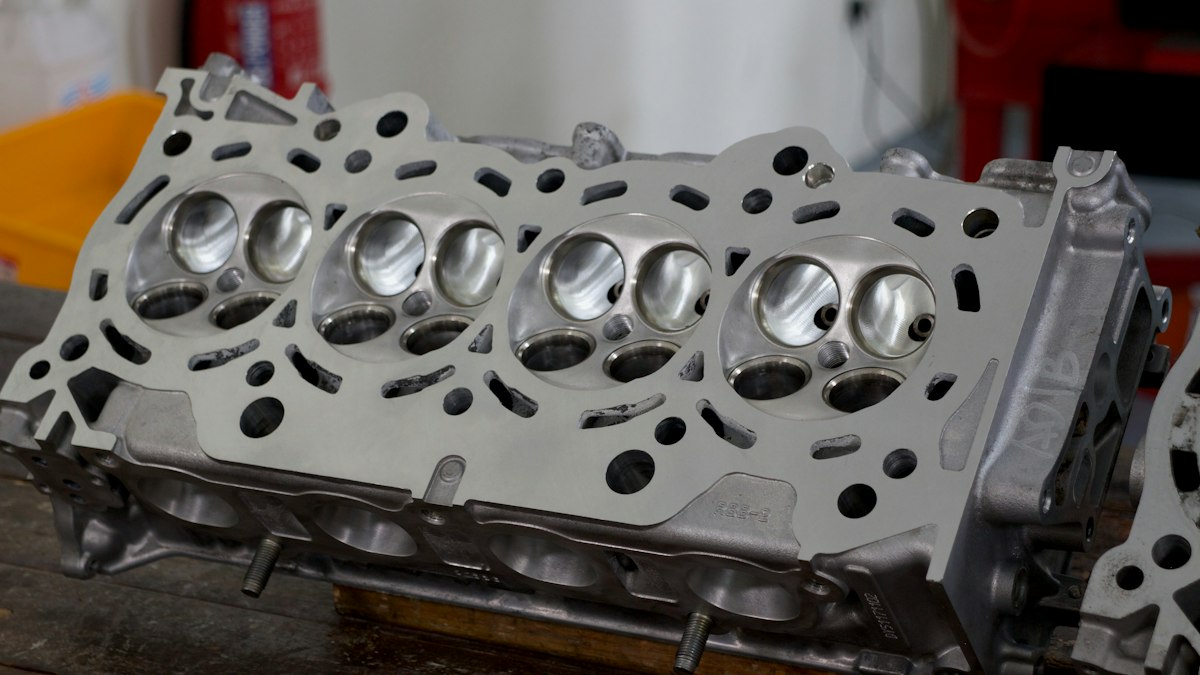
The V6 engine has performed more heavy lifting than almost any layout in automotive history. It's a workhorse. It has powered sedans, SUVs, and minivans whenever a four-cylinder engine simply ran out of breath, while it has also outperformed V8s on every measurable axis in the half-ton truck world, where it is often the most capable option you can buy today. Yet it has almost no defenders. The hate isn't rational. It stems from the collision between the passion enthusiasts bring to engines and the cold arithmetic the industry uses to build them.
It's unloved. Understanding the engine requires looking at two factors: the physics that make it inherently rougher than six-cylinder rivals, and the history that tied it to downsizing, cost-cutting, and the retreat from the V8 era. A V6 engine is a six-cylinder engine whose cylinders sit in a V and feed one shared crankshaft. And companies began experimenting with the layout before World War II, with the first designs created independently by Marmon, Deutz, and Delahaye. Over time, it became the dominant six-cylinder design in cars.
The Physics of Engine Imbalance
Packaging is the core appeal. Because a V6 engine is short, carmakers often fit it as the larger option in models otherwise sold with inline-fours, especially in transverse layouts where the engine sits sideways. It's a compromise. As front-wheel drive conquered the mainstream, the layout became closely associated with that setup and the vehicles built around it, which is the root of the problem. That association turned it into the engine of cost-cutting, a symbol of the drift away from the golden age of the rear-wheel-drive V8.
The mechanical case is real. Because every V6 engine with even firing possesses a primary imbalance, it's true that each bank acts as a straight-three engine, and three is an odd number. That odd count of cylinders in each bank sets up vibrations that a V8 simply doesn't have. So, straight-six and flat-six engines don't suffer this imbalance at all. It's visible on a dynamometer.
Comparing Vibration and Torque Swings
On a dynamometer, torque delivery shows clear swings across different cylinder counts and V-angles:
- Even-fire V6 engine: Brief torque peaks of 154 percent over mean torque, with valleys sinking 139 percent beneath it.
- Standard four-cylinder: Torque peaks of roughly 270 percent above mean torque and valleys of 210 percent below.
- 90-degree uneven-fire V6 engine: Torque swings of 185 percent above and 172 percent below mean torque.
Context matters. A four-cylinder is far worse. In a four-cylinder, a single piston fires at a time, and each one halts and reverses before the next power stroke begins. The V6 engine has overlap. The next cylinder starts firing 60 degrees before the last one is done. That overlap means less pulsation than a four-cylinder. So it is smoother than the engine below it and rougher than the one above it, earning middle-child status that attracts resentment rather than loyalty.
From Early Cost-Cutting to Engineering Fixes
Engineers tame the shakes using harmonic dampers or counter-rotating balance shafts. It works. But that persistent, lingering vibration remains a genuine, unavoidable downside for luxury cars that simply can't be ignored by engineers or owners who demand a perfectly smooth experience on the open road. This explains why a flat-six defines the Porsche 911 and an inline-six carries decades of cultural weight at BMW. The mainstream American story starts in 1962 with General Motors. Buick created the Fireball V6 engine by chopping a pair of cylinders from a smaller V8 in its lineup, and the whole point was to save engineering cost. Aside from the missing cylinders, the Fireball shared everything with the V8 it was derived from. It's simple.
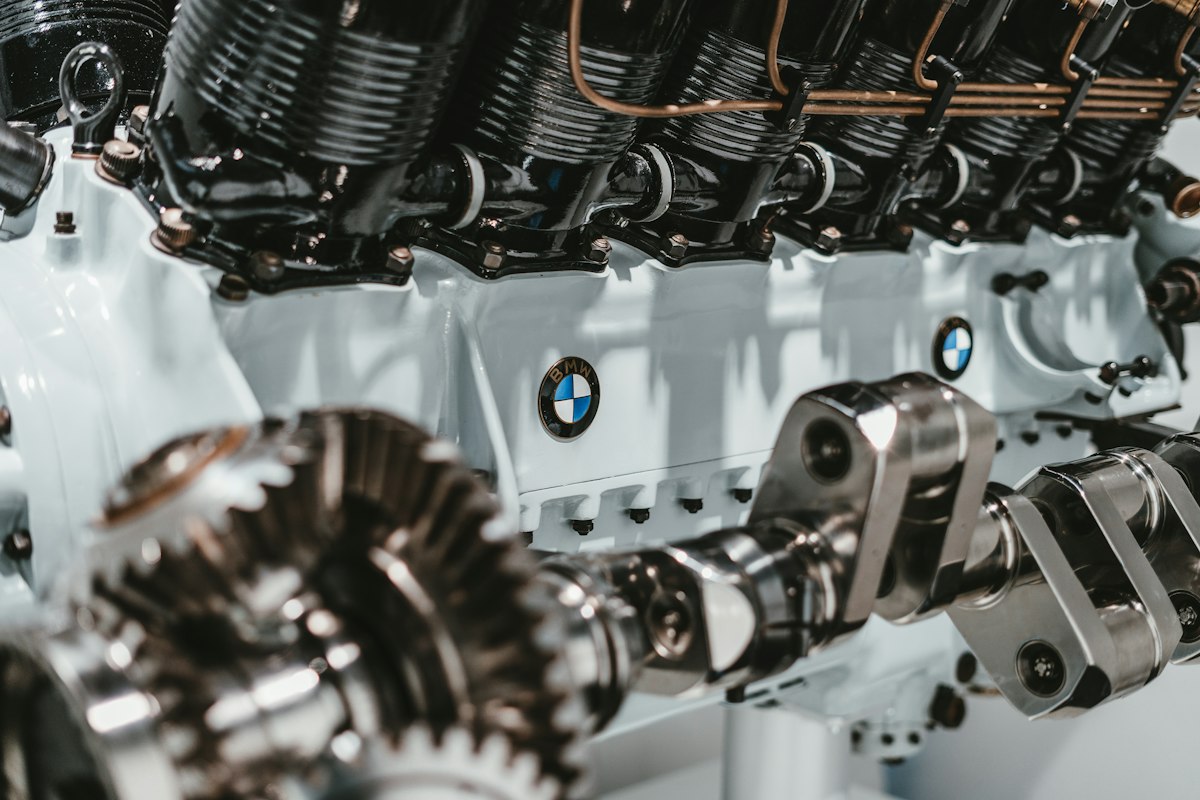
That is the original sin. The first American V6 engine existed to reduce cost, not to delight anyone. Doing it on the cheap had consequences. GM's engine used a 90-degree V-angle borrowed from the V8. The trouble is that a 90-degree block designed for eight cylinders does not balance with six, because you are back to that odd number of cylinders per bank. GM ignored the roughness and shipped it anyway.
Swapping the four-throw crankshaft for a three-throw unit kept design costs down. It’s brutal. Because a V6 engine running uneven firing intervals of 90 and 150 degrees displays those severe torque swings of 185 percent above and 172 percent below mean, it’s significantly rougher than an evenly-fired configuration, even if it’s still better than a four-cylinder.
The Hunt for Ideal V-Angles
Detroit ignored the engineering answer. Lancia moved that layout into volume production in 1950 with the Aurelia and chose a 60-degree V-angle, which solved the balance problem while being aided by a pioneering six-throw crankshaft that reduced vibration. Sixty degrees is the optimal configuration for V6 engine balance. It’s smoother, more compact, and more power-dense than a 90-degree layout. Because the narrower angle makes the whole engine narrower, it fits neatly into transverse front-wheel-drive bays, where a pair of crankshaft counterweights can almost perfectly cancel the primary forces, and engine mounts mop up the rest.
GM finally built its own 60-degree V6 engine. It arrived in the 1980 Chevrolet Citation, a model marketed on modern efficiency that flopped spectacularly, proving that even clever designs don't always guarantee success in a fickle market. Bespoke 60-degree engines cost more to engineer, but they delivered the specific refinement that the 90-degree adaptations couldn't provide, and this layout eventually won out across the entire automotive industry. It worked.
Volkswagen's Ultra-Narrow Approach
Volkswagen pushed compactness further with the VR6. Produced since 1991, this engine features tight V-angles of just 10.5 and 15 degrees, allowing it to use a single cylinder head. It’s narrow. Because the intakes sit on one side and the exhausts reside on the other, it’s technically a straight engine. So, the name comes from German words meaning shortened inline engine. It gave VW a 60 percent displacement bump over the inline-fours it replaced, all while fitting perfectly into the same engine bay they’ve used for years.
Despite the scorn, the V6 layout creates true monsters.
Notice the pattern. Both the VR38DETT and the Ford GT's EcoBoost rely entirely on forced induction to reach their maximum performance peaks, yet even a from-scratch masterpiece like the Nettuno was met with widespread indifference. It's cold. The V6 engine can be brilliant, but it still can't move anyone.
Owner FlyerTuck has enjoyed his 2009 Infiniti G37 sedan, equipped with the 328hp, 269 lb-ft 3.7L V6 engine, for seventeen years, and it's currently showing 152K on the clock. It's fast. But while he doesn't do it anymore because of his age, he fondly remembers that it was a total blast running the car up over 7,000rpm and hearing that engine sing.
The layout faces a squeeze. Turbocharged four-cylinders press up from underneath while electric motors bear down from above, leaving the V6 engine stuck in the middle of a shifting industry landscape. But manufacturers are bringing V8s back to half-ton trucks. It's not because the V8 does the job better, but because buyers crave the noise and the nameplate more than they value raw capability. In those same trucks, the V6 is frequently the most capable option on offer.
That is the whole story. The V6 engine wins on numbers but loses on feeling. If you want to appreciate one, stop judging it against the straight-six it can't out-smooth or the V8 it can't out-charm, and instead judge it against the four-cylinder it actually replaced. Drive a turbocharged example with real intent behind it. So, accept that competence rarely wins hearts.
Frequently Asked Questions
What is the primary physical reason that V6 engines are often considered rougher than other configurations?
Every V6 engine with even firing possesses a primary imbalance because each bank acts like a straight-three engine. Since three is an odd number, this cylinder count sets up vibrations that are not present in straight-six or flat-six engines.
Why did General Motors create the Fireball V6 engine in 1962?
The primary goal of creating the Fireball V6 was to reduce engineering costs for the company. Buick achieved this by chopping a pair of cylinders from a smaller V8 in its lineup and sharing most of the parts between the two engines.
How does the torque delivery of a V6 engine compare to a standard four-cylinder engine?
The V6 engine is smoother than a four-cylinder because it has firing overlap where the next cylinder starts firing before the last one is finished. In contrast, a four-cylinder engine has higher torque peaks and deeper valleys because a single piston fires at a time and must halt before the next stroke.
What engineering design is considered the optimal configuration for V6 engine balance?
A 60-degree V-angle is considered the optimal configuration for V6 engine balance. This design is smoother, more compact, and more power-dense than a 90-degree layout, and it allows for a six-throw crankshaft that reduces vibration.
Who developed the VR6 engine, and what is the meaning behind its name?
Volkswagen produced the VR6 engine starting in 1991, utilizing very tight V-angles of 10.5 and 15 degrees. The name is derived from German words meaning 'shortened inline engine' because it functions technically as a straight engine with a single cylinder head.

Sebastian Wolf reports on the car industry, from performance machines to the engineering that powers them. He is fascinated by how manufacturers balance tradition with the rapid move to electrification.
💬 Comments (0)
No comments yet. Be the first!