Red E Charge Plug & Charge goes live nationwide
Red E Charge Plug & Charge turned on at select stalls, letting drivers plug in without apps or cards under its new Red E Go service.
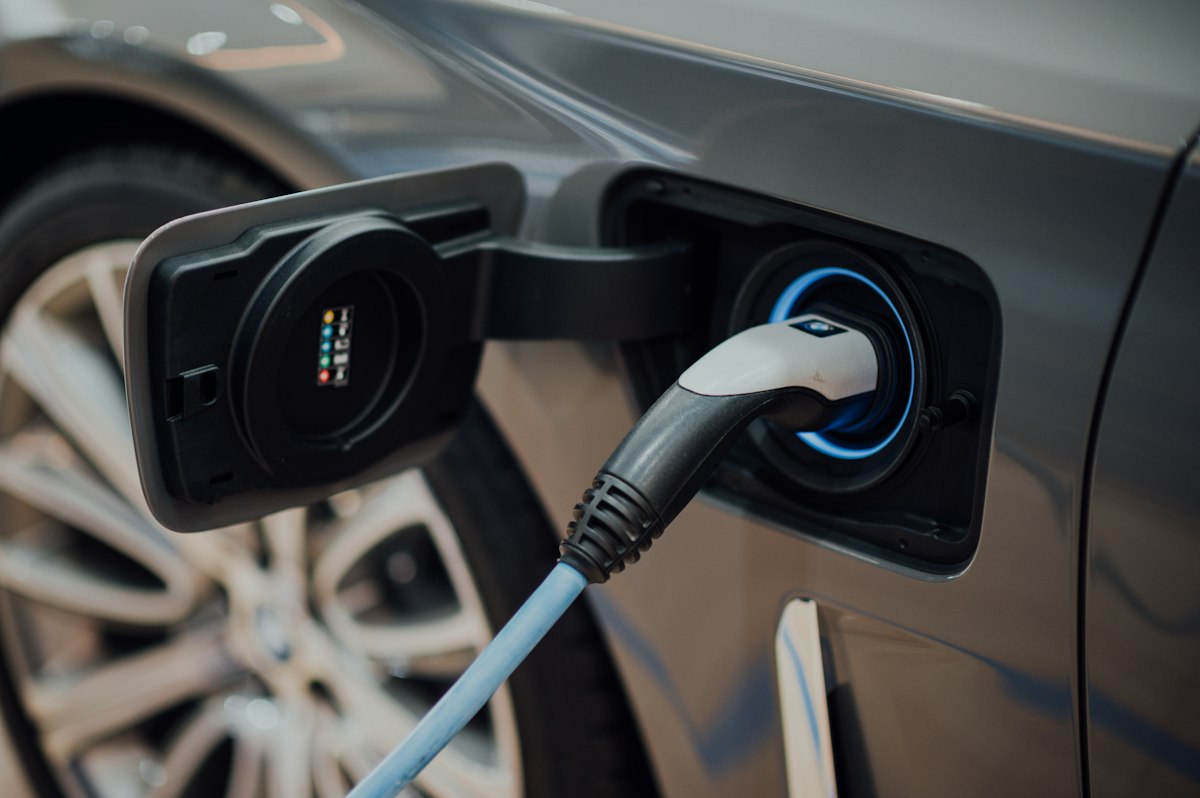
Red E Charge Plug & Charge has gone live across a slice of the company's network, and the Detroit-based operator is betting drivers would rather leave their phones in their pockets than fumble through another QR code at the curb. The feature, branded Red E Go, lets a driver pull up, plug in, and let the payment settle itself. No app to open. No card to swipe. No code to scan.
It's a small convenience. It sounds trivial. But you don't think so when you're standing in the rain at a broken pedestal, trying to remember which app you used last time, and that's a ritual Red E Charge Plug & Charge is meant to erase entirely, at least at the stations where it works.
How Red E Go Actually Works
The setup happens once. Drivers complete a configuration inside the network's smartphone app, entering vehicle details and a payment method. After that, the car and the charger handle the handshake on their own at compatible stations. The phone and the wallet can stay exactly where they are.
There is a catch, and it is the same one every network faces. The feature is live at select locations, not the whole footprint. Red E has not said how many stalls are covered or when the rest will follow. For now, Red E Charge Plug & Charge is a partial rollout, which means the old habits still matter at plenty of stops.
The Footprint Behind the Feature
That footprint is not small. Federal data puts Red E at more than 1,500 sites and roughly 4,600 ports across 46 states. Of those ports, 2,159 are fast chargers spread over 579 stations. Another 600 locations carry nearly 2,500 Level 2 ports.
Stall output swings wildly depending on where you land and what plug you carry. The range runs from a plodding 10 kW to a genuinely quick 640 kW. The network supports J1772, CCS1, NACS, and CHAdeMO connectors, with pricing between $0.40 and $1.15 per kWh.
- More than 1,500 sites and about 4,600 ports in 46 states
- 2,159 fast-charging ports across 579 stations
- 600 locations offering nearly 2,500 Level 2 ports
- Output from 10 kW to 640 kW depending on location and plug type
- Pricing from $0.40 to $1.15 per kWh
For a network most drivers could not pick out of a lineup, those numbers carry more weight than the brand name suggests.
A Quiet Climb Up the Rankings
Momentum tells a sharper story than size. One analysis pegged Red E as the fourth-fastest-growing DC fast charging network nationwide in the second quarter, with 315 new ports. That placed it behind Tesla, Walmart, and ChargePoint, but ahead of Electrify America, EVgo, and Ionna.
Customers seem to notice. Red E ranked fifth in the latest JD Power Electric Vehicle Experience Public Charging Study, trailing Ionna, the Mercedes-Benz Charging Network, the Rivian Adventure Network, and Tesla's Supercharger network. Its 628 points on a 1,000-point scale came in just under the 666-point segment average, yet still beat Electrify America, EVgo, and ChargePoint.
Red E is at 99% uptime for their charging network.
That figure, raised in reader discussion around the rollout, puts the operator in respectable territory. Tesla's Supercharger network sits at 99.95%, while Electrify America is aiming for 97% and currently lands somewhere between 90% and 94%.
Why Uptime Is the Real Battle
Plug and charge only matters if the stall works when you arrive. A dead pedestal does not care how elegant your payment handshake is. The frustration of pulling up to an entire facility that refuses to deliver electrons is a familiar one, and it is the reason reliability numbers get scrutinized far more than app design.
One driver recounted trying five cords across four pedestals at an Electrify America site, only to hit a charging error on every single one. The phone tree offered no shortcut for reporting a full outage. That is the backdrop against which Red E Charge Plug & Charge has to prove itself.
Not Everyone Wants an App
A portion of drivers do not want a smoother app experience. They want no app experience at all.
Take money, give fuel. That sentiment surfaced plainly in response to the rollout, with one commenter noting that gas stations now push apps for discounts too, and the trouble rarely seems worth it. Sometimes it works. Sometimes it does not. Then the promotional emails start.
Red E Charge Plug & Charge answers half of that complaint. It removes the phone from the transaction after setup. But it doesn't answer the other half, because the one-time configuration still lives in an app, and for drivers who never wanted an account in the first place, the barrier has moved rather than disappeared. The barrier moved. It's still there.
What Comes Next
For now, the feature stays at select locations, and no timeline has been offered for a wider push. The broader trajectory, though, is harder to ignore. A network that ranked fourth in fast-charging growth and fifth in customer satisfaction is no longer a curiosity. It is a player, even if most drivers still could not name it.
Red E Charge Plug & Charge won't fix a broken pedestal. It won't silence the phone tree. But what it can do, at every stop where it works, is shave off a few minutes and a few small humiliations, and in a charging landscape still defined by fumbling, that counts for something.
Frequently Asked Questions
What is Red E Go and how does it work at compatible stations?
Red E Go is a feature branded under Red E Charge Plug & Charge that lets a driver pull up, plug in, and let the payment settle itself. The setup happens once, with drivers completing a configuration inside the network's smartphone app by entering vehicle details and a payment method, after which the car and the charger handle the handshake on their own at compatible stations.
Is the Red E Charge Plug & Charge feature available across the entire Red E network?
No, the feature is live at select locations, not the whole footprint, and Red E has not said how many stalls are covered or when the rest will follow. For now, Red E Charge Plug & Charge is a partial rollout, which means the old habits still matter at plenty of stops.
What does the article say about Red E's network size, charger types, output, and pricing?
Federal data puts Red E at more than 1,500 sites and roughly 4,600 ports across 46 states, including 2,159 fast chargers over 579 stations and 600 locations with nearly 2,500 Level 2 ports. Output ranges from 10 kW to 640 kW, the network supports J1772, CCS1, NACS, and CHAdeMO connectors, and pricing runs between $0.40 and $1.15 per kWh.
How did Red E rank in growth and customer satisfaction compared to other charging networks?
One analysis pegged Red E as the fourth-fastest-growing DC fast charging network nationwide in the second quarter with 315 new ports, placing it behind Tesla, Walmart, and ChargePoint but ahead of Electrify America, EVgo, and Ionna. Red E also ranked fifth in the latest JD Power Electric Vehicle Experience Public Charging Study with 628 points on a 1,000-point scale, trailing Ionna, the Mercedes-Benz Charging Network, the Rivian Adventure Network, and Tesla's Supercharger network.
Why is uptime described as the real battle, and what are Red E's reliability numbers?
Plug and charge only matters if the stall works when you arrive, because a dead pedestal does not care how elegant your payment handshake is, and reliability numbers get scrutinized far more than app design. Red E is at 99% uptime for their charging network, while Tesla's Supercharger network sits at 99.95% and Electrify America is aiming for 97% and currently lands somewhere between 90% and 94%.

Sebastian Wolf reports on the car industry, from performance machines to the engineering that powers them. He is fascinated by how manufacturers balance tradition with the rapid move to electrification.
💬 Comments (0)
No comments yet. Be the first!