NYC Weighs 20+ E-Bike Bills, Including Class 3 Ban
New York City lawmakers consider over 20 micromobility bills this week, including proposals to ban Class 3 e-bike sales and riding.
NYC E-Bike Laws Face a 20-Bill Shakeup
NYC e-bike laws are about to get the kind of scrutiny that usually follows a scandal, not a commute. On Wednesday, the New York City Council's Committee on Transportation and Infrastructure meets to take up a package of more than 20 micromobility bills covering e-bikes, electric scooters, mopeds, delivery apps, and enforcement. Some of the proposals target real problems: illegally modified bikes and unregistered mopeds dressed up as e-bikes. Others go much further. Three separate bills would effectively wipe out Class 3 e-bikes, a category that is perfectly legal in New York right now.
What New York Actually Allows Today
Here's the backstory. New York legalized e-bikes statewide in 2020 and split them into three classes. Class 1 bikes use pedal assist up to 20 mph. Class 2 bikes add a throttle, also capped at 20 mph. Class 3 bikes provide motor assistance up to 25 mph, and riders must be at least 16 years old, but none of these bikes require a driver's license or vehicle registration, so it's not like they're treated the same as cars. But don't forget the age rule.
That framework has held for years. The 25 mph ceiling for Class 3 is lower than the 28 mph standard used across most of the country, an admittedly arbitrary number, but it has worked. Now lawmakers are asking whether the top tier should exist in the city at all.
The Class 3 Crackdown
Councilmember Crystal Hudson has introduced two bills. They target the fastest legal e-bikes. The first bars shops from selling or renting Class 3 e-bikes, and while a first violation wouldn't trigger a fine, repeat violations could cost up to $2,000, a penalty that supporters say fits the risk these machines pose. But the second bill goes considerably further. It would prohibit people from riding Class 3 e-bikes on streets, in parks, or in any other public space, and that's a sweeping restriction riders say they can't ignore.
Transportation Committee Chair Shaun Abreu has proposed a softer landing. His bill would create a trade-in program letting owners of Class 3 and other ineligible e-bikes swap them for a Class 1 or Class 2 model, or receive a voucher toward buying one. That idea only makes sense if the ban moves forward. It also signals how serious the city is about redrawing the line.
Testing Bikes, Not Banning Them
Not every proposal punishes legal riders. One bill would set up a program allowing the NYPD and the New York City Department of Transportation to use a dynamometer to test suspected illegal micromobility vehicles for motor power and maximum assisted speed. That gives police an objective tool to determine whether a bike has been modified or is simply an electric motorcycle pretending to be an e-bike. Europe already uses this approach with good results.
Delivery companies face their own rules. One proposal would require delivery apps to verify that mopeds used by workers are properly registered. And another would force the companies to file annual safety reports and plans. Councilmember Gale Brewer has introduced a bill requiring food delivery apps to carry liability insurance covering crashes involving workers making deliveries or waiting to make them, and it's a move that could reshape how these apps operate across the city. They can't avoid it.
The stakes are enormous: the Workers Justice Project estimates around 80,000 e-bike delivery workers operate in New York City.
Two Different Problems, One Debate
Here's the distinction. It keeps getting blurred. Cracking down on illegally modified e-bikes is one thing, but making currently legal e-bikes illegal is another entirely, and it's a difference that matters because enforcement tools like dynamometer testing could catch the rule breakers without sweeping compliant riders into the same net. The Class 3 ban does the opposite. It moves the legal line downward. And it removes a category the state currently permits.
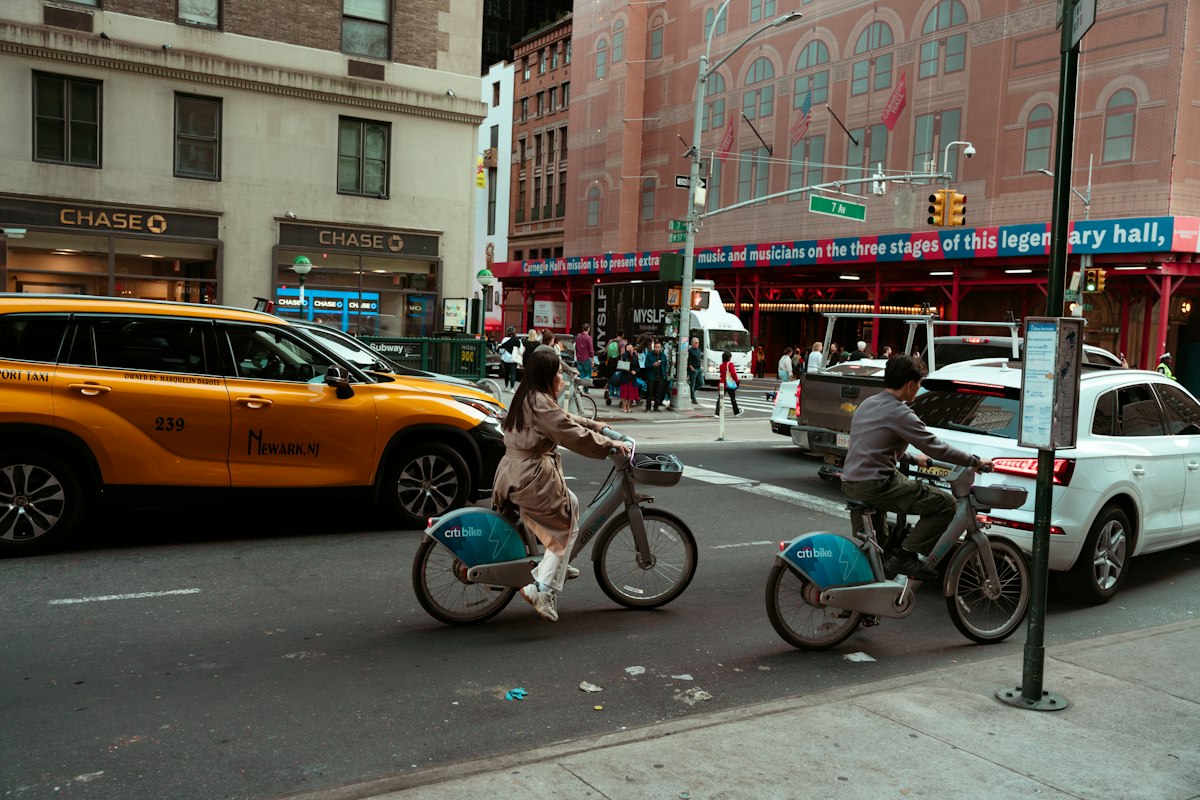
This is not happening in a vacuum. Last year, the city ordered Citi Bike to cut the top assisted speed of its gray electric bikes from 18 mph to 15 mph. The push to slow down e-bikes in New York City is already underway, and the Class 3 bills are the sharpest edge of it.
What Happens Wednesday
Wednesday's committee meeting is one step in the legislative process. It's not a final vote. New Yorkers have been invited to testify in person or remotely, and with more than 20 bills landing at once, public input could shape which proposals survive. So they're showing up. Whether the city adopts any of them remains an open question.
The real debate isn't about whether New York should regulate e-bikes. Not anymore. It's about where lawmakers draw the line, and that line sits somewhere between going after illegal vehicles and restricting the legal ones that already carry thousands of workers and commuters across the five boroughs every single day. But they can't have it both ways. We've got thousands of riders. So the question isn't if, it's where.
- Class 3 e-bikes: legal now, potentially banned from sale, rental, and public streets under three separate proposals.
- Enforcement: dynamometer testing could give the NYPD a scientific way to identify illegally modified bikes.
- Delivery platforms: new registration checks, annual safety reports, and liability insurance requirements are on the table.
For the roughly 80,000 delivery workers who depend on e-bikes, and for anyone who bought a Class 3 model believing it was street legal, the outcome of these NYC e-bike laws could arrive fast. The committee meets Wednesday. Testimony is open. The line is about to move, one way or another.
Frequently Asked Questions
What is the New York City Council's Committee on Transportation and Infrastructure doing on Wednesday regarding e-bikes?
The committee meets on Wednesday to take up a package of more than 20 micromobility bills covering e-bikes, electric scooters, mopeds, delivery apps, and enforcement. This is one step in the legislative process, not a final vote, and New Yorkers have been invited to testify in person or remotely.
How do New York's current e-bike classes differ from each other, and what age rule applies to Class 3?
New York legalized e-bikes statewide in 2020 and split them into three classes: Class 1 uses pedal assist up to 20 mph, Class 2 adds a throttle also capped at 20 mph, and Class 3 provides motor assistance up to 25 mph. Riders of Class 3 bikes must be at least 16 years old, but none of these bikes require a driver's license or vehicle registration.
What specific measures do Councilmember Crystal Hudson's two bills propose for Class 3 e-bikes?
The first bill bars shops from selling or renting Class 3 e-bikes, with repeat violations potentially costing up to $2,000. The second bill would prohibit people from riding Class 3 e-bikes on streets, in parks, or in any other public space.
How would the dynamometer testing program proposed in one bill help enforce e-bike rules?
One bill would set up a program allowing the NYPD and the New York City Department of Transportation to use a dynamometer to test suspected illegal micromobility vehicles for motor power and maximum assisted speed. This gives police an objective tool to determine whether a bike has been modified or is simply an electric motorcycle pretending to be an e-bike.
What new requirements would delivery companies face under the proposed bills?
One proposal would require delivery apps to verify that mopeds used by workers are properly registered, and another would force the companies to file annual safety reports and plans. Councilmember Gale Brewer has also introduced a bill requiring food delivery apps to carry liability insurance covering crashes involving workers making deliveries or waiting to make them.

Sebastian Wolf reports on the car industry, from performance machines to the engineering that powers them. He is fascinated by how manufacturers balance tradition with the rapid move to electrification.
💬 Comments (0)
No comments yet. Be the first!