NHTSA Investigating Tesla Autopilot Fatal Crash
The NHTSA is conducting a special crash investigation after a Tesla Model 3 crashed into a Texas home, killing one woman.
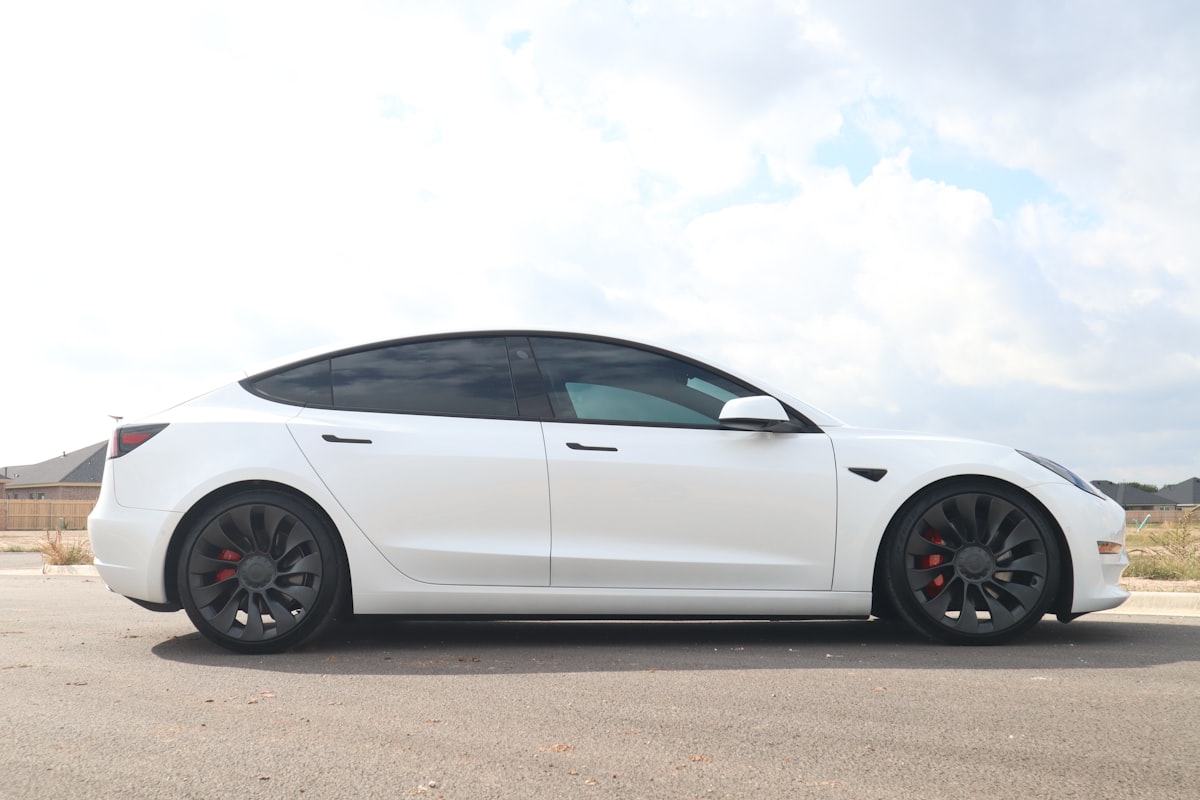
NHTSA is investigating Tesla Autopilot. That's the immediate priority for federal safety regulators after a horrific crash in Texas claimed the life of an elderly woman inside her own home. It happened on a Friday. A Tesla Model 3 left the roadway and plowed into a residential structure at a high rate of speed, causing massive destruction and a tragedy that's once again put a national spotlight on automated driving systems. The driver told police at the scene he was actively relying on the vehicle's automated driver-assistance mode when he lost control of the sedan. But it's too late for the woman.
The crash's mechanics reveal sudden devastation. It's a violent snapshot of metal and brick colliding. According to the Harris County Sheriff Office, the driver, identified as Michael Butler, failed to drive in a single lane before veering off the road and striking the residence. But Butler wasn't intoxicated. He's cooperating with the investigation and assisting local police in understanding how the Autopilot technology functions. The Model 3's exact speed hasn't been disclosed, yet a nearby doorbell camera captured the moment the vehicle burst through the front of the brick home. And photos shared on Facebook by the Office of Constable Terry Allbritton showed the sheer scale of the structural ruin left in the wake of the impact.
Tragic Loss of Martha Avila
Martha Avila was seventy-six. Inside her home, she stood in the front room when a vehicle breached the walls, and she lived there with her daughter Jennifer Barbour, her son-in-law, and three young grandchildren. No one else was injured. But Avila succumbed to her injuries following the impact, leaving her family in a hotel, grieving in shock and waiting for official answers. Barbour noted her mother was in excellent health and took no medications, so the family believed she'd live a long life like her grandmother, who they thought might reach 100.
"She didn't deserve to go that way," Jennifer Barbour said, describing the sudden loss of her mother. "I don't know if it's his fault or the car's fault or what really happened. I've never seen a car go that fast."
This agonizing situation highlights the human cost of unproven automotive technologies. But the family remains trapped in uncertainty, unsure whether to lay blame on the driver's actions or a failure of the vehicle's automated systems. The National Highway Traffic Safety Administration confirmed it is launching a special crash investigation to determine exactly what went wrong, a move that highlights how little we still understand about these systems. Tesla didn't immediately respond to requests for comment. It's a tragedy.
The Mixed Messages of Autopilot Marketing
Tesla has long insisted that its driver-assistance systems save lives. The company owner manual states that drivers must keep their hands on the wheel and be ready to take over at any moment. But there is a catch. The marketing surrounding these features often tells a completely different story. Just days before the crash, Tesla official account on the social platform X ran an advertisement showing drivers with their hands completely off the steering wheel, waving their fingers in the air and holding coffee mugs. The day after Butler's crash, the Tesla X account reposted a gushing comment from a Tesla fan who shared a pic of himself taking a photo of a sunset while driving, with a caption claiming that Tesla's technology 'is both magical and life changing, relaxing and maybe even lifesaving!
Regulatory Battles Over Safety Rules
The federal probe gets underway. But the company is actively lobbying to strip away existing safety regulations, pushing hard under the current administration to fast-track automated vehicles by removing human-centric design mandates. So Tesla is now pushing federal regulators to eliminate two specific safety rules.
- The requirement to install physical displays that show transmission shift positions, which Tesla argues are obsolete.
- The requirement for windshield wipers and defogging controls on vehicles utilizing automated driving systems, because the vehicle relies on cameras rather than human visibility.
They also warn that passengers need clear visibility through the windshield to spot hazards or evaluate their surroundings during emergencies or crashes.
The Reality of Crash Statistics
Proponents of automated vehicles frequently point to a 2019 federal study showing that ninety-four percent of motor vehicle crashes are linked to human error. But that statistic is highly misleading, as safety advocates are quick to note. It's a risky bet. The original federal study explicitly noted that while human error was a critical reason linked to the events, it was never intended to assign absolute fault to the driver over vehicle or environmental factors, so the promises of fewer crashes, lower congestion, and safer roads remain unproven theories, not established facts.
A Shifting Regulatory Environment
The relationship between federal regulators and automated vehicle manufacturers has shifted dramatically. It's a stark change. In 2023, regulators forced Tesla to recall over two million vehicles , every single car equipped with Autopilot , after deciding the system didn't do enough to guarantee drivers stayed attentive. That action came from a federal investigation launched in 2021. But since then, Tesla CEO Elon Musk has led government efficiency efforts that dramatically cut the number of federal agency staff with specialized expertise in evaluating automated vehicle safety. That staff reduction happened just before reports of Tesla Full Self-Driving system failures sparked another federal probe last October. So the oversight cycle continues.
Federal officials now seem more aligned with the push for rapid deregulation. They see 2026 as a big year. Agency leaders have indicated that this will be the moment for writing new rules that pave the way for vehicles requiring zero human intervention, aiming to deploy them with fewer manual controls like removing transmission shift displays and windshield wiper wipers as Tesla has proposed. But officials acknowledge the engineering challenge is safety-critical. They argue the potential societal benefits of autonomous transportation are too great to delay with heavy enforcement or regulatory hurdles. For families like Martha Avila's, however, the human cost of this rapid transition is already a permanent reality.
Frequently Asked Questions
What is NHTSA investigating regarding Tesla?
NHTSA is investigating Tesla Autopilot after a fatal crash in Texas where a Tesla Model 3 plowed into a home, killing an elderly woman. The driver told police he was relying on the vehicle's automated driver-assistance mode when he lost control.
Why did the driver lose control of the Tesla Model 3?
According to the Harris County Sheriff Office, the driver, Michael Butler, failed to drive in a single lane before veering off the road and striking a residence. The driver told police he was actively relying on the vehicle's automated driver-assistance mode.
How did the crash affect the victim's family?
The victim, Martha Avila, was a 76-year-old woman who lived with her daughter and three young grandchildren. Her daughter expressed grief and uncertainty about whether to blame the driver or the car's automated systems, saying 'She didn't deserve to go that way.'
Who is the driver involved in the crash?
The driver is identified as Michael Butler, who was cooperating with the investigation and assisting police in understanding the Autopilot technology. He was not intoxicated according to the Harris County Sheriff Office.

Sebastian Wolf reports on the car industry, from performance machines to the engineering that powers them. He is fascinated by how manufacturers balance tradition with the rapid move to electrification.
💬 Comments (0)
No comments yet. Be the first!