2027 Genesis GV90 Debuts as New Flagship
Genesis reveals the 2027 Genesis GV90, a flagship electric SUV with 657 horsepower and an ultra-luxurious coach-door option.
The 2027 Genesis GV90 has officially debuted. It's the luxury brand's new flagship SUV, and with that single move, the division is pushing itself into a fiercely competitive arena where high-end electric mobility is the new battleground. This electric model is the largest, most powerful, and most luxurious vehicle the company has ever produced, a statement of intent that can't be ignored. And by establishing a new peak for its lineup, Genesis is signaling its desire to capture a slice of the ultra-luxury market, a space long ruled by established European names. So the move reveals a broader industry shift, one where manufacturers use the electric transition to redefine their identities and climb into more profitable territory. It's a bold gambit.
A Dual Strategy for the Flagship
The market strategy for the vehicle splits into two distinct approaches. The standard version of the 2027 Genesis GV90 is a three-row model with conventional rear doors. Simple enough. This version will be offered with either six or seven seats. The six-seat configuration is expected to feature second-row captain's chairs, which changes the interior dynamics considerably. So this setup aims directly at the premium family market, offering space and utility alongside high-end electric performance, but it can't afford to ignore the competition. That's the plan.
Then there's the Neolun. This top-of-the-line variant competes with bespoke luxury vehicles. It's got rear-opening coach doors and a unique four-seat VIP configuration for its initial limited-production First Edition. Other Neolun models will carry six seats across three rows. But the defining engineering feature is its lack of a central pillar. Genesis calls this a hidden B-pillar, so when both doors are opened, the cabin is fully exposed without any structural obstruction. That's a bold move. This layout uses a dual-motion hinge that slides the doors back before swinging them outward, allowing the power-operated rear doors to open completely independently of the front doors, and it's a clever trick for such a large car.
Massive Proportions and New Engineering Foundations
Size defines this flagship. It's a staggering 208 inches long, which makes the new model substantially larger than its closest rival, the Mercedes-Benz EQS SUV, and that gap isn't subtle. So the SUV sits on a fresh foundation, one Genesis calls the eMP platform, built to support that massive footprint. This architecture likely shares DNA with the wider Hyundai Group eGMP setup that powers other electric vehicles, but the brand insists its specific layout is unique to this nameplate alone. Don't mistake it for a rebadge. That's the point.

The physical scale is staggering. It's a direct force on the mechanical specs, so to move this massive SUV, every model comes standard with a dual-motor powertrain that churns out 657 horsepower. But the battery tells a bigger story. That pack holds 124 kWh, which dwarfs the 110-kWh unit you'll find in the three-row Hyundai Ioniq 9 electric SUV, and that extra capacity isn't just for show.
Power and Charging Specifications
- Dual-motor powertrain producing 657 horsepower
- Large 124-kWh battery pack
- Expected maximum driving range of 310 miles
- Fast-charging capability from 10 percent to 80 percent in 22 minutes using a 350-kWh DC fast-charger
- Standard air-spring suspension with height adjustment
- Rear-wheel steering for improved maneuverability
The Catch on the Open Road
But there's a catch. The vehicle's substantial size and weight take a direct toll on its efficiency, so the expected maximum driving range of 310 miles, while respectable, falls short of the 400-plus-mile figures that rivals like Rivian and Lucid deliver. Fast-charging tech helps, though. It replenishes the battery quickly when you plug into a high-output charger, but that's not the whole story. Heavy structural reinforcements were required to keep passengers safe without a B-pillar, and that means the Neolun variant will likely weigh considerably more than the standard three-row model. And that weight, of course, only compounds the range problem.
Inside the High-Tech Cabin
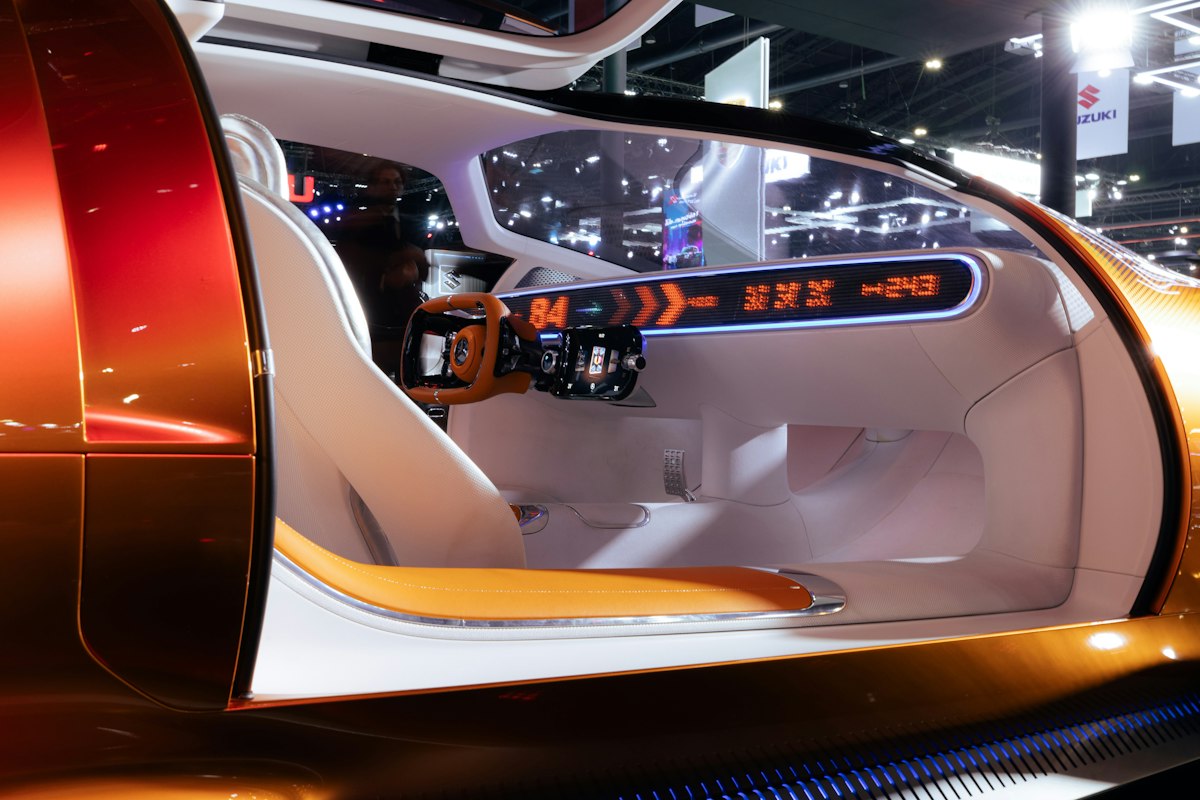
Inside the cabin, the focus shifts to noise isolation and digital integration. Thick acoustic glass is standard on all models to ensure a quiet ride. The dashboard is dominated by a 23.6-inch OLED touchscreen running the new Pleos Connect infotainment software. When the vehicle is parked, this screen can rise an additional 3.4 inches to provide a larger display for watching videos. The physical cabin layout of the Neolun also includes a veneer wood floor, unique upholstery choices, and front seats that can swivel 180 degrees to face the rear seats when parked, creating a mobile lounge environment.
The start button? Gone. Physical controls have been stripped away, and there's no traditional starter anywhere on the dashboard, replaced instead by an approach-based system that mirrors what other electric vehicle brands already use. So the car wakes up on its own the moment you get close and pull the door open. You slide in. Closing the door triggers the shifter to reposition itself automatically, and then all it takes is a tap on the brake pedal to make the vehicle ready to drive. It's that simple.
Market Positioning and Expected Pricing
Personalization is the heart of their sales strategy. Buyers can pick from 16 exterior colors, including both gloss and matte finishes, so there's real room to make a statement. The interior design offers unusual two-tone schemes, like indigo and green, brown and blue, or purple and beige. And for those chasing the absolute top spec, the First Edition of the Neolun brings exclusive two-tone paint, body-color-matching wheels, a wool cashmere cabin, and special logos. Pricing? It's still under wraps. But the standard three-row model should start in the low-$100,000 range, while the ultra-luxury Neolun variant will likely command around $150,000, which puts it squarely against Maybach models. That's a steep ask. Yet they're betting on it.
The 2027 Genesis GV90 is the Genesis luxury brand's new flagship SUV. It comes with a 657-hp electric powertrain and claims a maximum driving range of 310 miles.
This is a major step forward. By offering a vehicle that starts above the hundred-thousand-dollar mark and extends into the territory of traditional ultra-luxury brands, the manufacturer is testing the limits of its brand equity, and it's a gamble that could redefine its future. But the success of this flagship will depend on whether buyers are willing to accept a Korean challenger as a true peer to established luxury symbols. It's a tough sell.
Frequently Asked Questions
What is the 2027 Genesis GV90, and what are its key specifications?
The 2027 Genesis GV90 is the luxury brand's new flagship SUV, being the largest, most powerful, and most luxurious vehicle the company has produced. It comes standard with a dual-motor powertrain producing 657 horsepower and a 124-kWh battery pack, with an expected maximum driving range of 310 miles.
How does the market strategy for the GV90 split into two distinct approaches?
The standard version is a three-row model with conventional rear doors, offered with six or seven seats, targeting the premium family market. The top-of-the-line Neolun variant competes with bespoke luxury vehicles, featuring rear-opening coach doors, a unique four-seat VIP configuration for its First Edition, and a hidden B-pillar for an unobstructed cabin when doors open.
Why is the Neolun variant likely to weigh more than the standard three-row GV90?
The Neolun has a defining engineering feature of lacking a central pillar, which Genesis calls a hidden B-pillar. To keep passengers safe without this pillar, heavy structural reinforcements were required, meaning the Neolun will likely weigh considerably more than the standard model, compounding the range problem.
How does the GV90's interior technology enhance the driving experience?
The cabin features thick acoustic glass for noise isolation and a 23.6-inch OLED touchscreen running Pleos Connect infotainment, which can rise 3.4 inches when parked for video watching. Physical controls are stripped away, replaced by an approach-based system: the car wakes up when you get close, and tapping the brake pedal makes it ready to drive.
What is the expected price range for the 2027 Genesis GV90 and its Neolun variant?
Pricing is still under wraps, but the standard three-row model should start in the low-$100,000 range. The ultra-luxury Neolun variant will likely command around $150,000, putting it squarely against Maybach models.

Clara Rossi covers the motoring world, with a focus on electric vehicles, design and the shift toward cleaner transport. She tests the latest models and explains what matters to drivers beyond the spec sheet.
💬 Comments (0)
No comments yet. Be the first!