15 Vibe Coding Tools Compared for 2026
Vibe coding tools let developers turn plain language prompts into software. We compare 15 platforms for pricing, features, and best fit.
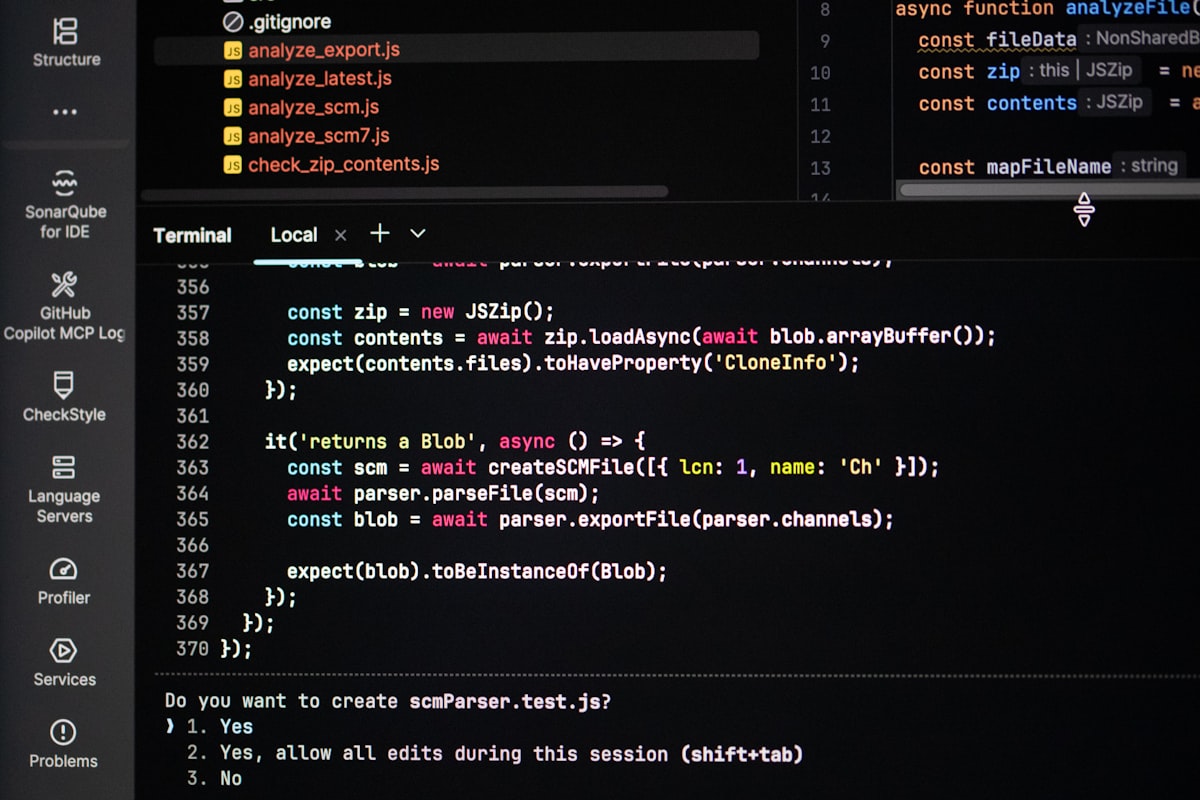
Vibe coding tools are reshaping how software gets built in 2026. And the pace is only accelerating. So the shift began with a simple observation: describing an app in plain English could be enough to generate a working product. Karpathy coined that idea. It's now defining an entire category of development platforms, moving the craft away from line-by-line coding and toward a model where the developer sets the vision, reviews the output, and the AI handles the heavy lifting.
“You describe what you want in plain language, and an AI agent turns that description into working software.”
It's called vibe coding. For founders, it means testing a concept without assembling a full engineering team, and for experienced developers it means skipping boilerplate and focusing on architecture. So the result is faster iteration, shorter feedback loops, and a dramatically lower cost to go from idea to prototype. But the tools that support it aren't science experiments anymore, they're production-grade, and they're splitting into two distinct philosophies.
The Trade-Off at Every Tool’s Core
It's control versus automation. Some platforms aim to ship a live full-stack product with almost no human touchpoints after initial prompt, while others keep developer close to the code and act as a powerful co-pilot rather than autonomous builder, so the right fit depends heavily on the project stage, the team's tolerance for automation risk, and how much review is required for compliance, security, or architectural soundness.
They split along one axis. And now 15 tools span that gamut, but reading them strictly as two camps misses the real story because what's actually happening is a rapid consolidation that blurs the old boundaries between agent-first platforms and editor-first assistants.
The 15 Tools Shaping the Market
Full-Stack Autonomy
- Atoms, Takes the concept furthest by pairing natural language input with a team of specialized AI agents. It handles market research, architecture, engineering, SEO, and even advertising, delivering a production-ready app with user authentication, databases, Stripe payments, and scalable hosting. Developers keep full control and can export code or sync to GitHub at any time.
- Devin by Cognition AI, Positioned as an autonomous software engineer that plans, codes, debugs, tests, and deploys end-to-end. It represents the most hands-off end of the spectrum, where the developer assigns work and reviews results rather than driving each step.
- Bolt, Built by StackBlitz, it turns plain-English prompts into full-stack web apps that run in the browser and can deploy in a few clicks. Strong for MVPs and early-stage validation.
- Lovable, An AI app-building platform with a no-code feel. It pairs AI design with app generation from prompts, targeting product designers and non-technical founders who want a functional prototype without writing code.
Developer-in-the-Loop Editors
- Cursor, An AI-native IDE with multi-agent prompting and an “Agent Mode” that plans and applies changes across many files. It connects to frontier models from OpenAI and Anthropic while keeping the developer in a familiar editor.
- Replit, A browser-based IDE with zero local setup. Its Replit Agent generates code from natural language, making it a go‑to for hackathons, quick web app prototypes, and shareable demos.
- Claude Code (Anthropic), A terminal-style agent that retains project context across a session. Developers talk to the AI to build, edit, and refactor directly, which suits those who live in the command line.
- GitHub Copilot, Now equipped with an “Agent Mode” that handles full coding tasks from a prompt, not just line completions. Its deep integration into VS Code and GitHub workflows is its biggest advantage.
- Cascade by Windsurf, An AI-driven code agent designed for iterative work with low input overhead. Cognition acquired Windsurf in December 2025, folding Cascade into the same platform as Devin and making context gathering and multi-file edits smoother.
- Junie (JetBrains), A language-aware agent that plugs into the JetBrains IDE family. It takes a task, plans steps, and applies changes, fitting naturally into the habits of teams already standardized on those tools.
- Augment Code, Brings chat-based coding with a pull request review model. Agents plan, build, and open PRs that keep a human in the loop, treating the AI like a teammate for larger codebases where oversight matters.
- Zed Editor, A next-generation editor built for performance and high-speed human-AI collaboration. Speed is central to its pitch, and it integrates AI assistance without bogging down large projects.
- Cody by Sourcegraph, Focused on helping developers read, understand, and refactor sprawling repositories. Its awareness of how code connects across services makes it valuable for legacy system maintenance.
- Tabnine, Provides context-aware code completion with a strong privacy focus. It can run on local or on-device models, making it a practical pick for enterprises with strict data rules.
- Codex (OpenAI), An agentic coding system that runs across the command line, IDEs, ChatGPT, and GitHub. It reads large codebases, runs tests, and prepares changes for review, with several million developers using it weekly.
Consolidation Changes the Game
The market's consolidating fast. When Cognition acquired Windsurf at the end of 2025, it didn't simply add a tool to its portfolio but merged Cascade's real-time editor-native workflow with Devin's autonomous agent capabilities under one roof. But that move signals. The hard line between 'do it for me' and 'do it with me' gets fuzzy. One platform might switch modes. For teams evaluating vibe coding tools, the real question is no longer just about a product's current feature list, and it's about which ecosystems are actively redefining the category.

Where the Real Choice Lies
All 15 tools share speed. They help developers and founders ideate, build, and iterate much faster than traditional workflows ever could, but privacy, codebase size, hosting needs, and review rigor all matter even though they're secondary to one central decision, so every vibe coding tool asks the same thing: how much do you want the agent to do, and how much do you want to keep in your own hands?
Frequently Asked Questions
What exactly are vibe coding tools according to the article?
Vibe coding tools are development platforms where you describe what you want in plain language, and an AI agent turns that description into working software. They move the craft away from line-by-line coding toward a model where the developer sets the vision and the AI handles the heavy lifting. The term was coined by Karpathy and is now defining an entire category of development platforms in 2026.
Why are vibe coding tools valuable for founders and experienced developers?
For founders, vibe coding tools mean testing a concept without assembling a full engineering team, dramatically lowering the cost to go from idea to prototype. For experienced developers, they mean skipping boilerplate and focusing on architecture, resulting in faster iteration and shorter feedback loops. The article states that all 15 tools share speed, helping users ideate, build, and iterate much faster than traditional workflows.
How do vibe coding tools split into two distinct philosophies?
The tools split along the axis of control versus automation. Some platforms aim to ship a live full-stack product with almost no human touchpoints after the initial prompt, while others keep the developer close to the code and act as a powerful co-pilot rather than an autonomous builder. The right fit depends on the project stage, tolerance for automation risk, and review requirements for compliance, security, or architectural soundness.
Which vibe coding tool is described as taking full-stack autonomy the furthest, and what does it offer?
Atoms is described as taking the concept furthest by pairing natural language input with a team of specialized AI agents. It handles market research, architecture, engineering, SEO, and advertising, delivering a production-ready app with user authentication, databases, Stripe payments, and scalable hosting. Developers keep full control and can export code or sync to GitHub at any time.
What recent market consolidation does the article highlight, and how does it affect the distinction between tool types?
The article highlights that Cognition acquired Windsurf in December 2025, merging Cascade's real-time editor-native workflow with Devin's autonomous agent capabilities under one roof. This move signals that the hard line between 'do it for me' and 'do it with me' gets fuzzy, as one platform might switch modes. The consolidation blurs the old boundaries between agent-first platforms and editor-first assistants.

Marcus Thorne covers the fast-moving field of artificial intelligence, with a particular interest in large language models, automation and the companies driving the technology forward. He aims to cut through the hype and explain what these systems can and cannot do.
💬 Comments (0)
No comments yet. Be the first!