DiffusionGemma: Is Google's Faster AI for You?
Google's new DiffusionGemma model promises 4x faster text generation. Here is what this experimental, parallel-processing AI means for developers and power users.

DiffusionGemma: Is Google's Faster AI for You?
DiffusionGemma is a sharp departure from how we usually think about large language models. Most AI today relies on autoregressive decoding, meaning it generates text one token at a time, strictly left to right, with each new word depending entirely on what came before it. This model does it differently. It generates entire blocks of text simultaneously.
Speed kills for developers. But this model is the main event if you're pursuing speed in local workflows, because it abandons sequential token generation to deliver up to 4x faster output on dedicated hardware. Latency is the primary enemy, so it's built for those tasks.
How It Works Under the Hood
Most AI models are stuck in a waiting game. They're constantly loading weights, generating a single token, and then loading more weights, so they're trapped in a cycle that depends on memory bandwidth. But DiffusionGemma flips this bottleneck. It shifts the burden from memory to raw compute power.
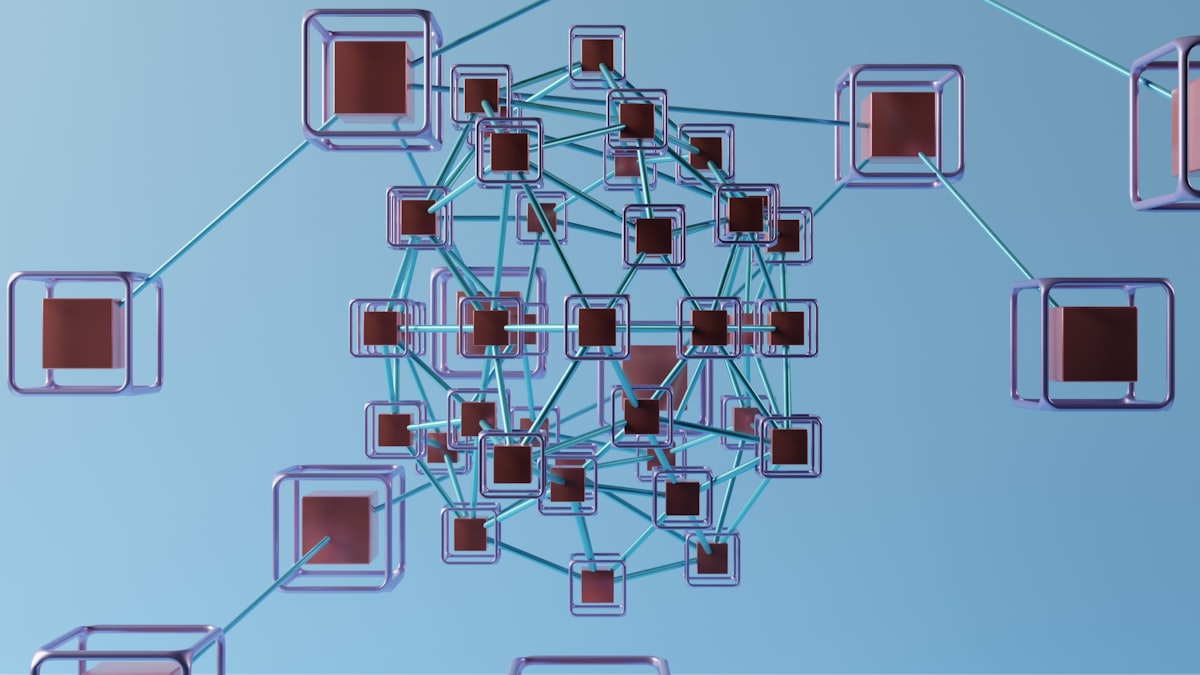
It starts with a canvas of random placeholder tokens, then makes multiple passes to refine that canvas by locking in high-confidence tokens and using them to influence the others. But the model uses a technique called Uniform State Diffusion. By the end, the full sequence snaps into focus.
Here is the technical reality of the model:
- It is a 26B Mixture of Experts model.
- Only 3.8B parameters are active during inference.
- The context window reaches 256K tokens.
- It supports over 140 different languages.
- Quantized versions fit inside 18GB of VRAM.
The Speed Advantage
Real talk: it's all about your hardware. On an NVIDIA H100, the model reaches 1000 tokens per second, but if you're using a more accessible NVIDIA GeForce RTX 5090, you can still expect 700+ tokens per second. That's fast. And it's significantly faster than standard models that struggle with the same constraints.
But there's a catch. Google is very direct about the trade-off: this model prioritizes speed and parallel layout generation over raw output quality, so it's best suited for specific, speed-critical jobs where you don't need the absolute highest quality in production. The standard Gemma 4 remains the recommendation for that.
When To Use This Model
Don't use this for general chat. It shines when you need to handle non-linear structures or perform rapid iterations, and because it uses bidirectional attention, every single token on the canvas can see every other token. This lets the model self-correct in real time. If a token's confidence drops, the sampler can re-noise it and try again. But standard autoregressive models can't do this, since they commit to each token once and can't go back to revise it.
Practical Applications
It's all about constrained generation and interactive workflows. That's the core idea. Use cases include in-line code editing, document parsing, or solving complex, multi-variable puzzles like Sudoku, but a base model might fail entirely.
The Hardware Reality
This model targets local, low-concurrency inference. But try running it in high-traffic cloud environments, and you might actually see diminishing returns because autoregressive models are often more efficient in those specific scenarios. It's a massive jump forward for the single-user developer loop.
The Verdict
It's an experimental release. But if you need raw speed and are willing to experiment, this tool brings high-end throughput to consumer-grade hardware, so it can be a powerful addition to your local toolkit. Keep your expectations aligned with its design.
Frequently Asked Questions
What is DiffusionGemma and how does it differ from standard AI models?
DiffusionGemma generates entire blocks of text simultaneously instead of one token at a time. This abandons sequential token generation to deliver up to 4x faster output on dedicated hardware.
Why is DiffusionGemma faster than autoregressive models?
It shifts the burden from memory bandwidth to raw compute power by starting with random placeholder tokens and refining them in multiple passes. This avoids the cycle of loading weights for each token, reducing latency.
How does DiffusionGemma handle self-correction during generation?
It uses bidirectional attention, so every token can see every other token on the canvas. If a token's confidence drops, the sampler can re-noise it and try again, unlike autoregressive models that commit permanently.
When should you use DiffusionGemma instead of standard models?
Use it for speed-critical tasks like in-line code editing, document parsing, or solving complex puzzles where you don't need the absolute highest quality. It is not recommended for general chat.
Who is the target user for DiffusionGemma according to the article?
It targets developers pursuing speed in local, low-concurrency workflows, especially in single-user developer loops. It brings high-end throughput to consumer-grade hardware like the NVIDIA GeForce RTX 5090.

Marcus Thorne covers the fast-moving field of artificial intelligence, with a particular interest in large language models, automation and the companies driving the technology forward. He aims to cut through the hype and explain what these systems can and cannot do.
💬 Comments (0)
No comments yet. Be the first!