Wildfire Smoke Reverses Prenatal Air Quality Gains
A new study reveals wildfire smoke is offsetting decades of Clean Air Act improvements, disproportionately affecting unborn babies in low-income and rural communities.
Wildfire Smoke Erases Decades of Clean Air
Progress for Unborn Babies
Wildfire smoke is now the biggest driver of dangerous air pollution for pregnant women across the United States. A new study reveals it's effectively canceling out hard-won gains from the Clean Air Act. That's the grim takeaway. Researchers at the University of Maryland, College Park analyzed air quality data and birth records spanning 16 years, and they found that while pollution from cars and factories has plummeted, the toxic plume from increasingly intense wildfires has surged to fill the gap. So the most vulnerable Americans, babies still in the womb, are breathing air as dangerous as anything seen before the landmark environmental law took effect. And it's getting worse.
The study, published in Frontiers in Environmental Health, tracked nearly 65 million live births between 2003 and 2019. The team combined Environmental Protection Agency pollution monitors with computer models that simulated air quality with and without fire emissions, and that pairing let them isolate the smoke from human-caused pollution. It's a distinction with real stakes. So it turns out to be key for figuring out who's truly at risk, because the two sources don't affect the same communities in the same way. But the numbers don't lie. They're stark.
The findings are stark. Average daily prenatal exposure to pollution from human sources fell 37 percent over the study period, a notable drop that still hides a worrying change in what actually reaches the most at-risk mothers. But wildfire contributions doubled, and in the West and Northwest, they more than doubled. These two trends aren’t canceling each other out evenly across the population, so the real picture is one of growing disparity rather than steady improvement. The burden falls hardest on low-income, rural, and Indigenous communities. They often have the least access to neonatal care. It’s a brutal paradox.
The Numbers Tell a Different Story
Here's the part that should make policymakers pause. The Clean Air Act, signed by President Richard Nixon in 1970, has been a genuine triumph, a real achievement that has saved countless lives across this nation. And it's saved those lives.

But the new analysis shows that progress is being systematically undone by a force the law never anticipated. It's climate change, driven by the same fossil fuel combustion the Clean Air Act regulates, and it's creating hotter, drier conditions that make wildfires more intense and destructive. Wildfire smoke, it turns out, isn't just any pollution. And according to the study's authors, it's more harmful than the ambient pollution from other sources. So we can't ignore it.
Michel Boudreaux, an associate professor of health policy and management, framed the work in simple terms, and the team's focus was sharp. They looked at infants born during the study window, calculating each one's daily exposure to unhealthy air while still in the womb. The stakes are incredibly high. But that's exactly why this specific population matters so much, because the consequences of prenatal pollution can ripple through a child's entire life. It's a heavy burden. And the numbers don't lie.
Prenatal exposure to wildfire smoke significantly increases the likelihood that babies will be born too early or too small, raising their risk of dying early or developing chronic respiratory conditions and other diseases later in life.
That sentence, drawn directly from the findings, is the core of the problem. It's not some abstract environmental concern. But it is a measurable, preventable harm to real people who have no say in the matter, and we can't pretend otherwise.
Who Bears the Smoke Burden?
The study's geographic breakdown reveals a sharp divide. It's stark. In the West and Northwest, wildfire contributions to air pollution more than doubled during the study period, and that surge tracks directly with where the most catastrophic fires have burned in recent years, so the data reflects a grim, on-the-ground reality. But the numbers don't lie. They're screaming.
The demographic breakdown is even more troubling. The communities where wildfires are responsible for the largest reversals in air quality are the same communities that are least equipped to handle the consequences. Low-income families, rural residents, and American Indian and Alaska Native populations face the highest exposure and the least access to healthcare services. That combination, the authors note, is a recipe for lifelong health disparities.
There is one detail worth pausing on. The study does not track whether a pregnant woman spent time outdoors, wore an N95 mask, or used an air filtration system in her home. Boudreaux acknowledged that limitation directly. But he also pointed to data from sources like Purple Air, which detect large amounts of PM2.5 pollution inside homes even when windows are closed. The smoke gets in, and it stays in.
What the Research Does and Does Not Prove
Ilona Jaspers, an inhalation toxicologist and professor of pediatrics at the University of North Carolina, Chapel Hill, reviewed the work with a critical eye. She wasn't involved in the study, which gives her assessment some distance. Her verdict: the study doesn't integrate data on preterm birth, birthweight, or other health outcomes. It's a "very good exposure-characterization study," in her words. But it stops short of connecting those exposures to specific medical results, so the gap between what we breathe and what we suffer remains, for now, unbridged. That's the limit.
That caveat matters, but it doesn't diminish the urgency. Jaspers noted that the study "confirms and expands the well-established finding that ambient PM2.5 in the United States is increasingly wildfire-dominated, offsetting Clean Air Act gains, but applies a birth-weighted lens to it," and that lens shifts how we see the impact on the most vulnerable. So this isn't a new problem. It's a known one, now measured with sharper precision.
Her own previous research, using prescription insurance claim data, has shown that exposure during specific perinatal periods can lead to childhood respiratory diseases. The connection between early life pollution and later health problems is not speculative. It is documented.
The Invisible Threat Inside Homes
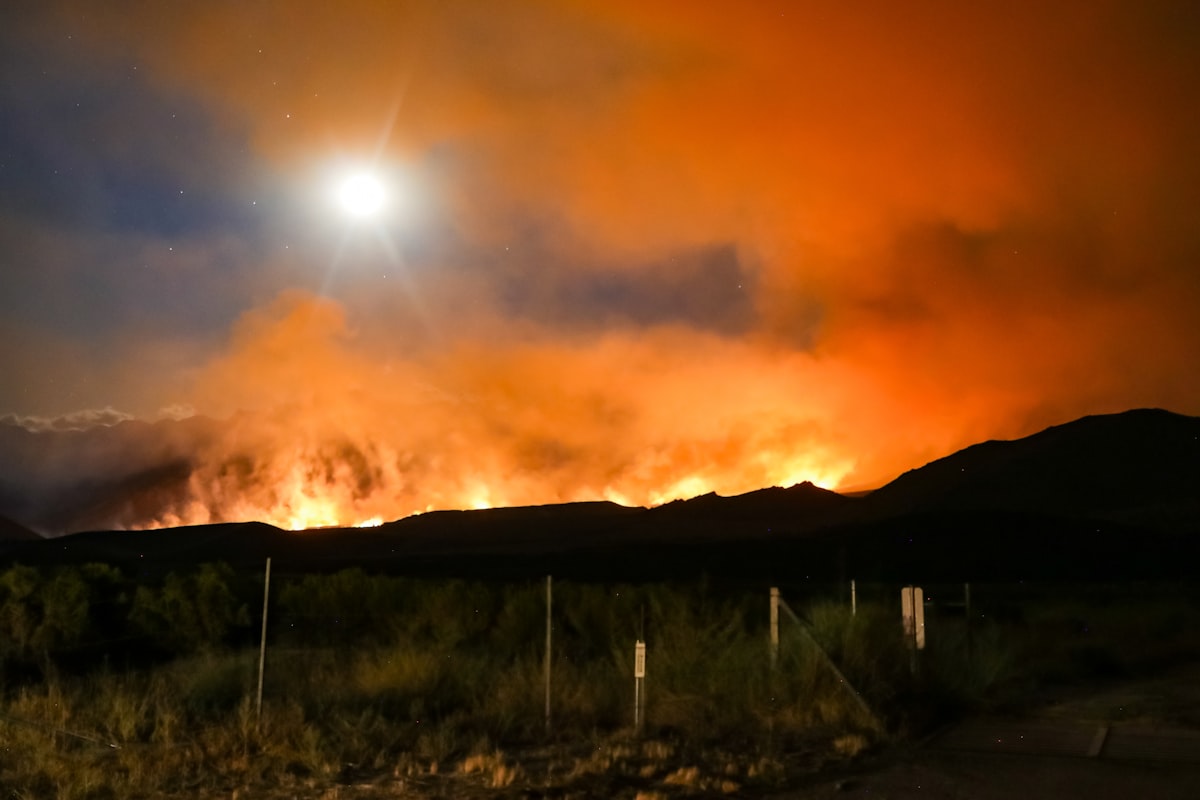
Boudreaux made a point that deserves emphasis. But the real health threat is invisible. The classic image of wildfire danger, a wall of flame approaching a hillside neighborhood, captures our attention and dominates the nightly news, yet it's the fine particulate matter, PM2.5, that drifts for hundreds of miles and seeps through window seals and ventilation systems, and that's what actually harms us.
They're small enough to slip past the body's defenses. Tiny. But they embed deep in lung tissue, cross into the bloodstream, and, in pregnant women, can reach the placenta, which makes their reach far more alarming than the particles' size alone might suggest. The EPA threshold for unhealthy air is the benchmark the study used to count exposure days, and those days are increasing,so we can't ignore what that means for our lungs, our blood, and our children.
What Comes Next
Boudreaux does not sugarcoat the trajectory. The last six years have seen several catastrophic fires in the West and Canada. If the team were to extend the study through 2026, he said, they would likely see wildfires make an even higher contribution to unhealthy prenatal exposures. He was careful to call that speculation, not a prediction.
But the pattern is clear enough. Wildfire smoke now accounts for an increasing share of what he called "acute, massive air pollution days," and those are the days when the air is genuinely dangerous to breathe. They're becoming more common. It's a stark shift.
So what do we do about it? It's a practical question. Boudreaux framed the next frontier in those terms: helping people manage exposure to wildfire smoke, which is a different kind of exposure than ambient pollution from other sources. That means providing communities with clean-air shelters, air filters, and better access to healthcare when smoke blankets their towns. But the answer isn't simple.
The Bigger Question
There is an uncomfortable conclusion lurking in this data. The Clean Air Act was designed to regulate stationary and mobile sources of pollution. It was not designed to regulate the atmosphere itself. But climate change has turned the atmosphere into a delivery system for a new kind of pollution, one that no tailpipe standard or smokestack scrubber can fully address.
Boudreaux put it directly: "We should be asking, are there things we can do to reduce the risk of climate change in general?"
So the study ultimately forces that question. It's a stark one. The gains from 50 years of pollution control are real, but they're fragile, and a single bad fire season can erase them in a matter of weeks. And the people who pay the price are the ones who had nothing to do with creating the problem. That's the bitterest part.
The research does not offer easy answers. It offers a measurement, a warning, and a direction. The next step, as Boudreaux sees it, is figuring out how to protect the most vulnerable among us from a threat that is no longer hypothetical. The smoke is here. The question is whether we will adapt before it does more damage.
Frequently Asked Questions
What did the University of Maryland study reveal about wildfire smoke and prenatal air quality?
The study revealed that wildfire smoke is now the biggest driver of dangerous air pollution for pregnant women across the United States. It found that while pollution from cars and factories has plummeted, toxic plumes from increasingly intense wildfires have surged to fill the gap, canceling out gains from the Clean Air Act.
How did the researchers isolate wildfire smoke from other pollution sources in their analysis?
The researchers combined Environmental Protection Agency pollution monitors with computer models that simulated air quality with and without fire emissions. This pairing allowed them to isolate the smoke from human-caused pollution, which is key for figuring out who's truly at risk because the two sources don't affect the same communities in the same way.
Which communities bear the heaviest burden from wildfire smoke exposure according to the study?
The burden falls hardest on low-income, rural, and Indigenous communities, including American Indian and Alaska Native populations. These groups face the highest exposure to wildfire smoke and have the least access to healthcare services, creating a recipe for lifelong health disparities.
What are the documented health consequences of prenatal exposure to wildfire smoke mentioned in the article?
Prenatal exposure to wildfire smoke significantly increases the likelihood that babies will be born too early or too small, raising their risk of dying early or developing chronic respiratory conditions and other diseases later in life. This is a measurable, preventable harm to real people.
Why is wildfire smoke considered more harmful than ambient pollution from other sources?
According to the study's authors, wildfire smoke is more harmful than ambient pollution from other sources. The fine particulate matter, PM2.5, drifts for hundreds of miles, seeps through window seals and ventilation systems, embeds deep in lung tissue, crosses into the bloodstream, and in pregnant women can reach the placenta, making its reach far more alarming than its size suggests.

Chloe Dupont covers consumer technology, from the latest devices to the software shaping daily life. She focuses on how new tools fit into the real world and whether they live up to the promise.
💬 Comments (0)
No comments yet. Be the first!