This Founder Is Teaching Chips to Recycle Their Energy
Hannah Earley's startup Vaire Computing uses reversible computing to make chips recycle energy, potentially slashing data center power use.

Reversible Computing Is Leaving the Theory Phase
Reversible computing has hovered at the edges of computer science for decades, a beautifully logical idea that never quite survived contact with real silicon. Hannah Earley, chief technology officer and cofounder of Vaire Computing, thinks the problem was never the concept. It was the hardware.
Earley, 31, has spent years redesigning the physical components needed to make chips that recycle their own energy. That's the whole mission. Her startup, Vaire Computing, builds processors that treat waste heat not as an unavoidable cost but as a design flaw, which is a radical shift from every conventional chip on the market today. So the approach, called reversible computing, could reshape how much power data centers, laptops, and phones actually consume. But it doesn't stop there. That single idea might redraw the entire energy map of the digital world.
Conventional chips waste energy in a predictable way, and here's the core problem. When a processor runs a calculation, it erases intermediate information along the way, and that erasure dissipates energy as heat. It's pure loss. Earley offers a memorable analogy: imagine racing through a city only to slam the brakes at every intersection, where each stop kills your momentum and forces you to burn more fuel just to get back up to speed. So that's the reality. Every chip in every device does this billions of times per second, and they can't escape it.
Reversible computing takes a different path. Instead of destroying the information from intermediate steps, the circuit holds onto it, and that retention is what flips the usual logic of energy loss on its head. It's possible to run the computation backward. That reclaims a meaningful chunk of the energy. The idea was first proposed over 50 years ago, but it never worked well with the transistors and circuits available at the time, so Earley decided to rebuild the hardware from scratch. But the old approach was dead. He started over entirely.
A Resonator That Beats the Odds
The breakthrough hinges on a component Earley designed herself. She created a patent-pending type of resonator, a microscopic part of the chip that stores recovered energy for later reuse, and that's where the real magic lies. Her description of the device is refreshingly humble. So don't expect any grand claims from her.
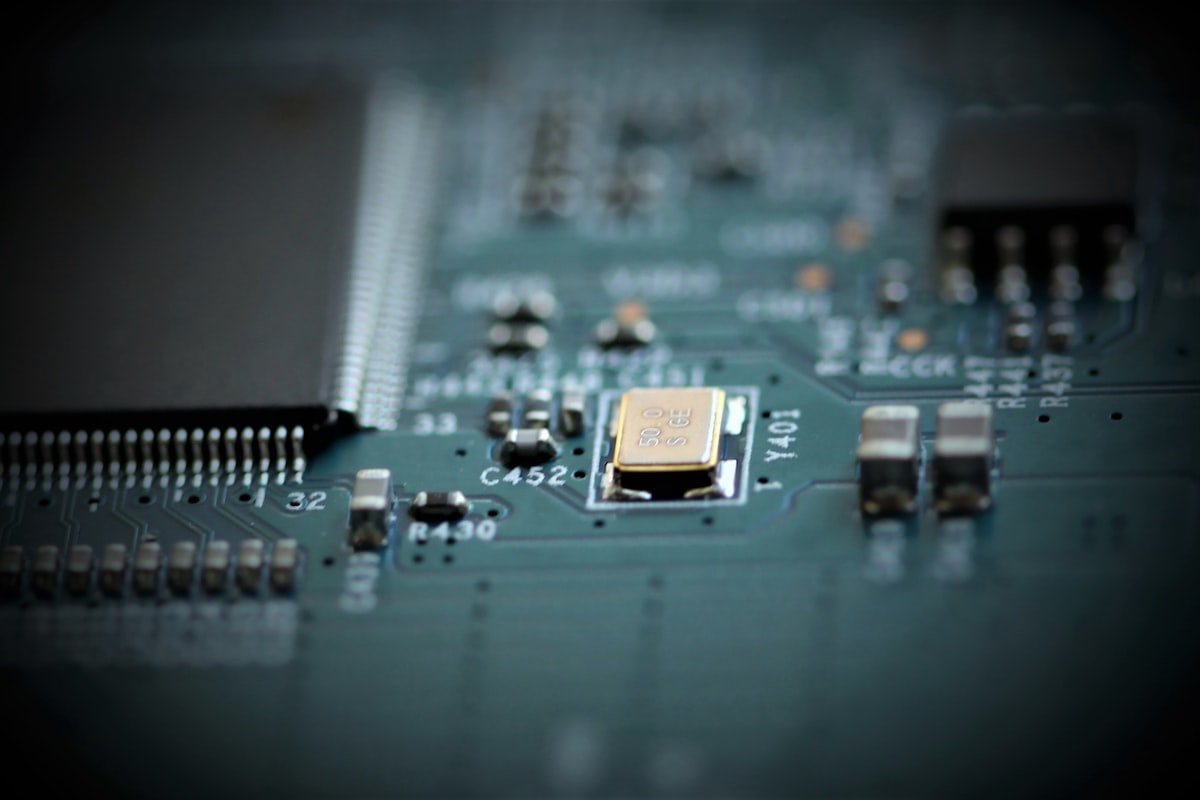
“It’s really a glorified pendulum.”
Last year, Vaire announced a key milestone: a chip with a resonator that recovered more energy than it lost, even after accounting for the power needed to run the component itself. That result was proof of life. For a subfield that has existed mostly as theory since the 1970s, it's the kind of moment researchers can't easily dismiss, and it finally turns decades of speculation into something you can hold in your hands. But the bigger story isn't just the numbers. It's that the old doubts don't apply anymore.
Igor Markov, a researcher in electronic design automation and former professor at the University of Michigan, Ann Arbor, has watched the work with interest, tracking each incremental step as the field inches forward. He isn't ready to declare victory. But he sees genuine promise, and that's enough to keep him paying close attention.
“It’s clear they have something interesting,” Markov said. Still, he cautioned, the technology is quite early stage. The company will need “a series of increasingly realistic and convincing demonstrations to attract the industry support needed for commercialization.”
That's the honest assessment of where things stand. Reversible computing isn't a thought experiment anymore. It's a working chip in a lab, a tangible piece of silicon that flips bits and runs calculations without the usual energy toll, proof that the theory has crossed into physical reality. But the gap between that working chip and a commercial product remains vast, a chasm filled with engineering hurdles, packaging problems, and cost barriers that no one has yet solved. So don't hold your breath for it in your laptop. Not yet.
From Teenage Coder to Chip Designer
Earley’s path to this point didn’t follow the usual route through electrical engineering. She started programming around age nine, beginning with high-level web coding before moving into languages like Perl and Java, and she kept pushing toward more abstract layers of computing, working her way down through the stack until she reached transistors themselves. But that wasn’t a straight line. It was a descent, layer by layer. And it took years.
Her PhD work at the University of Cambridge began under computational biologist Gos Micklem. She initially studied how materials like DNA could perform calculations, probing the edges of a young field. But a few months in, Micklem sent her a copy of Michael Frank’s 1999 PhD thesis. That document landed on Earley like a slow-acting revelation, its implications unfolding gradually, reshaping her sense of what computation might be, pressing on her assumptions until they cracked. Frank is a pioneer in reversible computing. It's a dense, strange field. And it changed everything.
She read it once and felt skeptical. She read it again. She sat with it for weeks. Gradually, she became convinced that the link between information, energy, and heat could transform computers forever. The fascination redirected her entire PhD.
Earley studied the physical limits of computation. That's the simple fact. And then he built software capable of converting ordinary programs into reversible ones, a technical feat that required careful attention to the underlying logic and energy constraints of every operation. Micklem eventually stopped putting her name on his papers. But she didn't stop working.
“Eventually I wouldn’t let her put my name on any of her papers, because I felt that I couldn’t really stand up and give a proper talk about them,” Micklem recalled. “It was her stuff.”
After completing her degree in 2021, Earley connected with Rodolfo Rosini, a technology entrepreneur and investor. They founded Vaire that same year. Since then, the company has raised more than $12 million, brought Frank aboard as a senior scientist, and started turning the vision into physical hardware.
The Winter That Almost Broke the Design
Innovation doesn't happen on a whiteboard in a comfortable office. During the winter of 2022, Earley found herself in Grinnell, Iowa, in the basement apartment of her now-wife, where the wind chill outside reached roughly 40 degrees below zero, a brutal cold that forced every thought inward. She spent weeks covering that whiteboard over and over with schematics for the core circuitry needed to make reversible logic function. It was brutal. And yet she kept drawing.
The design finally came together after the couple escaped the cold for Las Vegas. It wasn't a thunderbolt, no sudden flash of genius. Instead, it arrived as a slow wave of relief, the kind that creeps in when you've stopped forcing the pieces and just let the quiet hours of a desert afternoon do their patient, unglamorous work. But that's exactly how it happened.
“I’m not completely out of my depth,” she remembered feeling.
That moment of self-assurance matters. It really does. Earley had taken on a problem that stumped the best minds in computing for half a century, a puzzle so stubborn that generations of researchers had circled it without ever finding a crack, let alone a solution. So she redesigned the resonator, the component central to energy recovery, and made it work in practice. She didn't just theorize. She built it.
The next challenge is fitting this radically different chip into familiar devices and manufacturing systems. But Earley doesn't want to tweak existing chip designs. She wants to throw them out. That's the whole point, and it's a gamble that could redefine how we build everything from smartphones to servers, though it also means convincing a cautious industry to abandon decades of incremental progress. So the real fight isn't the silicon, it's the stubbornness of the status quo. And that's a battle she's ready to start.
“I want to tackle every part of how computers are built,” Earley said, “and rethink it in these terms.”
Here's the part that makes this hard to dismiss. It's not about smaller transistors or more cores. Reversible computing is a fundamental change in how chips treat information itself, because conventional processors erase data as they calculate, and that erasure carries a thermodynamic cost that can't simply be waved away. But reversible chips avoid that cost by keeping the information around long enough to recover the energy. So the trick is all in the timing.
The resonator is the piece that makes recovery possible. It stores the energy that would have been lost as heat and feeds it back into the next calculation. Earley calls it a pendulum. A pendulum swings down, and if you catch it at the right moment, you can use that motion to push it back up with very little added force.
That is the promise. The reality is that data centers consume enormous amounts of electricity, and a large share of that power ends up as waste heat. If Vaire’s approach scales, it could cut that waste dramatically.
Markov's warning about increasingly realistic demonstrations is the correct frame, and it's a warning we'd all do well to heed. One working resonator is a proof of concept. But a chip that runs real workloads at competitive speeds is a different matter entirely, since the gap between a lab demo and a product you can actually deploy in a data center is often measured in years, not months. The company has not disclosed when it expects to ship a commercial product. That silence speaks volumes.
What is clear is that reversible computing has crossed a threshold. It is no longer just mathematics. It is a physical object, a resonator that recovers more energy than it burns. The founder who made it happen started with a thesis from 1999, spent a frozen winter in Iowa, and came out the other side with a design that could change how every computer is built.
For Earley, the work is just beginning. Reversible computing needs to prove itself across a series of larger and more demanding chips, and that means each new design has to be tested, refined, and shown to work under real-world pressures that no one has fully simulated yet. Each step will require convincing the industry that this strange approach is worth the investment, especially when engineers and executives are used to decades of conventional methods that already deliver results. So it's a slow grind, not a sprint. But they can't afford to stumble now.
The momentum is there. The question is whether it can carry through to the data centers that need it most.
Frequently Asked Questions
What is the core principle behind Vaire Computing's approach to chip design?
The company builds processors that treat waste heat as a design flaw rather than an unavoidable cost. They use reversible computing, where circuits retain information from intermediate steps instead of erasing it, allowing computation to run backward and reclaim energy.
Why did Hannah Earley decide to redesign the hardware from scratch?
Reversible computing was first proposed over 50 years ago but never worked well with the transistors and circuits available at the time. Earley decided to rebuild the hardware from scratch because the old approach was dead and she wanted to create components that could actually make the concept functional.
How does the resonator, which Earley describes as a 'glorified pendulum,' function in energy recovery?
The resonator is a microscopic part of the chip that stores recovered energy for later reuse. It works like a pendulum: when a pendulum swings down, catching it at the right moment allows its motion to push it back up with little added force, similarly storing energy that would be lost as heat and feeding it back into the next calculation.
What milestone did Vaire announce last year regarding the resonator?
Vaire announced that they had a chip with a resonator that recovered more energy than it lost, even after accounting for the power needed to run the component itself. This result was seen as proof of life for the subfield, which had existed mostly as theory since the 1970s.
Who is Igor Markov and what is his assessment of Vaire's technology?
Igor Markov is a researcher in electronic design automation and a former professor at the University of Michigan, Ann Arbor. He has watched the work with interest and says 'It's clear they have something interesting,' but cautions that the technology is quite early stage and will need a series of increasingly realistic and convincing demonstrations to attract industry support for commercialization.
Markus Heill writes about technology and the tools we use every day, from smartphones to the services that run in the background. He is interested in how good design makes technology easier to live with.
💬 Comments (0)
No comments yet. Be the first!