Solar Geoengineering Road Map Sets $370M Research Plan
Reflective's solar geoengineering road map lays out a decade of stratospheric aerosol injection research costing about $370 million if coordinated.
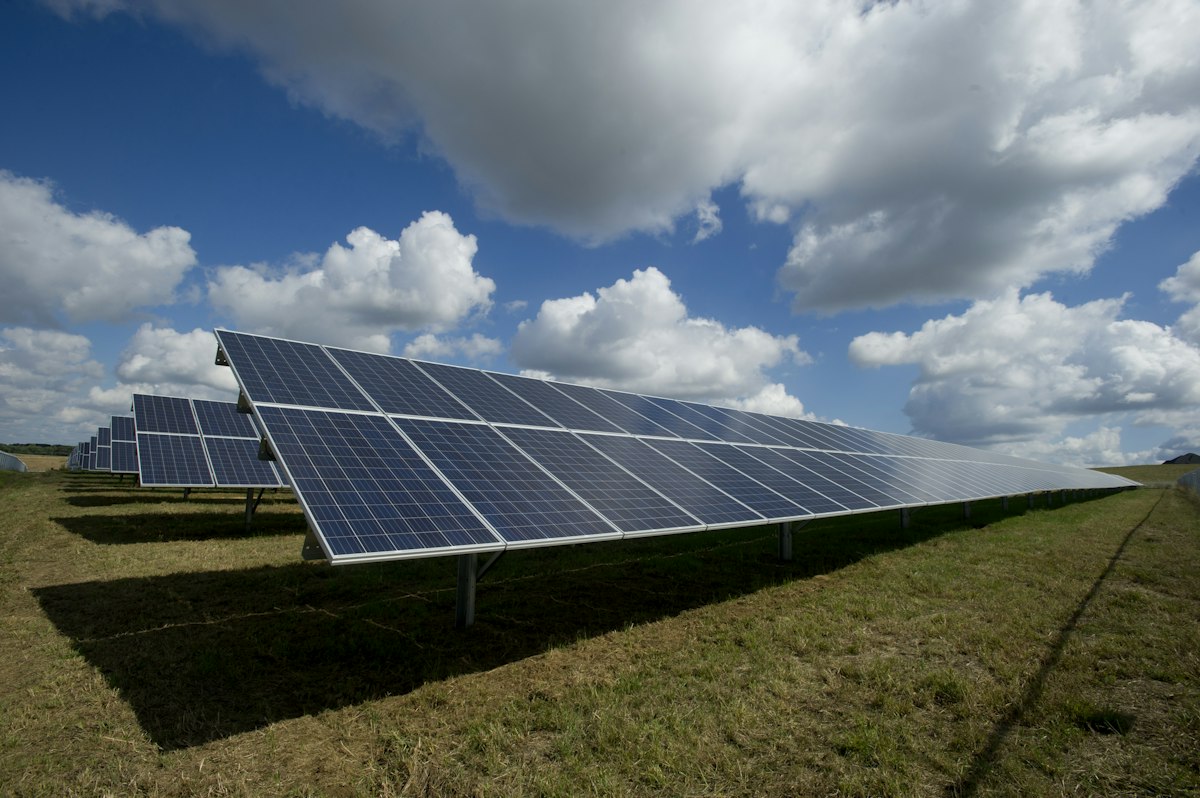
Solar geoengineering has a new playbook, and it comes with a price tag. A San Francisco nonprofit called Reflective has published a detailed road map of the experiments, studies, and infrastructure it says would be needed to make informed decisions about releasing reflective particles into the stratosphere. The plan, dubbed the SAI Research Roadmap, estimates that a coordinated research effort could take about a decade and cost around $370 million. Run the work without coordination, and the same questions might take roughly 20 years and nearly $1.4 billion to answer.
That gap is the whole argument. Scientists have spent half a century exploring whether stratospheric aerosol injection, or SAI, could counteract climate change by mimicking the cooling effects of volcanic eruptions, and hundreds of studies later, big gaps remain in the understanding of how well it would work and what else it might do. Reflective's road map tries to turn that pile into a sequence. But they're scattered. We've got research, sure. It's not a plan yet.
A $370 Million Bet on Better Answers
Dakota Gruener is the organization's cofounder and chief executive. She frames the mission in blunt terms. The world may need to make very consequential decisions on timelines far shorter than the research system is prepared for, she says, and that gap between what's needed and what's ready is exactly where the road map is meant to work. The hope is that the road map will guide scientific efforts and push philanthropies or government agencies to fund high-priority work and responsibly accelerate research. But it's just a hope.
"Our mission is to equip the world with the data and tools required for informed decision-making about sunlight reflection fast enough to matter," says Dakota Gruener, Reflective's cofounder and chief executive.
Gruener stresses that Reflective does not advocate using this form of solar geoengineering. But the report does make the case for outdoor experiments, which would release successively larger amounts of sulfur dioxide, or materials that would convert into it, in the stratosphere to observe what happens. That is a controversial standpoint, and the organization knows it.
The Road Map, Phase by Phase
The plan breaks into stages, each with its own budget and timeline. The first phase, labeled foundational knowledge, covers additional computer simulation studies and lab experiments designed to shed light on potential impacts on different regions, ecosystems, and phenomena. That list includes ocean circulation patterns, ice sheets, and crop yields.

This stage would also begin developing more observational tools. Why? To improve understanding of baseline stratospheric conditions, which in turn shapes the ability to assess any effects from eventual material releases. Reflective estimates this phase would last two to three years and cost $30 million to $75 million. But some analysis and observational work would continue into later phases, and that work doesn't stop when the phase ends, because they're tracking conditions over time and we've got to keep watching.
Then comes the part that will draw the most attention.
- Phase one, foundational knowledge: two to three years, $30 million to $75 million, focused on simulations, lab work, and observational tools.
- Phase two: modified aircraft would release 10 metric tons of sulfur dioxide into the stratosphere, four times over two seasons. Four to eight years, $70 million to $150 million. It could cut uncertainty about cooling efficacy by about 25%.
- Phase three: releases would step up to 25,000 tons of sulfur dioxide over one season, at least once and possibly twice. Four to 11 years, $270 million to $1.1 billion, reducing efficacy uncertainty by around 66%.
- Phase four: ongoing monitoring of full-scale solar geoengineering, if the world goes ahead with it, to gather real-life data and spot unexpected or undesired consequences.
The numbers tell a story about where the money and the risk concentrate. The early phases are cheap by research standards. The later ones are not, and they are the ones that would put hardware in the sky.
The Objection That Will Not Go Away
Since 2002, hundreds of academics have signed an open letter calling for a ban on outdoor experiments and an international non-use agreement. Their argument? Such a powerful technology could never be governed in a globally equitable way. But some signatories go further. They say more studies can't fix the biggest question about solar geoengineering, which is who gets to do it, and no amount of research will ever settle that dispute because the problem isn't scientific at all, it's political, and it's about power. Who decides? That question stays.
"The first-order questions, from my perspective, are not technical. The core question is: Who would control a planet-altering technology like stratospheric aerosol injection? Who would develop it, and who would deploy it, and to what end?" says Aarti Gupta, co-initiator of the non-use initiative and professor of global environmental governance at Wageningen University in the Netherlands.
Gupta's point is that this planet-altering technology will have winners and losers. That framing does not fit neatly into a research budget spreadsheet, which is precisely why the road map's authors keep returning to governance and stage gates rather than pure science.
Stage Gates and the Case for Stopping
Gruener says the road map is Version 1. It's concrete enough to argue with. Reflective plans to update it as reactions come in from researchers and other observers, and it will invite feedback through a mechanism on its site, which keeps the whole thing moving rather than frozen in place. But there are firm stage gates between the later phases. Research shouldn't proceed if experiments suggest the releases don't have the hoped-for impact, show worrisome downsides, or fail to resolve key uncertainties.
"Our road map has these gates precisely because there may be points where the answer is 'You should stop,'" Gruener says.
That's a meaningful concession. It comes from an organization that funds this research, which matters. But it doesn't settle the debate. The gates only work if someone with authority honors them, and that's a condition nobody involved has guaranteed, because authority itself is the thing this whole fight has always been about.
Why Earlier Experiments Never Flew
Most observers agree. The studies could reduce uncertainty about solar geoengineering's effectiveness and the technical ability to carry it out, according to those who spoke about the report. But that won't make outdoor experiments easier to move ahead with. It's not that simple. Highlighting the scientific importance of these experiments doesn't guarantee they'll proceed, because several earlier proposals, including Harvard's SCoPEx and the UK-based SPICE project, were ultimately halted amid opposition from environmentalists or policymakers.
The Termination Shock Argument
Not everyone agrees that experiments at these scales get anyone to the point of an informed decision. Wil Burns, a research professor and legal scholar at American University and a signatory to the International Non-Use Agreement, fears scientists will not understand the extent of potential downsides, including impacts on the protective ozone layer and changes to regional precipitation patterns, until full-fledged solar geoengineering is underway.
"The research would give you some answers. I just don't think it gives you answers that are that relevant. To get to those relevant answers, you have to deploy at scale, and I just don't think that's ever tenable," says Wil Burns, a research professor and legal scholar at American University.
His reasoning rests on intergenerational equity. If the world keeps emitting greenhouse gases, increased levels of solar geoengineering would merely mask continued warming. Future generations, people who had no say in its use, could not turn it off without triggering a sudden surge of warming known as termination shock. Burns calls that a sword of Damocles over future generations, and says that even if someone could prove it works, it would never be tenable from an intergenerational perspective.
Some researchers disagree. They've argued the risks of termination shock are less likely than often assumed. And they say solar geoengineering could be slowly dialed down over time, a claim that sits uneasily beside the fears others raise. That disagreement isn't resolved by the road map. It's not meant to be.
What Supporters See in the Plan
Ilan Gur applauds the road map. He's the former CEO of the Advanced Research and Invention Agency, the UK research department that funded 21 geoengineering research projects last year, and he says that whether you're a scientist, a policymaker, or just a concerned citizen, the goal should be to answer the biggest scientific questions as quickly and efficiently as possible to determine whether this approach might work or would never work.
"We should all want to spend the effort and money to buy down that uncertainty, so my view is 100% the approach that Reflective is taking is the right one," says Ilan Gur, former CEO of the Advanced Research and Invention Agency.
Sebastian Eastham, an associate professor in sustainable aviation at Imperial College London who leads an ARIA-funded project exploring another approach to engineered cooling, agrees the outdoor experiments cannot resolve all unknowns. But he says the map helps start a conversation about how to make decisions on a tool with potential benefits and risks, in the face of escalating climate dangers. Every hard decision ever taken has happened in the context of unresolved uncertainty, he says. That is just the nature of things.
Eastham argues it has become necessary to move beyond computer simulations, saying appropriately designed and executed outdoor experiments can teach so much more than millions of hours of computational processing time that it almost becomes irresponsible to say there cannot ever be any experiment. The risk, in his view, is spinning wheels running the same simulations over and over.
Reflective's Growing Footprint
Reflective started in late 2023. It's now a big deal. Since Gruener incorporated the nonprofit, it has quickly become an important player in solar geoengineering research. The money's real. It has raised more than $20 million from a number of prominent charities and individuals, and it has provided around $4 million to several dozen research groups. And it runs its own projects too, including the development of an open-source solar geoengineering simulator and an online hub for collaborative research.
Earlier this year, Reflective released its SAI Uncertainties database. It's a long list. Scientific unknowns and engineering obstacles would need to be addressed before even a small-scale effort could move ahead, and some of the biggest uncertainties involve what gas or particles would make the most sense to use and what would happen once they were released in the dry stratosphere. It's not clear, for example, whether they'd spread out in a way that maximizes reflectivity or clump together and quickly fall out into the troposphere, the lowest layer of Earth's atmosphere. But the road map builds on that database. It highlights a path to addressing most of those questions.
On the question of environmental risk from the smaller experiments, Gruener offers a comparison: 10 tons of sulfur dioxide is less than 2% of the amount the global aviation industry releases into the atmosphere each day. Some people will be uncomfortable with any discussion of any outdoor experiment, she acknowledges. But if decisions are to be made on good science, she argues, these are questions an experiment will be necessary to address.
Her larger fear is about timing. The rising dangers of climate change will put growing pressure on nations and other actors to move forward with solar geoengineering, even if no one has done the necessary research to reduce scientific uncertainty and sort out the technical challenges. The alternative, she says, is not decisions failing to happen at all. It is decisions being made in a panic or on a lack of evidence.
That's the wager. A $370 million road map says a structured research plan can arrive before the pressure does, and whether the world takes the coordinated path or the slow one, the document now exists for people to argue with.
Frequently Asked Questions
What is the SAI Research Roadmap published by Reflective, and what does it estimate?
The SAI Research Roadmap is a detailed plan of the experiments, studies, and infrastructure that Reflective says would be needed to make informed decisions about releasing reflective particles into the stratosphere. It estimates that a coordinated research effort could take about a decade and cost around $370 million, while uncoordinated work might take roughly 20 years and nearly $1.4 billion.
Why does Reflective argue its road map is necessary now?
Dakota Gruener, Reflective's cofounder and chief executive, says the world may need to make very consequential decisions on timelines far shorter than the research system is prepared for. The road map is meant to work in that gap between what's needed and what's ready, with the hope of guiding scientific efforts and pushing philanthropies or government agencies to fund high-priority work and responsibly accelerate research.
How is the road map structured across its phases, and what does each phase involve?
Phase one, foundational knowledge, would last two to three years and cost $30 million to $75 million, focused on simulations, lab work, and observational tools. Phase two would use modified aircraft to release 10 metric tons of sulfur dioxide four times over two seasons, costing $70 million to $150 million over four to eight years, and phase three would step up to 25,000 tons over one season at $270 million to $1.1 billion over four to 11 years, with phase four involving ongoing monitoring of full-scale solar geoengineering.
What is the main objection raised by critics of outdoor solar geoengineering experiments?
Since 2002, hundreds of academics have signed an open letter calling for a ban on outdoor experiments and an international non-use agreement, arguing that such a powerful technology could never be governed in a globally equitable way. Aarti Gupta, co-initiator of the non-use initiative, says the core question is who would control a planet-altering technology like stratospheric aerosol injection, and that this dispute is political rather than scientific.
What concerns does Wil Burns raise about relying on research to inform decisions on solar geoengineering?
Wil Burns, a research professor and legal scholar at American University and a signatory to the International Non-Use Agreement, fears scientists will not understand the extent of potential downsides, including impacts on the protective ozone layer and changes to regional precipitation patterns, until full-fledged solar geoengineering is underway. He argues that to get relevant answers you have to deploy at scale, which he does not think is ever tenable, and he warns that future generations could not turn it off without triggering termination shock.
Chloe Dupont covers consumer technology, from the latest devices to the software shaping daily life. She focuses on how new tools fit into the real world and whether they live up to the promise.
💬 Comments (0)
No comments yet. Be the first!