Why Sunspot Activity Orbital Decay Matters for Starlink
Sunspot activity orbital decay research reveals how solar cycles speed reentries, impacting Starlink's 50,000+ collision avoidance maneuvers.
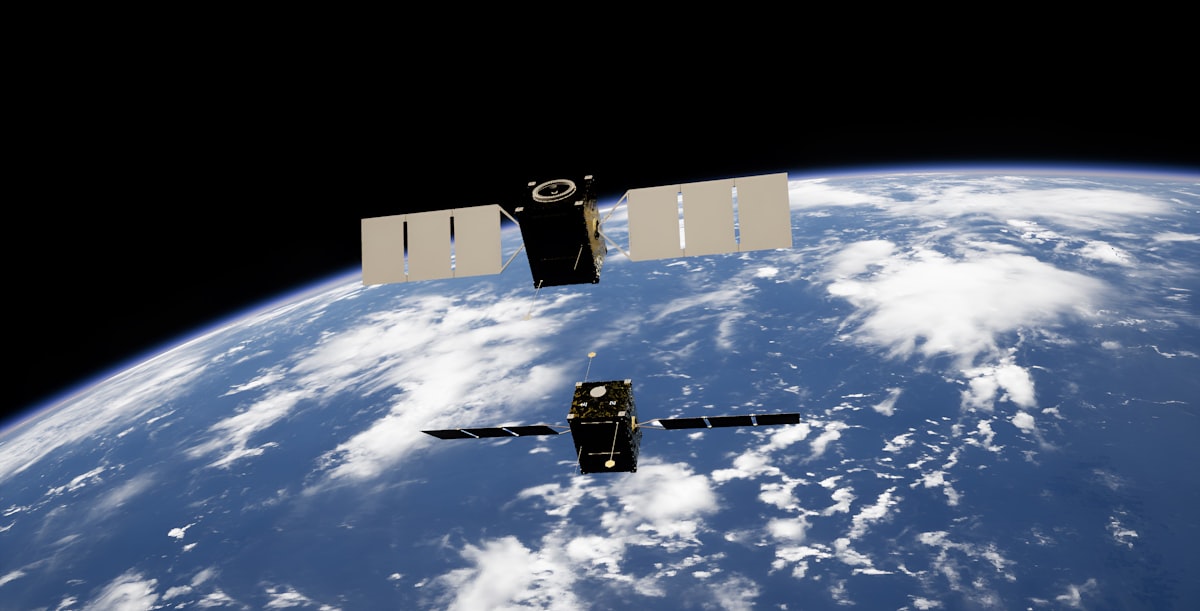
Sunspot activity orbital decay is not merely an academic curiosity tracked by solar physicists. New research from the Vikram Sarabhai Space Centre and the Indian Institute of Space Science and Technology, published in Frontiers in Astronomy and Space Sciences, makes clear that the relationship between the Sun's 11-year cycle and the speed at which objects fall back to Earth carries direct operational consequences for companies building mega-constellations in low Earth orbit. The study followed 17 debris objects over nearly 40 years, spanning solar cycles 22, 23, 24, and the beginning of 25. For SpaceX, which executed more than 50,000 collision avoidance maneuvers for its Starlink constellation in the first half of 2024 alone, the findings are a window into environmental volatility that a growing orbital population must now navigate.
A Crowded Sky Meets a Cyclical Sun
The timeline isn't fixed. It's modulated by the Sun. But low Earth orbit is undergoing its most dramatic transformation since the dawn of the space age. The rapid deployment of Starlink and other mega-constellation networks has added an exponential load of satellites and debris to an already cluttered orbital shell. Space weather, particularly during solar maximum, energizes the outer atmosphere and causes it to swell outward, and debris in low Earth orbit then encounters increased drag, accelerating its descent. The study notes plainly that all that goes up must eventually come down. The study's contribution lies not in confirming this well understood mechanism but in tracking its long-term statistical fingerprint across multiple solar cycles using debris objects rather than operational spacecraft. Debris doesn't perform station-keeping but responds purely to natural forces, making it an unusually honest tracer of environmental change that no amount of thruster telemetry can obscure.
Why EUV Matters More Than Geomagnetism
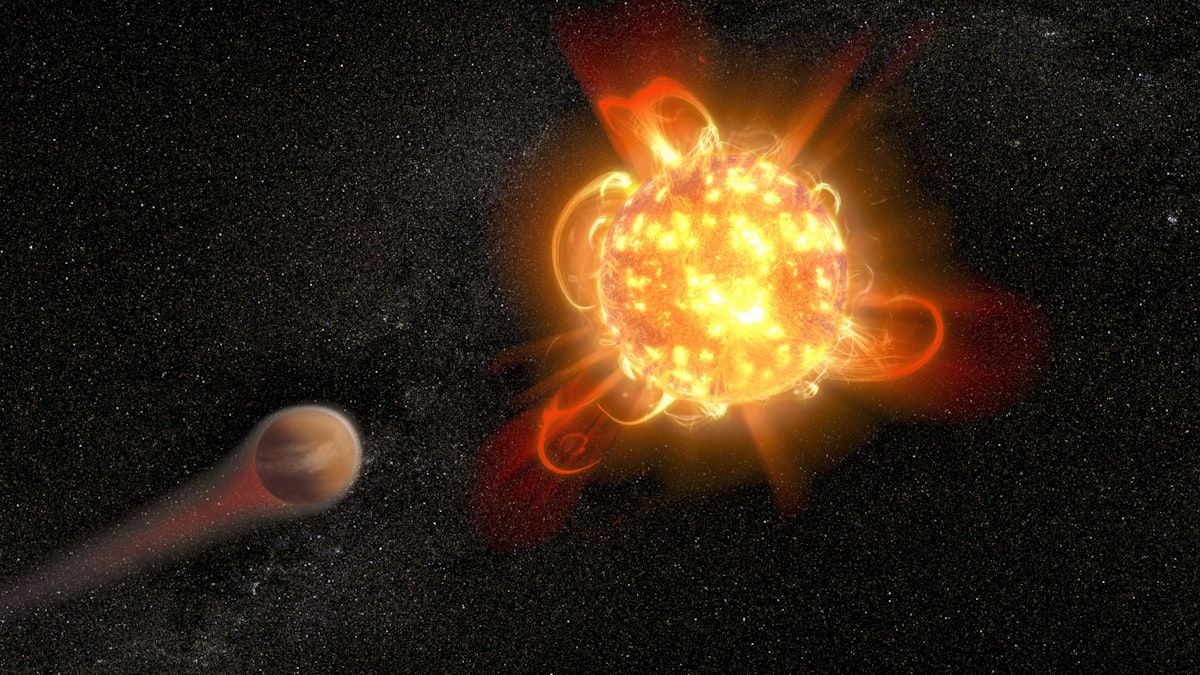
EUV flux spikes sharply. When sunspot numbers cross a key two-thirds threshold, that spike triggers a transition boundary past which space junk experiences significantly greater drag. But geomagnetic activity, long assumed to be the primary actor in orbital perturbation, plays only a secondary role. The variation in EUV flux, captured over recent solar cycles by the joint NASA/ESA SOHO mission operating since 1996, correlates tightly with the accelerated decay rates recorded during the peaks of cycles 22, 23, and 24. For operators managing large constellations, knowing when EUV will spike becomes a mission-critical forecasting challenge rather than a footnote in a quarterly space weather bulletin. The spike in decay rates over the peak of the past three cycles isn't ambiguous. It's a pattern we can't ignore.
The Two-Thirds Threshold
It's almost a gear shift. Below it, drag behaves within predictable bounds. Above it, the atmosphere swells enough to alter the fate of objects across entire altitude bands. So the study's data suggests planners could use this threshold as a leading signal to adjust conjunction assessments, maneuver planning, and end-of-life deorbit timelines. The research team pulled initial data on 95 objects from the Space-Track catalog, NORAD's clearing house for satellite analysis, before narrowing to 17 objects tracked across decades. Among them was Explorer 7, carrying the exceptionally low catalog number of 22, a relic from an era when orbital debris was a footnote rather than a discipline.
- Sunspot numbers crossing the two-thirds mark signal a regime change
- EUV spike patterns from SOHO data provide the leading indicator
- Historical decay rate comparisons from cycles 22 through 24 validate the model
50,000 Maneuvers and the Cost of Uncertainty
It's no longer niche. Reading the study alongside operational realities clarifies why sunspot activity orbital decay is no longer a niche topic for heliophysicists. SpaceX's Starlink constellation performed more than 50,000 collision avoidance maneuvers in the first half of 2024. That number becomes more sobering when placed against an atmosphere that grows more turbulent on an 11-year rhythm. But the study references two events that compounded the debris problem: the collision of Iridium 33 and Kosmos 2251 in 2009, and the Russian ASAT anti-satellite missile test in 2021. Both injected large volumes of new debris into low Earth orbit, debris that now responds to the same EUV-driven drag forces documented in the research. Crewed stations such as the International Space Station and Tiangong must conduct routine avoidance maneuvers, and those maneuvers grow more frequent when solar maximum swells the upper atmosphere and alters trajectories in ways that are not always intuitive.
"While the influence of solar activity on satellite drag is well recognized, a systematic investigation into its long-term impact on the orbital decay of space debris remains lacking," the researchers note. "The rapid expansion of the space sector and the corresponding growth in space debris population have made it increasingly important to understand the long-term drivers of orbital decay."
Polar Orbits Resist the Pattern
Two objects in high inclination polar orbits appeared largely immune to the impacts of peak EUV flux. That finding introduces important caveats. It suggests either limitations in the study's methodology or the existence of orbital regimes where the sunspot activity orbital decay relationship weakens considerably. But that distinction matters enormously. If polar orbits offer a partial shield against the drag spikes that hit lower inclinations harder, the trade space between coverage, latency, and orbital lifetime shifts in ways most deployment models haven't yet priced in. The researchers don't overstate the finding, but its presence invites further investigation. It also complicates any simplistic assumption that solar maximum threatens all low Earth orbit assets equally.
Debris as the Unvarnished Signal
Operational satellites use active station-keeping, firing thrusters to counteract drag and maintain altitude. That masks the raw environmental signal. Debris drifts without correction. Its orbital evolution over nearly four decades strips away the noise of human intervention, revealing the pure relationship between sunspot activity orbital decay and the environmental forces acting upon it. The initial 95 objects came from publicly available catalogs, and the 17 tracked across the full timespan provide a longitudinal dataset that is rare in the field. This approach, the researchers argue, had been missing despite widespread acknowledgment that solar activity influences drag. The gap between acknowledging a mechanism and quantifying its long-term behavior is precisely where operational risk accumulates, quietly and without announcement.
What Operators Should Watch Next
The forward view from the study points toward practical operational value. Identifying periods when decay rates peak could assist planners managing conjunction risk, deorbit schedules, and launch timing with greater precision than current models permit. Solar cycle 25 is now underway. A large sunspot group on the solar farside in the first half of May 2026 hinted at the kind of activity that could push EUV flux across the two-thirds threshold. SOHO continues to gather data, and the study's authors envision their findings feeding into predictive models that allow operators to anticipate rather than react. For Starlink and any entity operating at scale in low Earth orbit, the sunspot activity orbital decay link, tracked across 40 years of debris behavior, is no longer a question of if but of how accurately the timing can be forecast.
- EUV flux readings approaching the two-thirds threshold demand immediate review
- Solar cycle 25 progression toward maximum will compress decision timelines
- Debris decay rates serve as an early indicator of atmospheric swelling before operational assets feel the effect
The answer will quietly shape the economics of every constellation flying through the next solar maximum.
Frequently Asked Questions
How does sunspot activity affect Starlink satellites?
Sunspot activity increases solar radiation, heating the upper atmosphere and causing it to expand, which increases drag on low-Earth orbit satellites like Starlink.
Can sunspot activity cause Starlink satellites to deorbit faster?
Yes, heightened sunspot activity accelerates orbital decay by increasing atmospheric drag, potentially shortening satellite lifespans.
What is the relationship between solar cycles and Starlink operations?
During solar maximum, more frequent sunspots and solar flares lead to greater atmospheric drag, requiring more frequent orbit adjustments or replacements.
How does SpaceX manage increased orbital decay from sunspots?
SpaceX uses onboard propulsion to raise satellite orbits and may adjust launch schedules to avoid periods of high solar activity.
Why is understanding sunspot activity important for Starlink's long-term viability?
Predicting sunspot cycles helps SpaceX plan satellite maintenance, replacement, and collision avoidance to ensure network reliability.

Leo Sokolov reports on spaceflight and the companies and agencies racing to reach orbit and beyond. He is captivated by the engineering that makes leaving Earth possible.
💬 Comments (0)
No comments yet. Be the first!