Vast satellite buses target a 50,000-unit market
Vast satellite buses debut as the company diversifies beyond space stations into power-hungry orbital applications, with first deliveries targeted for Q4 2027.

Vast satellite buses are suddenly a product, not a distant roadmap item. A technology demonstration mission this year validated key systems for the company's Haven-1 space station and unlocked a diversification push that the company had quietly planned. Vast Space, a Long Beach, California-based startup that's already invested $1 billion in manufacturing infrastructure, announced Tuesday it will begin selling high-powered satellite buses. That's a big step. But the company's entering a market crowded with new entrants and hungry for modular, power-dense platforms. The move is an explicit bet that the same spacecraft backbone designed for a private habitat can anchor demanding payloads in orbits from low-Earth to the Moon; it's also a bet that revenue from satellite sales can arrive sooner than station leasing income.
Diversification Was Always the Plan
But when Vast launched a small demonstration spacecraft in early November, the public read it as a stepping stone toward the Haven-1 space station. The spacecraft finished its test campaign, de-orbited successfully three months later, checking off power, propulsion, tracking, other technologies; that performance gave Vast confidence to accelerate a satellite bus product line under consideration from the start. It's de-orbited.
“Every single successful space company is diversified in its products,” said Max Haot, chief executive of Vast Space. “So for us it really was a question of when, not if.”
Haot’s phrasing is telling. It recasts the satellite entry not as a pivot forced by circumstance, but as a logical multiplier of the company’s core investment. The demo mission was not just a station precursor; it served double duty as a flying qualification for a bus that can host telecommunications, Earth observation, data services, and even orbital data center inferencing payloads.
Vast satellite buses take shape with 15 kW-class design
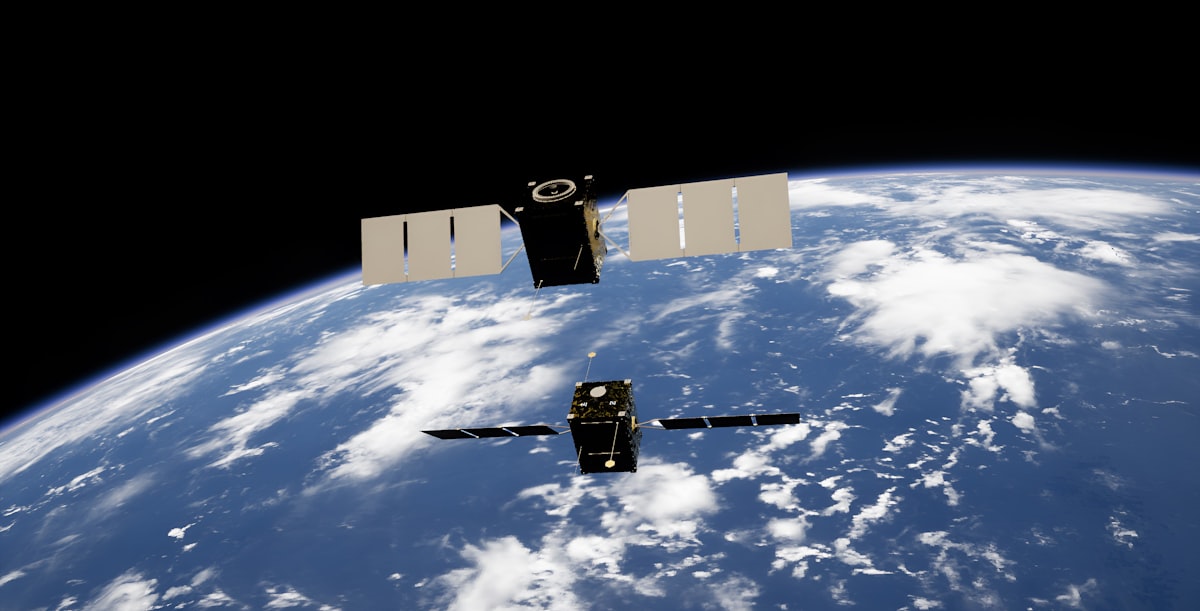
It's a 15 kW-class satellite bus. Each bus is 3 meters long, 4 meters tall, weighs 700 kilograms, carries at least 350 kilograms payload, and its five-year design life and a low-Earth to lunar orbit envelope separates it from single-regime buses. And it borrows heavily from the Haven-1 space station architecture, has fresh components, and Vast is already developing in-house electric propulsion and a deployable solar array specifically for the satellite.
A Bus Built for Power and Reach
- 15 kW-class power bus
- Dimensions: approximately 3 meters long, 4 meters tall
- Mass: 700 kg, payload capacity at least 350 kg
- Design lifetime: five years
- Operational orbits: low-Earth orbit to lunar
- Includes Nvidia Space-1 Vera Rubin Module for orbital inferencing
That last bullet is not trivial. By bundling an Nvidia Space-1 Vera Rubin Module, Vast is signaling that its bus is tuned for compute-heavy, power-hungry applications like on-orbit data centers, a niche where thermal and power demands weed out less capable platforms. Haot confirmed that Vast intends to serve customers in telecommunications, observation, and data services. The company has already signed a customer for four satellites with an option for up to 200 additional units.
Vast satellite buses enter a crowded market
Historically, Boeing, Lockheed Martin, Northrop Grumman, Maxar, and Sierra Space have built medium and large satellites, often with bespoke programs costing tens to hundreds of millions of dollars. That model's cracking. But the Space Development Agency's preference for proliferated constellations of smaller, harder-to-target satellites is reshaping procurement, and Falcon 9's high cadence and rideshare missions have made it operationally simpler, sometimes cheaper to deploy medium-class spacecraft. So venture capital's poured into a new generation of builders, among them K2 Space, Rocket Lab, True Anomaly, Blue Canyon, and Millennium Space Systems.
The immediate logic might suggest that a station company should focus on habitats and leave satellite buses to the pure-play manufacturers. But that framing misses something. Vast already operates $1 billion worth of clean rooms and manufacturing facilities built for station production, and those same assets can be used for satellite buses without a proportionate increase in overhead. The bus is not a distraction; it is an adjacent revenue line that leverages sunk costs.
Four satellites are already booked. Haot argued that most new entrants in the satellite bus arena are still emerging, their products aren't yet mature, and with power-hungry missions growing, he sees a path to market leadership if execution is swift. There's an option up to 200. But the claim is credible only if Vast can deliver on cost and schedule. The $1 billion in facilities and the plan to launch at least ten Vast satellites in the fourth quarter of 2027 frame an aggressive posture.
What a $1 Billion Factory Buys
Vast's investment isn't theoretical. The facilities that'll produce Vast satellite buses are already in place, purpose-built as clean rooms and production capacity originally scoped for the Haven-1 station. Haot said the same infrastructure can serve both product lines, which reduces the marginal cost of building the first batch of buses and shrinks the time from order to orbit. But in a market where constellation operators and data-center startups are racing to put assets in space, speed of manufacturing becomes a strategic lever.
Satellite count's exploded. Driven overwhelmingly by Starlink, it's surged from about 4,000 a decade ago to roughly 14,000 today, and some projections point to 500,000 satellites in orbit within another ten years, and Haot expects around 90 percent of those'll be built by SpaceX, Amazon, Blue Origin, or similar vertically integrated players. But the remaining 10 percent of that addressable market amounts to 50,000 satellites for commercial bus manufacturers to compete for, a number far larger than today's annual build rate across all companies. In that context, owning a ready factory flips the script from chasing demand to being ready to absorb it.
The Road to 2027
It's targeting Q4 2027. Vast is targeting the launch of at least ten satellite buses in Q4 2027, aligning with a development timeline that includes maturing electric propulsion and deployable solar array hardware with the Haven-1 station program. But the initial customer commitment for four satellites coupled with an option structure scaling to two hundred provides a demand signal that's beyond press-release language, and a company that just months ago was primarily known for its space station ambitions now has a fully articulated satellite bus business with a hard launch date and a growing list of potential payloads.
The picture clarifies. It's read alongside the company's $1 billion facility footprint and the Nvidia module inclusion. Vast satellite buses aren't a hedge but a parallel growth engine built from the same technological core as the station, aimed at a market segment where power density and operational flexibility can command a premium. So the debut mission in low-Earth orbit turned out to be a proving ground for far more than a habitat, and the industry will watch whether the confidence translates into on-orbit hardware by the end of this decade.
FAQ
What are Vast satellite buses?
Vast satellite buses are high-powered spacecraft platforms designed for payloads in low-Earth to lunar orbits, offering 15 kW-class power and a five-year design life.
When will Vast satellite buses be delivered?
First deliveries are targeted for Q4 2027, with at least ten buses planned for launch.
How many Vast satellite buses have been ordered?
An initial customer has booked four satellites, with an option for up to 200 additional units.
Frequently Asked Questions
What is a satellite bus in the context of Vast Space's strategy?
A satellite bus is the standardized platform that carries the payload, providing power, propulsion, and communication, which Vast Space customizes for various missions.
How does Vast Space's satellite bus strategy differ from competitors?
Vast focuses on modular, scalable buses that can be rapidly reconfigured for different payloads, reducing costs and lead times compared to traditional custom designs.
What types of missions are Vast's satellite buses designed for?
They are designed for Earth observation, communications, and scientific research, with flexibility to support both low Earth orbit and geostationary missions.
What key technologies are used in Vast's satellite buses?
Key technologies include advanced electric propulsion, high-efficiency solar panels, and onboard AI for autonomous operations and data processing.
How does Vast Space ensure reliability and cost-effectiveness in its bus designs?
By using commercial off-the-shelf components and standardized interfaces, Vast reduces costs while maintaining reliability through rigorous testing and redundancy.

Leo Sokolov reports on spaceflight and the companies and agencies racing to reach orbit and beyond. He is captivated by the engineering that makes leaving Earth possible.
💬 Comments (0)
No comments yet. Be the first!