What Starship V3 Test Flight Means for You
Starship V3 test flight set for Wednesday. After explosions and delays, success could mean cheaper internet and lunar missions.

Starship V3 test flight is finally here. After seven months of silence, SpaceX is putting its radically redesigned rocket on the pad this Wednesday. And honestly, a lot of people are holding their breath.
That is not hyperbole. Everything SpaceX wants to become hinges on this vehicle working. Not eventually. Soon.
Let me unpack why.
Seven Months of Silence
SpaceX has not flown Starship in seven months. The last V2 flight was in October 2025. The gap was not planned. It was forced.
2025 was brutal. Three consecutive flights lost control of the Starship upper stage during ascent. Debris rained down over the ocean. Nobody on the ground was hurt, but the imagery was awful. The ninth flight overall, on May 27, was the absolute worst. Both the upper stage and the Super Heavy booster failed. Total loss.
Then came November. During a routine ground pressure test, a V3 booster simply exploded. No flight. No warning. Just a test failure that seemed to sum up a year SpaceX would rather forget.
But the company kept building. It always does.
Why This Launch Carries Heavier Weight
Here is the deal. The Starship V3 test flight is not just another experimental hop. It carries more consequence than any previous attempt.
The US commercial space industry is waiting. NASA is waiting. Starlink customers are waiting. And SpaceX itself has bet nearly everything on this rocket working.
Jacob McKenzie, SpaceX's vice president for the Raptor engine, put it plainly in the company's new "Test Like You Fly" video: "We are not breaking laws of physics; we are just trying to leverage them as effectively as we can."
That video is not promotional fluff. It shows engineers inside the Starfactory in South Texas talking candidly about brutally hard problems. Real engineering struggle. The kind most companies hide.
A Decade and $15 Billion
By some estimates, SpaceX has now invested $15 billion in Starship over ten years. Eleven test flights. A sprawling spaceport in South Texas. A massive factory. Expanding facilities in Florida. And 600 Raptor engines built just for the V2 program.
They're not comparable. But while NASA pays $3.5 billion for two dozen comparably powered engines, SpaceX built 600 of them for a rocket that has not yet reached orbit and hasn't delivered a single payload.
That is either visionary or terrifying, depending entirely on what happens Wednesday.
What Changed Under the Skin
The V3 is essentially new. But SpaceX did a "clean sheet" redesign of the upper stage propulsion system, and that's the exact part that caused so many failures during V2 flights.

The changes run deep and specific. Here is what the source material tells us got reworked.
- Raptor 3 engine mass dropped from 1,630 kg to 1,525 kg, saving nearly one ton per engine when including simplified hardware and supporting systems.
- Fuel transfer system completely redesigned for more reliable, simultaneous startup of all 33 Raptors.
- Grid fins reduced from four to three and moved lower on the booster to protect them during hot staging.
- Hot staging ring hardware now integrated into the booster itself, making it fully reusable instead of discarded after flight.
- Upper stage propulsion redesigned to reduce contained volumes in the aft end, preventing trapped propellant leakage that previously caused catastrophic failures.
- New launch pad with larger propellant storage, built to support faster fueling operations.
In plain English, they sealed up the places where leaking fuel could pool and explode. That was the problem. That was the fix.
The Engine That Took 600 Tries
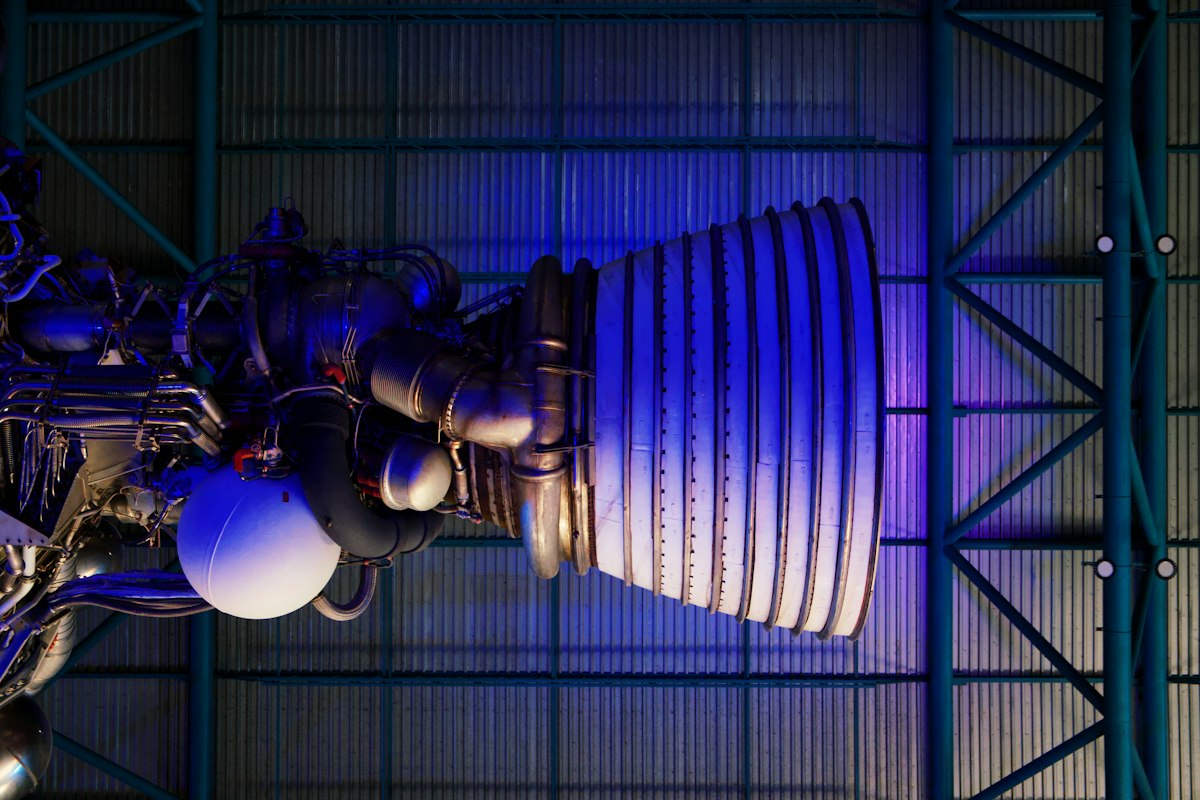
McKenzie's team built 600 Raptor engines for V2. Not all of them flew. Many were tested, iterated, and scrapped. The V3 version sheds another 105 kilograms per engine while gaining reliability. That is an extraordinary evolution for a rocket engine that already pushed combustion chemistry to its edge.
The early May static fire was the moment it came together. After a February test that damaged half the Raptors due to a hard shutdown and a mid-April attempt that cut off at 1.88 seconds, SpaceX finally got a full-duration burn. The engines held. The pad held.
Who Is Counting on This Rocket
The list is long and it starts with NASA. The Artemis Moon program needs Starship for lunar landings. Orbital refueling demonstrated in space is the critical missing piece. NASA has dibs on dozens of flights in 2027 and 2028, including a demonstration landing and an actual crewed Moon landing with humans.
Then there is Starlink. The larger next-generation satellites cannot fit inside a Falcon 9. They need Starship's cavernous payload bay. Without it, the direct-to-cell service and expanded broadband network stay grounded.
He's estimating 2028 or 2029. Tom Patton, writing for The Journal of Space Commerce, says Starship may not become widely available for commercial customers until then, and Ars Technica originally reported that timeline assumes everything goes right starting now.
That is a long wait when your business model depends on cheap launch. And many companies are betting exactly that.
- NASA's Artemis III Moon landing and subsequent crewed missions depend on Starship refueling and lunar landing capability.
- Starlink's next-generation larger satellites cannot launch on anything else.
- Commercial space companies designing orbital data centers and large satellite constellations have built their business plans around Starship's promised capacity and price.
- SpaceX itself needs Starship operational before its IPO to justify a valuation somewhere between $1.5 and $2 trillion.
The Price Promise
Falcon 9 brought launch costs to the low thousands of dollars per kilogram. Starship could push that into the low hundreds. An order of magnitude cheaper. That math changes everything.
SpaceX charges $74 million for a Falcon 9 launch to external customers. Internally, it costs them about $15 million. Competitors pay four to six times that for similar capability. Starship would carry several times the Falcon 9's payload in one mission and potentially cost less than Falcon 9 does today.
But that framing misses something. Falcon 9 is the most successful rocket in history, and it flew 165 times last year, which means it's reliable, proven, and in screaming demand.
The Strange Bet SpaceX Just Made
SpaceX is voluntarily slowing down the Falcon 9. The company stopped flying it from historic Launch Complex-39A at Kennedy Space Center. That pad now belongs exclusively to Starship. The company retired one of its two Florida seagoing drone ships to serve as a Starship transporter instead.
Falcon 9 will fly fewer times this year than last. SpaceX is essentially throttling back the most successful launch vehicle ever built to make room for a rocket that has not yet reached orbit.
That is audacious. It might be reckless. It is definitely intentional.
"This is such a wild ride. The highs are high. The lows are low." , Jenna Lowe, senior manager of Starship operations, in the "Test Like You Fly" video.
What Happens If It Fails
Everything slips. NASA's lunar timeline tightens against China's competing Moon program. Starlink expansion stalls. Commercial customers who booked their futures on cheap Starship launch wait even longer. The IPO narrative gets harder to sell.
If the V3 flight goes badly, SpaceX could face a repeat of 2025, a year the company cannot afford. Three consecutive failures. Debris showers. A booster that exploded during a ground test. Another year like that, and the schedule starts to look like a problem rather than a delay.
The ground systems are new. But the company's got momentum now, and the early May static fire was a full-duration success, while the booster passed pressure testing in February after the November explosion and the vehicle's redesigned top to bottom.
They might knock it out of the park.
If they do, a sub-monthly launch cadence is possible before the end of this year. Starlink deployment begins. Refueling tests start. NASA breathes easier. Commercial customers start counting months instead of years.
This isn't just another launch. But the Starship V3 test flight is the moment SpaceX finds out whether the bet of a decade pays off because Starlink direct-to-cell, orbital data centers, and a city on Mars all depend on this rocket fulfilling its promise of rapid, low-cost, reusable launch.
Wednesday will tell us a lot.
Frequently Asked Questions
What is the Starship V3 test flight?
It's a flight test of SpaceX's upgraded Starship V3 vehicle, designed to validate new engines, heat shield, and reusability systems.
How will the Starship V3 test flight affect me?
If successful, it accelerates affordable space travel and satellite deployment, potentially lowering costs for internet and Earth observation services.
When is the Starship V3 test flight happening?
SpaceX has not announced an exact date, but it is expected within the next few months pending regulatory approvals.
What are the key goals of this test flight?
The main goals include demonstrating orbital capability, controlled reentry, and a precision landing for future reuse.
Is the Starship V3 test flight safe?
SpaceX prioritizes safety with extensive pre-flight checks and abort systems, though test flights inherently carry some risk.

Leo Sokolov reports on spaceflight and the companies and agencies racing to reach orbit and beyond. He is captivated by the engineering that makes leaving Earth possible.
💬 Comments (0)
No comments yet. Be the first!