Starship V3's Mixed Debut Signals Bigger Shift
SpaceX's Starship V3 test flight showed heat shield success but two Raptor 3 engine failures, shaping the path toward orbital refueling and Starlink deployment.

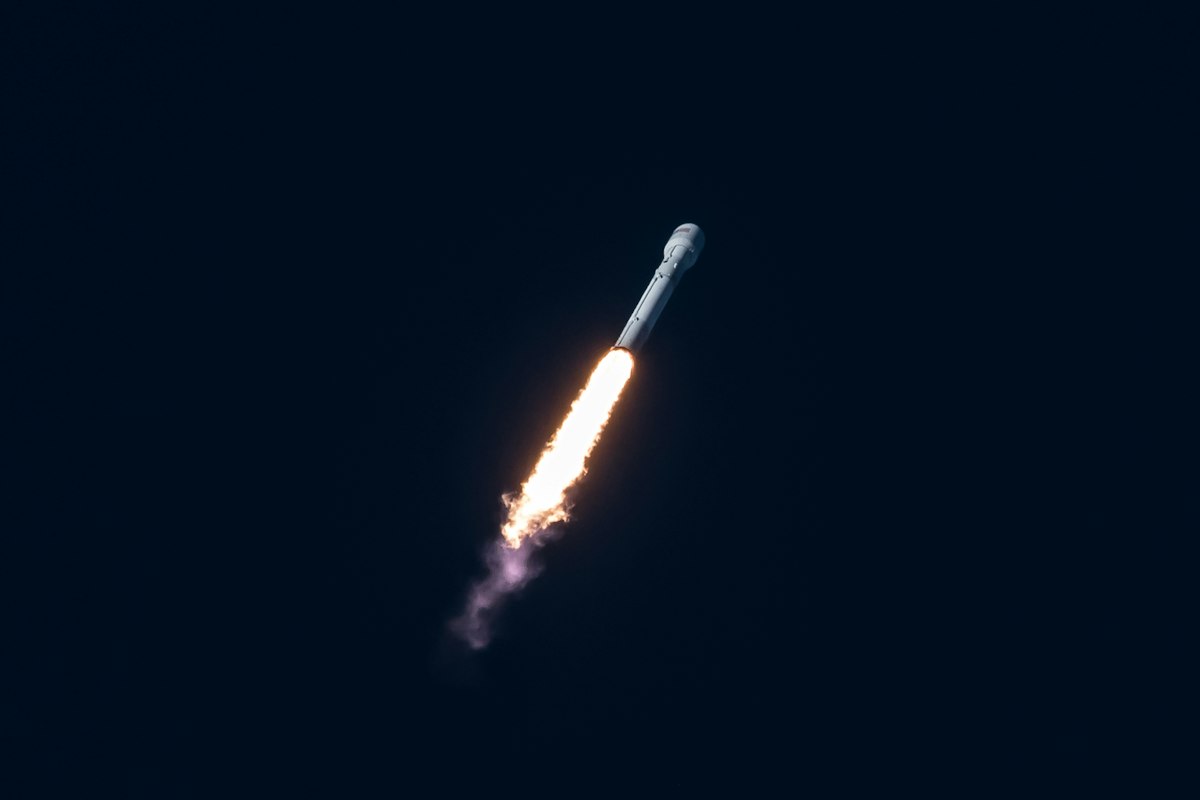
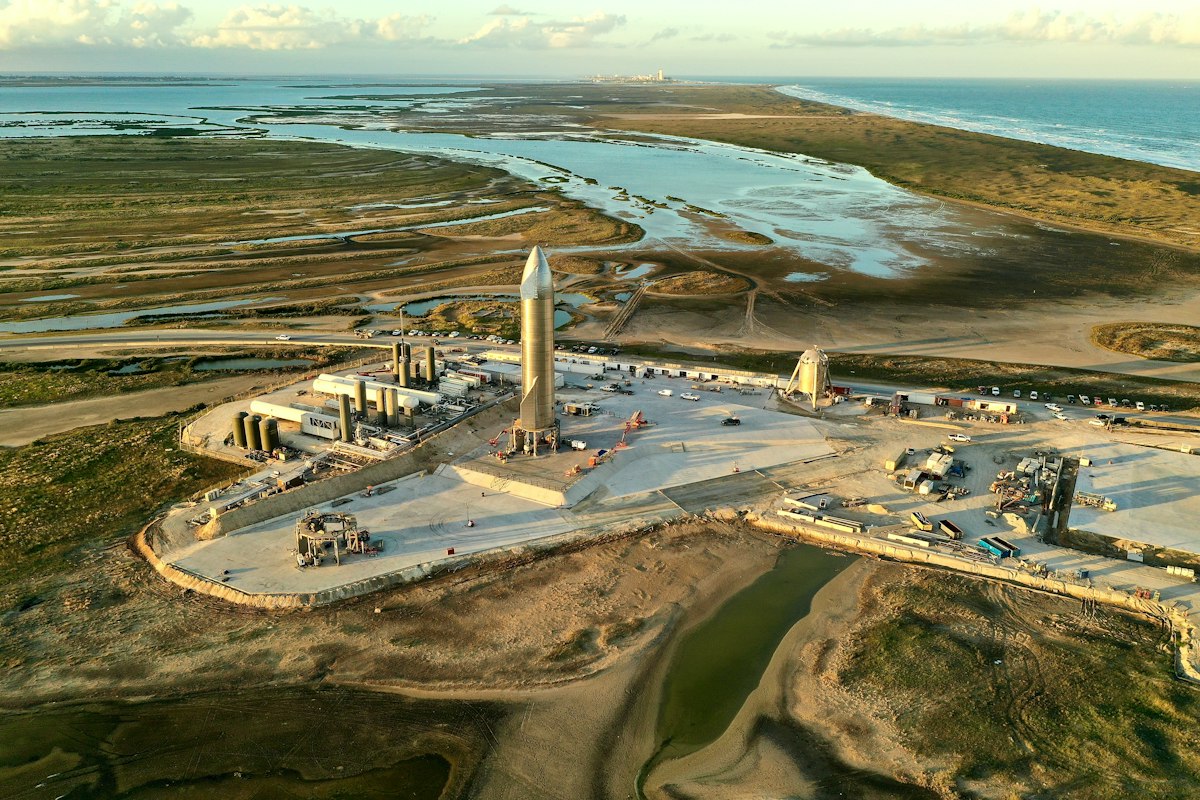
Starship V3 debuted on Friday. A study in controlled ambition. A 408-foot-tall stainless steel rocket cleared a brand-new launch pad at Starbase, arced over the Gulf of Mexico, and one hour later splashed down precisely on target in the Indian Ocean. The imagery from drones and buoy cameras was cinematic. But for aerospace investors, defense analysts, and policy makers, the flight wasn't merely a spectacle. It was a signal that SpaceX is methodically decoupling its launch architecture from a single point of failure, even as the upgraded Raptor 3 engines showed they still bite back.
A Different Kind of First Impression
SpaceX has grown accustomed to ending test flights in pieces. Both Starship V1 and V2 broke apart on their inaugural outings. This time, the ship stayed intact. The heat shield, perhaps the program’s most persistent engineering headache, survived the fiery reentry over the Indian Ocean with flaps intact. That is not a small detail. A reusable upper stage, one that can brake through the atmosphere repeatedly without catastrophic tile loss, is the hinge on which rapid turnaround economics swing. The vehicle also executed a series of banking maneuvers before flipping vertical for a landing burn, a sequence that eventually will guide returning ships straight back to the mechanical arms waiting at the Texas coast. Most of the day’s objectives landed in the win column.
But the Boost-Back Burn Failed
Yet the booster never made it to a controlled splashdown. One of the 33 Raptor 3 engines on the Super Heavy shut down prematurely shortly after liftoff, and something after stage separation, still to be diagnosed, sent the rocket hurtling toward a high-speed impact in the Gulf. Moments later, an outer engine on the Starship upper stage also cut out. The ship compensated by burning its five remaining engines a little longer and still hit its trajectory. SpaceX’s engine-out philosophy worked. But the booster’s loss of control meant no full boost-back burn. That matters because recovering the booster is essential to the launch cadence required for Starlink replenishment and Artemis refueling campaigns. One step forward, one step sideways.
The Payload Gambit Deployed
100 metric tons. The flight tested the delivery mechanism for that promise, and a redesigned Pez-style dispenser released 20 mockups of next-generation Starlink satellites plus two inspection spacecraft fitted with flashlights and cameras. All of this worked perfectly as the ship soared to 121 miles over the South Atlantic. It wasn't passive. This was a dry run of the operational machine SpaceX intends to run relentlessly, a fleet of Starships seeding and refreshing a proprietary broadband constellation. But from an industrial standpoint, that vertical integration is the kind of moat that transforms a launch provider into an infrastructure owner.
The NASA Administrator Was Watching
Jared Isaacman was in Texas. He was on the ground. He's NASA's Administrator. He lauded a "hell of a V3 Starship launch." His presence was a reminder that the vehicle's trajectory runs straight through the Artemis program. NASA is counting on a human-rated Starship to land astronauts on the Moon, and before that can happen, the company must demonstrate orbital refueling, a maneuver that demands multiple ship-to-ship propellant transfers in space. That capability's now tied, in part, to resolving the engine relight envelope. But SpaceX elected to forego a planned Raptor restart in space after the in-flight engine failure, a choice that pushes orbital testing a little further out. Read alongside recent announcements, the picture clarifies: the agency's timeline is being written by Starship's iterative pace, not the other way round.
What the Engine Glitch Hides in Plain Sight
Two Raptor 3 engines shut down early. The public might read that as a flaw. But that framing misses something. Rockets with 39 engines routinely lose one and keep flying. The Super Heavy booster produced up to 18 million pounds of thrust, twice the power of NASA’s Space Launch System rocket used on last month’s Artemis II mission. What Friday’s ride really tested was the fault tolerance of a machine designed to absorb failures and still deliver. That's the architecture of a system meant for bulk cargo, not exquisite one-off missions. The real question is whether the redesigned Raptor 3, billed as higher thrust and lighter weight, can mature quickly enough to permit the fully orbital flight that SpaceX has so far avoided. All 12 Starship test flights have remained suborbital. Officials want proof that they can guide the ship back to Earth before risking an uncontrolled reentry of the world's most massive spacecraft outside the International Space Station.
A Signal for Starlink and Artemis
Moves like this typically signal a shift toward operational deployment of a satellite fleet that underpins a global broadband business. With the payload mechanism validated and the heat shield proving its resilience, arguments for waiting to loft real Starlink hardware weaken. But the seven-month gap since the last flight, program's longest, reflected more than vehicle upgrade, and SpaceX used that interval to complete second launch pad at Starbase with a design template bound for Cape Canaveral. It's no mere technical milestone. It's a capital investment in launch frequency, the lever that eventually bends cost curves, and when source notes initial pad inspections showed no significant problems, it signals the company's multi-site strategy has just de-risked considerably.
“Congratulations SpaceX team on an epic first Starship V3 launch & landing! You scored a goal for humanity,” Elon Musk posted on X. Gwynne Shotwell, SpaceX’s second in command, added, “Congrats and a huge thank you to the SpaceX team that always delivers. This was an incredible first flight of a brand new vehicle. Our collective future flying amongst the stars has become so much closer.”
Those words, stripped of engineering caution, reflect an executive team that sees a path past the program’s most dangerous unknowns. The heat shield held. The payload deployment worked. The ship survived and splashed down. The booster did not. It was a mixed debut, and the message is that mixed is enough to accelerate.
What Comes Next
That's the next shift. Watch the summer manifest. SpaceX has more ships and boosters on track for test flights later this summer, and the path ahead involves chasing the perfection that Flight 12 didn't fully achieve, meaning an orbital flight if the engine relight question's settled, eventually an attempt to catch Starship with the tower's giant mechanical arms. For investors and policy makers tracking the commercial space sector, the cadence of those attempts matters more than any single success, and a vehicle that can double payload capacity, deploy a constellation mockup with ease, and shrug off an engine failure is already sending a clearer signal than any press release. But the race isn't against a competitor named in the report. It's against the clock set by Starlink's bandwidth needs and Artemis's lunar deadlines. Friday proved the ship can fly and return with its skin intact, and the next flights will show how fast the booster can join it.
Frequently Asked Questions
What is Starship V3 and why is its debut significant?
Starship V3 is the latest iteration of SpaceX's fully reusable spacecraft, marking a major step toward interplanetary travel. Its mixed debut signals a shift in aerospace engineering priorities.
What went wrong during Starship V3's first flight?
The launch experienced partial engine failures and a delayed stage separation, though the vehicle reached space. These issues highlight the challenges of testing cutting-edge technology.
How does Starship V3 differ from its predecessors?
It features upgraded Raptor 3 engines, a taller design, and improved heat shield tiles for better reusability. These changes aim to increase payload capacity and reliability.
What does the 'bigger shift' in the blog title refer to?
The shift is toward rapid iterative testing and accepting failures as learning opportunities, a departure from traditional aerospace's cautious approach.
When is the next Starship V3 test flight expected?
SpaceX plans a second test within months, pending FAA approval and analysis of the first flight's data.

Arthur Vance writes about astronomy and space exploration, covering the discoveries that expand our view of the cosmos. He enjoys connecting distant science to the questions we ask here on Earth.
💬 Comments (0)
No comments yet. Be the first!