ESA Scout Missions Reshape Earth Science Economics
ESA Scout missions like newly selected Hibidis and SOVA-S prove that cutting-edge Earth science can be delivered on a 35 million Euro budget and a three-year schedule, reshaping industry dynamics.
ESA Scout Missions Reshape Earth Science Economics
ESA Scout missions aren't an experiment. With the formal selection of Hibidis and SOVA-S following a ten-month process, the European Space Agency has doubled down on a procurement philosophy that could quietly rewire how Earth science gets funded, built, and launched. But that signal goes beyond winners. It confirms that the institutional space world is learning to prize speed and a fixed-price discipline that was, until very recently, alien to government-led environmental monitoring.
Simonetta Cheli doesn't mince words. Her statement will likely echo in boardrooms far beyond Paris. “The ESA Scout missions show that achieving groundbreaking Earth science doesn’t always require large budgets and long development times,” she said. “By moving fast, embracing innovation and empowering emerging ideas, these missions demonstrate how agility and creativity can accelerate progress, delivering impactful science and technology in a remarkably short time frame.” This isn't marketing language. But it's a direct challenge to the multi decade, multi billion Euro flagships that have historically defined the agency’s relationship with Earth observation.
What the Scout Model Upends
The rules are blunt. Every Scout mission must be ready for launch within three years of selection and cannot exceed a budget of 35 million Euro. Those two constraints do more than save money. They force prime contractors and their supply chains to abandon bespoke, slow-burn development in favour of off-the-shelf platforms and proven subsystems. In the case of Hibidis, Italy’s SITAEL is using its new Empyreum small satellite platform and the SPARK low-cost electric propulsion unit, a pairing that speaks to the kind of component standardisation more commonly associated with commercial New Space constellations. The Hyper-spectral Biodiversity Scout will study the understory spectrum of forests and jungles from multiple angles, a niche scientific question that would never have justified a traditional Earth Explorer budget but one that holds real promise for understanding ecosystem health at a planetary scale. When the price per answer drops, the threshold of what becomes worth measuring drops with it.

Hibidis and SOVA-S avoid all-purpose streams. SOVA-S, the Satellite Observation of Waves in the Atmosphere, will use a shortwave infrared imager to routinely monitor atmospheric gravity waves, the energy-carrying ripples that drive weather and climate dynamics far above the surface. But that routine monitoring, confused for decades with the astrophysical phenomenon of merging neutron stars, could help refine weather models in ways that operational forecasters understand well and risk-averse budget holders have long underappreciated. The mission's narrow focus fits the Scout template; it's about answering one question definitively on a hard timeline for a fixed price.
Where the Money Goes, and Where It Doesn’t
35 million Euro. That figure now anchors the entire Scout class and it is worth pausing to consider what it excludes. Decades-long technology development. Multiple prototype cycles. The gravitational pull of requirements creep that drags large missions toward overruns. The Scout process, by design, punishes complexity that cannot be delivered inside three years. The selection itself was not rushed; it took ten months of evaluation before Hibidis and SOVA-S emerged from a competitive field that included the SIRIUS and NAIAD proposals. But the moment a mission is chosen, the clock starts, and the design must have already converged on credible hardware choices. SITAEL’s partnership with Amos, Vito, and the University of Zurich on Hibidis demonstrates the industrial pattern that ESA is betting on: specialised small satellite builders leading consortia with academic payload teams, all bound by a delivery date that has no political flexibility.
“The ESA Scout missions show that achieving groundbreaking Earth science doesn’t always require large budgets and long development times. By moving fast, embracing innovation and empowering emerging ideas, these missions demonstrate how agility and creativity can accelerate progress, delivering impactful science and technology in a remarkably short time frame.” — Simonetta Cheli, ESA Earth Observation Program director
But that framing also reveals a tension. For all the talk of agility, the budget cap is immovable. At 35 million Euro, the margin for failure is simultaneously low and unusually public. If a Scout mission misses launch window or fails on orbit, the programme's credibility will be questioned by science circles and finance ministries that watch experiments for proof that smaller can also mean reliable. The counterweight is the growing portfolio. HydroGNSS is the first Scout. It's already launched on a Falcon 9 Transporter-15 rideshare. NanoMagSat, targeting space weather interactions with Earth's local environment, and Tango, focused on industrial emissions, are in development. Each successful delivery builds the case that the model is replicable, not a one-off anomaly.
The Launch Equation and Geographic Tilt
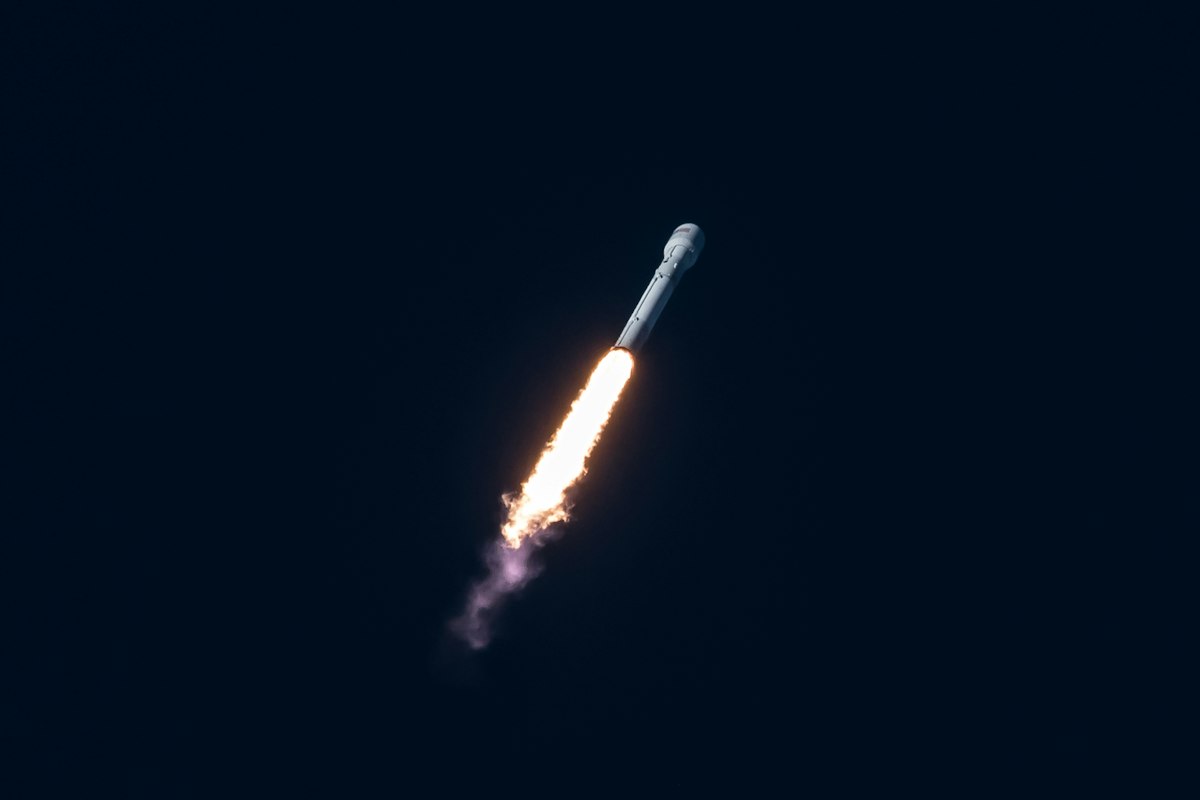
HydroGNSS left Earth. It rode a Falcon 9 rideshare from Vandenberg Space Force Base in California, and every indication suggests Hibidis and SOVA-S will follow the same path into sun-synchronous orbit. That's a high-inclination polar track. It was once the preserve of clandestine reconnaissance satellites because it provides consistent lighting conditions and pole-to-pole coverage, but today it's growing crowded with commercial Earth-observing payloads. And the westward launch trajectory required is steadily transforming Vandenberg from a niche military spaceport into a major commercial hub. For ESA Scout missions, the choice of orbit and launcher is as much a statement of economic intent as a technical necessity, so rideshares on purely commercial terms, with no dedicated European launcher dependency, cut last-mile costs and keep the 35-million-Euro envelope intact.
- HydroGNSS: first Scout, launched November 28 on Transporter-15.
- Hibidis: hyper-spectral biodiversity mission, SITAEL prime contractor.
- SOVA-S: shortwave infrared imager for atmospheric gravity waves.
- NanoMagSat: space weather and local environment interactions.
- Tango: industrial emissions monitoring.
A Portfolio That Signals a New Approach
The picture clarifies. So read these announcements. ESA is assembling a constellation of single-question Scout missions in sun-synchronous orbit, each flying a different sensor but all sharing the same relentless schedule and fiscal discipline. The biodiversity data from Hibidis and the gravity-wave maps from SOVA-S won't compete with the multi-sensor giants of the Earth Explorer line but they'll complement them by filling gaps that were economically unaddressable until now. That's the structural shift the Scout programme introduced and these two missions accelerate. It suggests a future where European Earth science is distributed across a fleet of small, rapid-turnaround assets rather than concentrated in a few billion-Euro heritage platforms that take a generation to design and build.
Hibidis and the New Space Ecosystem
They aren't a one-off. SITAEL's Empyreum bus and the SPARK electric propulsion unit represent a layer of European industrial capability purpose-built for small satellite programmes like those the Scout class validates. With Amos and Vito in Belgium and University of Zurich contributing payload and science expertise, the Hibidis consortium looks like a carefully negotiated commercial venture with a public science mandate, not a traditional institutional project. That blend of academic ambition and industrial cost realism is exactly what the three-year deadline rewards.
SOVA-S: The Weather Model Changer
It's a 35-million-Euro investment. Atmospheric gravity waves carry immense energy from the lower to the upper atmosphere, and SOVA-S is designed to map them routinely, while the shortwave infrared imager will feed data into weather forecast models that currently treat these waves as a poorly constrained variable, so if the mission succeeds the return on a 35-million-Euro investment will be measured in improved forecast accuracy, a payoff that operational meteorologists will feel long before most policymakers notice. But that kind of quiet, everyday impact may ultimately be the strongest argument for repeating the Scout formula again and again.
HydroGNSS demonstrated Scout's concept-to-orbit. So the question's now whether Hibidis and SOVA-S can sustain the momentum and prove that the model works across diverse payloads and consortia. Their launch campaigns will be watched not just for the data they promise but for whether the fixed-price three-year drumbeat can become the new normal for environmental science from space.
Frequently Asked Questions
What are ESA Scout missions?
ESA Scout missions are small, low-cost satellites designed to demonstrate innovative Earth observation technologies and address specific scientific questions.
How do Scout missions reshape Earth science economics?
By reducing development time and costs, they enable more frequent missions and broader participation, making Earth science more accessible and cost-effective.
What is the cost range for an ESA Scout mission?
Each Scout mission is capped at around €30 million, significantly lower than traditional large-scale ESA missions.
What technologies do Scout missions test?
They test novel sensors, miniaturized instruments, and advanced data processing techniques for Earth observation.
How do Scout missions benefit the scientific community?
They provide rapid access to space for new ideas, fostering innovation and complementing larger missions with focused, timely data.

Astrid Berg covers space and astronomy, from missions and launches to the science of the universe. She follows the ongoing effort to explore beyond our planet.
💬 Comments (0)
No comments yet. Be the first!