Rocket Report: Blue Origin New Glenn Explosion; Pentagon Eyes New Launch Site
Rocket Report details Blue Origin New Glenn explosion destroying LC-36A, plus Starship V3 debut, Shenzhou 23 crew, DARPA motor contract, and more.
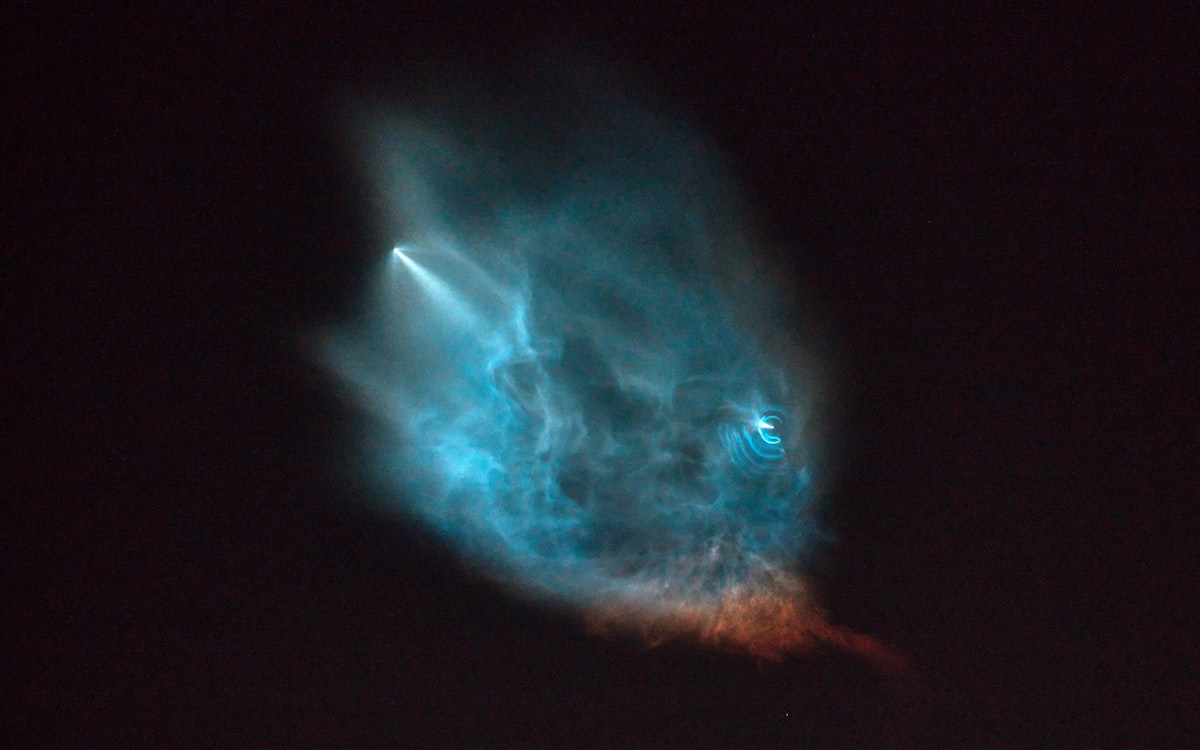
Blue Origin New Glenn explosion Thursday night at Cape Canaveral destroyed much of the company’s sole orbital-class launch pad and will ground the rocket for an extended period. No one fully appreciates the ripple effects yet. The blast erupted after engine ignition during a static fire test at Launch Complex 36A, sending a massive methane-fueled fireball into the Florida sky. NASASpaceflight.com captured the destruction live on its Space Coast Live feed. This is possibly the most dramatic and powerful rocket explosion since the Soviet Union’s N1 rocket was destroyed in 1969.
Blue Origin New Glenn Explosion Rips Through Florida Pad
The booster was supposed to fly next week. Its payload, a batch of Amazon Leo broadband satellites, sat safely inside a hangar, nowhere near the rocket when it let go. This fourth New Glenn mission would have come less than two months after the rocket’s third flight, a cadence Blue Origin had fought years to achieve. Now that timeline is shattered.
The accident is the worst disaster in company's 25-year history, and Blue Origin, founded by Jeff Bezos in 2000, appeared to be turning a corner after enduring delays and growing pains with the orbital-class launcher. The pad is in ruins. The investigation's barely begun, and it's too soon for hot takes, but one thing is certain, the consequences will stretch into months and years.
NASA’s Lunar Timeline Faces New Uncertainty
It's a huge blow. But the failure has major implications for NASA's surging effort to return humans to the Moon before the end of the decade and to build a lunar base. And any prolonged grounding of the heavy-lift New Glenn, which NASA counts on for multiple Artemis campaign elements, puts immense pressure on schedules that already have little slack.
Who Feels the Impact Now
- Amazon’s LEO broadband constellation loses its near-term launch vehicle.
- NASA’s Artemis program faces a fresh, unwelcome variable.
- Blue Origin itself must rebuild both hardware and confidence.
- The Eastern Range at Cape Canaveral loses one of its newest orbital pads for the foreseeable future.
Air Force Chief: We Need Another Heavy Launch Site
Traffic at U.S. military launch sites is approaching max capacity. The nation needs another site capable of hosting heavy and super heavy launches to keep up with growing demand, according to the Air Force’s top officer. The call comes as SpaceX, United Launch Alliance, and soon Blue Origin cram more rockets onto pads along both coasts, squeezing range infrastructure that was designed for a slower era.
No location has been named, and no formal acquisition has begun, but the plea signals a real shift inside the Pentagon. The current sites cannot simply absorb the expanding manifest. Something has to give.
Starship V3 Survives Reentry, Skips Engine Restart
It's mostly positive. The launch was May 22. SpaceX launched the first test flight of its upgraded Starship rocket and Super Heavy booster, and it splashed down on target in the Indian Ocean more than an hour after liftoff from South Texas. But this was the 12th full-scale Starship test flight and the debut of the V3 design, which fared far better than the ill-fated first flights of V1 and V2 in 2023 and 2025.
But there's a catch. Two Raptor engines failed during the launch sequence, one on the 33-engine booster and one on Starship's six-engine upper stage. The booster couldn't perform a guided descent toward the Gulf, and the ship skipped a planned engine restart in space. That unchecked box means the next flight will likely stay on a suborbital trajectory, but heat shield showed real improvement during reentry with fewer signs of damage as it touched down northwest of Australia.
Rideshare Integrators Go Solo on Falcon 9
Exolaunch booked two flights. Two rideshare operators, SEOPS and Exolaunch, are stepping past the standard Transporter and Bandwagon missions by purchasing dedicated SpaceX Falcon 9 launches during the Smallsat Europe industry conference. SEOPS booked one. So their motivation is straightforward: they're creating missions tailored for time-sensitive or non-standard payloads that don't fit the typical rideshare box.
SpaceX's rideshare program's a revolution. But the companies that broker capacity see a market for more control. A dedicated Falcon 9, even if it carries a cluster of smallsats, gives them the flexibility to place unusual satellites in orbits that a standard sun-synchronous or mid-inclination ride simply can't reach.
China’s Rocket Debris Problem Escalates
Chinese launches surge. Driven by Guowang and Spacesail, they're leaving rocket bodies in long-lived orbits, and Jim Shell's analysis shows mass above 800 km climbed from under 100 metric tons to 252 in five years. But unlike most modern operators, China routinely skips the propellant reservation needed to deorbit spent stages after payload separation.
Debris lingers for decades. These constellations sit at higher altitudes where that debris stays, and if China launches 1,000 or more rockets this decade without changing its disposal practices, the already congested environment will deteriorate sharply. But the numbers don't tell the same story as the country's public commitment to space sustainability.
Fresh Crew Flies to Tiangong
The crew docked quickly. Shenzhou 23 spacecraft, launched atop a Long March 2F rocket from Jiuquan on Sunday, carried astronauts Zhu Yangzhu, Zhang Zhiyuan, and Lai Ka-ying, first Hong Kong astronaut, who docked with Tiangong in under four hours. But officials haven't decided who will stay a year, among the longest single stays in orbit, while the other two return in about six months.
Quick Looks Around the Industry
Virgin Galactic Glides Unity Again
VSS Unity flew again. It's an unpowered spaceplane that separated from its carrier jet over New Mexico and glided to a runway landing at Spaceport America for pilot training. But the real goal is its first Delta-class spaceship, expected by summer, and this is the first of several planned glide flights to prepare crews for the Delta ship's test campaign.
“Unity’s glide characteristics and energy-management profile provide an outstanding real-world proxy for our new spaceship,” said Mike Moses, president of Virgin Galactic Spaceline.
RFA Upgrades Helix Engine Before First Flight
RFA tested an upgraded power pack for its Helix engine in Sweden, and the new design will double the thrust of the kerosene-fueled Helix 2.0 without increasing mass or cost, according to COO Stefan Brieschenk. RFA One hasn't left yet. The company applied for a marine license with a no-earlier-than date of July 1, but the original booster was destroyed during a 2024 test firing, and RFA noted, "it's not a launch date just yet.
NASA Orders More Crew Dragon Flights
Starliner isn't certified yet. NASA's adding six more crew rotation missions to SpaceX's contract, each carrying four astronauts, to protect itself from the reality that Boeing's Starliner still lacks certification for regular flights. The next Starliner mission will be cargo-only, so the earliest crewed flight is next year at best. And with the ISS set to retire in the early 2030s, NASA's already reduced its operational Starliner order from six flights to four.
Frequently Asked Questions
What caused the Blue Origin New Glenn explosion?
The explosion occurred after engine ignition during a static fire test at Launch Complex 36A. The blast sent a massive methane-fueled fireball into the sky and destroyed much of the company's sole orbital-class launch pad.
Why is this explosion considered a major disaster for Blue Origin?
The accident is the worst disaster in Blue Origin's 25-year history, destroying much of its only orbital-class launch pad and grounding the New Glenn rocket for an extended period. It shattered the company's recent cadence of launching less than two months after the previous mission.
How does the explosion impact NASA's Artemis program?
NASA's Lunar Timeline faces new uncertainty because the heavy-lift New Glenn rocket, which NASA counts on for multiple Artemis campaign elements, is now grounded. Any prolonged grounding puts immense pressure on schedules that already have little slack.
When did the explosion happen and what was the immediate consequence for the payload?
The explosion occurred Thursday night at Cape Canaveral. The booster was supposed to fly next week with a batch of Amazon Leo broadband satellites, but those satellites sat safely inside a hangar, nowhere near the rocket when it exploded.
Who else is affected by the Blue Origin New Glenn explosion besides the company itself?
Amazon's LEO broadband constellation loses its near-term launch vehicle. NASA's Artemis program faces a fresh variable, and the Eastern Range at Cape Canaveral loses one of its newest orbital pads for the foreseeable future.

Leo Sokolov reports on spaceflight and the companies and agencies racing to reach orbit and beyond. He is captivated by the engineering that makes leaving Earth possible.
💬 Comments (0)
No comments yet. Be the first!