Week in wildlife: baby pangolin, gorilla super-mum, F1 geese
Week in wildlife: from a baby pangolin treated for sinusitis to a gorilla super-mum and Formula One geese, a selection of global wildlife images.
Week in wildlife delivers a collection of moments that refuse to stay within the frame. A gorilla mother cradles her newborn against staggering odds, a baby pangolin receives sinusitis treatment from dedicated medics, and Canada geese spectate at a Formula One race. These aren't from separate planets. But they're all from the same week on this one.
Gorilla Super-Mum Defies the Odds
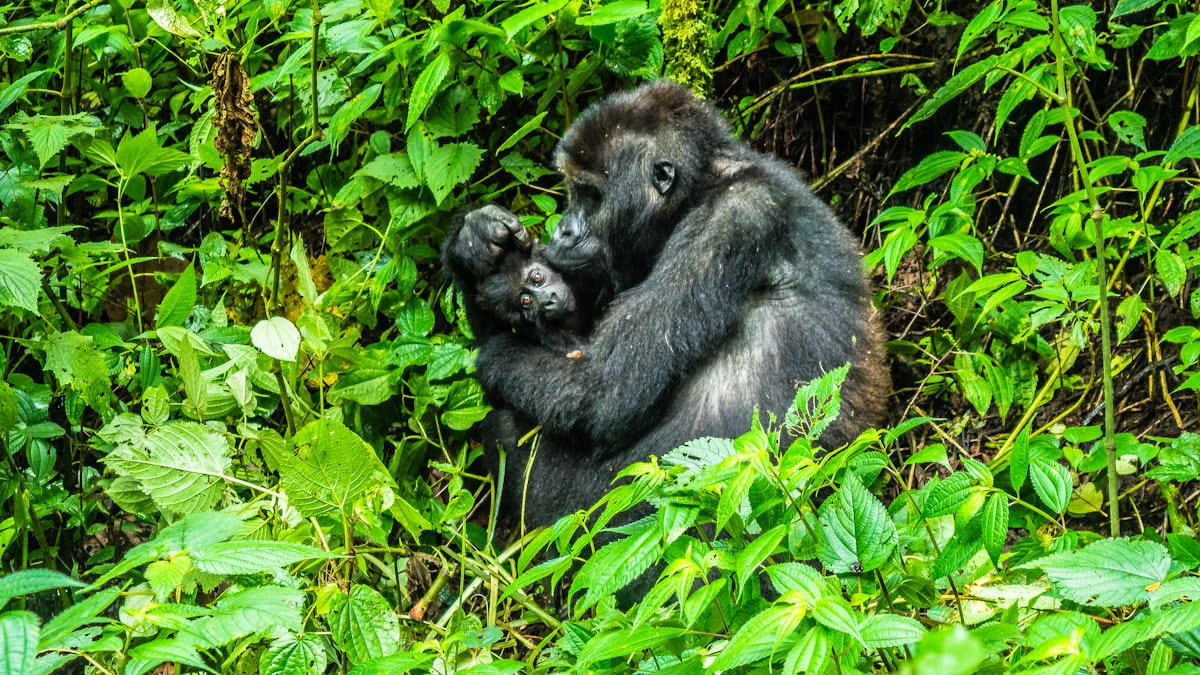
She's a western lowland gorilla. Lengui is in her 30s, but her species generally lives to about 40, and eight years ago her hand was caught in a snare in Congo's wilds, so rescuers had to amputate it.
None of that stopped her.
The Aspinall Foundation captured her on camera cradling her newborn baby. A disabled gorilla, missing a hand, in what should be her twilight years, has given birth and is raising an infant. In the wild. The image is not just sweet. It is a quiet, fur-and-bone rebuttal to every assumption about what a survivor looks like.
Eight Years After the Snare
Snare traps remain a brutal reality for great apes across central Africa. Lengui's story could have ended the day she was caught. Instead, it has entered a new chapter, one where she is both patient and proof that rescue efforts can yield results that unfold for years after the headlines fade.
A Tiny Patient in Indonesia
A baby pangolin with sinusitis? It's not global front-page news. But in Indonesia this week, medics from International Animal Rescue's partner Yiari treated one, and the photograph shows the small scale-covered creature receiving care for what the caption called 'snout trouble.' Pangolins are the most trafficked mammals on Earth. So every individual that gets medical attention instead of ending up in a shipment container represents a small stubborn victory.
The Parakeet Power Couple
Nacho and Trixie are not household names. They are birds. Specifically, they are kākāriki karaka, New Zealand's rarest and smallest species of parakeet. They also happen to be, in the words of their programme leader at the NZ department of conservation, amazing parents.
In their two years together in a captive breeding programme in Christchurch, this single pair has produced more than 10% of the total population. This season alone, they accounted for 33 chicks.
"They're amazing parents. Some pairs might only have one or two nests per season, but these guys just keep going."
That is not a small contribution. When two birds can shift the genetic future of an entire species, the stakes of every nesting season become enormous. The "superbreeders" label is earned.
Nacho and Trixie's Record
The kākāriki karaka programme relies on many birds doing their part. But this pair has rewritten what the programme leader thought was possible. Their output is not slightly above average. It is extraordinary.
Stowaway, Survivor, New Yorker
Basil is a two-year-old British red fox. He hid onboard a ship bound for New York. When he arrived, he carried more than the stress of a transatlantic crossing. He had French heartworm. The Bronx Zoo took him in, treated him, and this week cleared him from quarantine. Basil is now in much better health.
The zoo said it's still assessing a suitable long-term home for him, a British fox treated at an American zoo who's awaiting a permanent address. His week in wildlife reads like a peculiar children's book. But every word is true.
Geese, Peacocks, and Jellyfish
That's Notre Dame Island, Quebec. Canada geese watched the Canadian Formula One Grand Prix there, trackside and unbothered by the noise, the speed, or the spectacle, and the photograph captures them as the most composed spectators at the entire event.
The sea's getting warmer. Dead cannonball jellyfish washed ashore in Santa María Xadani, Oaxaca, Mexico, and specialists and fishermen attribute their proliferation to the high temperatures recorded in the Gulf of Tehuantepec. But not every species is having an easy week. The jellyfish are showing the receipts.
More than 120 wild peacocks have mobbed Punta Marina, a small seaside resort in Ravenna, Italy, after they multiplied rapidly in an abandoned complex during the Covid pandemic. Now the town's divided. So they can't agree on what to do with the oversupply of fowls. It's a pandemic legacy nobody saw coming. Too many peacocks.
More From the Week
The rest of the planet did not sit still. A rapid-fire tour through the other moments that made this week in wildlife:
- A Mabel's orchard orb weaver spider rested in its web in Orlando, Florida, its multicoloured body and appetite for mosquitoes both widely appreciated.
- A wild black-tailed deer buck near Elkton, Oregon, showed off antlers still covered in velvet, the soft, blood-rich tissue that feeds one of the fastest-growing bone types in the animal kingdom.
- Swallow chicks in Gimhae, South Korea, opened their mouths in unison under the eaves of a house, waiting for lunch.
- Fulmars and northern gannets wheeled at Bempton Cliffs in East Yorkshire, captured in a multiple-exposure composite that turns flight paths into choreography.
- A Eurasian scops owl in Balıkesir, Turkey, relied on bark-like plumage to vanish against a tree trunk.
- An osprey ate a large fish atop a tree at Fort De Soto Park in Florida, while a reddish egret, North America's rarest, ruffled its feathers nearby.
- A Canada goose helped a boy fish at Victoria Park in Hackney, London, in an image that is either charming or deeply opportunistic, depending on which species you ask.
A frog emerged at night. It emerged in Taichung, Taiwan. So golden monkeys moved through Volcanoes National Park in Rwanda, fox cubs in Kocaeli, Turkey underwent rehabilitation at Ormanya natural life park, a hammertail, it's also known as a robber fly, waited on a leaf in Juno Beach, Florida ready to ambush prey mid-flight, wild elephants grazed in the Garo hills of Bangladesh, and a snail crawled across a trail in Sejong, South Korea while a runner jogged past.
Week in wildlife is never just about the charismatic stars. It is about the quiet accumulations. The snail crossing a path. The owl that disappears into bark. The spider hanging perfectly still. Every one of them is a story still unfolding, whether anyone is watching or not.
Frequently Asked Questions
What is the baby pangolin story in this week's wildlife roundup?
A baby pangolin was rescued in Senegal after being found clinging to its mother, who had been killed by poachers.
Who is the 'gorilla super-mum' featured this week?
A gorilla named Koko at Bristol Zoo gave birth to her 10th offspring, making her one of the most prolific gorilla mothers in captivity.
What is the 'Formula One geese' story about?
A flock of geese was filmed racing alongside a Formula One car at Silverstone, creating a humorous and unexpected wildlife moment.
What other notable animal was highlighted in the week's wildlife news?
A rare white giraffe was spotted in Kenya, drawing attention to conservation efforts for the endangered species.
Where can readers find more weekly wildlife updates?
The 'Week in wildlife' series is published every Friday on The Guardian's website, featuring global animal stories and photographs.

Eva Koch writes about scientific research and the people behind it, covering the studies and breakthroughs shaping our understanding of the world. She values curiosity and careful evidence in equal measure.
💬 Comments (0)
No comments yet. Be the first!