Why US Seafood Sanctions Loom Over China's Shark Finning
A new petition seeks US seafood sanctions against China for lax shark finning rules, potentially banning $1.5 billion in imports and reshaping global marine conservation enforcement.
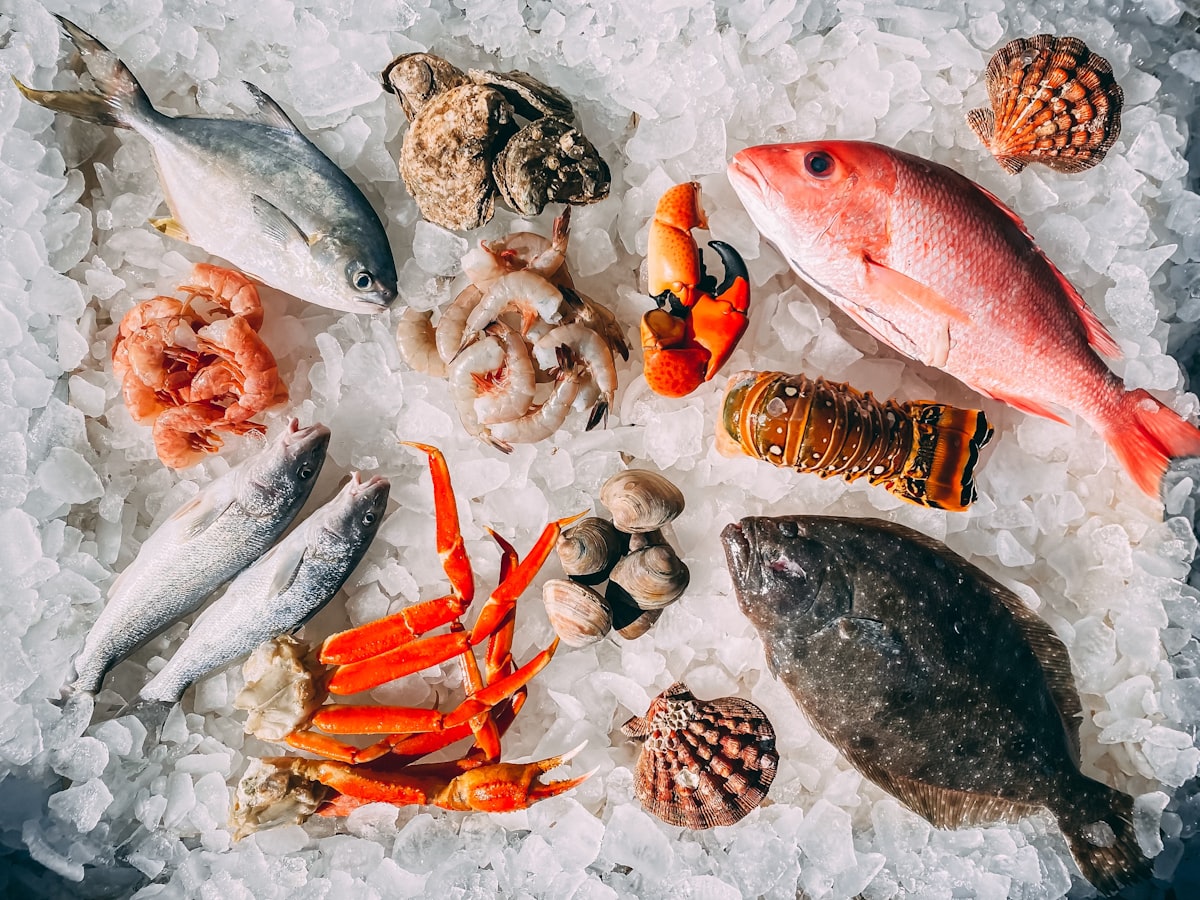
The Center for Biological Diversity, a nonprofit dedicated to protecting endangered species, filed a formal petition this month requesting that the U.S. government consider US seafood sanctions against China for failing to meet American shark conservation standards. The petition argues that China’s widespread practice of shark finning, documented by the Environmental Justice Foundation through crew interviews, continues because Beijing permits fins to be removed as long as they amount to no more than 5 percent of a shark’s bodyweight upon landing. Such ratio-based rules are widely criticized by conservationists as unenforceable and scientifically unsound. If the National Marine Fisheries Service identifies China as having violated the US Moratorium Protection Act, then President Trump could be expected to ban the import of all $1.5 billion of Chinese seafood. That figure gives the filing a gravity that far exceeds a typical environmental complaint. It signals how domestic conservation laws are increasingly being deployed to shape the behavior of foreign fleets, and it places the global seafood supply chain on notice.
Why US seafood sanctions are now a real threat
The threat of US seafood sanctions is not abstract. The petition argues that China’s regulatory framework, which still allows at‑sea removal of fins under a weight‑based loophole, fails to match America’s “fins naturally attached” standard that over 90 other jurisdictions have adopted since the US banned finning in 2000. The Moratorium Protection Act provides a legal avenue to restrict seafood imports from nations whose fishing practices undermine international conservation efforts. By tying the entire $1.5 billion Chinese seafood trade to a single conservation failure, the petition elevates shark finning from a niche environmental concern to a systemic supply chain risk. This kind of mismatch between science‑based management and political compromise is precisely the gap that trade measures are now being designed to close.
So the petition comes as international attention turns to the accelerating collapse of shark populations, which have declined by more than 70 percent since 1970, threatening one‑third of all shark and ray species with extinction. Eighty million are killed annually. They're killed as bycatch or intentionally. The slow reproductive rate of sharks makes them acutely vulnerable to overexploitation. But the Center for Biological Diversity is using the Moratorium Protection Act as a strategic tool, not simply to penalize China but to raise the cost of inaction and force a conversation about comparable standards.
Science versus math: China’s enforcement gap
China's approach has fundamental tension. It's a rule that allows fins to be separated before landing, using a weight ratio as the only safeguard, and it can't account for the biological diversity of shark species. But Alex Olivera, a senior scientist at the Center for Biological Diversity, explained in an email:

“Once the fins are separated from the bodies, inspectors have a nightmare of a time figuring out which fin belongs to which shark, whether protected species are mixed in, or if bodies were just dumped overboard. It turns real enforcement into a math game rather than a secure chain of custody.”
This isn’t a theoretical concern. Official Chinese data from 2023 shows that more than 10,000 blue sharks and nearly 1,700 shortfin mako sharks were discarded by crews in the western and central Pacific region alone. And for species already under pressure, the ratio‑based system provides cover for the conversion of endangered sharks into unidentifiable fins that flow into Hong Kong, the world’s largest shark fin trading hub. DNA analysis of fins imported into Hong Kong between 2014 and 2021 confirmed the presence of at least four CITES‑listed species:
- scalloped hammerhead
- smooth hammerhead
- great hammerhead
- oceanic whitetip sharks
That evidence, cited in the petition, underscores why trade measures are being floated as a corrective mechanism.
US seafood sanctions: a lever for enforcement
The status quo's unacceptable. Moves like this one fit a broader pattern in science-based trade policy, and when diplomatic engagement fails to produce regulatory alignment, the Moratorium Protection Act allows the United States to restrict imports from nations whose fishing practices undermine international conservation efforts. But Olivera noted that “the ideal outcome is for China to adopt shark conservation measures comparable to US law.” The petition doesn't assume sanctions are inevitable and its point, he said, is “to make shark conservation standards real, not optional.” Strip away the diplomatic language and the calculation's straightforward. A lack of comparable shark conservation standards places billions of dollars in seafood trade at risk.
The deeper question is positioning. By targeting China’s entire $1.5 billion seafood export sector, the petition links shark finning to a much larger economic conversation. This is a calculated escalation. It says that the cost of noncompliance should not be borne by a single commodity but by the entire industry that benefits from the same fleet operations. For research funders and policy makers, the petition reads as a test case for how environmental standards can be embedded into trade architecture, a theme that will only grow as ocean health declines.
A shadow fleet and its human cost
Behind the fin trade lies a network of distant‑water vessels where interviews by the Environmental Justice Foundation in 2024 and 2026 have documented forced labor, beatings, and grim working conditions.
- 80 percent of crew members on Chinese vessels in the Southwest Indian Ocean reported engaging in shark finning.
- 60 percent of those on squid jiggers in the Southeast Pacific said they saw sharks returned to the ocean without their fins.
One Indonesian crew member described how sharks were lifted, fins cut off, and the still-living animals thrown back. Another called it 'sadistic.' So these accounts place human rights abuses at the center of an illegal wildlife supply chain that Beijing hasn't been able or willing to dismantle.
The Chinese Embassy told Inside Climate News that Beijing “is deeply committed to science‑based conservation and sustainable use of international fisheries resources” and that it “attaches great importance to protecting the lawful rights and interests of workers and always asks Chinese companies to abide by laws and regulations.” But that framing misses something. The spokesperson did not reference sharks, finning, or the threat of US seafood sanctions at all, and stated the government was “not familiar with the specific situation” regarding the petition. The silence on the conservation issue, amidst strong language about labor protections, suggests a disconnect that US policy levers are designed to expose.
US seafood sanctions and the supply chain
EJF revelations show petition's logic. But the same vessels that engage in forced labor also fin sharks and evade inspectors, and the seafood that's entering global markets from these fleets carries a toxic mix of illegality and abuse. A US seafood sanctions regime wouldn't just restrict shark fins. It'd apply pressure to the entire Chinese seafood export industry, which relies heavily on the distant-water fleet. For supply chain managers and investors in the seafood sector, this is a signal to scrutinize traceability systems and sourcing risks far more seriously. And the petition highlights what due diligence professionals have long known: environmental and social risks in seafood are intertwined, and you can't ignore one without imperiling the other.
It's not just the US. But over 90 jurisdictions already require fins naturally attached, yet China's status as the world's largest fishing nation means its practices set a de facto standard for what's tolerable on the high seas. If US seafood sanctions become a reality, they'd create a powerful incentive for other nations to strengthen their own enforcement and for trading partners to demand higher standards from Chinese exporters. The petition isn't just about one country; it's about resetting the baseline for what constitutes acceptable behavior in the global ocean commons.
What US seafood sanctions mean for the ocean
She says it's a symptom. Heidy Martínez, a shark scientist and science communicator, explained, "Shark finning is part of that larger story, a reflection of just how deeply we have exploited our oceans." "The level of demand we place on the ocean simply cannot continue." But her point, borne out by the data in the petition, is that the extinction risk to sharks isn't solely a conservation issue but a warning about the sustainability of the entire wild‑capture seafood industry. The same overfishing and bycatch threats that affect sharks also degrade the ecosystems that support commercially valuable fish stocks.
It's a shock. The immediate impact on $1.5 billion in trade would be a shock if the United States follows the petition's logic and imposes US seafood sanctions. But the longer-term signal is more important, demonstrating that domestic conservation laws can be applied globally with real economic force. For science policy makers this is the frontier where funding for enforcement technology, stock assessments, and traceability can amplify regulatory ambition. For investors it's a reminder that environmental liabilities in supply chains aren't abstract. The petition may end with a request for sanctions but begins with a demand for standards that, if adopted, could help pull an ancient lineage back from the edge of collapse.

Eva Koch writes about scientific research and the people behind it, covering the studies and breakthroughs shaping our understanding of the world. She values curiosity and careful evidence in equal measure.
💬 Comments (0)
No comments yet. Be the first!