Inside the Astronaut Fitness Equipment Race
The astronaut fitness equipment race is intensifying as European consortia and a Danish aerospace firm compete to supply next-generation exercise devices for the Gateway Space Station and lunar missions.
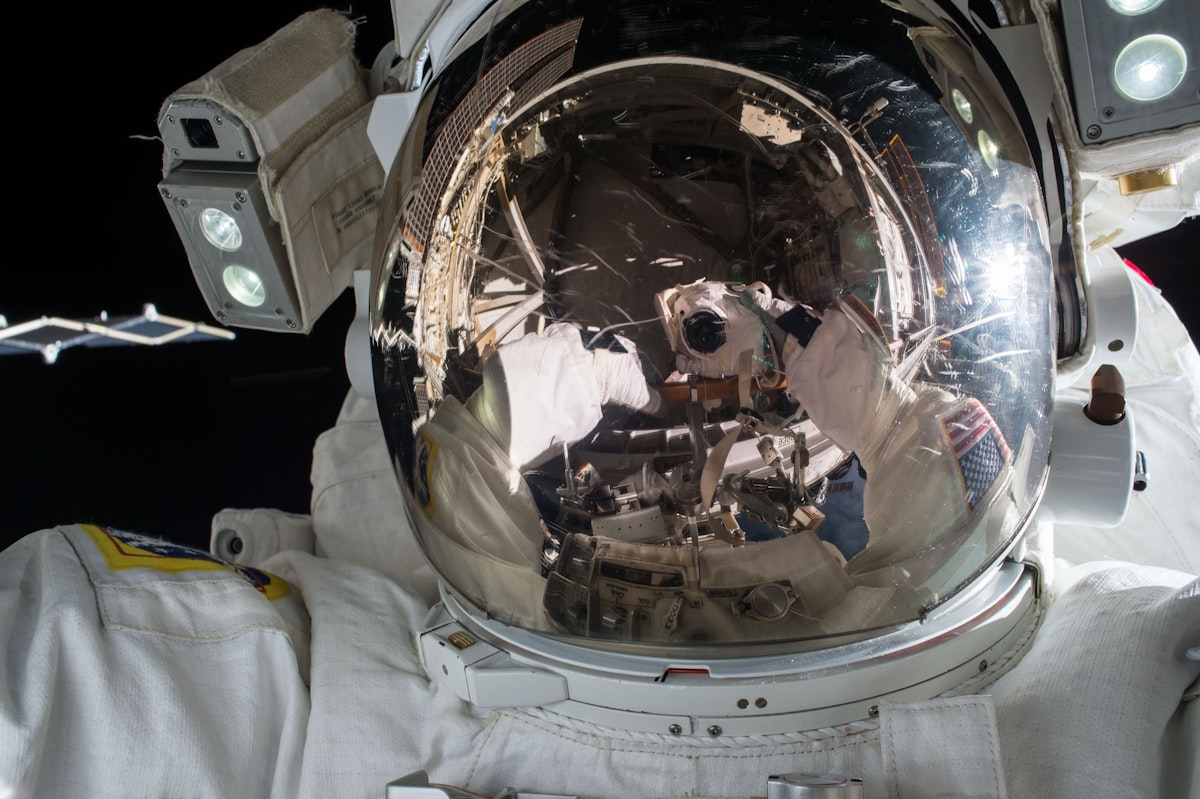
It's a proxy battle now. The data from an Olympic medallist rowing at 8,500 metres inside a parabolic aircraft doesn't just measure muscle output, it signals which nations and firms might secure contracts for lunar bases and commercial space stations. The British invention HIFIm, or High-Frequency Impulse for Microgravity, is the latest hardware to enter this contest. It's tested in 22-second bursts of weightlessness with backing from the European Space Agency, NASA, the Canadian Space Agency, and the UK Space Agency. The exercise equipment astronauts eventually take to the Moon will shape crew health, daily schedules, and even the volume of science a mission can produce. So today's parabolic flights carry far more than a prototype rowing attachment.
A Gym for the Moon
Three European consortia competed. They aimed to design an exercise unit for the planned Gateway space station, and that effort produced the HIFIm device. But Nasa has effectively sidelined Gateway. Dr Meganne Christian, a reserve astronaut and senior exploration manager at the UK Space Agency, sees no loss of urgency. She frames this as a “really exciting moment in space exploration”. The hardware developed for Gateway can instead flow to new space stations and “the lunar surface” through Artemis missions that intend to return to the moon “this time to stay”. That pivot reorients the astronaut fitness equipment race around dual‑purpose machines that work in orbit and on regolith, rewarding designs that are compact, power‑independent and versatile enough to handle hundreds of exercise variations. A device that trims daily workout time from two hours to half an hour, as HIFIm’s inventor John Kennett claims, would effectively buy back ninety minutes of astronaut labour per person per day. It's a productivity leap mission planners treat like extra payload capacity.
Why Every Minute Counts
Exercise is vital. Attention on exercise hardware sharpens alongside the ongoing Artemis II flight, and the crew carried a flywheel exercise device, a relatively simple piece of kit, yet NASA's called work on next-generation devices vital for astronaut health. In microgravity, skeletons and muscles begin to diminish immediately because the mechanical forces that load bones on Earth vanish. Dr Dan Cleather, professor of strength and conditioning at St Mary's University and member of HIFIm team, stresses without resistance exercise astronauts lose coordination and cardiovascular fitness, making them less able to perform functional tasks. The current regime on the International Space Station demands about two hours of every crew member's day. But Christian notes that trimming that time "frees up more time for astronauts to do science and experiments which could cause a whole range of breakthroughs." So the fitness equipment race isn't simply about the strongest pulley or vibration damper, it's about radically redistributing crew time, a currency every agency knows becomes exponentially dearer the further from Earth a mission travels.
The Fight for Half an Hour
That framing misses something. The HIFIm device operates without electrical power, isolates vibrations to protect fragile experiments and vessel structures, and handles 300 exercises from rowing to jumping in a single small package, so it's no incremental upgrade. The comparison with the E4D is instructive. That device, commissioned by ESA and developed by the Danish Aerospace Company, is also under astronaut testing and boasts resistive training, cycling, rowing and rope pulling, paired with motion capture technology for performance tracking. Both concepts pursue the same prize: a single multipurpose platform that eliminates the floor-space and power-draw of the current mixed inventory. The British team, however, leans heavily on a design philosophy that emerged from a Pilates studio and a cancer recovery client. John Kennett, a former aircraft engineer who runs that studio, says the International Space Station missed a trick by not adopting a device that could load the body across a richer movement library without electric motors. His machine was fabricated at Pinewood Studios by special-effects engineers whose credits include Star Wars, James Bond and the Oscar-winning film 1917. That's not cinematic window dressing. It signals that the supply chain for flight-qualified hardware is stretching beyond traditional aerospace primes, inviting talent from film, sports and rehabilitation science into the astronaut fitness equipment race.
“Isn’t it every kid’s dream to be an astronaut? It’s an opportunity to be able to do something really different.” , Matthew Wells, Olympic bronze medallist and HIFIm tester
Who Shapes Lunar Life
It's de facto pre‑selection arena. Multiple agencies, ESA, the UK Space Agency, NASA, and the Canadian Space Agency, participate in a single test programme; ESA funds parabolic flights, the UK provides senior exploration expertise, and the others observe or collaborate. So if astronauts can stay lean, strong and aerobically fit in thirty minutes a day without imposing electrical loads or vibrations on the habitat, mission architects can shrink gym volumes, simplify power budgets and schedule easier handovers between science and exercise. Whoever delivers a device that wins operational approval for a lunar‑surface or orbital‑habitat baseline won't only secure manufacturing contracts but will also set the ergonomic standard against which future modules are designed. That cascading architectural influence is what makes a competition among three European consortia, or between a Danish firm and a British inventor, more than a procurement tale. It's a fight to define the daily rhythm of life beyond Earth.
The Hardware That Could Travel Farthest
Several traits lift HIFIm into strategic view. Kennett’s device has already been through jumping‑setup tests on parabolic flights; the latest round added rowing, an exercise that cannot be faithfully replicated under gravity because the body’s relationship to the seat and handle changes entirely in freefall. Matthew Wells, the Olympic rower who pulled against the HIFIm harness, called the sensation “off the chart. The most outrageous so far.” Those twenty‑two‑second microgravity windows are short, but the data they yield fuels a machine‑learning‑type refinement of the resistance curves that Cleather’s monitoring technology captures. E4D, meanwhile, brings motion capture, an approach that appeals to agencies wanting real‑time biomechanical feedback. Both paths reflect a clear market truth: the astronaut fitness equipment race will be won not by the heaviest iron but by the most intelligent loop between human movement and software‑controlled resistance, all packaged in vibration‑isolated, powerless hardware that can survive lunar dust.
What Comes Next
Parabolic campaigns and astronaut evaluations continue. Christian suggests the devices they're readying will let people "stay" on the Moon. It implies permanent surface infrastructure. The HIFIm consortium has flagged its rowing attachment as requiring further weightless testing, and the E4D team still needs to prove its rope-pulling and cycling modes in long-duration simulations. But every exercise variant that passes microgravity validation adds another layer of intellectual property and flight heritage, gradually narrowing the field until an agency makes a formal selection for a habitat or lander. So the astronaut fitness equipment race will, over months and flights, translate the 300‑exercise claim and the half‑hour workout promise into either a procurement contract or a lesson for the next prototype. What is certain is that the man in the plane rowing without water, high above the Atlantic, is pulling for much more than a personal best. His strokes are measuring whether a small British machine can outpace a continent‑wide field and land on the Moon.
- HIFIm: powerless, vibration‑isolated, 300 exercises, 30‑minute daily workout, tested on parabolic flights.
- E4D by Danish Aerospace Company: resistive, cycling, rowing, rope pulling, motion capture, astronaut testing under ESA commission.
- Artemis II flywheel: a simpler device, highlighting the need for next‑generation replacements.
Frequently Asked Questions
What is the astronaut fitness equipment race?
It's the competition among space agencies and companies to develop the most effective exercise gear for astronauts to combat muscle and bone loss in microgravity.
Why is fitness equipment crucial for astronauts?
Without regular exercise, astronauts lose bone density and muscle mass rapidly, so specialized gear is needed to maintain their health during long missions.
What types of equipment are used on the ISS?
The ISS uses a treadmill, a stationary bike, and the Advanced Resistive Exercise Device (ARED) for weightlifting-like resistance.
How does microgravity affect exercise equipment design?
Equipment must be compact, durable, and use mechanisms like vacuum cylinders or flywheels to provide resistance without relying on gravity.
What innovations are being explored for future missions?
New designs include virtual reality-enhanced workouts, artificial gravity centrifuges, and compact all-in-one machines for Mars missions.

Eva Koch writes about scientific research and the people behind it, covering the studies and breakthroughs shaping our understanding of the world. She values curiosity and careful evidence in equal measure.
💬 Comments (0)
No comments yet. Be the first!