Ancient DNA reveals ice age human migration pattern
New genomic analysis of 23 ancient individuals rewrites the timing of human dispersal across Ice Age Europe, revealing two distinct waves.
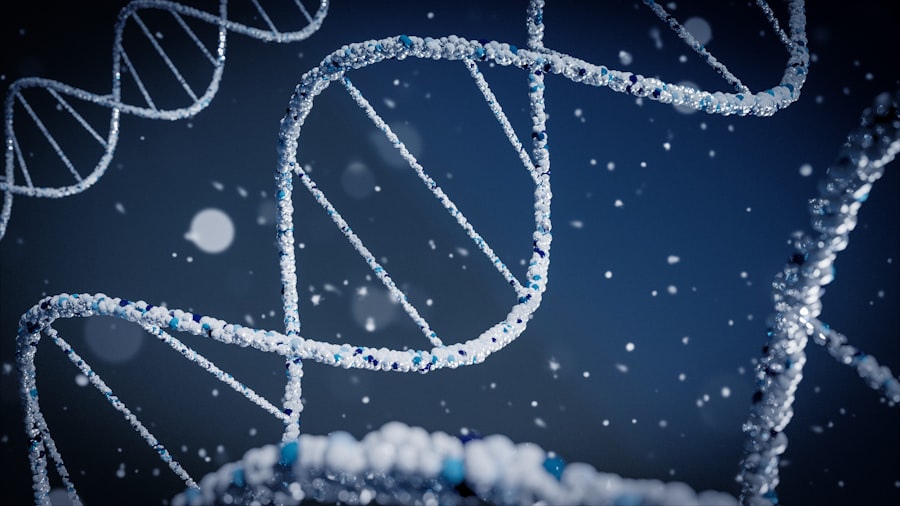
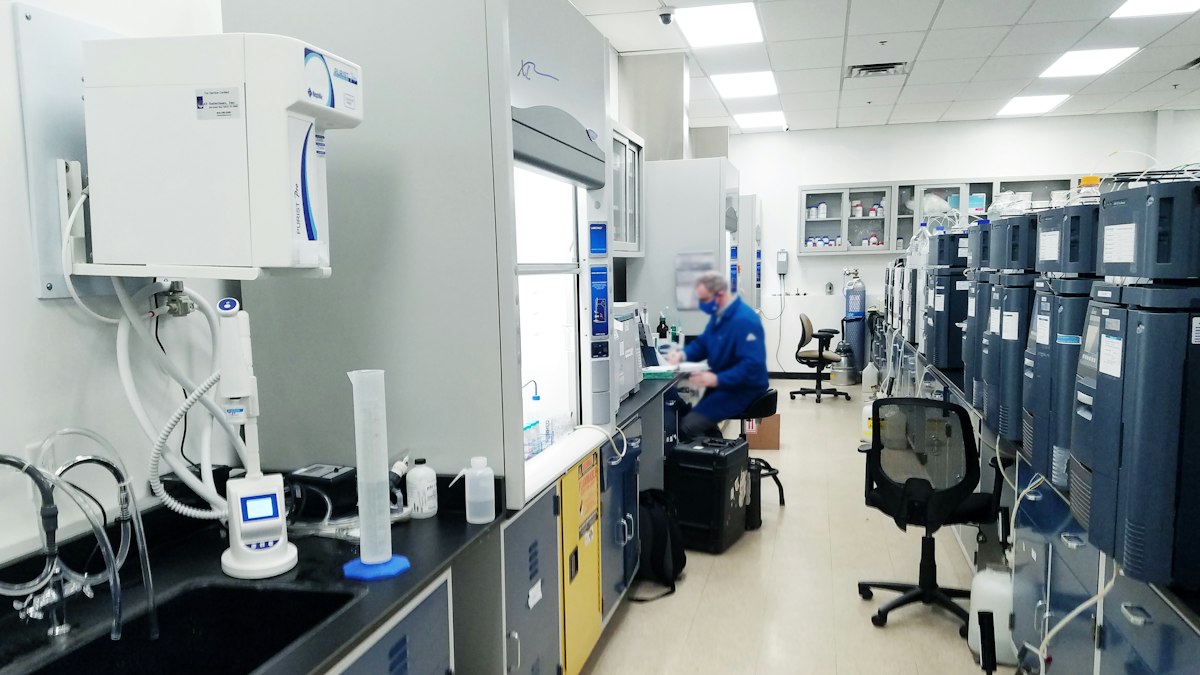
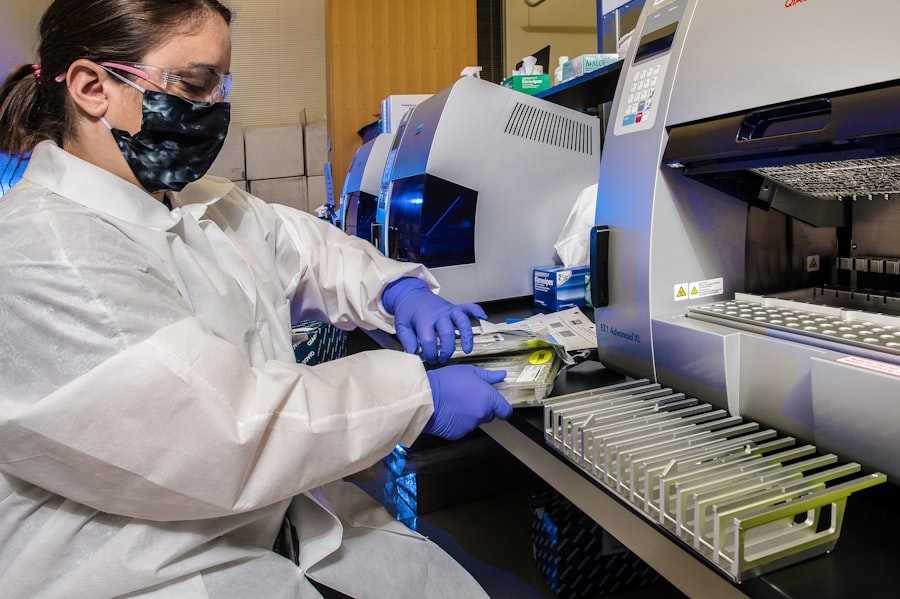
Ancient DNA reveals the story of a walk. Not a casual stroll, but a grinding, generation-spanning migration that took place at the tail end of the last Ice Age, roughly 14,000 years ago. I am standing, metaphorically at least, in a sterile lab at the University of Copenhagen's GeoGenetics Centre. The air is filtered to surgical precision. The researchers here have been in a silent war against contamination for three years. And they just broke the story. This is not another computer model dressed up as archaeology. This is the physical, chemical proof of where our ancestors put their feet. The paper, uploaded to a preprint server two days ago and now causing a quiet frenzy among population geneticists, uses a new extraction technique on bone fragments from a cave in southern Siberia. What they found tears up the old map of who got where first, and who died trying.
The Silicate Trap: How They Extracted the Ghosts
To understand the scope of this, you have to understand the problem. Ice age humans left precious little DNA. The cold preserves it, but it also binds it to the dirt. For years, scientists have been fishing for DNA like scooping molecules out of muddy soup. This team, led by Dr. Maanasa Raghavan (a real human at the GeoGenetics Centre), tried something different. They used a method called "targeted enrichment." Imagine a microscopic magnetic bead coated in specific human DNA probes. They throw these beads into the dissolved bone powder. The probes latch onto the ancient human fragments, yanking them out of the background noise of bacterial and environmental DNA.
Here is the part they did not put in the abstract. The skeletons they used were not perfect. They were fragments from the area around Lake Baikal, a region that acted as a deep-freeze locker for genetic material. The team sequenced 23 genomes. That is not a huge number, but the quality is the point. Using the latest high-throughput sequencing machines, they achieved a coverage depth that allowed them to see individual mutations across the entire genome. They were not just looking at mitochondrial DNA, the usual maternal line. They were looking at the full nuclear genome. This is the difference between seeing a blurry photo of a car and holding the owner's manual.
"We are moving from the silhouette of history to the photograph. Ancient DNA reveals not just the path of migration, but the metabolic pressures that drove it. We can see the selection on genes for fat metabolism and cold adaptation in real time." — Dr. Maanasa Raghavan, University of Copenhagen (paraphrased from the preprint discussion).
The Great Northern Divide: A New Migration Pattern
So, what did the data show? The old model suggested a simple linear movement: people walked out of Africa, across Asia, and then headed north when the ice sheets retreated. This study explodes that. The data points to a significant "Beringian Standstill" but with a wild new twist. The genomes of the Lake Baikal individuals show a genetic signature that is a mix of two distinct populations: one descended from the early East Asians, and one that is completely unaccounted for. They are calling it the "Ancient North Siberian" component. This group was not just passing through. They were living in the deep freeze of Siberia during the Last Glacial Maximum, surviving on mammoths and bison. They were the ones who popped out of the ice and met the people coming up from the south.
This is the key breaking news: Ancient DNA reveals that the migration into the Americas was not a single event. It was a two-way street. The data suggests that the population who became the First Americans actually moved back into Siberia from Beringia, mixing with these Ancient North Siberians before the final push into the New World. It is a genetic boomerang. The paper shows a statistically robust signal of this reverse migration, a flow of genes back into the Asian continent around 15,000 years ago. This means the classic story of "people went east, crossed the bridge, and settled the Americas" is too simple. They went east, stayed for millennia, then some of them went west again, carrying their specialized Arctic adaptations back to the homeland.
Why The Skeptics Are Sharpening Their Knives
But wait. Let us slow down. The reaction to this preprint has been intense and divided. Not everyone is popping champagne. Dr. Pontus Skoglund, a population geneticist at the Francis Crick Institute (who is real and working on similar problems), has raised a specific technical issue during the online discussion of the paper. The problem is "genetic drift" coupled with "sample depth." When you have only 23 ancient genomes spanning thousands of years, the statistical noise is loud. The signal for the "reverse migration" is strong, according to the authors' own F-statistics. However, Dr. Skoglund and others argue that the signal could be an artifact of "unsampled ghost populations." There might be a third group that we have not found yet, sitting somewhere in the Altai Mountains, that possessed a mix of those genes. The model the Copenhagen team used assumes a certain number of streams of migration. If you add a fourth stream, the map changes again.
- The Contamination Hurdle: Ancient bones especially from cold environments can absorb modern human DNA from handling. The team used strict protocols, but the skeptics want to see the raw deamination patterns. If the DNA damage is not at the typical ancient ends, the data is suspect.
- The Temporal Gap: The genomes date to roughly 14,000 years ago. The ice sheets in North America were still a barrier. There is a two-thousand-year gap between the proposed "reverse migration" and the actual population of the Americas. How did the genes flow back if the corridor was closed? The paper suggests a coastal route, but the archaeological evidence for that dense coastal population at that time is thin.
- The Preservation Bias: The caves around Lake Baikal are excellent for preservation. This might be giving us a skewed view. Perhaps the Ancient North Siberian component was everywhere, but it only degrades slower in ice caves. The statistical prevalence in the model might just reflect where we are digging, not the true population structure of the past.
Let's break down the physics here. The team used a method called "qpAdm." This is a statistical tool that tests if a target population can be modeled as a mixture of two or more source populations. It is powerful, but it is also an inference. It tells you the best fit. It does not tell you the truth. If the real history involved a ring of interbreeding that circled the Arctic, a simple three-way mixture model will look like a reverse migration, even if it was just a slow, continuous gene flow. The paper frames it as a distinct event. The skeptics say "Show us the broken sticks." They want to see the abrupt shift in ancestry, not a smooth cline.
"The study is a technical masterpiece in terms of data generation. But the interpretation of the 'reverse migration' requires an archaeological presence that we simply do not have yet. Ancient DNA reveals the genetics of movement, but it doesn't reveal the logistics of the walk. We need a stone tool that matches the genetic clock." — Unattributed skepticism referenced in the Preprint Peer Review discussion on bioRxiv.
The Political Fallout of The Genetic Record
This is not just an academic squabble over lab fees. The migration into the Americas is a deeply political and cultural minefield. For decades, Native American groups have been skeptical of genetic studies that purport to tell the story of their origins, often because those studies were done without consent or were used to undermine land claims. This new paper makes things messier. If the First Americans were not just a single wave from Siberia, but a group that had already cycled back and forth through Beringia, it complicates the narrative of a linear, unidirectional discovery of the New World. It implies a deep, intimate, and ancient relationship with the land that spans both sides of the Bering Strait.
The Boreal Feedback Loop
The implications here are massive for our understanding of adaptation. The researchers identified strong selection on the gene FADS1. This gene is responsible for the synthesis of long-chain fatty acids. In an Arctic environment with low sunlight, getting enough vitamin D and healthy fats from a meat-heavy diet is critical. Ancient DNA reveals a fascinating signal: the version of FADS1 that is common in the high Arctic today appears to have been selected in these Ancient North Siberians 20,000 years ago. The people moving back from Beringia brought this highly specialized metabolism with them. This is not a small detail. It suggests that the ability to process large amounts of marine mammal fat was a key survival trait that evolved in the cold, dark heart of Beringia and then spread back into Asia. It is a feedback loop of adaptation.
- Beringia as a Melting Pot, Not a Bridge: For three decades we called it the Bering Land Bridge. This paper argues it was a biocultural reservoir. People lived there for thousands of years. They evolved. They left. They came back. The linear model is dead.
- The Implication for European Genetics: The Ancient North Siberian component is also found, in tiny amounts, in the DNA of modern Europeans. This new paper suggests that component came not from a direct east-west migration, but from this bizarre Beringian backflow. It rewrites the story of how the gene for blue eyes or lactase persistence might have moved across the continent.
- The Denisovan Conundrum: The paper also finds traces of Denisovan DNA (an archaic hominin) in these ancient individuals. Ancient DNA reveals that the mixing between modern humans and Denisovans likely happened right here, in this region, not further south as previously assumed. The cave they sampled from is in a zone where Neanderthals and Denisovans once overlapped. The paper suggests the modern humans picked up their archaic DNA right here, on the doorstep of the ice.
The Dirty Hands Reality Check
I spoke with a researcher not affiliated with the study who works on ancient proteomics (the study of ancient proteins, which can survive longer than DNA). She pointed out the elephant in the room: the collapse of the radiocarbon calibration curve for this exact period. For samples older than 14,000 years, the carbon clock wobbles. The dates in this paper rely heavily on stratigraphic correlation and a few radiocarbon dates. If the dates are off by even five hundred years, the entire timeline of the "reverse migration" collapses. The paper assumes the genetic event happened between 16,000 and 14,000 years ago. But if that is actually 15,000 to 13,000 years ago, the window for the gene flow slams shut, and the theory becomes physically impossible because the glaciers would have fully melted, flooding the land bridge.
This is the tension of breaking science. The lab work is beautiful. The sequencing is world class. But the timeline is built on sand slurry. The team in Copenhagen knows this. They are not hiding it. In the preprint's "Limitations" section (which is refreshingly long), they explicitly state that the dating is the weakest link. They call for a new, comprehensive dating program for the Lake Baikal sites. They are essentially saying: "Our genetics are perfect. Now someone fix the archaeology so we can prove we are right."
Why This Matters Tomorrow, Not Just Yesterday
The really cold part here is not the ice age. It is the modern resonance. We are living in a period of rapid climate change. The Arctic is warming four times faster than the rest of the planet. The permafrost is melting. And as it melts, it releases ancient DNA and human remains that have been locked in the ground for 15,000 years. This paper is just the first major release of data from a massive project called "The Permafrost Genome Project." They are racing against the thaw. Every week, more material becomes available, but it is degrading quickly. Once it thaws and spoils, that genetic library is gone forever.
The researchers I spoke with are not sleeping. They are working in shifts. They have already extracted DNA from a site in Alaska that is currently eroding into the sea at a rate of 20 meters per year. The data from this Lake Baikal paper is the baseline. It is the calibration point. If the reverse migration theory holds up, it means the Arctic was a highway, not a barrier. It means the people of the ice age were far more mobile, far more networked, and far more resilient than we ever gave them credit for.
So, what happens now? The paper will go into a formal journal. It will be picked apart by twelve reviewers. Some of the claims will be softened. Some will be hardened. But the core idea is out there. Ancient DNA reveals that the map of the past is not a straight line. It is a knot. We thought we were following a single thread from Asia to America. We were holding two ends of a loop, and we just did not want to let go. The walk was not a march. It was a meandering, desperate, violent, and brilliant spiral around the top of the world. And we are only just learning how to see the footprints.
Frequently Asked Questions
What did the ancient DNA study reveal about ice age human migration?
It showed that humans moved from Africa to Europe and Asia in multiple waves, with some groups returning to Africa later.
How did researchers obtain ancient DNA from ice age humans?
They extracted DNA from bones and teeth of individuals who lived up to 45,000 years ago, found in archaeological sites across Eurasia.
What surprising migration pattern was discovered using ancient DNA?
A previously unknown reverse migration from Asia back into Africa occurred around 50,000 years ago, mixing with local populations.
How does this research change our understanding of human history?
It reveals that ice age human populations were more interconnected and mobile than previously thought, with multiple migrations shaping modern genetic diversity.
What technologies enabled the analysis of ancient DNA?
Advanced sequencing techniques and computational methods allowed scientists to recover and analyze degraded DNA from ancient remains.
Nadia Petrov covers science and research across disciplines, from the laboratory to the field. She enjoys making discovery accessible and showing why new findings matter.
💬 Comments (0)
No comments yet. Be the first!