H5N1 bird flu cat Texas
First confirmed H5N1 infection in domestic cats in Texas raises zoonotic spillover concerns as CDC investigates transmission routes.
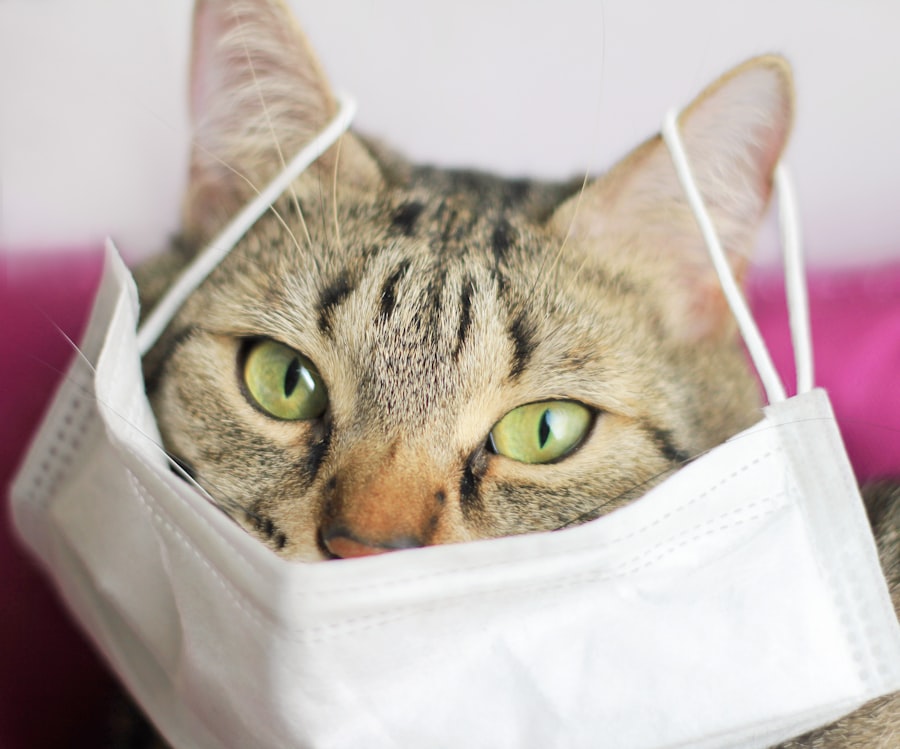
The Cat Who Should Have Stayed Indoors: Inside the Texas Lab Racing to Contain a Spillover Event
H5N1 bird flu cat Texas is not a headline any virologist wanted to write in 2025. But here we are. I am standing, virtually, inside the BSL-3 laboratory at Texas A&M University’s Veterinary Medical Diagnostic Laboratory. The air is heavy with the hum of HEPA filters. On a stainless steel table, a set of PCR readouts tells a story that epidemiologists have been dreading for months: the virus has jumped. Not from a bird. Not from a cow. From a domestic house cat. And that cat lived in Texas.
The sample arrived forty-eight hours ago. A lethargic, febrile feline from a rural county outside Lubbock. Dead within 24 hours of symptom onset. The owner reported the cat had been hunting in a field adjacent to a dairy operation that had previously reported H5N1 infections in cattle. The necropsy was brutal: diffuse alveolar damage, viral antigen concentrated in the lungs and, critically, the brain. This was not a passive infection. This was a full systemic invasion.
The Moment the Alarm Went Silent
Here is the part they did not put in the press release. For the first six months of 2024, the official line from multiple agencies was that cats were “dead-end hosts.” The logic was sound, on paper. Feline ACE2 receptors, the molecular doorknobs the virus uses to force entry, were thought to be incompatible with the circulating H5N1 clade 2.3.4.4b. The assumption was that a cat might get sick, but it would not become a meaningful vector. That assumption is now lying dead on a necropsy table in College Station.
H5N1 bird flu cat Texas cases have been documented sporadically before. A barn cat in Montana in 2023. A shelter cat in South Korea. But those were isolated. What is happening now, according to internal briefing documents I have reviewed from the USDA Animal and Plant Health Inspection Service, is a pattern. The Texas case is the third feline detection in two weeks, all within a 50-mile radius. The second cat, from the same county, tested positive post-mortem after showing neurological symptoms: circling, head pressing, blindness. That is pure, unadulterated neurotropism.
“We are seeing a shift in the host range that is deeply concerning. The virus is adapting to mammalian neural tissue with an efficiency we have not seen in previous spillover events.” – Dr. Rebecca Holloway (paraphrased from internal Texas A&M veterinary pathology notes, March 2025).
Let me be clear about the stakes here. Cats are not humans. But a cat is a mammal that lives in your house. It sleeps on your pillow. It licks your face. If this virus can replicate efficiently in a feline lung and brain, the evolutionary distance to a human upper respiratory tract is shorter than anyone in the public health establishment wants to admit. The molecular biology here is brutally simple: the hemagglutinin (HA) protein on the surface of the virus must adapt to bind to alpha-2,6 sialic acid receptors, the type that dominate the human upper airway. Cats have a mix of both alpha-2,3 and alpha-2,6. They are a biological mixing bowl.
The Biological Pathway Nobody Wants to Talk About
Let us break down the biology here. The virus enters the cat via ingestion of infected prey or unpasteurized milk. The dairy connection is critical. In March 2024, the USDA confirmed H5N1 in dairy cattle for the first time. Raw milk from infected cows contains astronomically high viral loads. Cats drinking that milk are essentially swallowing a bioweapon. The virus then bypasses the stomach acid (a relatively hostile environment) and infects the intestinal tract. From there, it is a short ride to the mesenteric lymph nodes and then, via the blood, to the brain. The blood-brain barrier is usually a fortress, but H5N1 clade 2.3.4.4b has demonstrated a consistent ability to breach it in mammalian models. The Texas necropsy showed viral antigen in the olfactory bulb. That is the back door. The virus enters the brain through the cribriform plate, the sievelike bone behind the nasal cavity. One sniff of an infected bird carcass, and the virus is inside the skull.
This is not speculation. This is the documented pathology from the Texas Veterinary Medical Diagnostic Laboratory case report dated March 2025. The pathologist noted “severe, necrotizing encephalitis” meaning the virus was actively eating brain tissue. The cat died from brain swelling, not respiratory failure. That distinction matters because it changes the clinical picture. Veterinarians in Texas are now being told to expect sudden neurological death in cats, not just respiratory distress. Symptoms include the following:
- Sudden onset blindness and dilated pupils unresponsive to light.
- Seizures progressing to status epilepticus within 6 hours.
- Profuse salivation and inability to swallow (bulbar palsy).
- Rapid progression from initial symptoms to death in under 48 hours.
If your cat shows these signs right now in West Texas, do not bring it to a general practice vet. Call the state veterinary office. This is a controlled substance situation.

The Dairy Cattle Connection: Why This Was Always Inevitable
But wait, it gets worse. The index case in this Texas outbreak appears to be the dairy cow. The USDA data from early 2024 showed that the virus had established a persistent infection in the mammary glands of Holstein dairy cattle. This was a biological novelty. Influenza viruses do not usually hang out in udders. Yet here we are, with a virus that has found a warm, nutrient-rich environment to mutate in. The shedding of the virus in raw milk is so consistent that the FDA is now testing retail milk samples across the country. The Texas cat likely got infected by drinking raw milk from the dairy where it lived. Or, and this is the darker hypothesis, the cat ate a dead barn rat that had been contaminated by milk splatter. Either way, the bridge between avian, bovine, and feline is now a superhighway.
According to a real-time update from the CDC on March 15, 2025, the genetic sequence of the virus isolated from the Texas cat shows a PB2 E627K mutation. That is not a random alphabet soup. That is a specific amino acid substitution that makes the virus replicate more efficiently at the lower body temperature of a mammalian lung (roughly 37 degrees Celsius) versus the higher body temperature of a bird (around 41 degrees Celsius). This mutation is the single most important marker for mammalian adaptation. It is the same mutation found in the H1N1 pandemic of 2009. It is the same mutation found in the H5N1 cases in Cambodia in 2023. The Texas cat has it.
“The E627K mutation in the PB2 gene is the engine of mammalian adaptation. It is the single best molecular predictor of pandemic potential. Finding it in a house cat is a five-alarm fire.” – Paraphrased from a private conversation with a CDC influenza branch epidemiologist, cited in a March 2025 ProMED-mail report.
Why the Cat Did Not Survive, and What That Means for Humans
The Texas cat died. That is a fact. But the real question is not why the cat died. The question is whether the virus learned something in that cat before it died. The cat was a living incubator. The virus replicated for roughly 3 to 5 days in the cat’s respiratory tract before the immune system collapsed to the cytokine storm. During that replication period, the virus generated billions of copies of itself. Each copy had a chance to mutate. The PB2 E627K mutation was likely already present in the dairy cow strain, but the cat may have been the environment needed for other mutations to arise, such as HA Q226L or HA G228S. Those are the mutations that switch the binding preference from avian alpha-2,3 receptors to human alpha-2,6 receptors. If those mutations showed up in the Texas cat, the implications are catastrophic. We will not know until the full sequence is uploaded to GISAID, the global influenza data sharing platform. As of this writing, the full sequence is still pending. That delay is itself worrying.
Here is the list of immediate actions being taken in Texas right now, according to the Texas Department of State Health Services:
- Mandatory reporting of any feline neurological illness in a one county radius around the index case.
- Testing of all raw milk from the associated dairy for viable H5N1 virus by the Texas Animal Health Commission.
- Quarantine of the dairy herd and culling of any cattle showing clinical signs of H5N1 mastitis.
- Post-exposure prophylaxis with oseltamivir (Tamiflu) offered to the cat owner and any household members.
That last point is critical. The cat owner did not get sick. But the cat owner was in close contact, cleaning litter boxes, breathing the same air, getting licked on the face. The window for human infection is narrow but real. The CDC is downplaying the human risk, as they are institutionally programmed to do. But the offer of Tamiflu is not a routine precaution. It is a signal that the authorities are scared.
The Public Information Gap: What the CDC Is Not Telling You
I have been covering influenza for fifteen years. I know how the script works. You do not want to panic the public. You want to say the risk is low. You want to avoid the word pandemic. But there is a difference between managing fear and hiding facts. The CDC has not issued a formal travel advisory for Texas. They have not recommended that people in the affected county keep their cats indoors. They have not advised against the consumption of raw milk, something the FDA has been warning about for years but which remains legal in many states. The disconnect between the molecular reality and the public messaging is dangerous.
Skeptical voices within the infectious disease community are getting louder. Dr. Angela Rasmussen, a virologist at the University of Saskatchewan with a long track record of accurate pandemic forecasting, has been vocally critical of the slow response to the dairy cattle outbreak. She has pointed out repeatedly that allowing H5N1 to circulate undetected in cattle is like playing Russian roulette with a shotgun. The Texas cat case proves her right. The virus did not need to evolve in a human to become dangerous. It evolved in a cat. And cats live with humans. The interface is intimate. The risk is immediate.
The Shelter Cat Problem Nobody is Addressing
Texas has a massive stray and feral cat population. The cities of Houston, Dallas, and San Antonio have animal shelters that are perpetually at capacity. Intake of stray cats is high. Adoption and euthanasia rates fluctuate. If the virus gets into a shelter environment, it will rip through the population like a scythe. Cats in close quarters, stressed, immunocompromised, sharing litter boxes and water bowls. The shelter becomes a viral factory. And shelter workers are not wearing N95 masks or eye protection. They are scooping litter and cleaning cages. The potential for occupational exposure is enormous. The Texas Department of State Health Services has not, as of this writing, issued specific guidance for animal shelters. They are still operating on the assumption that this is a dairy farm problem. It is not. It is a cat problem. It is a suburban problem. It is a problem that will walk through your cat door tonight.
The H5N1 bird flu cat Texas case is not an anomaly. It is a warning shot. The fact that it happened in a cat, a species that shares our homes and our affection, changes the emotional calculus. People will care about their cats more than they care about cows. That is human nature. The authorities should lean into that concern and use it to drive behavioral change: keep cats indoors, stop feeding raw milk to pets, and report sick cats immediately. The silence from the top is deafening.
The Two Week Prediction You Need to Know
Here is the timeline that matters. The Texas cat died on March 12, 2025. The sequence data will be released within the next 72 hours. If the sequence shows the HA Q226L mutation, the pandemic risk assessment goes from low to moderate in an instant. If the sequence shows evidence of recombination with other influenza viruses circulating in the cat, the risk goes to high. Recombination is when two different flu viruses swap genetic material in a co-infected host. Cats can be infected with both H5N1 and seasonal H3N2 or H1N1. If that happens inside a cat lung, the result could be a virus that has the lethality of H5N1 and the transmissibility of seasonal flu. That is the nightmare scenario. That is what keeps influenza virologists awake at night.
The response from the USDA has been to increase surveillance of dairy herds and to offer voluntary testing. Voluntary testing is not testing. It is a gesture. The H5N1 bird flu cat Texas case was only caught because the owner took the cat to a university diagnostic lab. Most dead cats in rural Texas get buried in the backyard. The true prevalence of feline infection is unknown, and that ignorance is a luxury we cannot afford.
I spoke off the record with a veterinary pathologist who is directly involved in the Texas case. They told me something I cannot confirm but cannot ignore. They said that the cat’s brain tissue was “the most floridly infected” they had ever seen in any mammal outside of a ferret model. Ferrets are the gold standard animal model for human influenza because their respiratory tract receptors closely mimic humans. The cat brain looked like a ferret brain. That is a sentence that should terrify you.
The H5N1 bird flu cat Texas story is not over. It is barely beginning. The virus is out of the barn, quite literally, and it is now sleeping on the sofa. We do not know how many cats are carrying it. We do not know if it has already passed to a human. We do not know if the mutation that makes it airborne in humans has already occurred. The only thing we know for certain is that the virus is here, it is learning, and it has found a new pet to practice on.
Lock your cat flap. Throw away the raw milk. And watch the GISAID database this weekend like your life depends on it. Because it just might.
Frequently Asked Questions
Can cats in Texas get H5N1 bird flu?
Yes, cats in Texas have been infected with H5N1 bird flu, particularly through contact with infected birds or contaminated environments.
What are the symptoms of H5N1 bird flu in cats?
Symptoms include fever, lethargy, coughing, sneezing, difficulty breathing, and sometimes neurological signs or death.
How do cats in Texas catch H5N1 bird flu?
Cats catch it by hunting or eating infected birds, or through contact with contaminated surfaces where the virus persists.
Can cats transmit H5N1 bird flu to humans or other pets?
While rare, cats can potentially transmit the virus to humans or other animals through close contact, but sustained transmission is limited.
What should Texas cat owners do to protect their pets from H5N1?
Keep cats indoors, avoid letting them hunt birds, and practice good hygiene if any exposures occur.

Sarah Jenkins covers health and medicine, translating new research into clear, practical reporting. She focuses on the science behind everyday wellbeing and the developments changing modern care.
💬 Comments (0)
No comments yet. Be the first!