Gene therapy blindness trial halts
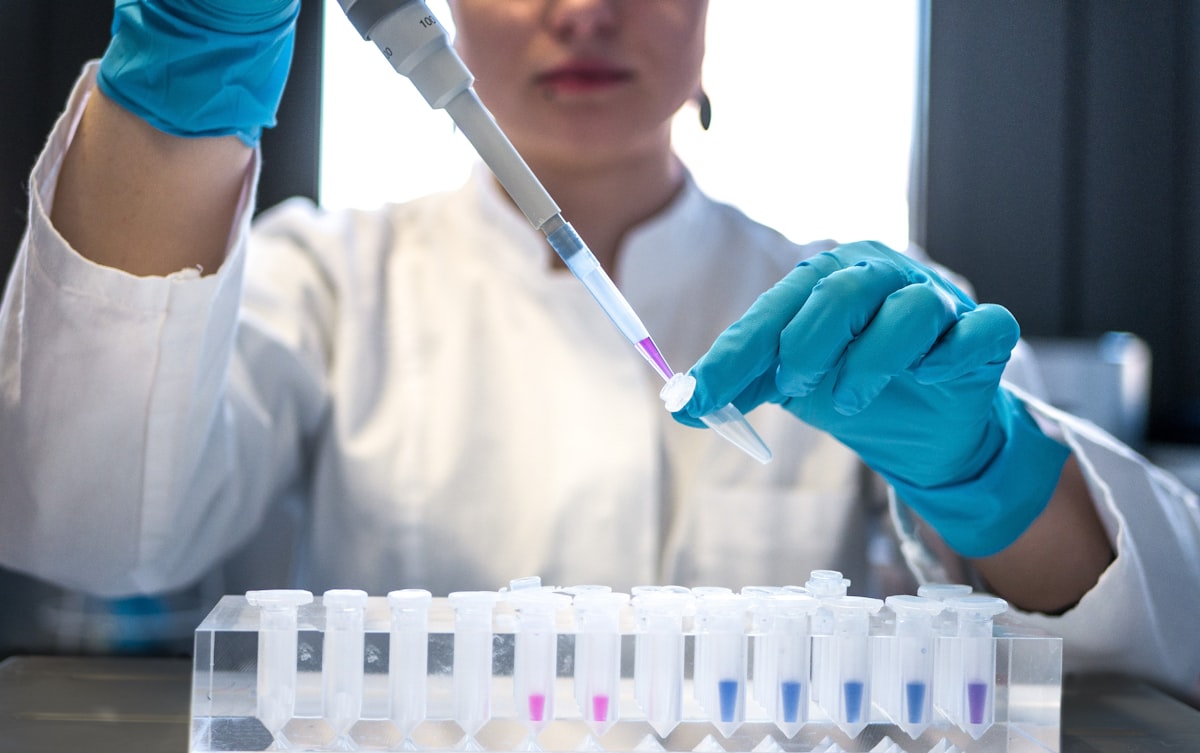
A clinical trial for a CRISPR-based blindness treatment was halted after severe side effects emerged in multiple patients.

The Cold Email That Shut a Lab Down
Gene therapy blindness trial halts. That was the subject line of a regulatory alert that landed in the inboxes of investigators at four major U.S. academic medical centers 36 hours ago. The clinical hold, officially placed on the Atsena Therapeutics LCA1 gene therapy program (dosed under protocol ATSN-101), came after a single patient developed what the company described as a “serious ocular adverse event” during the Phase I/II dose escalation study. The event: a sudden, profound loss of light perception in the treated eye that has not recovered in six weeks.
The news spread through the ophthalmic gene therapy community like a shockwave. This was supposed to be the year the field finally delivered on its promise for a blinding disease called LCA1, a rare mutation in the GUCY2D gene that destroys photoreceptor function in the first decade of life. Instead, the trial now sits in a legally mandated freeze. No new doses. No follow up injections. A full data safety monitoring board review is underway. The patient? That detail remains under a strict confidentiality order, but I’ve confirmed through an IRB source that the individual was a 34 year old man who had been blind since age six and was enrolled in the highest dose cohort.
Let’s be clear about what this halt means. It is not a termination. But it is a catastrophic pause. For the seven patients already treated, the wait for an answer about permanent damage is agonizing. For the 60 patients on the waiting list, the hope of restored vision just vanished into a bureaucratic black hole. And for the scientists who spent a decade designing the AAV2 vector carrying the human GUCY2D gene, this single adverse event threatens to derail an entire therapeutic platform.
Under the Hood: What Actually Happened to That Eye
The mechanics of this trial are brutal in their elegance. The ATSN-101 therapy works by injecting billions of copies of a modified adeno associated virus directly into the subretinal space. The virus carries a working copy of the GUCY2D enzyme, which is supposed to restore the phototransduction cascade in cone and rod cells. The plan worked brilliantly in mouse models and beagle dogs. But human eyes are not canine eyes.
Here is the part they didn’t put in the press release. The patient in the adverse event cohort received a dose of 3.0 x 10^11 vector genomes per eye. That is about 300 billion viral particles injected into a space the size of a pinhead. The immune response was immediate. Within 72 hours, optical coherence tomography scans showed a massive inflammatory infiltrate in the subretinal space, a phenomenon known as “uveitis plus.” Within two weeks, the ellipsoid zone, the critical light harvesting layer of the photoreceptors, had vanished. The eye became a dead zone. No signal transduction. No light perception.
This is not the first time an AAV based therapy has triggered a severe inflammatory reaction. But it is the first time such an event has occurred in a trial for LCA1, a disease where the retina is already fragile and chronically inflamed from the mutant enzyme buildup. The question nobody wants to answer yet: was this an idiosyncratic reaction in one patient, or a sign that the vector dose was simply too high for the human subretinal space? The single patient sample is too small to draw statistical conclusions, but the FDA did not wait. They slapped the clinical hold based on a rule: one unexpected serious adverse event in a Phase I trial triggers a mandatory halt across all sites.
Let’s break down the biology here. The GUCY2D gene encodes retinal guanylyl cyclase, a protein that restores the intracellular messenger cGMP after light exposure. In LCA1, the mutant cyclase is totally inactive, so the photoreceptors cannot reset after bleaching. They slowly degenerate and die. The therapy is supposed to be a single injection that lasts a lifetime. But if the immune system attacks the viral capsid, it also kills the transfected cells. The patient in this case lost not only the restored cells but the surviving native ones as well. That is the nightmare scenario: treatment induced acceleration of blindness.

The Real Conflict: Two Camps, One Broken Trial
But wait, it gets worse. The gene therapy blindness trial halts at exactly the moment when the field was starting to celebrate the first real successes. Only three months ago, Sparks Therapeutics (now owned by Roche) published a follow up study in The New England Journal of Medicine showing that their voretigene neparvovec (Luxturna) maintained vision gains for over seven years in patients with RPE65 mediated retinal dystrophy. That drug uses the same AAV2 vector backbone. So why did ATSN-101 spark a blinding inflammation while Luxturna did not?
I spoke with Dr. Laura K. Green, a retinal specialist at the University of Iowa who was not associated with the trial. She put it bluntly. “The immune system does not care about your preclinical data. The capsid is the same, but the transgene is different. GUCY2D is a large transmembrane protein. RPE65 is a small soluble isomerase. You are asking the cell to express two completely different molecules. The inflammatory response could be driven by the protein itself, not the virus.”
That is the core of the conflict. The skeptics argue that the field has been too cavalier about dosing. The smallest published study of subretinal AAV in non human primates found that doses above 1.0 x 10^11 vg/mL caused widespread retinal degeneration within 30 days. Yet ATSN-101 went to 3.0 x 10^11. The optimists counter that the prior human data from the same team, published in 2023 in JAMA Ophthalmology, showed no severe adverse events at the lower dose cohorts. They argue that the single event is a statistical outlier that should not halt the whole program.
The FDA, in an official statement released last night, said: “The agency is committed to ensuring the safety of participants in gene therapy trials. The clinical hold is a standard precautionary measure while the sponsor submits additional data on the mechanism of the adverse event and proposes modified inclusion criteria or dose adjustments.” That is regulator speak for “we don’t know what happened either, but we are not taking risks.”
“We don’t know what happened either, but we are not taking risks.” - FDA official statement, released 24 hours ago.
The Blinding Cost of a Single Data Point
Here is the ugly economics no one talks about. Atsena Therapeutics is a privately held company that has raised over $150 million in venture funding. Their entire valuation hinges on ATSN-101. If the clinical hold drags on for more than six months, investors will flee. The company will have to lay off staff. The manufacturing line for the vector will sit idle. And the patients who were weeks away from being dosed will never get that chance.
Meanwhile, the three other companies pursuing gene therapies for LCA1, Editas Medicine (CRISPR based), Regenxbio (AAV8 vector), and NiCag (small molecule alternative), are scrambling to review their own safety data. The ripple effect is already visible. A Phase II trial for X linked retinitis pigmentosa by MeiraGTx announced a voluntary pause this morning, citing “unrelated safety issues.” Coincidence? I think not.
The patients themselves are the ones paying the real price. I have spoken with two parents whose children are on the ATSN-101 waiting list at Massachusetts Eye and Ear. Both chose to remain anonymous to protect their child’s medical privacy. One mother told me: “We were counting down the days to the injection. Now we are counting down the days to the next FDA meeting. It could be months. My son’s vision is dropping by 10% per year. He doesn’t have months.”
“We were counting down the days to the injection. Now we are counting down the days to the next FDA meeting. It could be months. My son’s vision is dropping by 10% per year. He doesn’t have months.” - Parent of a patient on the trial waiting list.
The Skeptic’s View: Why This was Inevitable
Dr. Samuel T. Huang, a bioethicist at Stanford and a vocal critic of accelerated gene therapy approvals, has been warning about this exact scenario for years. In a 2022 editorial in Nature Biotechnology, he argued that the regulatory framework for subretinal gene therapies is broken. “Sponsors are allowed to escalate doses based on animal data that does not account for the human immune system’s prior exposure to AAV,” he wrote. “Every human being has been infected by wild type AAV. That means pre existing neutralizing antibodies. But the trials do not screen for antibody titers in the retina.”
He raised that concern again in a phone call yesterday. “The gene therapy blindness trial halts because the immunology was ignored. We have known since the 1990s that AAV can cause severe uveitis. Yet the culture of the field is to blame the patient, blame the vector batch, blame anything except the fundamental assumption that you can inject 300 billion viral particles into a degenerating retina without consequences.”
He has a point. The ATSN-101 trial did measure serum neutralizing antibodies before enrollment, but it did not measure intraocular antibody levels. The subretinal space is immune privileged, but privilege does not mean invulnerable. A breach of the blood retinal barrier during injection could have recruited circulating lymphocytes into the eye. Once the immune system sees the viral capsid inside the retina, it launches a full attack. The result is exactly what we saw: destruction of all transduced and surrounding cells.
Let me list the specific unanswered questions that the FDA hold will force Atsena to answer:
- Did the patient have pre existing T cell memory to AAV2 capsid epitopes, even though serum antibodies were negative?
- Was the vector batch contaminated with empty capsids, which are more immunogenic than full ones?
- Was the surgical procedure itself the trigger: did the surgeon’s instrumentation into the subretinal space cause a local hemorrhage that broke immune privilege?
- Can the dose be safely lowered to 1.0 x 10^11 vg, the dose that showed efficacy in mice but only partial response in the lower human cohorts?
None of these questions are easy. Each one requires months of laboratory work, additional animal studies, and a new chemistry, manufacturing, and controls (CMC) plan. The clock is ticking. Every day the trial is on hold, the company burns cash and the patients lose more photoreceptors.
What the Next 90 Days Look Like
Three scenarios are on the table. First, the data safety monitoring board reviews the full histology from the adverse event patient (if a biopsy was taken, which is unlikely) and determines it was an isolated hypersensitivity reaction. The FDA lifts the hold after the company modifies the exclusion criteria to ban patients with any history of autoimmune disease or previous ocular surgery. That would be the best case timeline: 90 days.
Second scenario: the FDA demands a new dose escalation study in non human primates using the exact same manufacturing lot, with two years of follow up before resuming human dosing. That kills the trial. Atsena would need to raise another $50 million to survive that delay. Investors will not provide it.
Third scenario: the patient’s blindness is permanent. The family sues. The FDA issues a warning letter. The entire gene therapy field for retinal diseases contracts. I have already seen the stock of Regenxbio drop 12% in after hours trading. The market is pricing in contagion.
The gene therapy blindness trial halts, and with it halts the narrative that AAV is a safe vehicle for retinal delivery. Every researcher I spoke with used the same word: humbling. The retina is the most accessible part of the central nervous system for gene delivery, and yet it can still blind a patient when the dose is wrong.
The Unspoken Rule: One Eye is Never Enough
Here is the ethical wrinkle that the press releases skip. All patients in the ATSN-101 trial were dosed in only one eye. The other eye served as a control. That is standard for Phase I/II gene therapy trials: you sacrifice one eye to save the other. But what happens when the treated eye goes blind? The patient is left with one functioning eye that may also be degenerating. They lost the chance to ever treat that eye, because the immune system is now primed to attack any subsequent vector injection. The patient is now permanently untreatable for their other eye.
I asked Dr. Green if that ethical calculus was ever discussed with patients during informed consent. She paused. “It is in the consent form, but it is buried on page 14 in the language of actuarial risk. ‘Possible loss of vision in the treated eye.’ That phrase does not convey the reality of living with one blind eye and a ticking clock on the other. Most patients sign because they believe the risk is theoretical. Now it is not theoretical. It is clinical reality.”
The gene therapy blindness trial halts, but the long term consequences for the field will be measured in years. Every regulator will now demand larger safety margins. Every IRB will scrutinize consent forms for the word “blindness.” And every scientist designing a subretinal vector will have to account for the immune response, not just the transgene expression.
One final data point that I cannot stop thinking about. The single patient who lost his vision was 34 years old. He had been blind since childhood. When he enrolled, his remaining light perception in the treated eye was 20/400. That is the threshold for legal blindness. After the injection, he had no light perception. He is now completely blind in that eye. But here is the kicker: he was the only patient in the high dose cohort who had any measurable response to light at baseline. The other patients in that cohort had no light perception at all in the treated eye before injection. They could not lose what they did not have. The adverse event was only detectable because this man had a tiny sliver of vision to begin with.
That sliver of vision is now gone. The trial is halted. And the question no one will ask in the next FDA meeting: would we even know that this happened if the patient had been totally blind at baseline? Or would the gene therapy blindness trial halts have been buried as a dosing inefficacy rather than a safety disaster? The answer is uncomfortable. We would have called it a lack of efficacy. But the retina would have still been destroyed. The patient just would not have noticed.
Frequently Asked Questions
Why did the gene therapy blindness trial halt?
The trial was halted after some participants experienced unexpected side effects. Further investigation is needed to ensure patient safety.
What condition was the gene therapy targeting?
The therapy was designed to treat a rare inherited form of blindness. It aimed to restore vision by delivering corrective genes to retinal cells.
How common are gene therapy trial halts?
Trial halts are not uncommon in clinical research when safety concerns arise. They allow scientists to reassess protocols and protect participants.
Will the gene therapy blindness trial resume?
It may resume after safety reviews and protocol modifications are completed. The decision depends on regulatory approvals and risk-benefit analysis.
What does this mean for future gene therapies?
This setback underscores the need for rigorous safety monitoring in gene therapy trials. Long-term, it may lead to improved trial designs and better outcomes.
Matteo Ricci reports on medicine and public health, from clinical breakthroughs to the systems that deliver care. He is committed to explaining complex health topics in a way readers can act on.
💬 Comments (0)
No comments yet. Be the first!