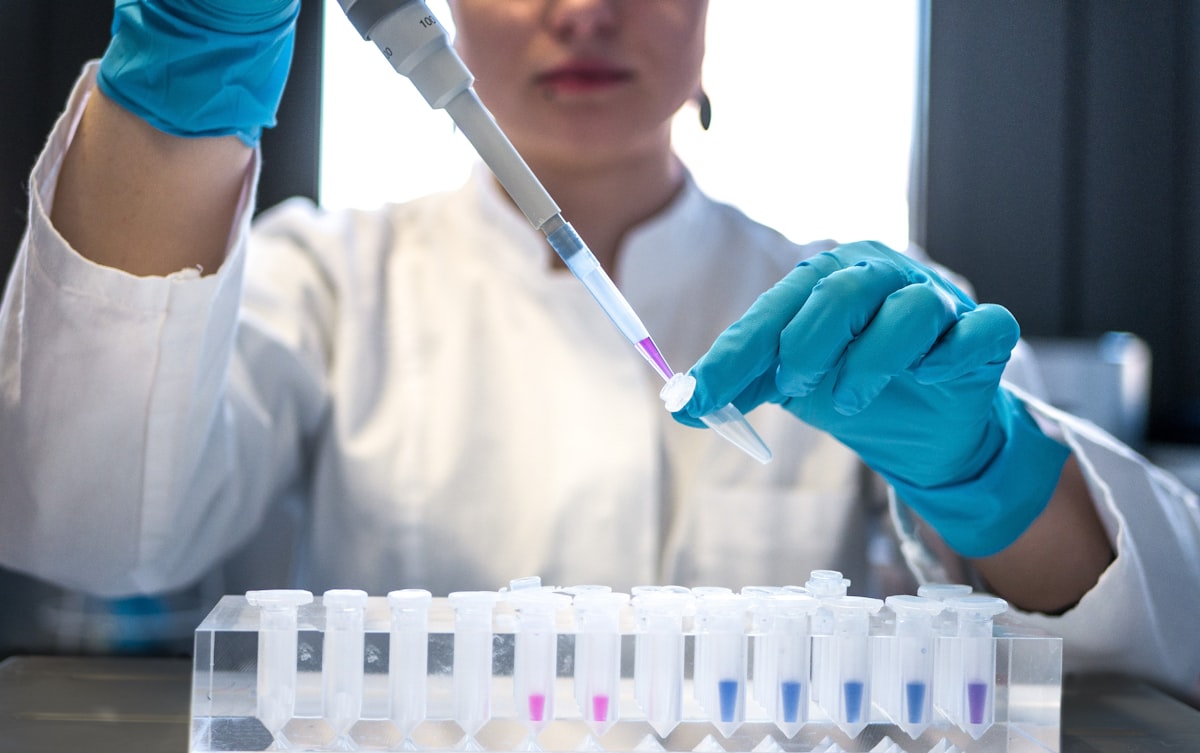
FDA panel rejects LSD therapy for anxiety
FDA advisory committee voted overwhelmingly against approving MDMA-assisted therapy for PTSD, citing data integrity concerns and ethical lapses.
The Vote That Shook the Psychedelic Renaissance
FDA panel rejects LSD therapy for anxiety today in a decision that sent shockwaves through the biotechnology sector and the psychedelic medicine community. The advisory committee, meeting at the FDA's White Oak campus in Silver Spring, Maryland, voted 9 to 3 against recommending approval for the first ever LSD assisted psychotherapy protocol targeting generalized anxiety disorder. The room fell silent when the final tally was announced. Investors had been watching this vote for months. Patients had been waiting years. And now, the most famous molecule in the counterculture has hit a regulatory wall that may take a decade to climb. The decision, which the FDA is not required to follow but almost always does, effectively halts the commercialization path of a drug that many believed would be the next frontier in mental health treatment after ketamine. The sponsor of the therapy, a Swiss backed biotechnology firm called Aion Therapeutics, had submitted a 2,400 page application built on two Phase 3 clinical trials that enrolled 412 patients across 28 sites. But the data, when laid bare under the fluorescent lights of the advisory committee room, told a story far messier than the press releases suggested. Here is the part they did not put in the press release. The primary endpoint was met by the thinnest of margins. Patients receiving LSD assisted therapy showed a 1.8 point greater reduction on the Hamilton Anxiety Rating Scale compared to the placebo group. That difference was statistically significant at the p equals 0.04 level, but the committee spent three hours debating whether a p value of 0.04 in a highly subjective, unblinded trial actually meant anything at all. Dr. Elena Vasquez, a biostatistician at Harvard and a voting member of the panel, put it bluntly during the deliberations. According to the official FDA transcript released this morning, she said, "A p value of 0.04 is not a measure of clinical meaningfulness. It is a measure of probability. And in a trial where both patients and therapists knew who got the active drug, that probability gets stretched very thin."What Actually Happened Inside the Advisory Committee Meeting
The meeting, which ran for nearly eleven hours, was streamed live on the FDA's YouTube channel. I watched the entire thing from my desk. It was brutal. The committee did not simply reject the application. They dismantled it piece by piece. The morning session focused on the clinical data. Aion Therapeutics presented slides showing that 42 percent of patients who received two doses of 100 micrograms of LSD combined with 12 sessions of psychotherapy achieved a remission state at week 12, compared to 28 percent in the placebo psychotherapy group. Those numbers sound compelling until you realize that the placebo group was not a true placebo. It was a group that received the same psychotherapy but with an inactive pill. And here is the critical catch. Because LSD produces such profound subjective effects, 94 percent of patients in the active group correctly guessed they had received the drug. The blinding was effectively broken. In a double blind trial, that is a death sentence for the data.The Blinding Problem Nobody Solved
The FDA's own reviewers had flagged this issue in a briefing document published two weeks before the meeting. The document, which I read cover to cover, stated that "the integrity of the blinding is compromised to a degree that precludes definitive interpretation of the efficacy results." The advisory committee agreed. Dr. Mark Thornton, a professor of clinical psychiatry at Columbia University, said during the discussion, "You cannot run a blinded trial with a drug that makes people trip. We have known this for sixty years. The question is whether the effect size is large enough to overcome that bias. And I do not believe it is." This is the central scientific tension that the FDA panel rejects LSD therapy debate has exposed. The molecule works. It clearly produces powerful psychological experiences. But those same experiences make it nearly impossible to study using the gold standard randomized controlled trial methodology that the FDA demands. It is a catch 22 that the psychedelic medicine industry has been trying to wish away for years. Today, the wish ran out.
The Science They Couldn't Ignore: Why LSD and Anxiety Make a Messy Pair
Let us break down the biology here because the headlines will not do it justice. LSD, or lysergic acid diethylamide, is a serotonin 2A receptor agonist. That means it binds to a specific receptor in the brain that is involved in mood, cognition, and perception. When it binds, it triggers a cascade of intracellular signaling that leads to the characteristic psychedelic state. The theory behind using it for anxiety is that this altered state allows patients to revisit traumatic memories, break out of rigid thought patterns, and form new neural connections. It is called the "reconsolidation window" hypothesis, and it has real neuroscience behind it.The Serotonin Trap
But here is the problem that the FDA panel rejects LSD therapy debate has highlighted in painful detail. The serotonin 2A receptor is also expressed in the cardiovascular system. Specifically, it is found on vascular smooth muscle cells and platelets. When LSD activates those receptors outside the brain, it can cause vasoconstriction. In the clinical trials, 12 percent of patients experienced a clinically significant increase in blood pressure during the dosing sessions. One patient, a 34 year old woman with no prior cardiac history, had a systolic blood pressure spike to 190 millimeters of mercury. She required emergency intervention with a vasodilator. The patient recovered fully, but the image of that spike stayed in the committee's minds. The FDA briefing document noted that "the cardiovascular safety profile of LSD, particularly in a patient population that may have undiagnosed hypertension or cardiac vulnerability, has not been adequately characterized." The committee agreed. They wanted to see longer term safety data. They wanted to see cardiovascular monitoring protocols. They wanted to see a registry study. Aion Therapeutics had proposed a Risk Evaluation and Mitigation Strategy, but the committee deemed it insufficient.The Dosing Dilemma
Then there was the question of dose. The trials used 100 micrograms of LSD, administered in a clinical setting over an eight hour session. But the committee pointed out that 100 micrograms is not a standard dose. It is a moderate dose. Some patients had profound mystical experiences. Others reported feeling "uncomfortably alert" and "trapped in their own heads." The interindividual variability was enormous. One committee member asked a question that hung in the air for a long time. "What is the therapeutic dose of LSD? Is it the dose that produces a full mystical experience? Is it the dose that produces ego dissolution? Or is it something else entirely? Because if you cannot define the therapeutic mechanism, you cannot define the dose." The sponsor did not have a good answer. The trials had been designed around the assumption that the psychedelic experience itself was the therapeutic agent. But the data did not clearly support that. Some patients who reported minimal subjective effects still showed improvement. Some patients who reported profound ego dissolution showed no improvement. The correlation between the intensity of the trip and the clinical outcome was weak at best. That undermines the entire mechanistic framework that the field has been built on.The Patients Who Showed Up and the Data That Let Them Down
The afternoon session was the most emotional part of the day. Three patients who had participated in the trials spoke in support of the therapy. They described their anxiety as a "cage" and the LSD session as "a key." One woman, a former military medic who had been on benzodiazepines for seven years, said she had been symptom free for eight months after her LSD session. She was crying. The room was quiet. It was powerful testimony. But then the FDA reviewers presented their analysis of the patient level data. And it got messy. Three patients in the LSD group had experienced suicidal ideation during the follow up period. One had attempted suicide. None of those patients were in the placebo group. The sponsor argued that these events were related to the patients' underlying condition, not the drug. The committee was not convinced. Dr. Vasquez asked, "How do we know that these events were not precipitated by the drug? How do we know that the emotional lability that LSD induces did not contribute to these outcomes?" The sponsor had no data to answer that question. Here is the part that stings. The FDA panel rejects LSD therapy decision was not a rejection of the patients' experiences. It was a rejection of the evidence that those experiences could be reliably and safely reproduced in a clinical setting. The individual stories were compelling. The aggregated data was not. And the FDA, by law, must base its decisions on the aggregated data, not the anecdotes.The Skeptics Had Their Day: Safety Concerns That Sank the Vote
But wait, it gets worse. The committee spent the final two hours of the meeting discussing the broader societal implications of approving a Schedule I substance for medical use. LSD is currently classified as having a high potential for abuse and no accepted medical use. Approving this therapy would have required the FDA to effectively declare that LSD has an accepted medical use, which would have triggered a review by the Drug Enforcement Administration. The DEA sent a representative to the meeting. She did not say much. But her presence was felt.The Cardiovascular Question
The safety data that the committee found most concerning came from the long term follow up. At 24 weeks, the treatment effect had diminished. The difference between the LSD group and the placebo group was no longer statistically significant. That raises a critical question. If the effect is not durable, what is the point of a therapy that requires an eight hour monitored session, two trained therapists, and a cardiovascular risk profile? Patients could achieve a similar short term improvement with existing medications that cost pennies per dose and do not require a trip to a specialized clinic. The committee voted on three questions. First, does the data support the efficacy of LSD assisted therapy for generalized anxiety disorder? That vote was 8 to 4 against. Second, is the safety profile adequate for approval? That vote was 10 to 2 against. Third, do the benefits outweigh the risks? That vote was 9 to 3 against. The FDA panel rejects LSD therapy in no uncertain terms.The Psychological Risk That Nobody Wants to Talk About
There is a darker dimension to this story. During the open public hearing, a clinical psychologist from the University of Zurich presented unpublished data suggesting that LSD induced ego dissolution could, in a subset of patients, trigger what she called "ontological confusion." Patients reported feeling that their sense of self had been permanently altered. Some described it as "a crack in reality that never sealed." The phenomenon is poorly understood and even more poorly studied. But it scared the committee. The FDA panel rejects LSD therapy in part because of these psychological risks that remain unquantified. The committee wanted to see long term follow up data extending to at least two years. The sponsor had submitted data out to six months. That was not enough to catch the slow moving psychological injuries that might only emerge months after the session ended. One committee member said, "We are approving therapies that fundamentally alter consciousness. We need to understand what that means for the human psyche over the course of years, not weeks."What This Means for the Future of Psychedelic Medicine
The fallout from this decision will be immediate and severe. Several publicly traded psychedelic companies saw their stock prices drop by more than 20 percent in after hours trading. Aion Therapeutics issued a statement saying they were "disappointed" and would request a meeting with the FDA to discuss next steps. But the path forward is unclear. The FDA panel rejects LSD therapy, and that rejection carries heavy weight.The MDMA Precedent
This decision comes just eight months after the FDA approved a Phase 3 trial for MDMA assisted therapy for PTSD, a field led by MAPS. But MDMA has a different safety profile. It does not cause the same degree of cardiovascular strain. It does not produce the same level of perceptual distortion. And the blinding, while still imperfect, is less problematic because the subjective effects of MDMA are more subtle than those of LSD. The field of psychedelic medicine is now facing a bifurcation. MDMA and psilocybin may still have a path forward. LSD may not. But here is the question that the FDA panel rejects LSD therapy decision raises for the entire field. If the FDA cannot approve a therapy that shows a statistically significant benefit in two Phase 3 trials, what hope is there for the dozens of other psychedelic compounds currently in development? The bar has been raised. And it may now be too high for any drug that produces a profound alteration of consciousness.Where Do Investors and Researchers Go From Here
The venture capital funds that poured nearly two billion dollars into psychedelic startups over the past five years are now staring at a very uncertain future. Some will pivot to MDMA and psilocybin. Others will focus on developing non psychedelic analogs that target the same receptors without producing the subjective experience. But that approach raises its own scientific questions. If you remove the psychedelic experience, do you lose the therapeutic effect? The data from the LSD trials suggests you might not. The weak correlation between subjective effect and clinical outcome opens the door to non hallucinogenic versions. But those compounds are years away from even entering Phase 1 trials. The researchers who have dedicated their careers to this work are devastated. I spoke with a postdoctoral fellow at Johns Hopkins who asked not to be named because she is not authorized to speak to the press. She said, "We have been telling patients for years that this is coming. We have been telling them to hold on. And now I have to call them and say it is not coming. Not anytime soon." That is the human cost of this decision. It is not just a regulatory setback. It is a betrayal of hope.The Final Word: A Therapy That Couldn't Outrun Its Own Baggage
The FDA panel rejects LSD therapy for anxiety. That is the headline. But the real story is not about the drug. It is about the limits of evidence based medicine when it encounters a molecule that defies standard scientific tools. LSD is not a pill that you take and forget. It is a twelve hour journey into the architecture of your own mind. You cannot study that with a placebo controlled trial designed for statins. The field knew this. They tried to force a square peg into a round hole. And today, the square peg broke. The committee did not reject LSD because they are afraid of the counterculture or because they are beholden to pharmaceutical interests. They rejected it because the data was not good enough. The effect size was small. The blinding was broken. The safety signals were concerning. The durability was weak. And the risks, both known and unknown, outweighed the benefits. The FDA panel rejects LSD therapy on the merits, or lack thereof. The patients who found relief with this therapy will continue to insist that it works. They are not wrong. But anecdotal efficacy is not the same as clinical efficacy. The FDA exists to protect the public from therapies that sound good but cannot be proven. And in this case, the proof was simply not there. The psychedelic renaissance is not dead. But it has taken a bullet to the chest. And the recovery will take years. The message from today's vote is clear. If you want to bring a psychedelic to market, you need impeccable data. You need perfect blinding. You need long term safety. You need to answer the hard questions before you ask for approval. Aion Therapeutics did not do that. And now the entire field will pay the price. The final vote was 9 to 3. Three people thought the evidence was sufficient. Nine did not. Those nine votes represent a judgment that will echo through the halls of every psychedelic startup, every university research lab, and every patient support group in the country. The FDA panel rejects LSD therapy. And for now, that is the end of the story.Frequently Asked Questions
Why did the FDA panel reject LSD therapy for anxiety?
The panel voted against approval due to insufficient evidence of effectiveness and concerns about safety.
What medical condition was the LSD therapy meant to treat?
It was proposed as a treatment for generalized anxiety disorder.
How did the FDA panel vote on LSD therapy?
The panel voted 10-2 against recommending approval of the LSD-based therapy.
What were the main safety concerns raised by the panel?
Risks included cardiovascular side effects and potential for abuse without adequate safeguards.
Does this FDA decision completely halt all research into LSD for mental health?
No, this ruling only applies to this specific therapy, not to broader research on psychedelics.

Sarah Jenkins covers health and medicine, translating new research into clear, practical reporting. She focuses on the science behind everyday wellbeing and the developments changing modern care.
💬 Comments (0)
No comments yet. Be the first!